Those arriving from another tradition are taken aback during the first obrigação. The comidas de santo in Batuque of Rio Grande do Sul are not the same as those in Baiano Candomblé, and the amalá is the clearest proof of this.
Batuque set up its own kitchen with what the South had on hand. Roasted ribs, potatoes, cassava flour, sausage, yerba mate. None of this is a deviation from the Afro-Brazilian matrix. It is the same liturgy speaking with the pantry of this region.
This guide shows what each orixá eats, what the person buys, and what changes from house to house.
Dry food and food of axé: the two categories
Before any list, it is necessary to understand that there are two types of food in Batuque, and they do not mix.
- Dry food: grains, flours, tubers, fruits, sweets, and drinks. It does not involve sacrifice. It is the food that the filho de santo takes to the ilê or delivers at the assentamento, and which he can prepare under the guidance of the house.
- Food of axé: the ritual food linked to the slaughter, prepared with the parts of the animal and with the flour and dendê that hold the axé. Only the house kitchen prepares it, under the guidance of the babalorixá or the ialorixá.
The food of axé appears in the cycle of obligations, a theme addressed in obrigação in Batuque. Dry food circulates all year round, in nature deliveries and in the firmezas of the assentamento.
After being served in the orixá room (quarto de santo), the food does not sit still. It is offered back to nature or shared among those present. The common meal is the closing of the rite, not a leftover of it.
The amalá of Batuque is not that of Candomblé
This is the point that most confuses those from the outside, and it is worth spelling out plainly.
In Candomblé Ketu, amalá is chopped okra with onion, dried shrimp, and dendê, served over acaçá. It is the recipe described in amalá de Xangô.
In the Batuque of Rio Grande do Sul, amalá is another dish. It is a pirão de farinha de mandioca with a beef breast and mustard sauce, served in a gamela, accompanied by bananas and quartered apples.
The change of ingredient does not impoverish the fundamento. It shows the liturgical creativity of a community that rebuilt the worship far from Bahia, with a different pantry and a different history. Xangô (Shango) receives the dish, and in many houses Oiá, Obá (Oba), and Ibeji also receive.
What each orixá eats in Batuque
The list below follows the order of the Batuque line, explained in orixás do Batuque. The dishes vary by nation and by the passage of the orixá, so treat the list as a map, not as a closed recipe.
- Bará: toasted corn, pipoca, and roasted or opeté potatoes, with dendê. The younger passages take candies and bergamot. Seven is the most cited count for the potatoes. See more in who is Bará.
- Ogum: roasted or fried beef ribs in dendê, miamiã de farinha de mandioca, pipoca, red apple, and orange.
- Oiá: pipoca, seven slices of fried potatoes, roasted sweet potatoes, roasted apple, and pumpkin stuffed with ground meat. In Batuque the current name is Oiá, not Iansã (Oya).
- Xangô: the amalá in a gamela, with bananas and apple. The number of bananas changes according to the passage, and the detail is in Xangô no Batuque.
- Odé e Otim: pork ribs fried in dendê, sweet miamiã, toasted small beans, and pipoca. They walk together and the food is usually prepared in pairs.
- Obá: yellow canjica and small beans cooked, mixed with chopped parsley and dendê. Lentils, pineapple, and pink roses accompany it.
- Ossanha: one opeté of potato with skin and another without skin, plus popcorn. Fried sausage and boiled egg appear in various houses.
- Xapanã: roasted black beans, roasted peanuts, and popcorn. Xapanã is the name of the Batuque for Obaluaê.
- Oxum (Oshun): yellow canjica, eight quindins, green apple in quarters, papaya in eight pieces, and yellow roses. Her number is eight.
- Iemanjá (Yemoja): white canjica cooked with parsley, meringues, and roasted fish. Comb, mirror, perfume, pear, and watermelon accompany it.
- Oxalá (Obatala): white canjica, eight slices of fresh coconut, cocada, shredded coconut, and peeled small beans. Everything white and without heavy seasoning.
- Ibeji: sweets, candies, quindim, bananas, and toys, set up in a square and shared in public.
Why does one house put canjica where another puts beans? Because the nation changes the preparation, as explained by the nations of Batuque.
The Gaucho kitchen of axé and the quizilas
Three adaptations tell the story of Batuque better than any definition.
The roasted rib of Ogum entered through the Gaucho and indigenous table of the South. The Irish potato of Bará arrived with German immigration. The sausage of Ossanha came from the Portuguese heritage. None of them exist in Ketu Candomblé, and all are foundation in Batuque.
The most striking adaptation is another. Erva-mate and chimarrão do not go to orixá, they go to the eguns, the dead. The pantheon gained a drink that no house in Bahia serves.
The quizilas, the dietary prohibitions, also have a local signature:
- Dendê never goes to Oxalá. His food is white, without red fat and without strong seasoning.
- Mel is quizila for Odé and Otim in many houses, and in those same houses it sweetens the food of Oxum.
- Each passage of the orixá adds its own restrictions, and they do not always coincide between nations.
Erring a quizila is a serious mistake. Ask your house before buying any ingredient.
Gamela, alguidar and quartinha: where the food goes
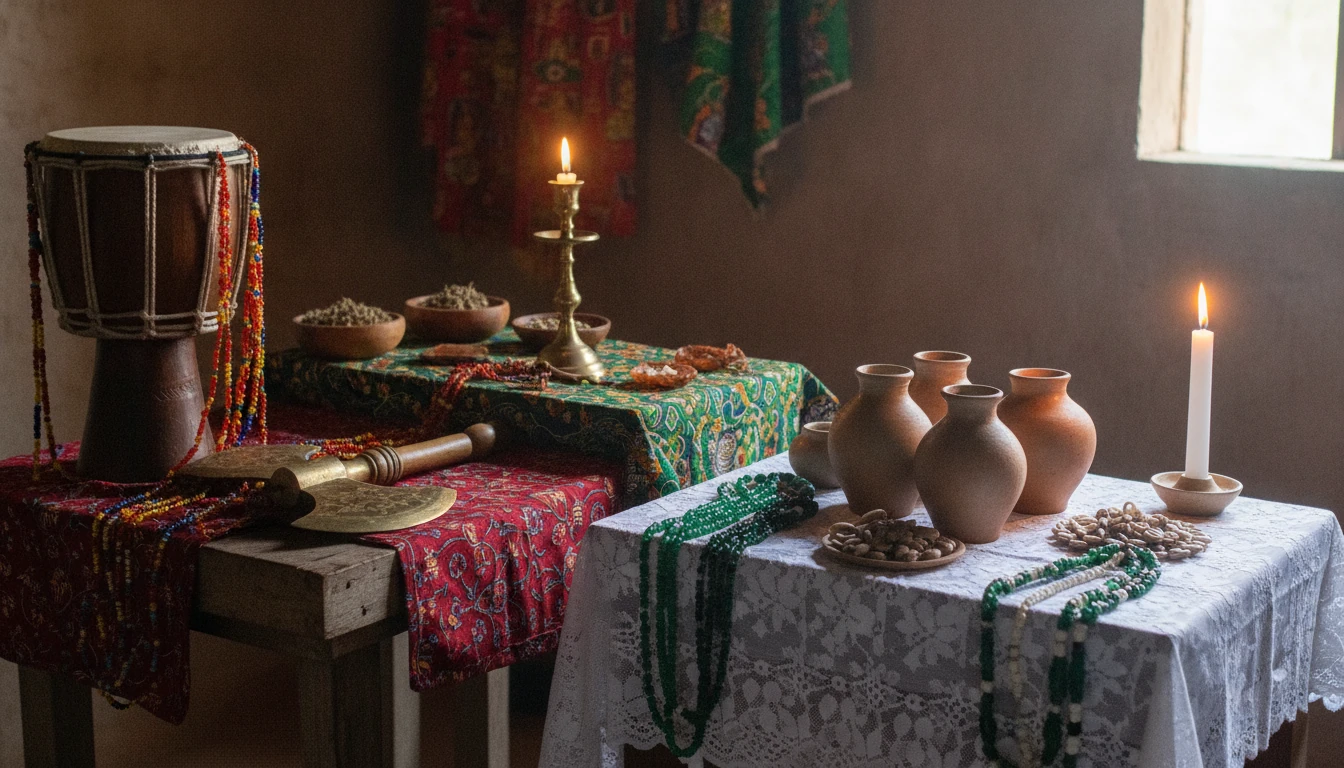
The pottery is not packaging. It participates in the rite and accumulates axé through repeated use, as shown by the ethnographies made in houses of nation Oyó in Porto Alegre.
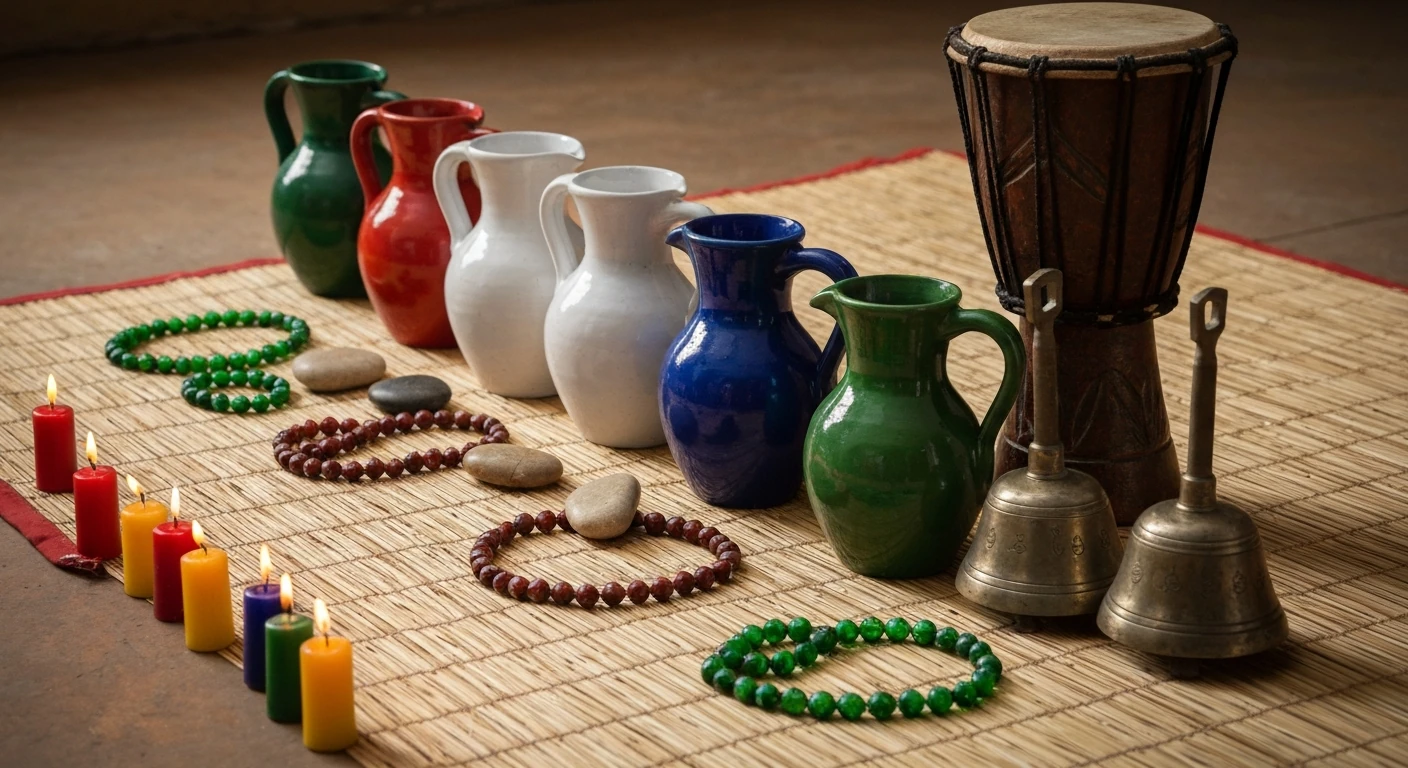
- Gamela de madeira: is where the amalá is served. A large piece, linked to Xangô and the sauce dishes.
- Alguidar de barro (clay bowl): receives the dry food and the nature offerings. The general use is in what the alguidar is for.
- Quartinha: keeps the water of the assentamento and never becomes a food plate. Check the foundation in what is a quartinha.
Each house has its own requirement for size, color, and finish. Buy after asking, not before.
The food of axé, the sacrifice and the law
Part of the food of the orixá comes from the ritual sacrifice conducted by the priest. Speaking of this naturally is the obligation of those who write about the religion.
The meat of the animal is prepared in the house kitchen, served to the orixá, and then shared among the community or sent as a despacho. The rite is conducted by the babalorixá or by the ialorixá, never on one's own.
From a legal standpoint, the issue is resolved. On March 28, 2019, the Supreme Federal Court judged RE 494.601. The established thesis states that the law allowing the ritual sacrifice of animals in Afro-Brazilian cults is constitutional, to safeguard religious freedom. The case arose from a law of Rio Grande do Sul itself. The scope and limits of the decision are in the text about what the STF decided about ritual sacrifice.
The anthropologist Norton Corrêa, who signed the classic ethnography of Batuque, points out the double standard of campaigns that target the terreiro and pass by the slaughterhouses.
Frequently asked questions
Does the Batuque amalá include okra?
No. In the Batuque of Rio Grande do Sul, the amalá is pirão of cassava flour with a sauce of beef breast and mustard. The okra with dendê is the Ketu Candomblé version. Both are legitimate within their traditions, and the complete comparison is in Batuque and Candomblé.
Can I eat the food of the orixá after it is offered?
It depends on the type. A large part of the axé food is shared among those present, and this common meal is a point of honor for the religion. Other foods are returned to nature as ritual offerings. The one who determines the destination of each dish is the leader of the house.
What to bring for a Batuque obrigação?
The house provides the list, and it changes according to the orixá and the stage. What appears most frequently are cassava flour, canjica, dendê, honey, popcorn, seasonal fruits, candles, and the requested dishes. Never buy on your own before talking to the leader.
Why does the orixá eat barbecue in Batuque?
Because the religion was reconstructed in the South with the ingredients of the South. Ogum's roasted ribs have roots in the Gaúcho and indigenous table, just as Bará's Irish potato arrived with the Germans. It is liturgical adaptation, not a loss of foundation.
Where to buy the material for the food of the orixá
At Joia Mística Laroyê, you find the ingredients and the dishes for preparation in one place:
- Cassava flour, white and yellow canjica: the base of miamiã and pirão
- Dendê, honey, and olive oil: in the volumes that the obrigação requires
- Alguidares and gamelas made of clay and wood: in various sizes
- Quartinhas: for the water of the assentamento
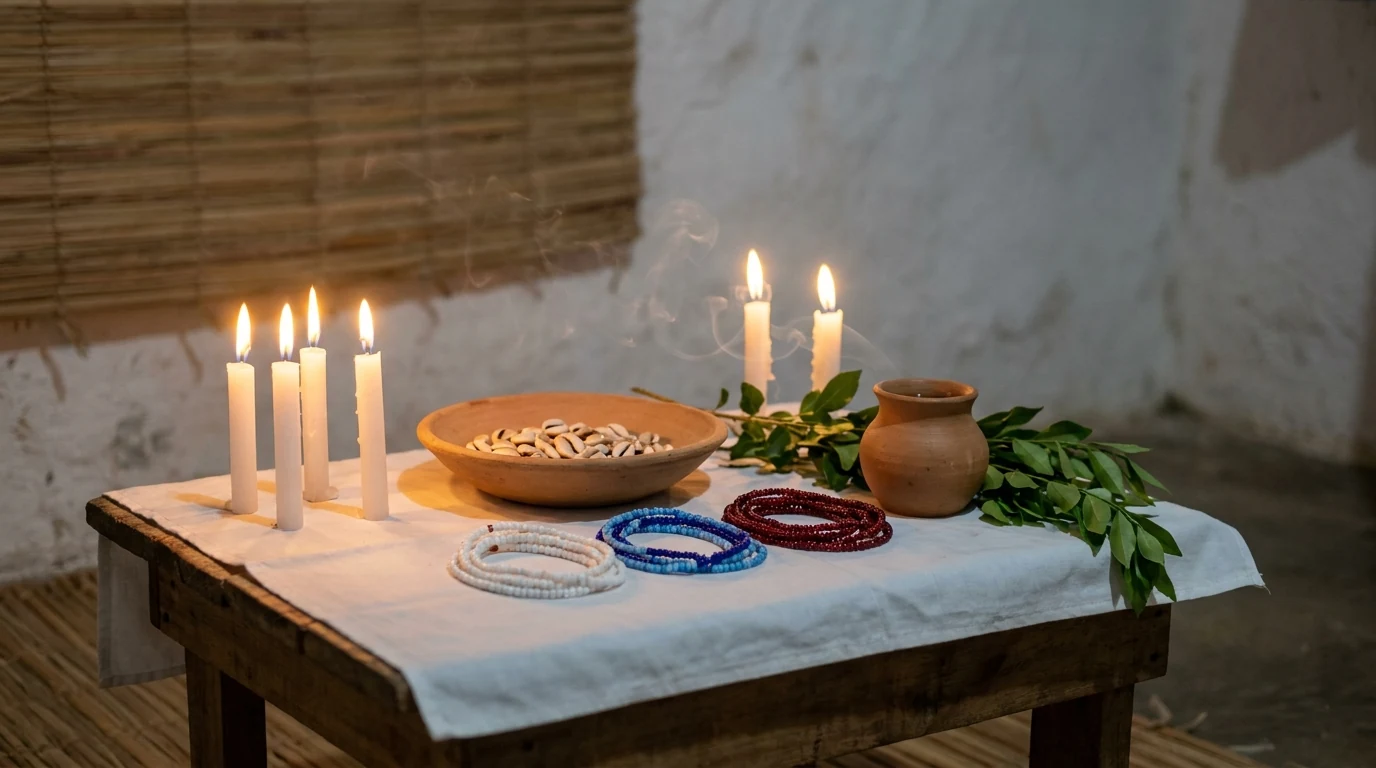
- Candles by orixá color and ritual popcorn: to accompany the delivery
Stop by the shop, at Rua Benedito Zingari, 460, Bela Vista, in Extrema-MG, or message on WhatsApp with delivery to all of Brazil.
One last word. No internet list replaces the word of your leader. Use this guide to understand the logic and go to the market knowing what to look for. The final dish is defined by your house.
References
- Gustavo Correa Pinto: study on amalá as sacred food in the Batuque of Rio Grande do Sul, Mangút Magazine v. 5 n. 2 (UFRJ)
- Museu Afro-Brasil-Sul (UFPel): record of offerings for Xangô, Bará, Oxum and Ogum with the ingredients
- Jornal da USP: analysis of the STF thesis on ritual sacrifice in Afro-Brazilian cults
- Instituto Humanitas Unisinos: interview with anthropologist Norton F. Corrêa about the gaúcho Batuque