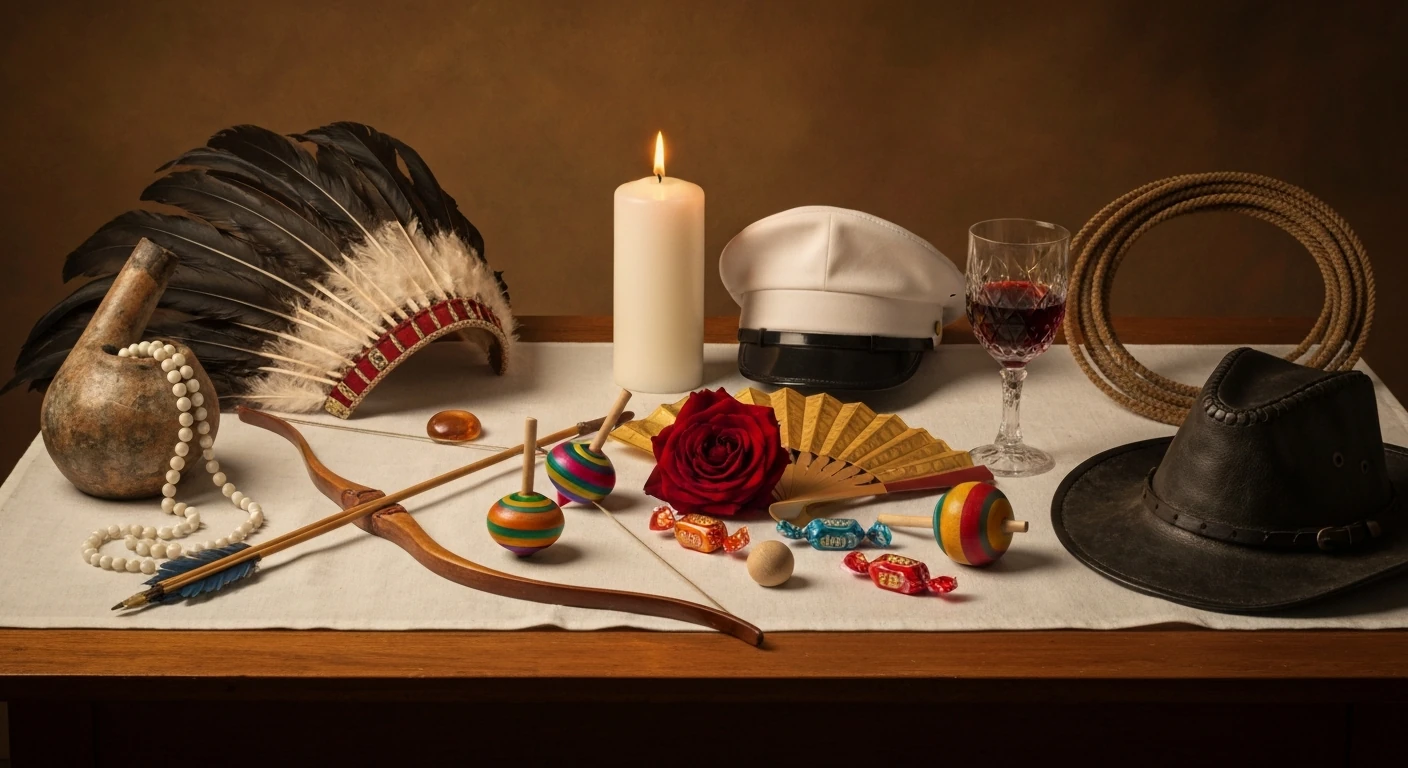
Umbanda is the most Brazilian religion that exists, born here, in the meeting between the faith of the African orixás (orishas), the charity of popular Catholicism, the mediumship of Spiritism, and the wisdom of indigenous peoples. At the center of everything is a phrase that summarizes its mission: to practice charity, to listen to those who suffer, and to heal.
In this guide, you will understand what Umbanda is, how it emerged, what its foundations are, the seven lines, the spirit guides that work in the giras, and why it has nothing to do with spells, "something evil," or the devil.
What is Umbanda
Umbanda is an Afro-Brazilian religion that organized itself at the beginning of the 20th century, in Rio de Janeiro, gathering elements from various traditions into a unique and genuinely national cult. It includes the worship of orixás inherited from the African matrix, the belief in reincarnation and mediumship of spiritist roots, devotion to saints and the charity of popular Catholicism, and reverence for ancestors and the herbs of indigenous traditions.
Above all is a single God, called Olorum (and also Zambi, depending on the house). In some houses, Oxalá (Obatala) is the greatest of the orixás and the "Great Father", but he is not God: the Tenda de Umbanda Caboclo Tupinambá e Vó Catarina writes that "God is unique", and a medium from Terreiro Pai Maneco says that "Oxalá is the son of Zambi" (see Oxalá in Umbanda). He is not worshipped directly: he manifests in the world through the orixás and the spirit guides, who descend in the giras to guide, comfort, and heal those seeking help. The foundation that sustains all of this is axé, the vital energy that gives strength to the ritual and the community.
The word "umbanda" itself has Bantu African roots. Sources point to different meanings linked to the same origin: "place of worship", "priest", and the "art of healing". All converge toward the central idea of the religion: a path of healing and service to others.
Origin: Brazil, beginning of the 20th century | Supreme God: Olorum (Zambi, in some houses) | Bases: African matrix, popular Catholicism, Spiritism, and indigenous traditions | Foundation: axé and charity | Sacred space: terreiro, tenda, or center | Leadership: pai-de-santo / mãe-de-santo
The origin of Umbanda: Zélio and the Caboclo das Sete Encruzilhadas
According to Umbanda tradition, the religion was born on November 15, 1908, in Niterói (RJ). It is said that the young Zélio Fernandino de Moraes, then about 17 years old, manifested a spirit that presented itself as Caboclo das Sete Encruzilhadas, during a session at the local Spiritist Federation. Faced with the refusal to accept the ritual work of caboclo and preto-velho spirits, the spirit reportedly announced that it would found a new cult, where Black and Indigenous people could fulfill their mission of charity. The next day, the Tenda Espírita Nossa Senhora da Piedade was born, considered the founding milestone of Umbanda.
To this spirit is attributed the phrase that became the synthesis of the religion:
“Umbanda is the manifestation of the spirit for charity.”
It is important, however, to treat this story with honesty: it is widely accepted and beloved in the Umbanda community, but it is also a subject of debate among researchers. The minutes of the 1908 session do not record the episode, and the accounts were systematized decades later. Furthermore, there are records of Afro-Brazilian practices of spirit incorporation much earlier, such as those of Luzia Pinta, still in the 18th century, and of other Black mediums in the 19th century. The sociologist Reginaldo Prandi places the organization of Umbanda as such closer to the 1920s. In other words: the Caboclo das Sete Encruzilhadas is the founding myth of Umbanda, and the religion has roots that come from much earlier than him. The date became the Day of Umbanda, and the life of the medium is in Zélio de Moraes.
The foundations of Umbanda
More than a set of rituals, Umbanda is a way of living the faith based on some pillars. Knowing them helps to understand what happens inside a terreiro.
- One God: Olorum (Zambi, in some houses) is the supreme creator, the source of all axé.
- Orixás: deities and forces of nature inherited from the Afro-Brazilian matrix, who govern the lines of ritual work.
- Charity: the central moral and religious axis. In Umbanda, spiritual service is free: no one pays to receive a spiritual pass or guidance.
- Mediumship: the communication between the material and spiritual plane. The mediums receive the spirit guides so that they may work in favor of those who seek the house.
- Reincarnation and spiritual evolution: a heritage of Kardecist Spiritism. It is believed that the soul reincarnates to learn and evolve.
- Law of cause and effect (karma): every action has a consequence, and service to one's neighbor is part of spiritual progress.
In Umbanda, spirituality is not bought. Be suspicious of any "terreiro" that charges for a consultation, spiritual pass, or work with a spirit guide: charity is, by definition, offered for free.
The Seven Lines of Umbanda
One of the best known ideas of Umbanda is that of the seven lines large chains of vibration, each ruled by an orixá, which organize the spiritual work. The most cited classic model is usually presented as follows:
- Line of Oxalá
- Line of Iemanjá (Yemoja)
- Line of Xangô (Shango)
- Ogum (Ogun) Line
- Oxóssi (Oshosi) Line
- Ibeji Line (children / erês)
- Line of the East
However, an important caveat is necessary: the classification of the seven lines varies greatly from author to author and from terreiro to terreiro. Some houses organize the worship by orixás, as above; others work with "phalanges" of caboclo, preto-velho, children, exu, and pombagira spirits. The two models are not the same thing and should not be mixed without explanation. More than memorizing a list, it is worth understanding the principle: each line is a field of force with its own characteristics, and the spirit guides act within it.
The spirit guides of Umbanda: caboclos, pretos-velhos, and exus
The spirit guides (or spirits) are the spirits that work in the giras, embodying in the mediums to guide and heal. Each group carries its own wisdom and way of working:
| Guia | Who represents and how they act |
|---|---|
| Caboclos | Spirits of indigenous people and native ancestors. They bring strength, firmeza, and healing with herbs and direct guidance. |
| Pretos-velhos | Spirits of enslaved African elders. They are the wisdom, patience, and serene counseling of Umbanda. |
| Children (erês) | Child spirits linked to Ibeji. They bring joy, lightness, and purity to the house. |
| Exus | Guardians of the paths and the crossroads. They work in protection and in clearing obstacles. |
| Pombagiras | Female line of the exus, such as Maria Padilha. They act in protection and in matters of affection and self-esteem. |
| Baianos, boiadeiros and marinheiros | Other falanges, linked to the sertão, the countryside, and the sea, with ritual work of strength and cleansing. |
Here it is necessary to undo an old confusion: Exu and Pombagira are not "the demon". This association is a Christian projection that does not belong to Umbanda. In the religion, they are spirit guides of work, guardians who open and protect paths and have no relation whatsoever with the devil of Abrahamic traditions. It is also worth remembering that quimbanda is its own tradition, distinct from Umbanda, with which it is often confused. To know each falange in detail, see the guide to the spirit guides of Umbanda.
How a gira of Umbanda works
The gira is the work session of Umbanda, the moment when the house gathers, the pontos are sung, and the spirit guides descend to attend. Even varying from terreiro to terreiro, some elements are almost always present:
- Defumação: the burning of herbs that cleanses the energy of the environment and prepares people for the work.
- Pontos cantados: the chants that praise, call, and bid farewell to the orixás and the spirits, marked by the sound of the atabaque. Each line has its toque.
- Pontos riscados: symbols drawn with pemba (a type of sacred chalk) that identify and firm the spirit, a kind of spiritual signature.
- A incorporação: the mediums (also called aparelhos) receive the spirit guides. It is common for them to prepare beforehand with herbal bath and abstinences.
- O passe e a consulta: incorporated, the spirit guide applies the passe a cleansing and energizing and listens to those seeking guidance, always as an act of charity.
The service is conducted by the pai-de-santo or the mãe-de-santo, leaders of the house, with the help of mediums and assistants. Everything revolves around one purpose: to welcome those who arrive and offer relief.
Umbanda and Candomblé are not the same thing
It is very common to confuse the two, but umbanda and candomblé are distinct religions. Candomblé is of African origin, formed in Bahia in the 19th century and has as its center the direct worship of the orixás, organized by nations (ketu, jeje, angola), each with its own liturgical language and its rites. Umbanda was born in Brazil in the 20th century and, although it also worships the orixás, works mainly with the guias caboclos, pretos-velhos, children, exus who manifest in the giras to guide and heal.
There are also structural differences: candomblé has the initiation (the feitura de santo) and a hierarchy linked to the nation; umbanda develops mediumship progressively, within the house. They are paths that respect each other, share roots, and sometimes cross, but have their own liturgies and histories. If you want to go deeper, see our guide on the difference between umbanda and candomblé.
Umbanda is not a spell nor something of evil
Umbanda is a religion: it is not a spell, it is not a "thing of evil" and it has no demon. This distortion, unfortunately common, is the result of religious racism: the same prejudice that, throughout history, led terreiros to be invaded, closed, and criminalized.
Umbanda worships charity, nature, and ancestors. Its spirit guides work to heal and orient, without charging anything for it. Using words like "witchcraft" and "black magic" to disqualify the religion reproduces an ancient violence against Brazilian black culture. Respect is simple: treat Umbanda with the same naturalness as any other faith.
Frequently asked questions
What is Umbanda and what does it believe in?
Umbanda is an Afro-Brazilian religion that emerged at the beginning of the 20th century. It believes in a single God (Olorum), in the orixás, in reincarnation, in mediumship and, above all, in charity. Its central work is to receive spirit guides in the giras to orient and heal those seeking help, always free of charge.
What is the origin of Umbanda and who founded it?
According to tradition, Umbanda was founded on November 15, 1908, in Niterói, when the medium Zélio de Moraes manifested the Caboclo das Sete Encruzilhadas. Researchers point out, however, that similar Afro-Brazilian practices already existed before, and that the organization of the religion consolidated in the following decades.
What are the seven lines of Umbanda?
The classic model cites seven lines ruled by orixás: Oxalá, Iemanjá, Xangô, Ogum, Oxóssi, Ibeji (children) and Oriente. This classification, however, varies greatly among authors and terreiros: some houses organize the work by falanges of spirits, such as caboclos and pretos-velhos. It is a study model, not a single rule.
What happens in an Umbanda gira?
The gira begins with the smoke cleansing (defumação) and the sung pontos (sacred songs) to the sound of the atabaque. The mediums incorporate the spirit guides, who apply passes (energy cleansing) and attend to those seeking guidance. Everything is conducted by the pai or mãe de santo as an act of charity, without charge.
Is Umbanda a spell or does it do harm?
No. Umbanda is a religion recognized and protected by law, focused on charity and healing. The idea that "it is a spell" or "does harm" comes from religious racism, not from the actual practice. As in any faith, what matters is the seriousness and respect of the house you seek.
Where to buy items for Umbanda
At Joia Mística Laroyê, you find everything to accompany a gira or set up your congá with respect and foundation:
- Statues of spirit guides and orixás caboclos, pretos-velhos, children, Exu (Eshu) and Pombagira for your altar
- Ritual candles in the colors of each line and spirit
- Smoke-cleansing blends and herbs for the energy cleansing of the environment
- Bead necklaces and fios de contas (ilekes) in the colors of the orixás
- Pemba and gira items for the ritual work inside the house
Visit our physical store in Extrema-MG or talk to us via WhatsApp and we ship all over Brazil. In case of doubt about the correct use of each item, talk to us: we provide guidance, not just sales.
To go deeper: the Umbanda on Wikipedia entry, the biography of Zélio Fernandino de Moraes and the overview about Umbanda on the Significados portal. Basic references: Prandi, R., studies on Afro-Brazilian religions; Bastide, R., African Religions in Brazil.
References
- Wikipedia: entry about Umbanda
- TUCTVC: Oxalá, faith, creation and divine peace
- Terreiro Pai Maneco: Oxalá in Umbanda
- Wikipedia: biography of Zélio Fernandino de Moraes
- Meanings: overview of Umbanda