In the Batuque of Rio Grande do Sul, no ritual work begins without Bará. Before Ogum (Ogun), before Xangô (Shango), before Iemanjá (Yemoja), it is he who receives the first greeting, the first offering, and the first cut because it is Bará who opens (or closes) the paths through which everything else will pass.
Owner of the keys to the crossroads, the gates, and the cruzeiros, Bará is the orixá of communication and movement. This guide explains who he is within the Gaucho Batuque, his qualities (the so-called "passagens"), his greeting, color, day, and offerings, and why he has nothing to do with the "devil" that prejudice insists on inventing.
Who is Bará in Batuque
Bará is the orixá of paths, crossroads, and gates in Batuque, the great religion of worship to the orixás of Rio Grande do Sul. The name comes from the Yoruba Ẹlẹ́gbára "he who possesses strength", "lord of power", the same root that gives rise to Elegbara and Exu in other traditions of the diaspora (Batuque, on Wikipedia).
His function is structural: Bará is the messenger between human beings and the other orixás, and the guardian of sacred spaces. Therefore, in Batuque, he is always the first to be greeted, fed, and cut in any obrigação. The logic is simple and ancient: without opening the path, the prayer request does not arrive; without the gatekeeper, no one enters. Bará is that gatekeeper and that key.
He rules the points of passage: the crossroads where two directions cross, the cruzeiro, the gate of the terreiro, the house door, the portal between one world and another. To mess with paths is to mess with Bará.
Alupô, Bará! is thus, with this greeting, that the terreiro reveres the orixá who opens all roads.
The qualities (passagens) of Bará
In Batuque, the same orixá manifests in qualities also called passagens or paths, each with its own function, consecrated foundation (assentamento), and tradition. Bará is one of the orixás with the most worshipped passagens, and knowing them is understanding how he works:
- Bará Lodê (or Olodê, the "Bará of the Street") guardian of the external part of the temple and the gate. His assentamento is located outside the ilê, watching who arrives. He is the Bará of the open street, of the free spaces.
- Bará Adagué (Adagbe) guardian of the internal part of the house. He receives offerings at the crossroads and "leads the way" for various orixás (Ogum, Oyá, Xangô, Odé, Otim, Obá (Oba), Ossãe, and Xapanã). He is one of the most requested passagens.
- Bará Lanã guardian of the door of the temple, known as the "Bará of the good path." He works at the cruzeiros, with duties close to those of Adagué.
- Bará Agelú (Ajelú) messenger linked to the orixás of the waters and the beach and guardian of the altar. Unlike the others, his day is usually Friday.
- Elegbá the form worshipped in the Cabinda rite, the Bantu-rooted nation of Batuque.
How many and which passagens a person "has" depends on the cowrie-shell divination and the fundamento of each Batuque house, something that is defined by the babalorixá or the ialorixá, never on one's own.
Bará: color, day, greeting, and offerings
Like every orixá, Bará has his ritual correspondences. They can vary according to the nation (Oyó, Ijexá, Jeje, Cabinda, Nagô) and the house, but in the Batuque of Rio Grande do Sul, the most common references are:
| Attribute | Bará |
|---|---|
| Dominion | Paths, crossroads, gates, communication |
| Greeting | Alupô! (also Lalupô) |
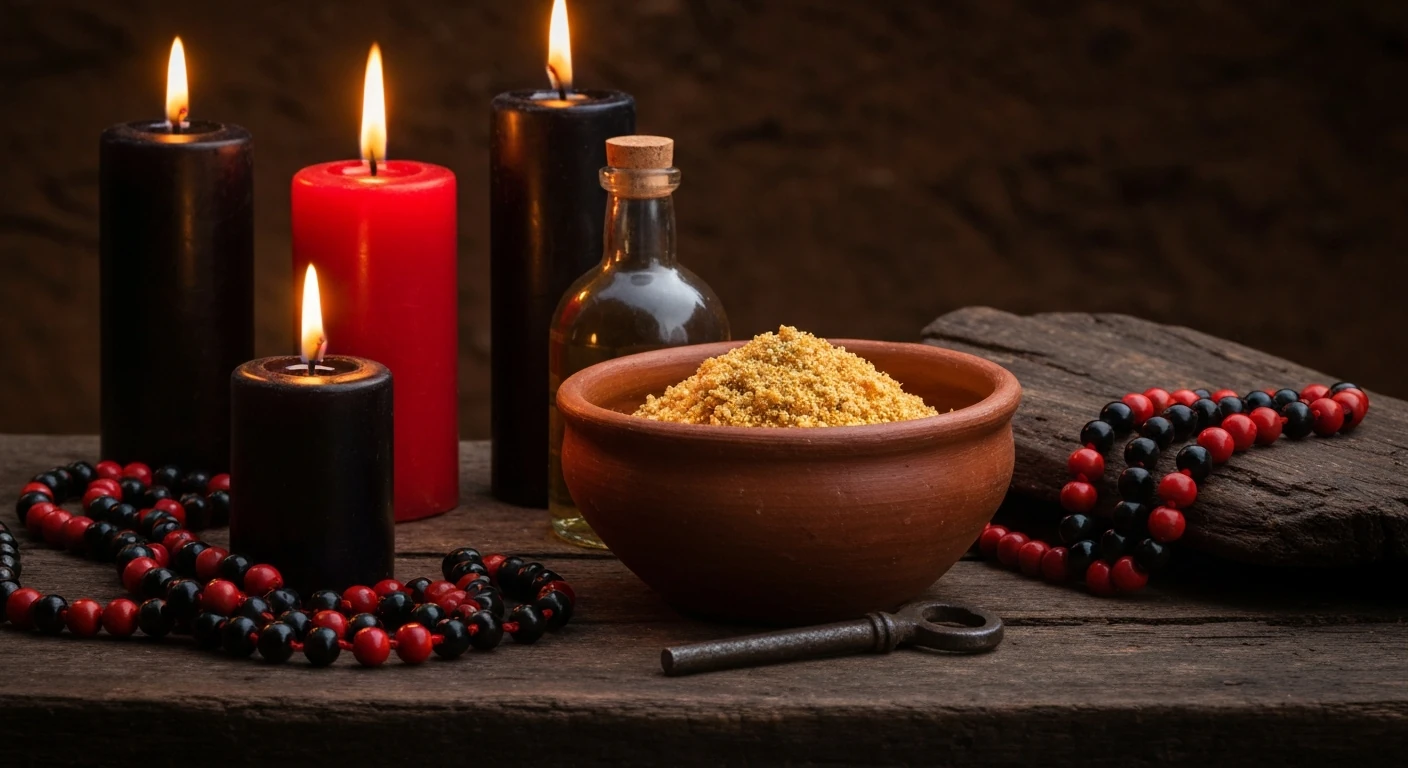
| Color | Red (black and red in passages like Lodê) |
| Day | Monday (Agelú, Friday) |
| Number | 7 and its multiples |
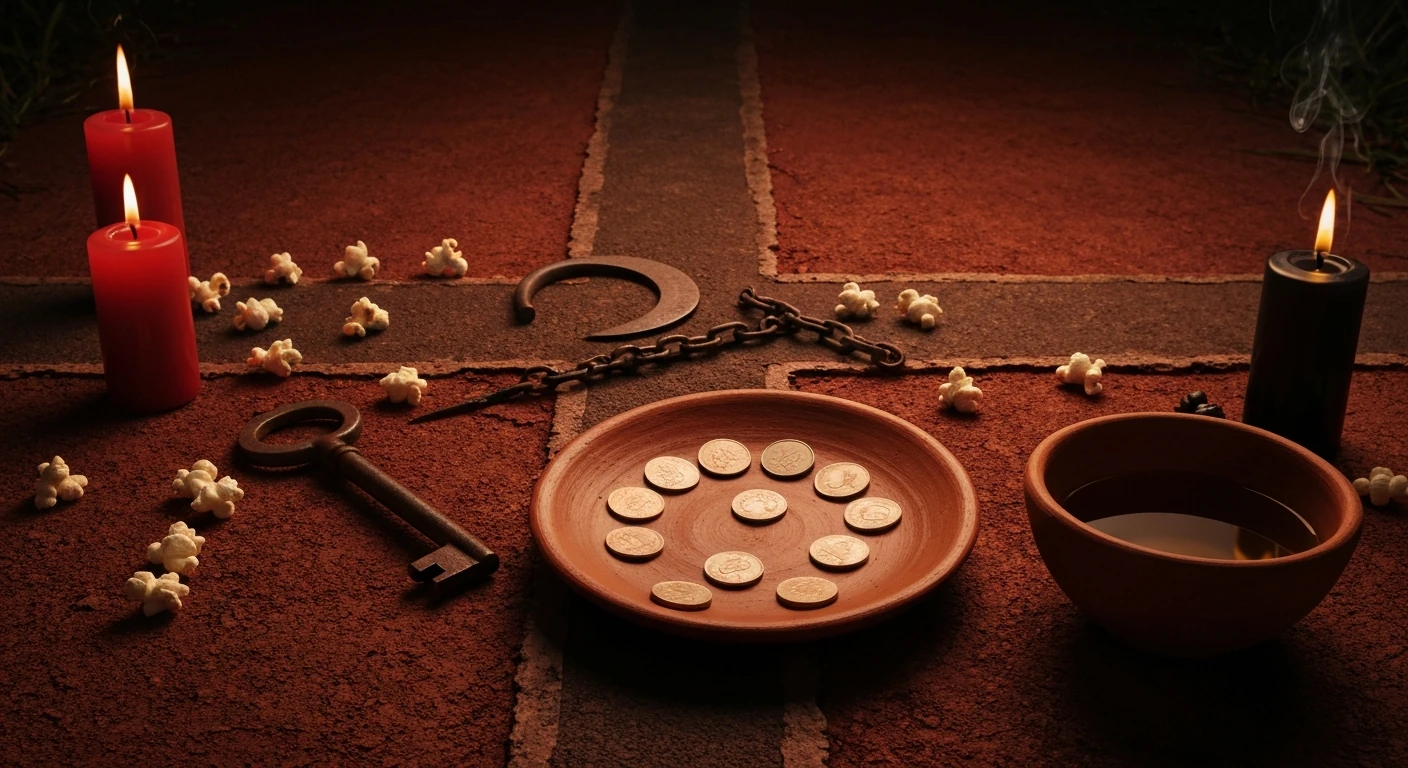
| Tools | Chain, key, scythe, 7 coins, 7 búzios |
| Offerings | Pipoca ("flowers of Bará"), roasted corn, roasted potatoes, farofa with dendê oil |
| Syncretism | Saint Anthony and Saint Peter (varies by passage and house) |
The dendê oil is a constant presence in Bará's treatment, just like the pipoca popped and affectionately called "flowers of Bará". But it is important to say: orixá offering has foundation, and foundation is learned in the terreiro. No list replaces the guidance of someone who is de santo.
Bará is not the "devil": undoing prejudice
Here is the point that causes the most confusion. Because he rules crossroads and because he carries a name linked to Exu, Bará was historically associated with the Christian demon a reading that has no basis in Afro-Brazilian religions, and which stems from religious racism.
Bará is not the devil of Abrahamic traditions. He is an orixá of nature, an ancestral force that organizes the traffic between worlds. Treating him as an "evil spirit" is the same mistake that reduces an entire religion to "evil stuff", misinformation that stigmatizes millions of practitioners. Not surprisingly, Rio Grande do Sul, which gathers more than 60 thousand terreiros, is also a constant stage for campaigns against religious intolerance, as shown by the Respeita o meu Orixá project, from UFRGS.
Bará is respect, it is foundation, he is the first to whom one asks permission. Those who truly know him know: without Bará, nothing moves.
Bará, Exu of Umbanda and Exu of Candomblé: the differences
It is common to mix three different figures just because they share the idea of "owner of the paths". It is worth separating:
- Bará (Batuque) is an orixá, a force of nature worshipped in Yoruba, with its own consecrated foundation (assentamento), passages, and obligations specific to Rio Grande do Sul. It does not incorporate to "work and talk" like a spirit of a gira.
- Exu of Umbanda and Quimbanda are spirits that manifest in giras, with their own names and personalities (Tranca-Ruas, Sete Encruzilhadas, Marabô). They work directly with the mediums, give consultations, "lock and unlock". It is a distinct line, explained in our guide about what is quimbanda.
- Exu / Elegbara (Candomblé) is also an orixá, worshipped by nation (ketu, jeje, angola), with its own qualities. A spiritual relative of Bará, but formed by another historical path, see the difference between umbanda and candomblé to understand why sister traditions are not synonymous.
In summary: Bará is the orixá guardian of Batuque; the Exu of gira is a spirit of Umbanda/Quimbanda; and the Exu orixá belongs to Candomblé. Three figures, three traditions, none of them demonic.
The syncretism of Bará with Saint Anthony and Saint Peter
During slavery and the repression of African cults, the orixás were associated with Catholic saints as a form of survival, a strategy of resistance, not a fusion of beliefs. In Batuque, this syncretism falls on Bará in a curious way, varying according to the passage and the house:
- The passages Lanã, Adagué and Agelú are usually associated with Saint Anthony, the saint celebrated on June 13, in the middle of the June festivities.
- The Lodê passage, the Bará of the street, is frequently linked to Saint Peter, guardian of the keys, a statue that speaks directly to the orixá who opens and closes doors.
It is fundamental to remember: saying that Bará was associated with Saint Anthony does not mean that Bará is Saint Anthony. They are figures from distinct traditions, brought together by history. For the practitioner, Bará remains an orixá; the saint is the mask that protected the worship when it needed to hide.
Frequently asked questions
Who is the orixá Bará?
Bará is the orixá of paths, of crossroads, and of gateways in the Batuque of Rio Grande do Sul. Messenger and guardian, he is always the first to be greeted and offered in any ritual, as he is the one who opens the paths so that requests reach the other orixás.
What is the difference between Bará and Exu?
Bará is the name of the orixá guardian of paths in the Gaucho Batuque, worshiped as a force of nature. The Exu of Umbanda and Quimbanda is a spirit of gira, who incorporates and gives consultation. In Candomblé, Exu is also an orixá. They are related figures, but from different traditions and neither is the Christian devil.
What are the qualities of Bará?
The most worshiped passages are Bará Lodê (external guardian, of the street), Bará Adagué (internal guardian, of the crossroads), Bará Lanã (guardian of the door, of the good path), Bará Agelú (linked to waters, Friday), and Elegbá (of the Cabinda rite). Which passage a person worships is defined in the cowrie-shell divination.
With which saint is Bará syncretized?
It depends on the passage and the house. The Lanã, Adagué, and Agelú passages are usually associated with Saint Anthony (June 13), while Lodê, the Bará of the street, is linked to Saint Peter, guardian of the keys. The syncretism is historical, not an equivalence of faith.
What is the color, the day, and the offering of Bará?
The color of Bará is red (with black in passages like Lodê), his day is Monday and his number is 7. Among the most common offerings are popcorn (“flowers of Bará”), roasted corn, roasted potatoes and farofa with dendê oil.
Where to buy items for Bará
At Joia Mística Laroyê, you find what you need to greet and worship Bará with respect:
- Bará Tools chains, keys and scythes in metal for the consecrated foundation (assentamento)
- Red and red-and-black candles in the colors of the orixá
- Dendê oil and flour for the farofa and the treatment of offerings
- Cowrie shells and coins for fundamento and offering (the number 7)
- Statues and bead necklaces (guias) in the colors of Bará and the other orixás of Batuque
Visit our physical store in Extrema, Minas Gerais or talk to us via WhatsApp, with delivery to all of Brazil. Want to continue learning about the religion? Explore the Batuque category here on the blog.
References
- Wikipedia: article about Batuque, an Afro-Brazilian religion from Rio Grande do Sul
- UFRGS: Respeita o meu Orixá project, about religious intolerance