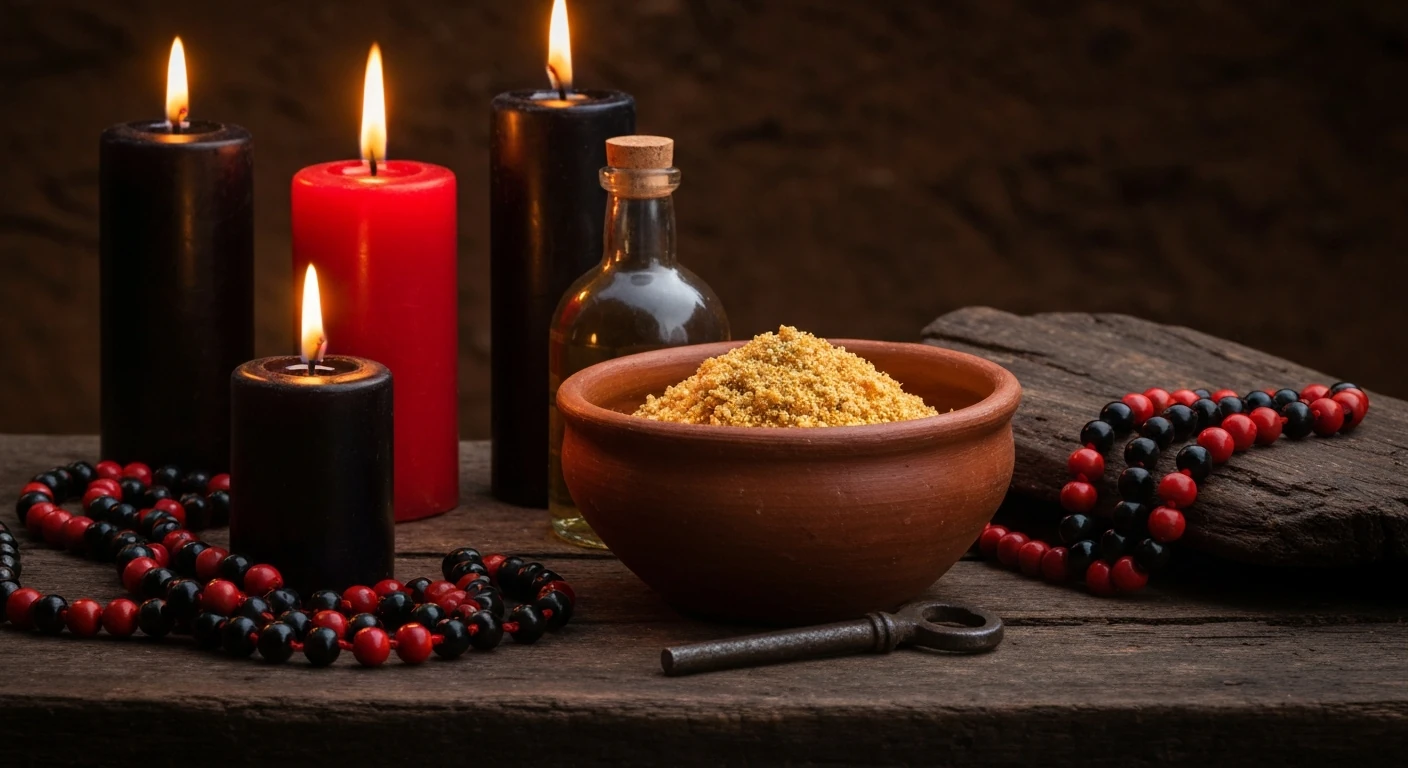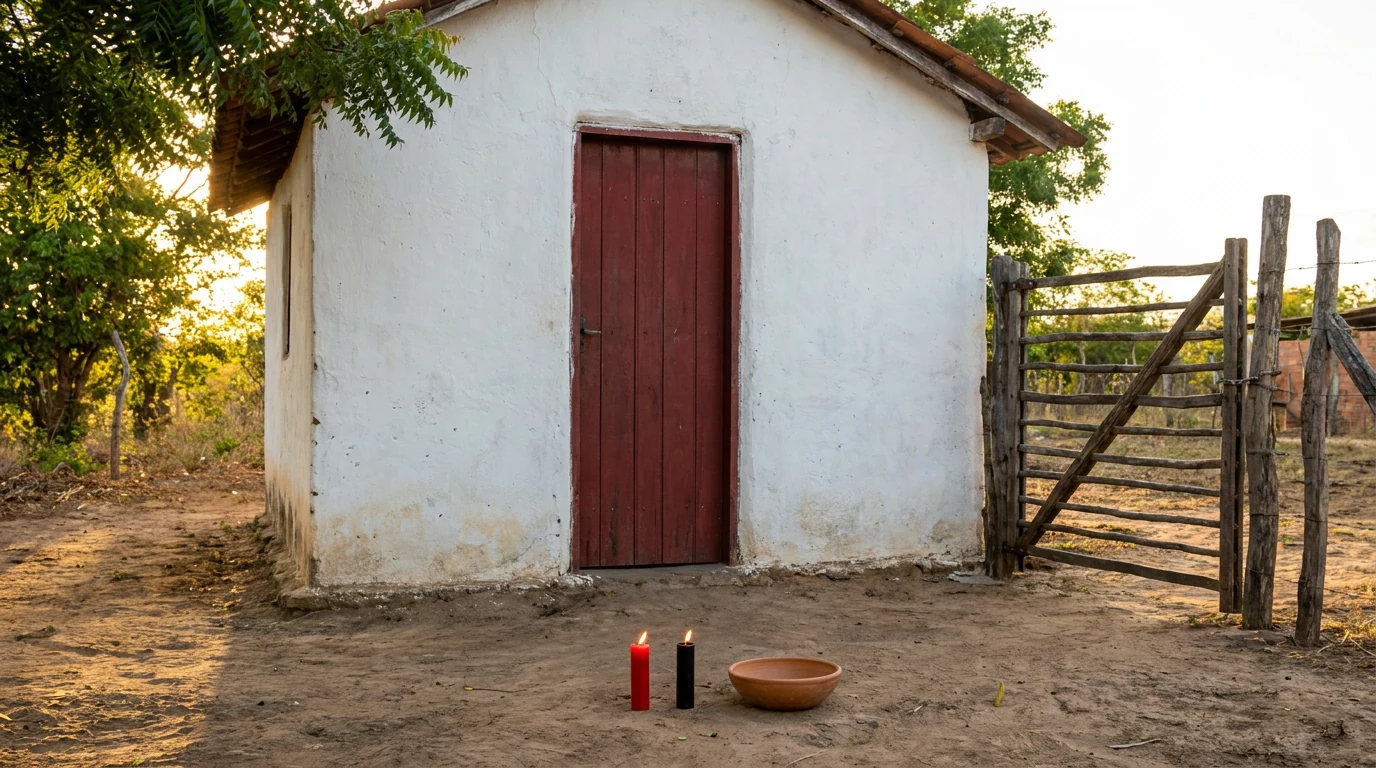
The consecrated foundation of Exu is the material dwelling of Exu, prepared by the house of the orixás, which links Exu to a terreiro or to a person. There, food is offered, requests are made, and candles are lit. In Candomblé, the orixá is settled; in Umbanda and Quimbanda, the guardian.
What is the consecrated foundation of Exu
It is the representation of Exu in the material world. The phrase is from the text of the Museu do Homem do Nordeste, from the Fundação Joaquim Nabuco, which exhibits a consecrated foundation of Exu made of tabatinga and cowrie shells in the 1980s. The piece belongs to the babalorixá Manoel Papai, from Sítio de Pai Adão, a Nagô-Egbá house in Recife.
The anthropologist Lucas Marques, in an article in Religião & Sociedade, joins three ideas into one. The consecrated foundation, also called ibá (igbá), is "the dwelling of the orixá, the orixá itself materialized, and the place where the relationship between person and orixá takes place."
And it is personal. Each person has their own assentamentos, which accompany them their whole lives. It is not just any object of Exu: it is the Exu of that person or of that house.
The orixá's assentamento is generally covered in assentamento de santo. Here is Exu's, which has its own rules of place and owner.
In Candomblé: the Exu of the house and the one of each initiate
In Candomblé, Exu is settled for collective and individual reasons. An ialorixá heard by researcher Luciana Novaes, from UFS, summarizes: in the collective, Exu is settled in the foundation of a Candomblé and as a protector of fairs and markets; in the individual, each son and daughter has an Exu along with their family of orixás.
Reginaldo Prandi, in Revista USP, gives both sides. Every house, every street and every market has its guardian. And "every human being has their Exu, who is settled, named and regularly propitiated".
Collective Exu: in the house of Exu or at the entrance of the terreiro | Individual Exu (Bara): in a private place of the owner | Who receives: the initiate, together with or before the assentamento of the orixá
The anthropologist Juana Elbein dos Santos, in Os Nàgô e a morte, studied Nagô Candomblé in Bahia. She calls the individual Exu Bara, worshipped in private by the person it accompanies. In initiation, the novice receives the Bara at the same time, "and even before", as the settlement of their orixá.
This Bara is not the Bará of the Gaúcho batuque, which is another orixá and is in who is Bará. The search "assentamento de exu bara" mixes the two.
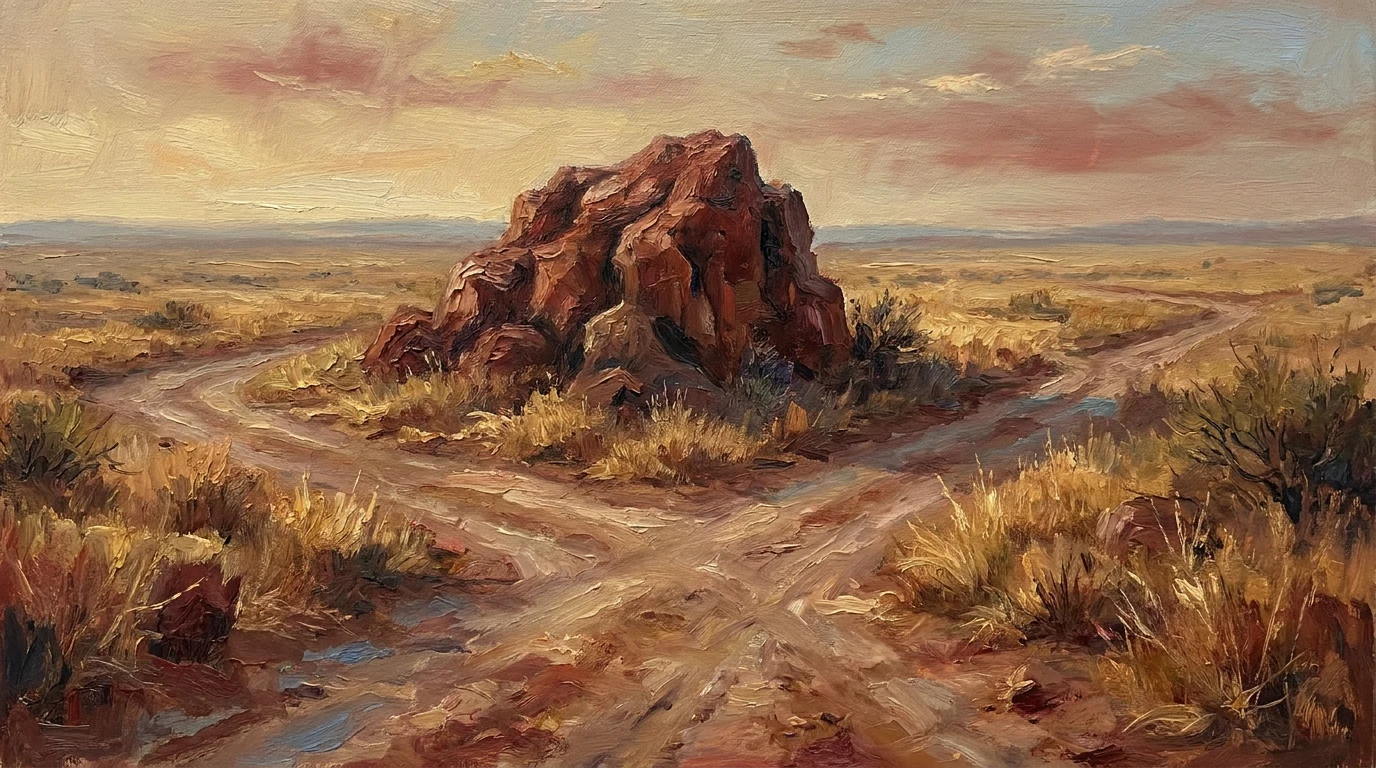
Juana Elbein also records the oldest form of Exu in Nagô myth: Exu Yangi, a rock of laterite. Prandi lists Iangui, "the first of Creation, represented by laterite".
Why Exu's assentamento stays at the door
Because Exu guards the passage. In the Nagô system, Exu "stays to the left of the paths and from there controls the entry and exit of all traffic", and therefore its places of worship are located on the paths of cities and villages. In Yoruba land, he is settled at the entrance of cities.
In Nagô terreiros in Bahia, the sociologist Roger Bastide saw two Exu assentamentos, according to the dissertation by Oli Santos da Costa, from PUC Goiás:
- The doorman: "in a small house near the entrance door, watches over the Candomblé, opens, closes its doors".
- The one of the threshold: "buried in the threshold of the main house or nestles behind the entrance door".
A myth collected by Prandi tells that Orunmilá (Orunmila) asked Exu where he wanted to live. Exu answered "on the outside," and the first answer was the one that counted.
In a terreiro in Bocaiuva, Minas, that practices Candomblé Angola and Ketu, Umbanda and Quimbanda, the assentamento of Exu and that of Senhor Tiriri are located at the gate. "They are the guardians who watch over the entrance of the terreiro," and the house believes that they drain what comes from the street.
In Umbanda and Quimbanda: the guardian's assentamento
In Umbanda, the exus are understood as spirits of deceased people, from the left line. So what is settled there is the guardian, and not the orixá. The difference between the two lies in who Exu is.
The place is the tronqueira, which in Umbanda is "the room of the exus." Prandi records that the tronqueiras "are populated with assentamentos assembled with the irons that represent the exus." The history of this iron is in tridente de Exu.
In Gaúcho Quimbanda, the assentamento gained central weight. The study by Emerson Giumbelli and Leonardo Oliveira de Almeida, in the Revista de Antropologia, calls the assentamentos "binders between people and spirits." The exus, who were only tolerated in Umbanda temples, began to have their own assentamentos, and the initiation involves sacrifice.
There, the settled exu remains hidden in the casinha dos exus, "accessible only to some." There are houses with separate small houses for the exus and for the barás. The Exu who accompanies the medium is in exu de guarda, and the Pombagira, in assentamento de Pombagira.
Assentamento, tronqueira and firmeza
The three names appear together and are not the same thing.
- Assentamento is the materialized Exu, of a house or of a person, made by the priest [D15, D10].
- Tronqueira is the room where the Exu assentamentos live, at the entrance of the Umbanda terreiro. In a house of Bocaiuva, the small wooden gate house "is considered the tronqueira of the house." The entire room is in what is tronqueira.
- Firmeza is another practice, without an assentamento, and the difference lies in firmeza in Umbanda.
Who does it and who can have it
The house does it. In Candomblé, UFS research counts at least three people in an Exu assentamento: "the Iyalorixá or the Babalorixá, the ogã, and the one who will have the divinity Exu settled." In Umbanda, the small tronqueira-house of Bocaiuva was made by the leader of the terreiro. In Quimbanda, the one who directs needs to be made ready (aprontado) and be linked to the assentamentos of the spirits with whom they work.
The piece is bought; the assentamento is not. The orixá blacksmith (ferreiro de santo) José Adário dos Santos, from Salvador, explained to Marques that the iron leaves the workshop as iron:
When an Exu leaves here, he does not leave already as Exu, here he leaves as jabá de ogum, which is the iron
José Adário dos Santos, blacksmith of orixá, in Religião & Sociedade
The trident, alguidar, and candle are bought at the shop; what transforms the iron into Exu is the terreiro. If your house requested material for an assentamento, Joice helps check the list via WhatsApp. What goes inside and how it is assembled does not appear here on purpose: it is the foundation of each house.
Who can have it is the one who has a house. In Candomblé, the individual Exu comes with the initiation. Changing terreiros or address with the assentamento is a decision of the leader, and no serious source gives a general rule.
What happens to the assentamento when the person dies
It depends on the nation and the house. In the Nagô of Bahia, Juana Elbein records that the Bara of the deceased "will be ritualistically destroyed with all the other representations that individualize" the person.
In Salvador, a babalorixá heard at UFS tells us that, in the axexê, sometimes the orixá's assentamento goes to the sea with the deceased's material. In other cases, "the assentamentos continue to be cared for by family members or by the terreiro". The deceased's house decides.
Frequently asked questions
What is Exu's assentamento in Umbanda?
In Umbanda, Exu's assentamento is that of the guardian, a spirit of the left line, and not that of the orixá. He lives in the tronqueira, the room of the exus at the entrance of the terreiro, set up with the irons that represent the exus. The house leader performs it.
Who can perform Exu's assentamento?
In Candomblé, the ialorixá or the babalorixá, with the ogã and the person who will have Exu settled. In Umbanda, the terreiro leader. In Quimbanda, only the priest who is prepared and linked to the spirits' assentamentos. A person alone, outside of a house, does not settle Exu.
Can you have Exu's assentamento at home?
Only through the house of the orixás and where the leader commands. In Nagô Candomblé, the initiate's individual Exu stays in a private place for him. In Gaúcha Quimbanda, the settled one stays in the little house of the exus of the terreiro. Those who do not have a house work with firmeza, which is not an assentamento.
Do Exu's and Pombagira's assentamentos stay together?
It depends on the house. In Umbanda, Prandi records that the pombagiras gained rounded-shaped irons in the tronqueiras, along with the forks of the exus. In Quimbanda, each spirit has its own assentamento, and Pombagira's is in the article about Pombagira's assentamento.
References
- Fundação Joaquim Nabuco, Museu do Homem do Nordeste: 31, Assentamento de Exu
- Lucas Marques: Fazendo orixás, Religião & Sociedade, 2018
- Reginaldo Prandi: Exu, de mensageiro a diabo, Revista USP, 2001
- Juana Elbein dos Santos: The Nàgô and Death, Vozes
- Luciana de Castro Nunes Novaes: Visible death and invisible life, dissertation, UFS, 2013 (archived copy)
- Oli Santos da Costa: Exu, the phallic orixá of Nagô-Yorubá mythology, dissertation, PUC Goiás, 2012
- Fábio da Silva Gonçalves: If you give me to drink, you also drink, dissertation, UFMG, 2017
- Emerson Giumbelli and Leonardo Oliveira de Almeida: The enigma of Quimbanda, Anthropology Journal, 2021
- Juliana Carvalho and José Francisco Bairrão: Umbanda and Quimbanda, Psicologia USP, 2019