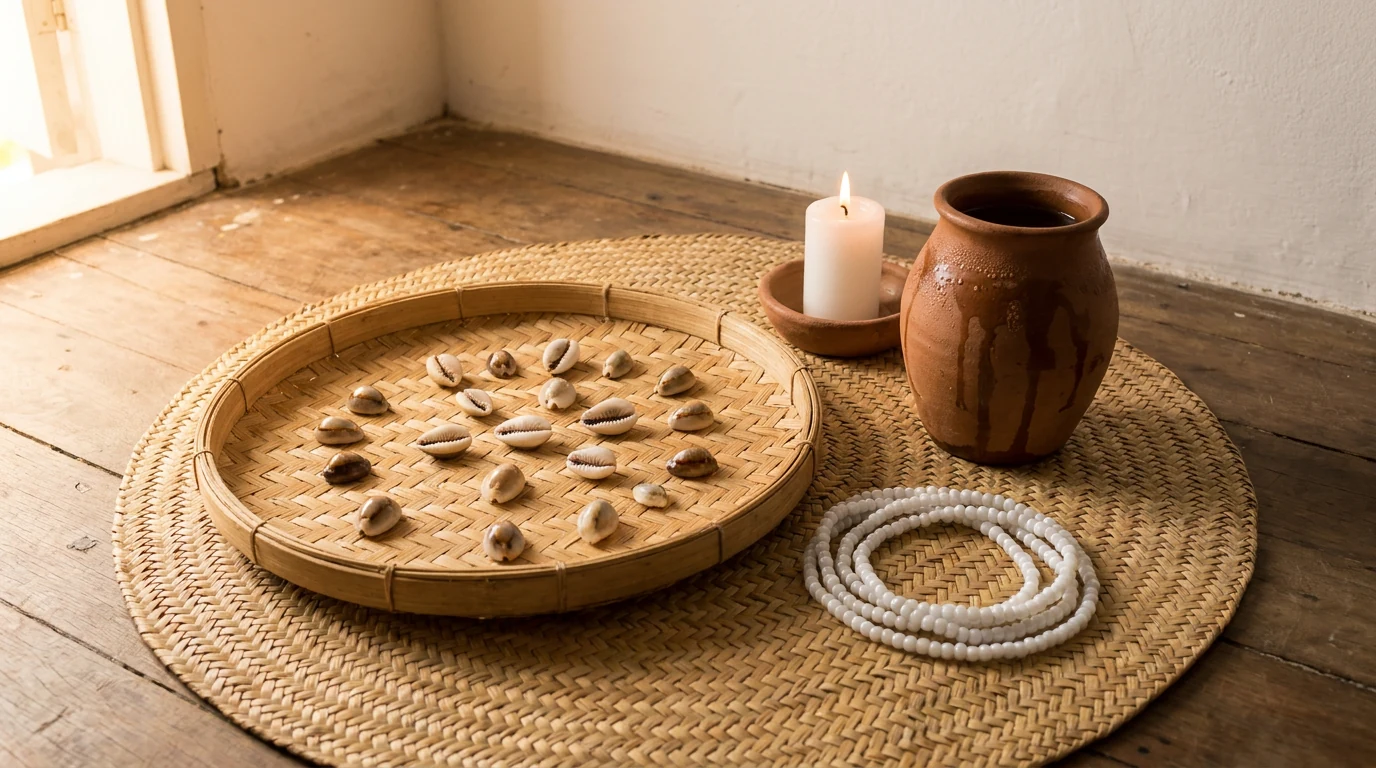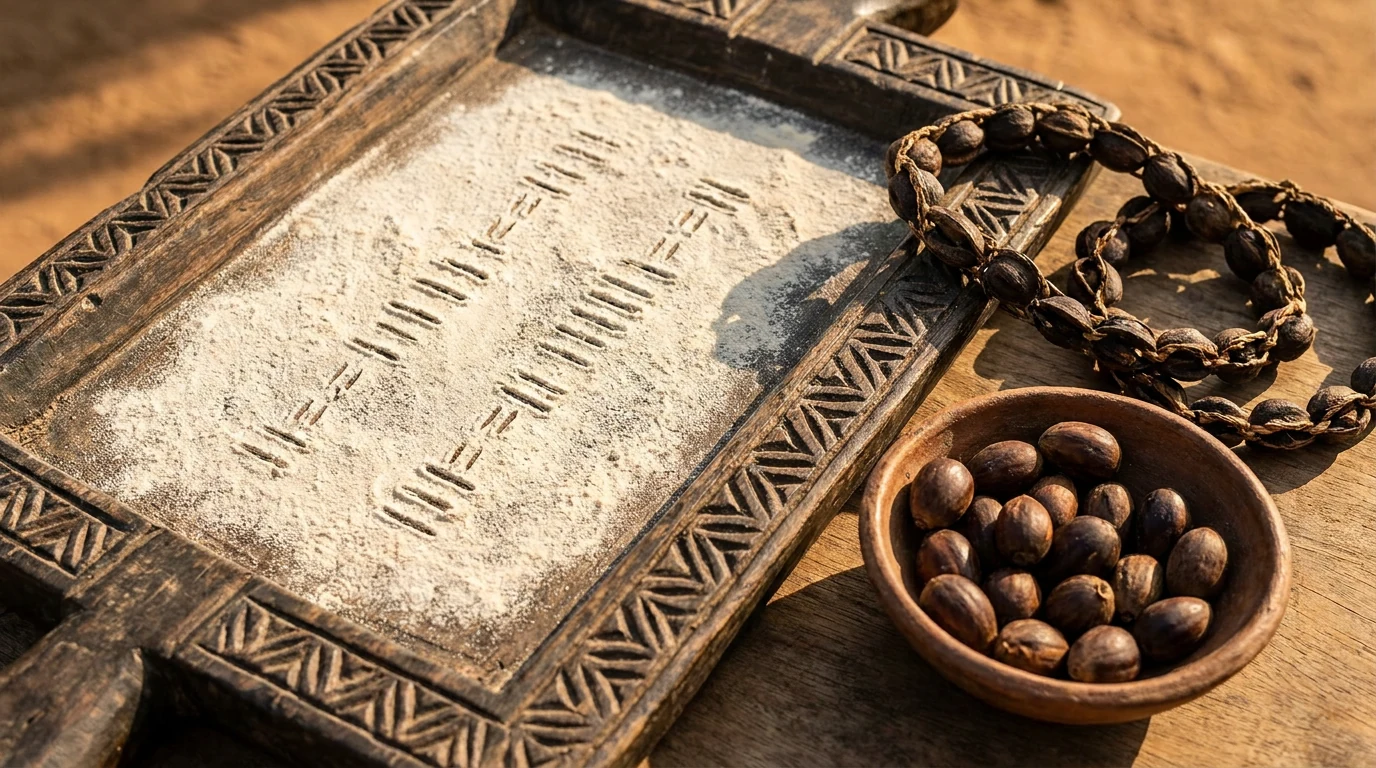
The odu of the year is the sign that the oracle reveals for the beginning cycle. It comes from the cowrie-shell divination, performed by priests at the opening of the year, and not from a calculation with the date. In Ifá, the one who throws is the babalaô; in Candomblé, the pai or mãe de santo, using the búzios.
Each tradition has its own date and its own result. In Ilé-Ifẹ̀, in Nigeria, the Yoruba odu of the year that began in June 2026 is Òsá Méjì.
What is odu
Odu is the sign of the oracle. Each one has a name, verses, stories, and advice, and the priest interprets what comes out for the question asked. It is not a lucky number or a horoscope.
In Ifá, the Yoruba divination system, the body of odus has 256 parts, according to UNESCO. Each odu has around 800 verses, called ese. The babalaô reaches the sign with the sacred gourds, the ikin, or with the divination chain, the opelê. UNESCO proclaimed Ifá a Masterpiece of the Oral and Intangible Heritage in 2005 and inscribed it on the list of intangible heritage of humanity in 2008.
The dissertation by Jamile Dantas Nascimento Santos, defended at USP in 2023, explains the calculation. There are 16 main odus and 240 minor ones, which sum to 256. She also separates who throws what in Brazil:
- Jogo de búzios: in the hands of babalorixás and ialorixás, kept the worship of the orixás (orishas) alive in Candomblé.
- Opelê and ikin: in the hands of the babalaôs. According to the author, supported by Bastide, the last babalaô in the country died in the middle of the 20th century. Ifá only returned with Nigerian and Cuban babalaôs in the 1980s and 1990s.
How the reading of the búzios works on the table is in what the cowrie-shell reading is.
The 16 odus of the jogo de búzios
In the cowrie-shell divination, the merindilogun, the odu is recognized by the number of shells that fall open. The Brazilian order attributed to Bamboxê Obitikô was compiled by Renata Barcelos in the portal Orisa Brasil:
| Open cowrie shells (búzios) | Odu | Open cowrie shells (búzios) | Odu |
|---|---|---|---|
| 1 | Okanran | 9 | Osa |
| 2 | Ejioko | 10 | Ofun |
| 3 | Etaogunda | 11 | Owonrin |
| 4 | Irosun | 12 | Ejilaxébora |
| 5 | Oxé | 13 | Ologbon |
| 6 | Obara | 14 | Ika |
| 7 | Odi | 15 | Obeogunda |
| 8 | Ejionile | 16 | Alafia |
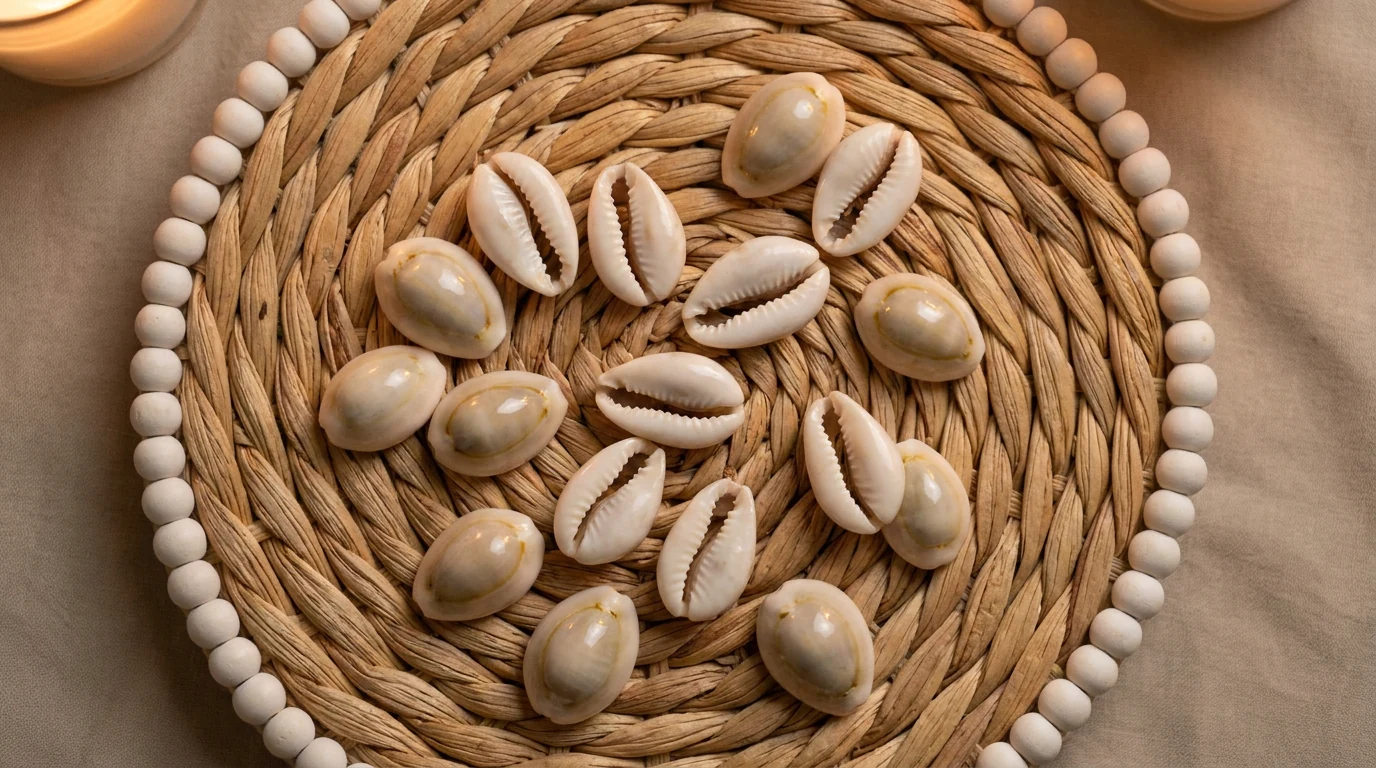
The table is not the same everywhere. The Portuguese Wikipedia swaps 13 and 14 and calls 16 Ejibê. In Oyó, in Nigeria, the anthropologist William Bascom recorded another numbering in the book Sixteen Cowries, from 1980. There, eight open búzios give Eji Ogbe, sixteen give Irete, and there is also Opira, with no open búzio.
The same number of shells can have a different name depending on the house and the nation. That is why the odu is read at the table, with the priest, and not in a loose table.
Who throws the odu of the year, and when
Three traditions announce a sign for the year, each in its own time.
In Ilé-Ifẹ̀, in June
The Yoruba year begins between the end of May and the beginning of June, with the Ifá festival. Who consults Ifá to open the year is the Araba Agbaye, the chief priest, as reported by the Nigerian Tribune in 2024. The rite takes place in Òkè-Ìtàsẹ́, in Ilé-Ifẹ̀.
The temple Ilé Awo keeps the list of the odus revealed there. The most recent:
- 2023: Irosun Osa
- 2024: Otura Ogbe
- 2025: Òtúrúpọ̀n Méjì
- 2026: Òsá Méjì, revealed on June 7, with Ìrè Ajé, the blessing of prosperity
In Cuba, on New Year's Eve
In Cuba, the odu of the year is called Letra do Ano. The commission bearing the name of the babalaô Miguel Febles Padrón was founded on December 31, 1986, according to IPS Cuba. The anthropologist Jenny Pantoja Torres, in CubaxCuba, situates the beginning of the rite at the end of the 19th century, with the babalaô Remigio Herrera.
The letra comes out with a fixed structure: a ruling sign, two witnesses, a ruling orixá, an attendant, and the flag of the year. Since 2021, two organizations draw separate letras. For 2026, the Asociación Cultural Yoruba gave the sign Ogunda Otrupón, and the Comissão Febles Padrón, Ofun Nabe. Both pointed to Oggún as the ruling orixá.
In Brazil, the first letra of the year was taken in 1996, by the Cuban babalaô Rafael Zamora Díaz, according to the USP dissertation.
In Candomblé, at dawn on January 1st
In Candomblé, the New Year's game is made with the house's búzios, and what it reveals applies to that community. In the houses of Salvador heard by the press, the game happens at dawn on January 1st, or in the first days of the year. The complete calendar is in ruling orixá of 2027.
Is it possible to calculate the odu by the date?
The search for "how to calculate the odu of the year" always brings the same recipe: add the digits of the date and look for the number in the table of 16. In 2026, the calculation would be 2 + 0 + 2 + 6 = 10, the odu Ofun. A promotional site used this sum to link 2026 to Oxalá (Obatala), and it became one of the year's guesses, as shown in ruling orixá of 2026.
Ifá priests contest the account. The babalaô Marcos Arino, from Rio de Janeiro, wrote on his blog about Ifá:
“Candomblé developed a meaningless habit of determining the birth Odu through numbers.” (Marcos Arino, babalaô, 2015)
He says that this relationship “was invented outside of Ifá” and risks that it emerged in the New World. The author himself warns that this is his deduction.
There are two more problems in the account:
- The calendar. Tom Oloorê, on the site Historiando Axé, calls the practice “Cabala de Odu”. He reminds that it uses the Gregorian calendar, while Yoruba culture has a four day week.
- The table. As the numbering changes between Brazil, Nigeria, and Cuba, the same sum leads to different odus.
Where there is field record, the personal odu appears in the game. In the house of Ifá in Rio de Janeiro studied in the USP dissertation, the birth odu is taken on the third day of initiation, with two witness odus.
Odu of the year, ruling orixá, and birth odu
They are three different things, which the internet usually mixes up.
- Odu of the year: the sign that the oracle gives for the cycle that begins, taken by priests at the opening of the year.
- Ruling orixá of the year: the orixá that the house understands conducts that year. In Candomblé, it comes from the same New Year's divination and is valid for the community.
- Birth odu: the personal sign of each one, taken in the game, generally within an initiation.
None of the three replace your head orixá, which is also revealed in the divination. The steps for this are in how to know which is my orixá.
Frequently asked questions
What is the odu of the year 2026?
It depends on the tradition. In Ilé-Ifẹ̀, the Yoruba odu of the year revealed on June 7, 2026, is Òsá Méjì. In Cuba, the Letra do Ano of 2026 gave Ogunda Otrupón by the Asociación Cultural Yoruba and Ofun Nabe by the Comissão Febles Padrón. In Candomblé, each house draws its own in the New Year's divination.
How to calculate the odu of the year?
The odu of the year is not calculated: it is drawn in the divination by a priest. The sum of the digits of the date circulates on the internet, but babalaôs like Marcos Arino call it a meaningless habit. The numbering of the odus also changes between Brazil, Nigeria, and Cuba, which makes the same sum give different signs.
How many odus exist?
In Ifá, there are 256 odus, according to UNESCO: 16 main and 240 minor, combined. In the Candomblé cowrie-shell divination, the reading starts from 16 odus, counted by the number of shells that fall open. The names vary from one nation to another.
Are Odu and orixá the same thing?
No. Orixá is the deity worshipped. Odu is the sign of the oracle, with its verses and advice. In the Letra do Ano of Cuba, the two appear separately: a ruling sign and a ruling orixá. In 2026, the Asociación Cultural Yoruba gave the sign Ogunda Otrupón and the orixá Oggún.
For the game table or for the New Year's turn in your house, the shop in Extrema-MG has búzios, obi and orobô, seven-day candles, quartinhas and pano da costa. Call on the Joia Mística WhatsApp, with delivery to all of Brazil.
References
- UNESCO. Ifa divination system
- SANTOS, Jamile Dantas Nascimento. Dissertation, USP, 2023. Culto a Ifá no Brasil: tempo e destino numa tradição afro-cubana
- BARCELOS, Renata. Orisa Brasil, 2017. Order and names of the Odu Eérìndínlógún
- BASCOM, William. Indiana University Press, 1980. Sixteen Cowries: Yoruba Divination from Africa to the New World
- Nigerian Tribune, 2024. Ooni of Ife, Araba Agbaye to usher in Odun Ifa Agbaye
- Ilé Awo. Oke Itase 2025 and Oke Itase 2026
- IPS Cuba, 2015. Comisión de la Letra del Año Miguel Febles Padrón
- PANTOJA TORRES, Jenny. CubaxCuba, 2025. Letra del año: designio de los orishas para Cuba?
- ARINO, Marcos. Òrúnmìlà Ifá, 2015. Odù de nascimento
- OLOORÊ, Tom. Historiando Axé, 2024. How to discover my orixá by birth date in Candomblé?