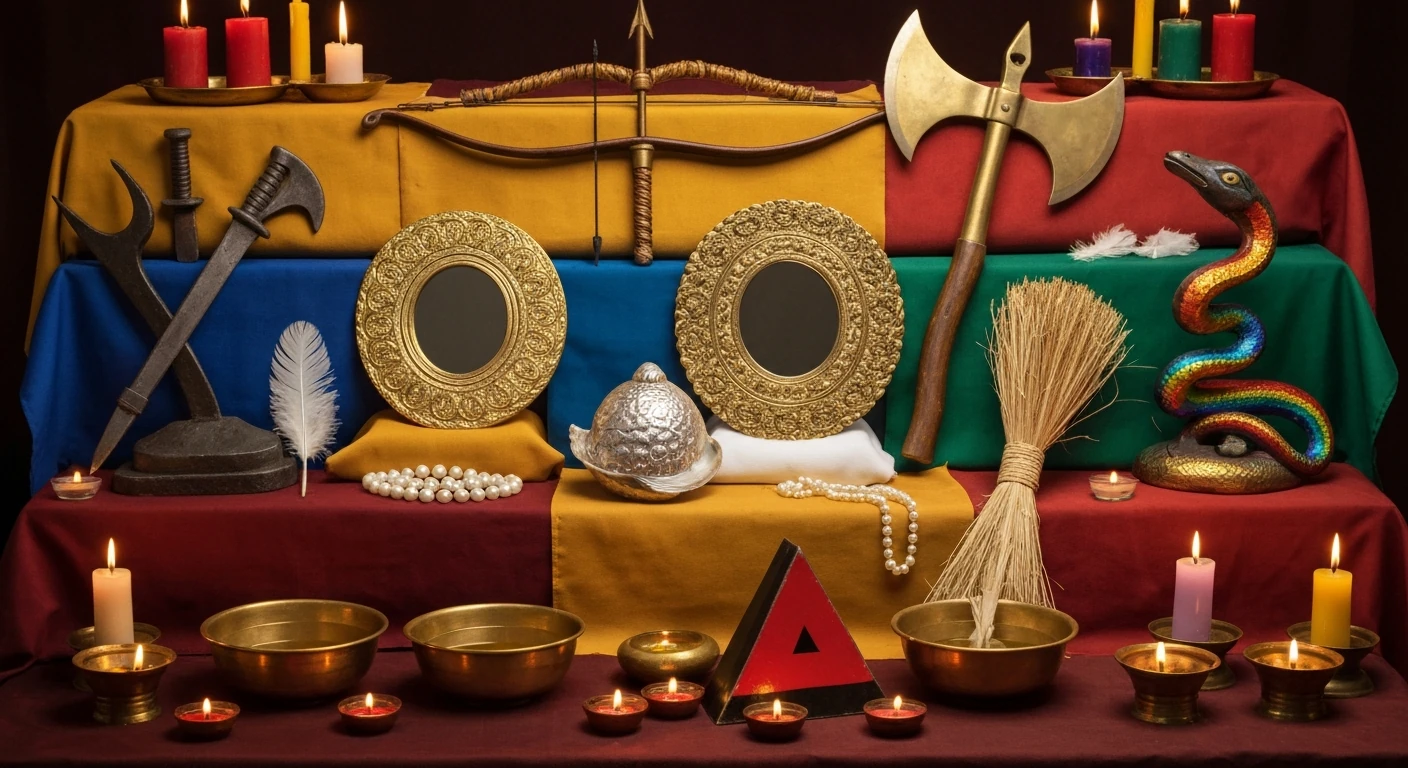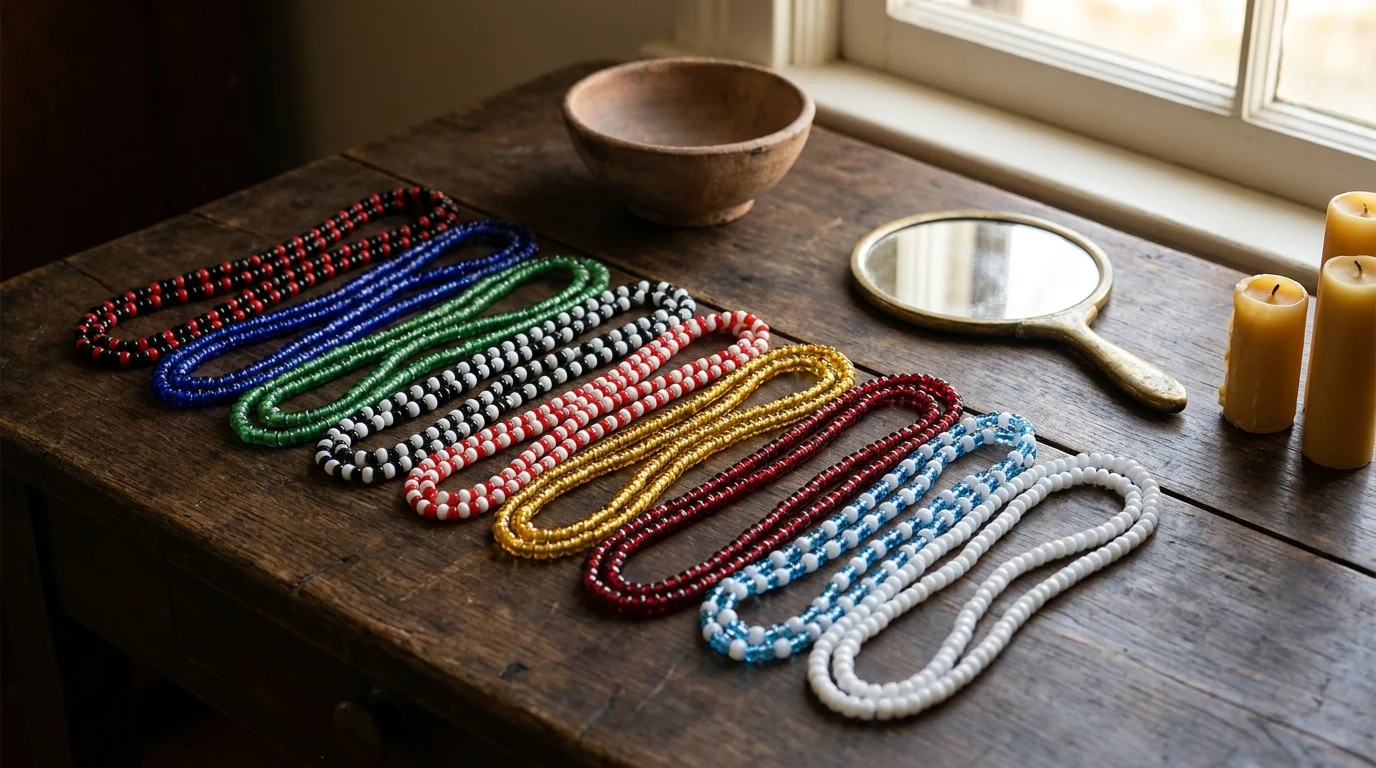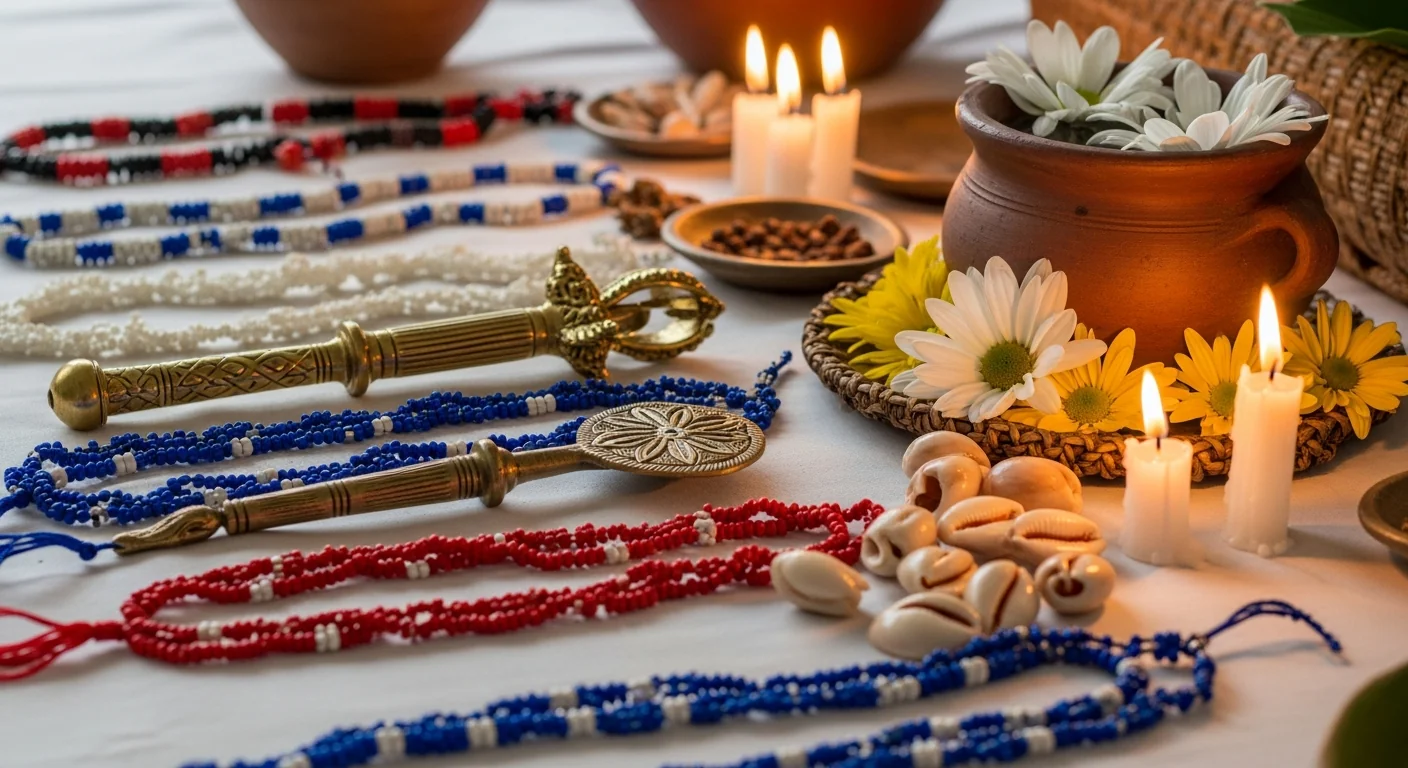
Knowing which is your head orixá is one of the first desires of those who approach Afro-Brazilian religions. The question is legitimate, but the true answer does not come from an internet test or a zodiac sign: it comes from the jogo de búzios, performed by a pai or mãe de santo. Even so, tradition recognizes signs that help a person perceive, even before confirmation, the energy that seems to rule their life.
This guide gathers seven signs that usually point paths, explains why only the terreiro confirms, and shows what does not determine your Orixá, so you do not get lost in myths.
What it means to have a "head orixá"
In Yoruba cosmology, each person is born linked to an orí, the spiritual head, the center of one's destiny. The Orixá that rules this orí is what we call the head orixá, or owner of the head. He is the force of nature that most resembles your temperament, your way of loving, of reacting, and of following life.
It is not a personal choice. You do not decide to be of Ogum (Ogun) because you like blue, nor of Oxum (Oshun) because you admire the beauty of waterfalls. The head orixá already comes with you, and the role of the religion is to reveal what has always been there. For this reason, researcher Reginaldo Prandi observes that, in the mythology of the Orixás, human beings reflect the passions, virtues, and conflicts of the deities from whom they descend.
Many people actually have a ruling pair: a front orixá and an adjunct orixá (called juntó). This combination explains why two people of the same Orixá can seem so different from each other.
Why only the jogo de búzios confirms
Before the seven signs, a truth that needs to be said clearly: no isolated sign defines your orixá. The signs are clues, not a verdict.
What confirms it is the cowrie-shell divination (jogo de búzios) (the merindilogun), read by a prepared priest. It is in the reading that the Orixás manifest and respond, within the liturgy of the house and the nação (ketu, jeje, angola, or the umbanda line). Therefore, be wary of any site, app, or person who promises to reveal your Orixá "instantly" and "with absolute certainty." Afro-Brazilian spirituality is preparation and responsibility, not instant divination.
Tip: observe the signs with care, note what you feel, but take these perceptions to a trusted house. Self-knowledge opens the door; the divination reading (jogo) confirms the path.
It is also worth remembering that umbanda and candomblé treat this revelation in different ways. It is worth understanding the difference between umbanda and candomblé before seeking a terreiro.
7 signs that may indicate your orixá
These are the signs that appear most in oral tradition and the experience of the terreiros. Read them as an invitation to observation, not as a closed diagnosis.
-
Temperament and personality. The strongest trait. People ruled by Ogum tend toward determination and struggle; those of Oxum, toward sweetness and diplomacy; those of Iansã (Oya), toward courage and movement; those of Xangô (Shango), toward a sense of justice. Ask yourself which energy your way of being resonates with most.
-
Affinity with elements of nature. Feeling at home before the sea, rivers, forest, fire, or quarries usually reveals affinity. Someone who renews themselves near a waterfall may have a connection with Oxum; someone who breathes deeply just by looking at the sea, with Iemanjá (Yemoja).
-
Patterns that repeat in life. Constant battles and hard-won victories speak of Ogum. Paths that always open at the last minute remind one of the presence of Exu (Eshu). Rebirths after great losses refer to Omulu and Nanã (Nana Buruku).
-
Recurring dreams and intuitions. Repeatedly dreaming of water, swords, storms, snakes, or forests can be a calling. Tradition reads dreams as one of the ways the Orixá communicates with the child.
-
Attraction to colors, foods, and symbols. Feeling attracted to certain colors (the blue of Ogum, the yellow of Oxum, the white of Oxalá (Obatala)) or to specific ritual foods is a light indication, which gains meaning when added to the others.
-
Health and sensitive points of the body. Each Orixá rules parts of the body. Old tendencies toward problems in the same region (stomach, joints, blood, skin) enter, with great care, into the reading of the elders.
-
The way you love and relate to others. The way you care, argue, and reconcile reveals energy. Maternal zeal points to Iemanjá or Nanã; intense passion, to Oxum or Iansã; protective firmeza, to Ogum or Xangô.
None of these signs, alone, close the account. It is the set that suggests a path to be confirmed.
How each Orixá usually expresses themselves in their children
As a matter of guidance, see how some Orixás frequently appear in the temperament of their children. These are general portraits of tradition, not rigid rules:
- Ogum: warrior, hardworking, impatient with injustice, opens paths with determination.
- Oxum: affectionate, diplomatic, linked to love, beauty, and prosperity.
- Iansã: courageous, intense, mistress of the winds, does not flee from change.
- Xangô: just, leader, firm, defends those he loves with vigor.
- Omulu and Obaluaê: resilient, reserved, profound, knows healing and transformation.
- Nanã: ancestral, patient, wise, connected to the mud that gives rise to life.
Notice that many of these traits coexist in the same person. That is where the Orixá juntó comes in, the second governing force, which nuances the child's temperament.
What does NOT determine your Orixá
Just as important as recognizing the signs is debunking the myths. They do not determine your head orixá:
- Your zodiac sign. Astrology and Orixás are different systems, from different origins. There is no "Aries Orixá".
- Your date of birth. The Orixá calendar celebrates each divinity on its own dates, but being born on an Orixá's day does not make them the owner of your head.
- The color you like most. Liking blue does not make anyone a child of Ogum. Aesthetic preference is not spiritual governance.
- The Orixá of a relative. Having a ruling orixá is not inherited like a surname. Each head has its own path.
Treating these elements as proof creates confusion and frustrates those who are truly seeking. Orixás are personified forces of nature, and reading your energy requires liturgy, not shortcuts. It is worth reading the background on what Orixás are to establish this base.
The safe path: from the sign to confirmation in the terreiro
If the signs awakened something in you, the next step is to look for a trusted casa de axé. There, two paths usually lead to revelation:
The cowrie-shell divination is the consultation in which the priest reads the response of the Orixás and identifies the owner of one's head, often along with the accompanying Orixá. It is the method of confirmation recognized by tradition.
The bori (from bo orí, "to feed the head") is the ritual of strengthening the orí. It calms, balances, and prepares the person, and in many houses it precedes or accompanies the discovery of the head orixá.
This careful structure is part of what makes the terreiros a living heritage. Not by chance, IPHAN has already recognized several Candomblé terreiros as Brazilian cultural heritage, safeguarding knowledge that has crossed centuries.
Frequently asked questions
Can I discover my Orixá alone at home?
You can observe signs and suspect a regency, but there is no way to confirm it alone. The definition of the head orixá comes from the cowrie-shell divination, performed by a Pai or Mãe de santo within the liturgy of a house. The signs are an invitation to seek, not a final verdict.
Can I have more than one Orixá?
Yes. Most people have a front Orixá (the owner of the head) and an accompanying Orixá or adjunto, who accompanies them. This dual regency explains why two children of the same Orixá can have very different personalities from each other.
What is the difference between the head orixá in Umbanda and in Candomblé?
In Candomblé, the head orixá is revealed in the divination and established in rites such as the bori and, later, the initiation. In Umbanda, there is also talk of the ruling orixá, and development happens in the giras. They are distinct traditions, with their own liturgies.
Does dreaming of an Orixá mean that they are mine?
Not necessarily. Recurring dreams with elements of an orixá can be a call or a message, and they enter as one among several signs. Alone, they do not confirm regency. Take the dream to your spiritual leader for the correct reading.
Where to find items to honor your orixá
At Joia Mística Laroyê, you find what you need to connect to the energy of your orixá with respect and devotion:
- Candles in the colors of each orixá (blue, yellow, white, red and more) for firming and requests
- Bead necklaces (guias) and strings of beads in the colors of the deities
- Herbs and baths dedicated to each energy, from cleansing to strengthening
- Statues and elements of assentamento for your altar
- White candles for the bori and head firmings
Visit our physical store in Extrema-MG or talk to us via WhatsApp and we ship all over Brazil. And remember: the item helps with the connection, but the terreiro is who confirms your orixá.
To delve deeper into the richness of this mythology, it is worth the academic reading of Reginaldo Prandi on the mythology of the orixás, one of the greatest Brazilian references on the subject.
References
- Agência Brasil (EBC): candomblé terreiro in the Recôncavo Baiano is listed by IPHAN
- SciELO, Reginaldo Prandi: academic article on the mythology of the orixás
=== IMAGE PROMPT === Serene Afro-Brazilian spiritual altar symbolizing the connection to one’s guardian Orixá. Multiple ritual candles in distinct colors (blue, yellow, white, red), strands of colorful beaded necklaces (guias) laid on white cloth, fresh natural elements like river water in a clay bowl, green herbs, and a small mirror reflecting candlelight. Warm golden lighting, wooden surface, sacred and contemplative atmosphere. Photorealistic style, rich saturated colors, shallow depth of field, no people visible, no faces, 16:9 aspect ratio.