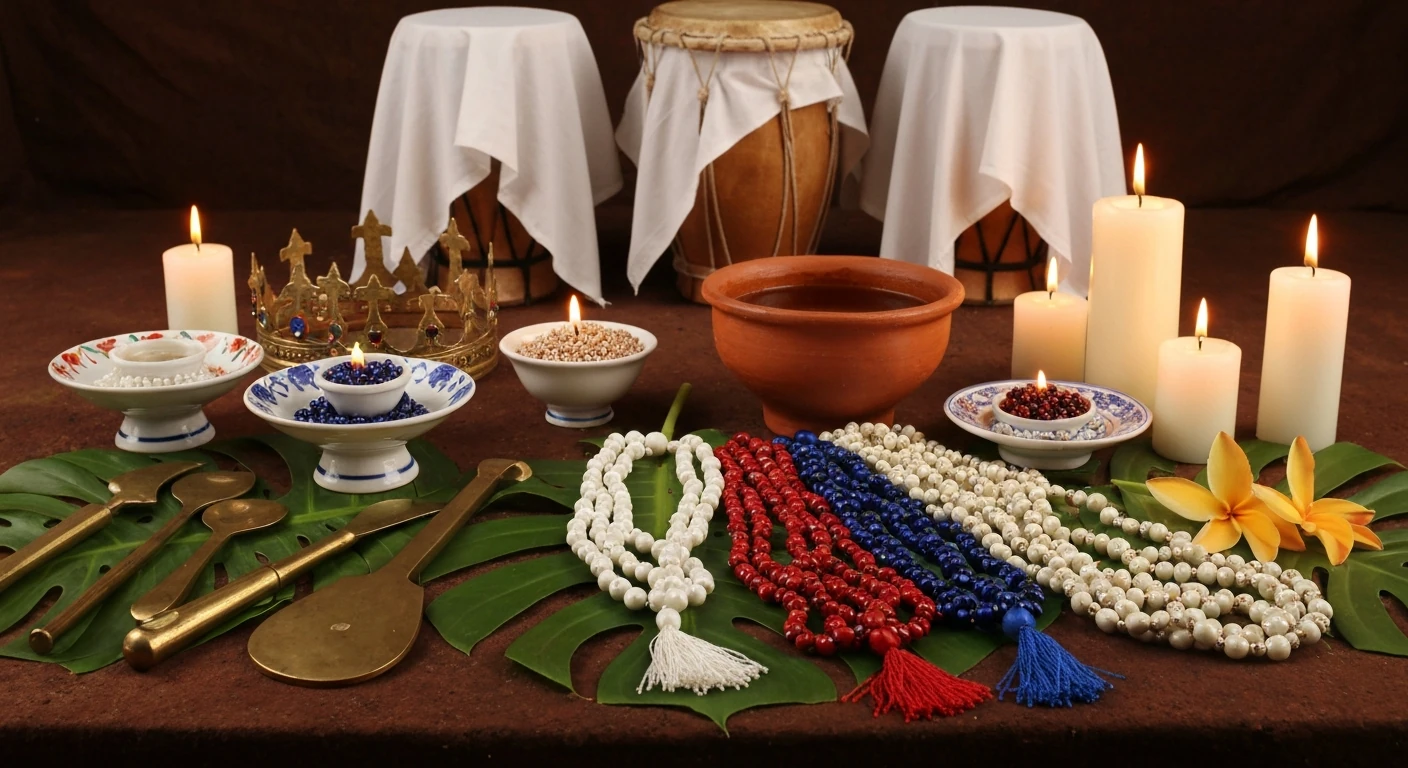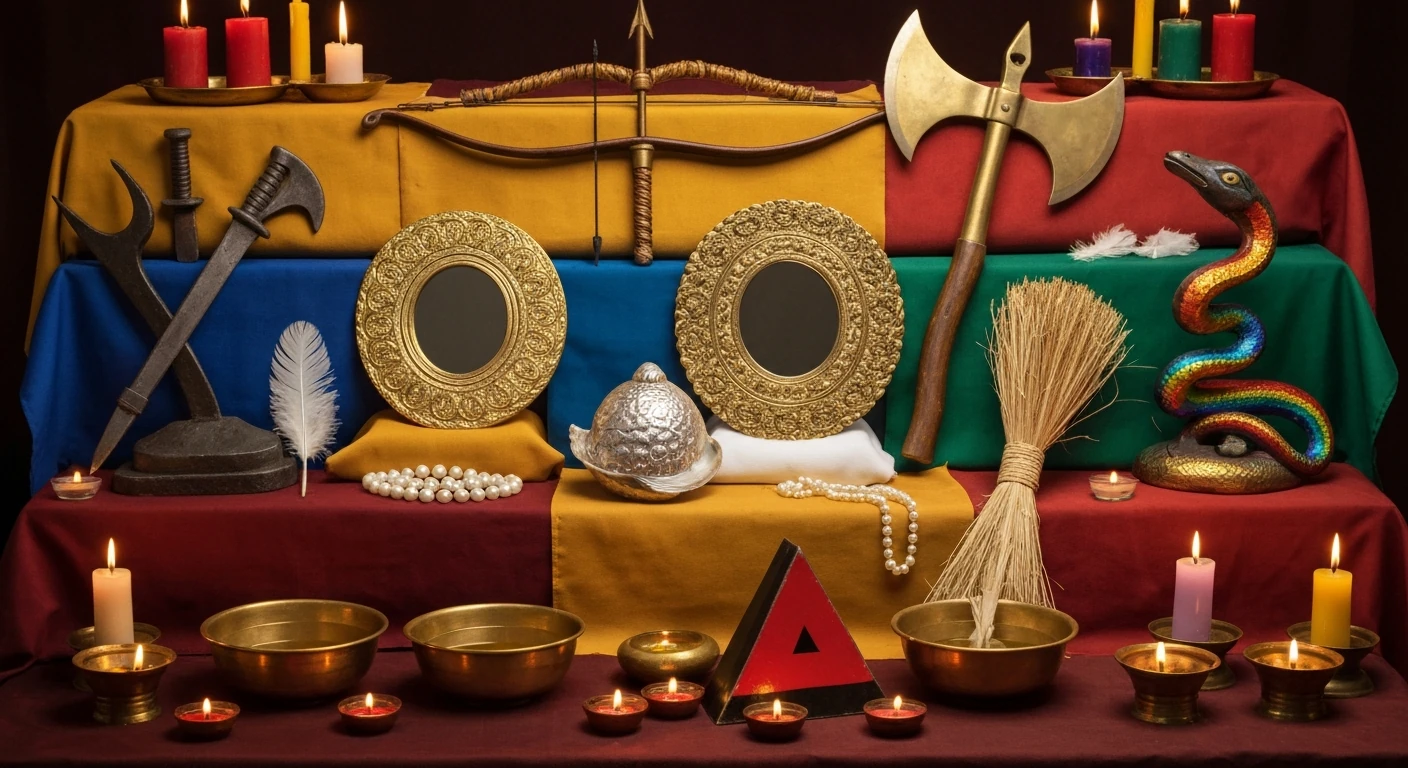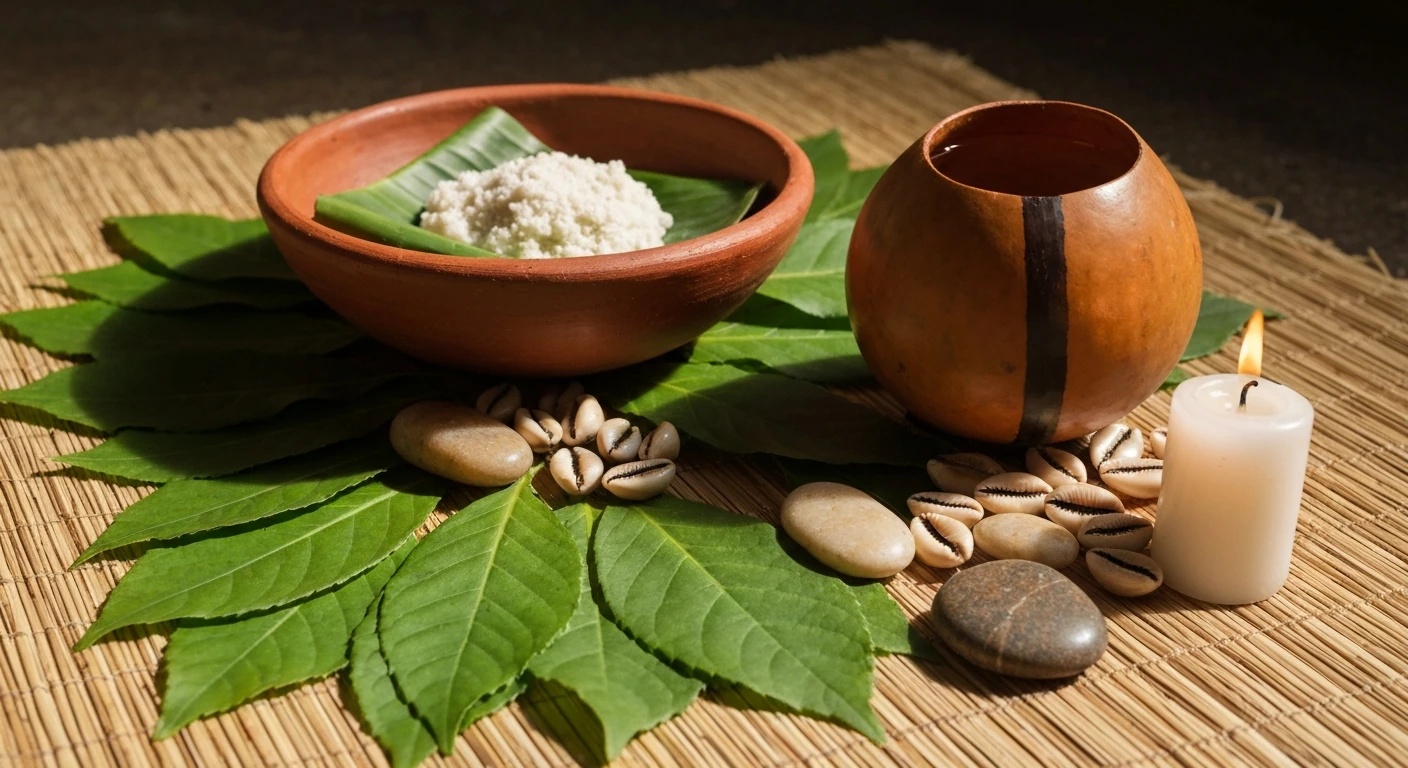
Axé is the vital force of Afro-Brazilian religions: a Yoruba word (àṣẹ) meaning power, energy, and realization, the force that animates orixás, people, leaves, and the word itself, and which is spoken as a blessing.
Do not confuse it with axé music, a carnival genre from Salvador that borrowed the name from the greeting. Here, the subject is the religious meaning: what the word means in Candomblé and Umbanda, where this force comes from, how it circulates, and why "axé!" became a greeting.
Origin: Yoruba àṣẹ | Means: vital force, power of realization | As a greeting: "so be it", similar to amen | In the Angola nation: nguzu
What does axé mean?
Axé, from Yoruba àṣẹ, is the vital force, the energy of realization that animates and connects everything that exists. In the Yoruba vision, this power was given by Olodumaré, the supreme being, to all of creation: orixás, ancestors, people, animals, plants, stones, rivers, and even the spoken word. Without axé, nothing is fulfilled.
More than "energy", axé is the dynamic principle that shapes, develops, moves, and transforms. The anthropologist Juana Elbein dos Santos, in her classic work on the nàgô, described axé exactly like this: the force that realizes, that makes things happen. That is why it is the pillar of the entire religion, in Candomblé and also in Umbanda.
Axé is not static. It is reinvigorated with rituals and offerings, and it weakens when the precepts and prohibitions of tradition are disrespected. Caring for axé is, at its core, caring for life.
The same word, therefore, appears with several meanings. It is useful to have the chart on hand:
| Meaning | What does it mean | Example of use |
|---|---|---|
| Vital force | The energy of realization given by Olodumaré to everything that exists | This leaf has axé |
| Greeting | Blessing and a wish for strength, in the sense of "so be it" | Axé to you! |
| Foundation of the house | The assentamentos and sacred objects that hold the force of the orixá | The axé of the house |
| Lineage of the terreiro | The house and the tradition it transmits | Ilê Axé Opô Afonjá |
| Musical genre | Axé music, the rhythm of the 1980s Bahian carnival | Axé band |
Meaning of axé in Umbanda
In Umbanda, axé has the same basic meaning as in Candomblé: the sacred force that circulates among people, spirits, elements, and rituals and that gives life to the spiritual ritual work. The word is also used as a greeting and blessing, to end a prayer or to wish strength to someone, like an amen.
A recent study on the theme describes axé, central in the cosmologies of Candomblé and Umbanda, as a potency that circulates among bodies, objects, words, spirits, and rituals, and that is updated in practice, in spirit incorporation, and in exchange. In other words: in the gira, axé is in the sung pontos (sacred chants), in the herbs of the baths, in the bead necklaces, and in the presence of the spirits, and not in an abstract idea of "energy".
Umbanda, however, is not a single block. The weight that each house gives to the concept, and the vocabulary it uses in daily life, varies from terreiro to terreiro. Those who want to understand the religion in its entirety can start by what is Umbanda.
Where does axé come from
Axé is not loose in the air. It concentrates in specific elements, which function as its carriers and vehicles. Knowing these sources helps to understand why each gesture in the terreiro has a meaning.
- The leaves and the herbs: the raw material of the sacred. It is through the leaf that the force of the orixá manifests in the world, and for this reason, the mastery of them belongs to Ossaim, the lord of the herbs.
- The ritual food: each orixá has their foods, and this force is distributed as blessed food in the house's festivities. See how an offering to the orixás works.
- The word and the chant: the speech that realizes has axé. The hand that blesses, the oríkì, the prayers and the chants carry this force, which is transmitted even through the breath, the reason for so many ritual silences.
- The head, the orí: each person's head is the receptacle of the axé of their orixá, strengthened in rituals such as the bori.
“Without leaf there is no axé.” The saying of the terreiros summarizes everything: vital force needs a body, a matter, a gesture to manifest. It is not abstract, it is planted, eaten, chanted and transmitted.
There is also a source that belongs to the foundation, to the world of the initiate: the ebó, the offering in its deepest sense, which reinvigorates the axé. This is not spoken about in detail in a public text. What can be said is that the axé circulates through the offering, and that these foundations are conducted by the babalorixá or by the ialorixá, never on their own.
How axé circulates and is transmitted
If axé is a force, it needs to flow. And it flows, above all, from person to person and from generation to generation, within a precise structure.
The main form of transmission is the iniciação, in which the axé passes from the elder to the younger, and the head of the initiate becomes the seat of that orixá. There is also the assentamento, in which the axé is fixed in the sacred objects that remain in the peji, the altar of the house. This concept is so important that the word “axé” also gives name to the set of these foundations.
Each house, in fact, has its own axé. It is said that it is “planted” at the foot of the central post of the terreiro and, from there, it is transmitted to everything and everyone who belong to that house. This is why many roças carry the word in their name, like the famous Ilê Axé Opô Afonjá. Axé is, at the same time, the force, the objects that guard it and the lineage of the house itself.
This circulation obeys the hierarchy and constant exchange. The axé flows between the children of santo and those who care for the house, in a movement of redistribution that keeps relationships alive. Those who close themselves off and do not exchange, stagnate.
”Axé!”: the force that became a greeting
You must have already heard someone end a speech with a warm “axé!”. In this use, the word functions as an affirmation and a blessing, equivalent to the “amen” or “so be it” of Christians. “Axé” is said to end a prayer, to greet those who arrive and those who leave, to wish strength, energy, and protection to someone.
Over time, the word moved beyond the terreiros and reached the streets, music, and capoeira. “Sending an axé”, “much axé to you”: these are legitimate and beautiful uses, but it is good to know that they are a secularized extension of something that, at its origin, is deeply religious and sacred.
Axé and axé music: what is the relationship
The axé music is a genre that emerged in Bahia in the 1980s, in the street parties of the Salvador carnival, mixing samba-reggae, frevo, ijexá, and other rhythms, some of them coming from Candomblé. According to Wikipedia, the name was coined in 1987 by journalist Hagamenon Brito, who joined the greeting “axé”, already current in Salvador's musical scene, with the English word music, initially in a derogatory tone.
In other words: the musical genre took the name of the religious greeting, and not the other way around. When someone asks what axé is in the sense of faith, the answer is the vital force of the orixás; the carnival rhythm is another conversation.
What axé is not
Precisely because it fell into popular taste, axé became a target of confusions that are worth clearing up.
Axé is not luck, nor a stroke of magic that solves life in a spiritual pass. It is not "positive energy" in the generic sense that self-help vocabulary uses. Axé is a precise Yoruba theological concept, linked to Olodumaré, the orixás, and an entire network of rituals and foundations. Reducing it to "good vibes" is to empty out centuries of tradition.
And axé is not a commodity. You do not buy "an axé" like someone buys an amulet. It is received, cultivated, and transmitted within the religion, through the path of respect and initiation. To recognize this is to recognize these traditions as what they are: sacred.
Axé in the different nations
As with almost everything in Candomblé, the concept gains names and nuances according to the nation.
In the ketu nation, of Yoruba root, the term is axé itself (àṣẹ), with all the theology we have seen. In the angola nation, of Bantu root, the vital force linked to the inquices is called nguzu, a concept from Central Africa with a very close meaning, as seen in the worship of nkise. Meanwhile, the jeje nation, from the Fon trunk, worships the voduns and has its own notion of sacred force.
They are distinct traditions, and not a single block. What unites them is the certainty that there is a force that animates life and that needs to be cultivated with respect.
Why understanding axé matters
Understanding this force changes the way of looking at Candomblé and Umbanda. Instead of a heap of meaningless rituals, what is revealed is a coherent worldview, in which every leaf gathered, every chant intoned, and every gesture of respect has a reason for being: to feed and circulate the energy that sustains life.
For those who are initiated in the religion, caring for this force is a daily commitment, made of precept, exchange, and reverence. For those who arrive from outside with sincere curiosity, understanding the concept is the first step toward seeing these Afro-Brazilian religions with the respect they deserve, far from prejudice and caricatures. In the end, speaking of axé is speaking of life in motion.
Frequently asked questions
What does the word axé mean?
Axé, from the Yoruba àṣẹ, means vital force, energy of realization, the power that makes things happen. In Afro-Brazilian religions, it is the principle that animates and connects everything: orixás, people, nature, and the word itself. It is also used as a greeting, in the sense of "so be it".
What does axé mean in Umbanda?
In Umbanda, axé is the sacred force that circulates among people, spirits, herbs, and rituals, the same notion of vital force inherited from Candomblé. The word is also spoken as a greeting and blessing, to close a prayer or wish strength to someone. The exact use varies from house to house.
What is axé in Candomblé?
In Candomblé, axé is the sacred force that comes from Olodumaré and manifests in the orixás, in the leaves, in the foods, in the people, and in the ritual objects. It is cultivated and transmitted through initiation, through the settlements, and through the offerings, and it is what sustains the spiritual life of each house.
Is axé the same as amen?
As a greeting, yes, axé functions in a similar way to the Christian amen: it is an affirmation that seals a prayer or a wish, in the sense of "let it so happen". But, in the tradition, axé is much more than that: it is the vital force itself, and not just a closing word.
What is the origin of the word axé?
The word comes from the Yoruba àṣẹ, the language of the peoples of West Africa who gave origin to Candomblé Ketu. It crossed the Atlantic with enslaved Africans and remained alive in Brazilian terreiros. In the Angola nation, of Bantu roots, the equivalent concept is nguzu.
Does Axé music have to do with religion?
Only in the name. Axé music is a genre of the Salvador carnival from the 1980s, named in 1987 by the journalist Hagamenon Brito, who joined the greeting "axé" with the English word music. The religious meaning, of the vital force of the orixás, is much older.
Is Axé positive energy?
Not exactly. Although it resembles the idea of energy, axé is a precise religious concept, linked to the orixás and an entire ritual structure. Reducing it to "good vibes" or "positive energy" from self-help erases its sacred meaning. Axé is vital force, not a cliché.
Where to find items for your axé
At Joia Mística Laroyê, you find what you need to care for your spiritual life:
- Herbs and sacred leaves: the raw material of axé
- Bead necklaces and beads: in the colors of each orixá
- Quartinhas and alguidares: for the assentamentos
- Candles and incense: for prayers and offerings
Visit our shop in Extrema, Minas Gerais or talk to us via WhatsApp and we ship all over Brazil.
References
- Wikipedia: entry about axé in Candomblé
- Candomblé: explanatory article about what axé is
- Geledés: report on axé as the force that realizes
- Meanings: meaning of axé
- Babbel Magazine: the origin of the word axé
- Wikipedia: entry about axé as a musical genre
- Marcelo Massucatto: Object a, of Axé: policies of enunciation between the couch and the terreiro, Brazilian Journal of Homoculture Studies, vol. 8, 2025