When someone says they are from Candomblé, the next question within the community is almost always: "from which nation?" It is because Candomblé is not a single and uniform tradition: the nations of Candomblé are the great branches that organize the worship, each bringing from the African continent a language, a pantheon, and a unique way of playing, singing, and worshipping. The three most widespread in Brazil are Ketu, Jeje and Angola.
This guide shows what a nation is, where Ketu, Jeje and Angola come from, what changes between them and why orixá, vodun and inquice are not the same thing with different names.
What is a nation in Candomblé
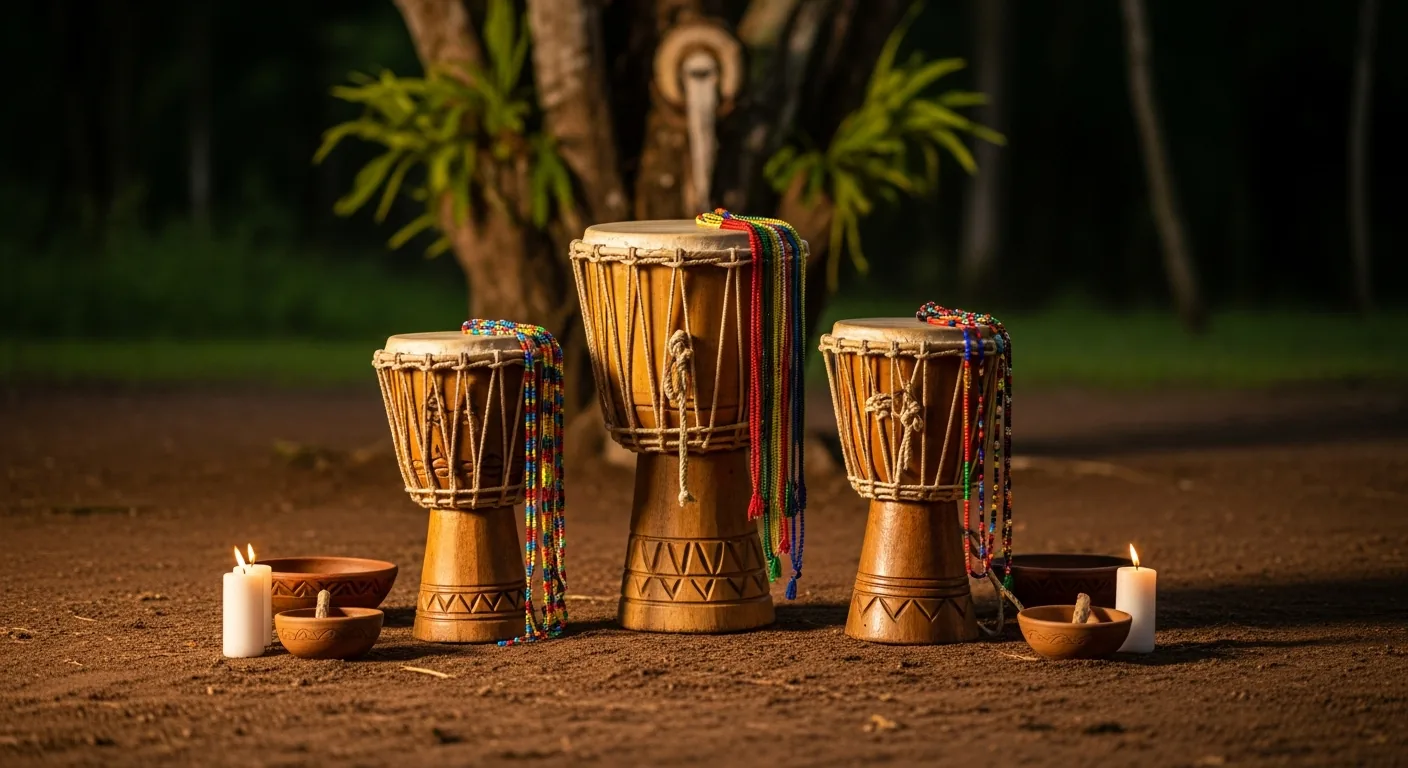
A nation is the liturgical tradition that differentiates one branch of Candomblé from another. It is defined by four pillars: the African origin of the people who brought it, the liturgical language used in chants and prayers, the deities worshipped and the form of the ritual: the atabaque beats, the dances, the foundations.
The nations of Candomblé emerged in Brazil from the diaspora forced by slavery. Peoples from different regions of Africa were gathered in the same territories and reorganized their worships in terreiro communities. From there, the nations were born, not as a Brazilian invention, but as a possible reconstruction of the religious memory of each people in new soil.
There is no fixed number of nations, and they are not isolated compartments: there are houses that combine elements from more than one. In addition to Ketu, Jeje, and Angola, there are Ijexá, Efã, Egbá, and the Caboclo lineage, among others. The three main ones, however, concentrate most of the Brazilian terreiros.
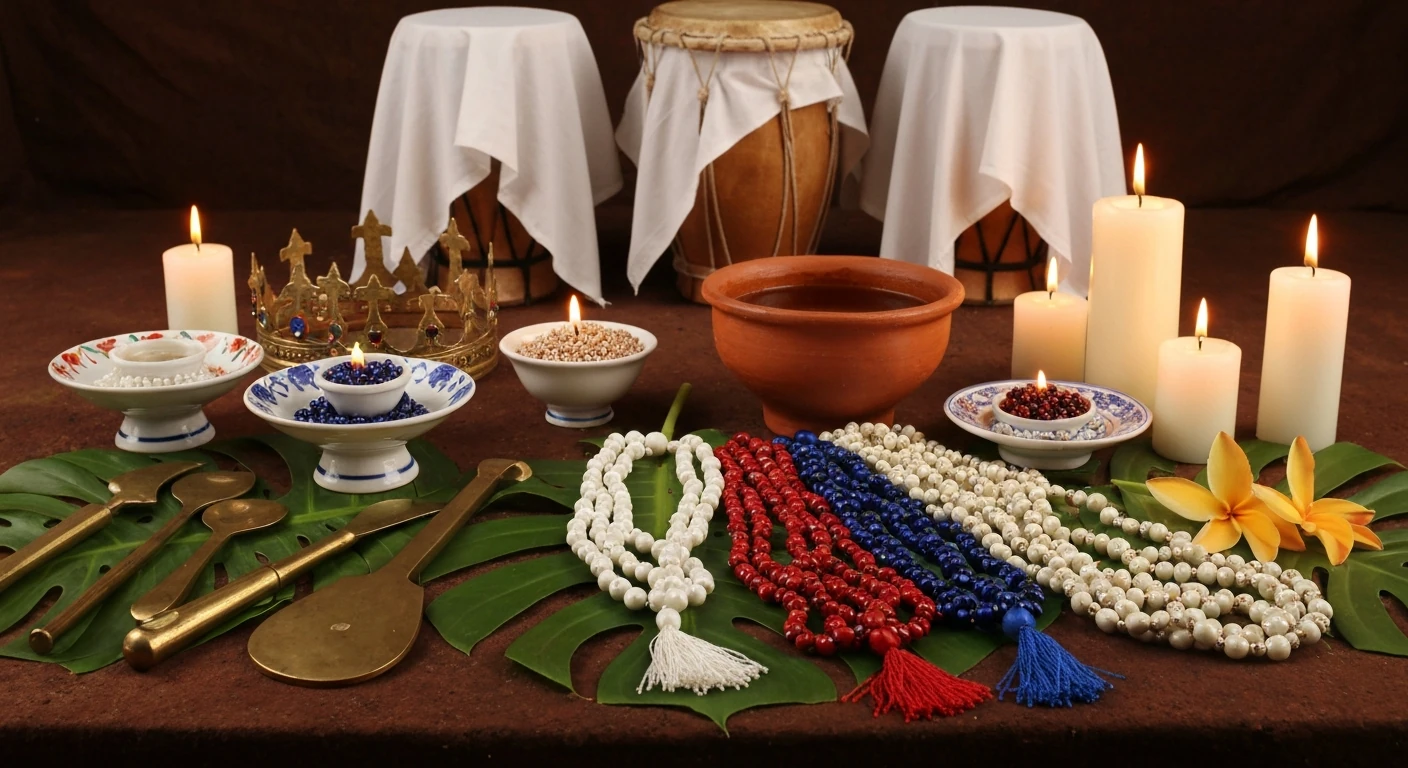
Ketu (nagô): the Yoruba nation
The Candomblé Ketu, also called nagô, has roots in the Yoruba peoples of the region of the ancient kingdom-city of Ketu, between present-day Nigeria and Benin. It is the most widespread nation in Brazil and the one that most preserved the classic Yoruba pantheon, as pointed out by the Geledés portal on Candomblé Ketu.
Its liturgical language is Yoruba (Nagô), and its deities are the orixás: Exu (Eshu), Ogum (Ogun), Oxóssi (Oshosi), Ossaim (Osanyin), Obaluaê, Oxumaré (Oshumare), Xangô, Iansã (Oya), Oxum (Oshun), Iemanjá (Yemoja), Nanã (Nana Buruku) and Oxalá, under the supreme being Olorum (Olodumare) (Olodumare). The xirê (the circle of chants and dances that greets each orixá in order) is a recognizable liturgical mark of this nation.
Origin: Yoruba peoples (Nigeria/Benin) | Language: Yoruba (Nagô) | Divinities: orixás | Supreme being: Olorum
A Casa Branca do Engenho Velho (Ilê Axé Iyá Nassô Oká), in Salvador, of Jeje-Nagô roots, was the first terreiro listed by IPHAN: the Advisory Council's decision is from 1984, and the entry in the Livro do Tombo is from 1986. It is a milestone in the recognition of these traditions as Brazilian heritage.
If you are still figuring out what the religion is before comparing the branches, it is worth reading what Candomblé is and what the orixás are.
Jeje: the worship of voduns
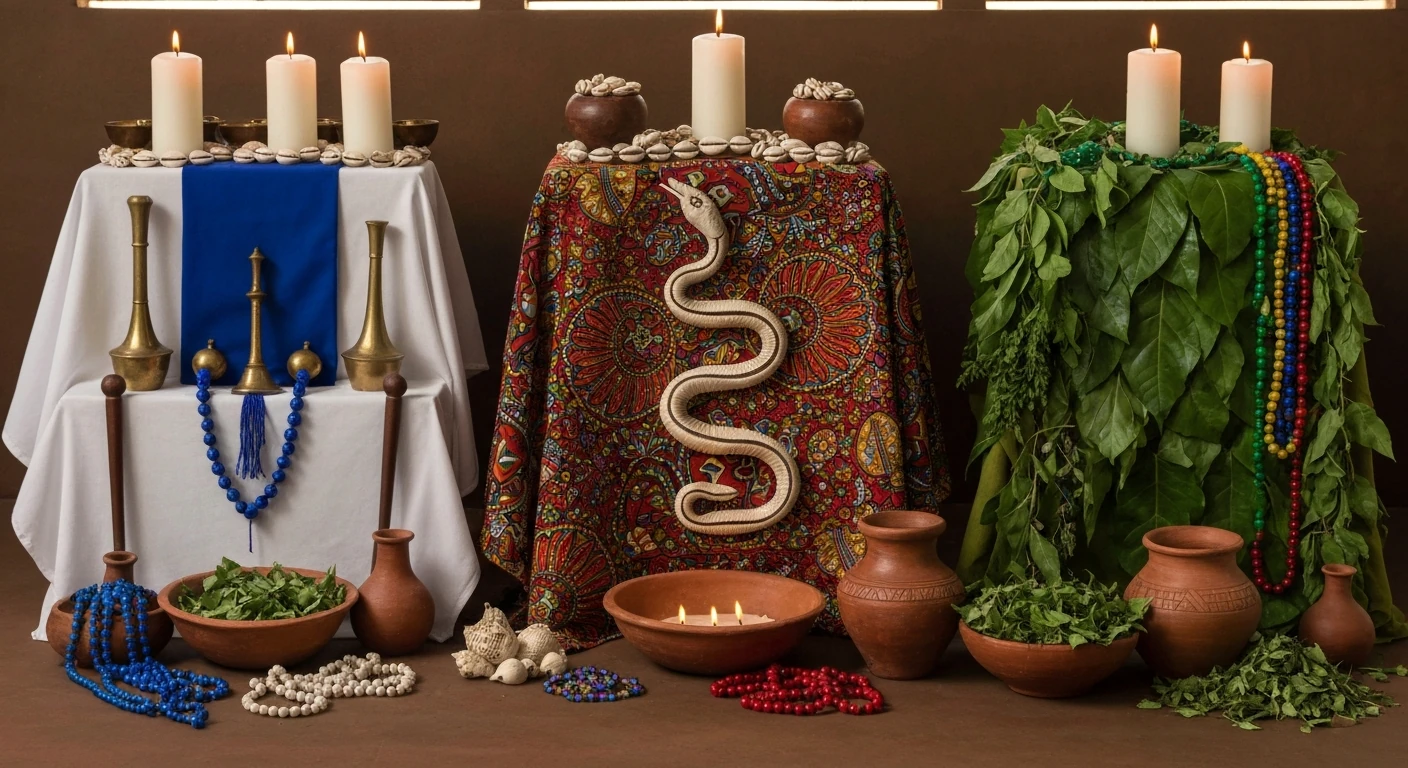
Candomblé Jeje comes from the ewe-fon peoples (fon, ewe, mahi, among others) of the ancient Dahomey (territories of present-day Benin, Togo, and part of Ghana). Its liturgical language belongs to the fon family, and its deities are not called orixás, but voduns.
The Jeje pantheon has its own figures: Legba (guardian of the paths), Sakpatá (linked to the earth and diseases), Sogbô/Quevioço (of thunder), Dan (the rainbow serpent), in addition to Loko, Agué, and Ayizan. The supreme being is Mawu, frequently associated with Lissá in the work of creation.
Origin: ewe-fon peoples (ancient Dahomey) | Language: fon (ewe-fon) | Deities: voduns | Supreme being: Mawu
The Jeje nation has a strong presence in Bahia, especially in the region of Cachoeira and São Félix, and shares kinship with the Tambor de Mina of Maranhão, another tradition of fon-ewe matrix. Each vodum has specific worship, toque, and fundamento. It is not a matter of "orixás with another name," but rather deities of their own cosmology.
Angola: the Bantu matrix
The Candomblé Angola has its origin in the bantos peoples of the regions of present-day Angola, Congo, and Mozambique. Its liturgical languages are kimbundu and kicongo, and its deities are called inquices (or nkises, from the kimbundu nkisi, "receptacle"), under the supreme being Nzambi.
Among the inquices are Aluvaiá/Bombojira, Nkosi, Mutalambô, Nzazi, Matamba, Dandalunda, Kavungo and Lembá. The Angola nation is known for its intense relationship with herbs, medicinal plants, and healing, for the worship of ancestors, and for atabaque toques and dances very distinct from the other nations.
Origin: Bantu peoples (Angola/Congo) | Language: kimbundu and kicongo | Divinities: inquices/nkises | Supreme being: Nzambi
It was the Bantu matrix that most influenced Brazilian umbanda. To learn the vocabulary and chants of this nation in detail, see the zuelas of candomblé de Angola. And if your doubt is between umbanda and candomblé as distinct religions, it is worth reading the difference between umbanda and candomblé.
Ketu, Jeje and Angola side by side
The clearest way to see the nations of candomblé is to compare them by the four pillars. The table summarizes the essentials:
| Aspect | Ketu (Nagô) | Jeje | Angola |
|---|---|---|---|
| Origin | Yoruba peoples (Nigeria/Benin) | Ewe-fon peoples (former Dahomey) | Bantu peoples (Angola/Congo) |
| Liturgical language | Yoruba (Nagô) | Fon (ewe-fon) | Kimbundu / kicongo |
| Divinities | Orixás | Voduns | Inquices / nkises |
| Supreme Being | Olorum (Olodumare) | Mawu (with Lissá) | Nzambi |
| Ritual mark | Preserved xirê and Yoruba pantheon | Own cult to the voduns | Strong connection with herbs, healing and ancestry |
An important observation: the lines of divinities are not equivalences. It is common to find tables that "translate" an inquice or vodum into an orixá, claiming, for example, that Nzazi "is" Xangô. This approximation is historical and didactic, never a theological correspondence. Each orixá, vodum and inquice has singular cult, foundation and treatment. Academic literature on the subject, from the sociology of Reginaldo Prandi to studies on the nations of Candomblé, warns precisely against confusing similarity with translation.
Orixá, vodum or inquice: the divinity has three names
The most visible difference between the nations of Candomblé is in how each one names the sacred. Orixá is the Yoruba divinity, worshipped in Ketu. Vodum is the Ewe-Fon divinity, worshipped in Jeje. Inquice (or nkise) is the Bantu divinity, worshipped in Angola.
It is not the same sacred with three labels: they are three cosmologies, each with its own history, its own language, and its own foundations. What brings the nations together is mutual respect and the common structure of the terreiro: initiation, the hierarchy of the house, the offering, the axé that is cultivated and transmitted.
A large part of what distinguishes one nation from another lies in the foundations, initiatic knowledge reserved for those who belong to the house. No public text reveals these secrets, and be wary of those who promise to "teach the foundations" over the internet.
And there is a care that applies to any nation: there is no "better," "stronger," or "truer" nation. Ketu being the most widespread does not place it above the others. Each nation carries its own axé, legitimacy, and history.
What unites the nations of Candomblé
Even though Ketu, Jeje, and Angola have distinct origins, languages, and deities, they share the same religious backbone. In all nations of Candomblé, the sacred is cultivated within the terreiro, under the leadership of a babalorixá or ialorixá, with a hierarchy of filhos-de-santo, initiation, and obligations. In all of them, what is worshipped, fed, and transmitted is the axé, the vital force that circulates among the deities, the initiates, and the community.
There is also a common historical heritage. The nations were born from the diaspora: enslaved men and women who, torn from their peoples, found in the terreiros a space for the reconstruction of identity, language, and religious memory. Keeping the worship alive was, at the same time, faith and resistance.
It is in this context that syncretism, the association between African deities and Catholic saints, is understood. It was not a fusion of beliefs, but rather a survival strategy in the face of persecution: behind the statue of a permitted saint, the forbidden orixá, vodun, or inquice was worshipped. Recognizing this historical layer is part of respecting the nations without reducing them to folklore.
Therefore, knowing the differences between Ketu, Jeje, and Angola is not about collecting curiosities, but about honoring the diversity of a heritage that survived the crossing and remains alive in Brazilian terreiros.
Frequently asked questions
How many nations of Candomblé exist?
There is no fixed number. The three main and most widespread in Brazil are Ketu (nagô), Jeje, and Angola. In addition to these, there are Ijexá, Efã, Egbá, and the Caboclo branch, among others. Some houses also combine elements from more than one nation.
What is the difference between orixá, vodum, and inquice?
They are the names of the deities in each matrix: orixá is Yoruba (Ketu nation), vodum is Ewe-Fon (Jeje nation), and inquice is Bantu (Angola nation). They are not equivalent to each other: each belongs to a cosmology, with its own worship and foundation, and the proximity of names is merely historical.
Which is the oldest nation of Candomblé?
All have African roots much earlier than Brazil, so there is no "oldest" in absolute terms. In Brazil, the Ketu nation is the most widespread and visible, and Casa Branca do Engenho Velho (jeje-nagô root) is one of the oldest historical terreiros, listed by IPHAN (decision in 1984, registered in 1986). The listed houses are listed in the text about terreiros listed by IPHAN.
How to know which is the nation of my terreiro?
The best way is to ask your babalorixá or ialorixá. Observable clues are the language of the chants (Yoruba, Fon, or Kimbundu), the names of the deities worshipped (orixás, voduns, or inquices), and the style of the atabaque beats and dances.
Is Candomblé de Caboclo a nation?
Yes. Candomblé de Caboclo is a Brazilian branch that worships the ancestral spirits of the land (the caboclos) alongside the orixás. It has a strong connection with the Banta matrix of the Angola nation and is considered one of the most genuinely formed expressions on Brazilian soil.
Is there a better or stronger nation than the others?
No. No Candomblé nation is superior, "stronger," or truer than another. Ketu, Jeje, and Angola each have their own axé, their foundations, and their legitimacy. The fact that Ketu is the most widespread in Brazil is a historical matter, not one of spiritual hierarchy.
Where to find items and products for your worship
At Joia Mística Laroyê, you find items that serve practitioners of all Candomblé nations:
- Statues and assentamentos of orixás: pieces for devotion and altar
- Bead necklaces and guias: in the colors of the deities
- Ritual candles: in various colors and purposes
- Herbs and sacred leaves: for baths, fumigations, and offerings
- Books on Candomblé and Afro-Brazilian traditions: to deepen your studies
Visit our physical store in Extrema, Minas Gerais or talk to us via WhatsApp and we ship all over Brazil. Our guidance is always to respect the foundations of your home and your terreiro.
References
- Geledés: report on Candomblé Ketu, the most widespread nation in Brazil
- Wikipedia: entry on the nations of Candomblé