



Whoever types tempo orixá is looking for Tempo, also called Kitembo. He is an inquice, a deity of the Candomblé of the Angola nation, and every terreiro that identifies as Angola must worship him.
This guide shows who Tempo is and why the search calls him an orixá. It also explains the white flag in the terreiro. And it gathers what the houses record about colors, festivities, greetings, and offerings.
Who is Tempo in the Candomblé of Angola
Tempo is an inquice, a name that the Angola nation, of Bantu roots, gives to its deities. The difference between inquice and orixá is explained in what is an nkise.
The name comes from the wind. In Kimbundu, kitembu means windstorm or gale, and in Kicongo témbo is wind. His domain is the atmosphere, the passing time, and a time without measure, the time of myths. In the house studied by researcher Pedro Cabral, Tempo is the wind itself.
He has many names. Kitembo is the current spelling in terreiros and in the Candomblé press. Research also records Kitembu, Ndembu, Dembwa, Kiamuílo, and Tempo Diambanganga. They are names of the same deity, and the sources do not treat them as qualities.
Nation: Angola | Domain: wind, atmosphere, and time | Symbol: white flag | Colors: white and green | Festivity: August
In some terreiros, Tempo receives the title of king of the nation. The other inquices of the nation are in inquices of the Candomblé of Angola.
Why the search calls Tempo an orixá
The confusion has three recorded origins.
The first is the correspondence between nations. Yeda Pessoa de Castro's dictionary gives Tempo as equivalent to Iroko and identified with Saint Lawrence. The person who transcribed the entry is Elizabete Umbelino de Barros, in the thesis on the languages of the angola candomblés, from USP.
The sources, however, do not approach it in the same way:
| Source | What it records |
|---|---|
| Yeda Pessoa de Castro, via Barros | Equivalent to Iroko, with reference to Loko |
| Amim, via Veridiana Machado | In jeje, Paraci and Loko; in ketu, Aruarô and Iroko |
| Inzó Dandaluna, São Paulo, via Barros | No correspondence |
| Marlon Marcos, Correio Nagô | Tempo is to the angoleiros as Oxalufã is to the nagôs |
The second origin is Umbanda. There are Umbandista houses that treat Tempo as an orixá and state this in writing, and from there comes part of the search for "orixá tempo in umbanda". Each tradition has its foundation, and this article speaks of the angola.
The third is the lack of study. The classical literature, centered on ketu, almost does not mention the worship of Tempo. In 2015, the dissertation by Veridiana Silva Machado recorded that there was no specific study about him.
If your doubt is about the orixá of the tree in ketu, the profile is in who is Iroko.
The white flag of Tempo
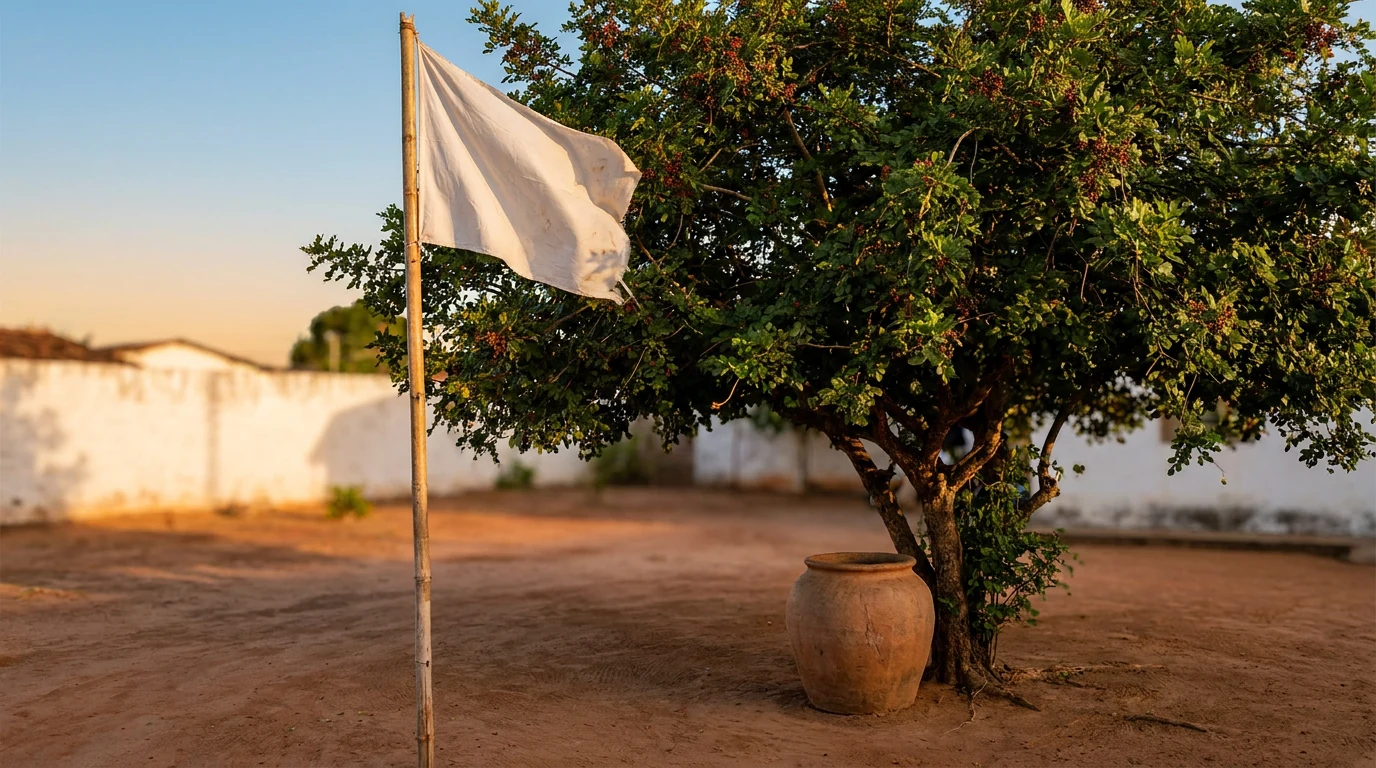
Every house of candomblé de angola flies a white flag, and it is the symbol of Tempo. The flag is changed every year, during his festival, normally in August. The mast is prepared during the period of the obrigação.
In the terreiro Omariô de Jurema, in Barra Mansa (RJ), the flag is a white cotton cloth atop a bamboo mast. The mast stays next to the consecrated foundation (assentamento), together with a pepper tree (aroeira).
The article by Pedro Cabral in the UFBA magazine records the meanings that the house gives to the flag. It shows from afar that this is an Angola house. When the wind makes it flutter, the community understands that Tempo is present. The houses also tell that peoples from Central Africa followed the wind to decide the direction.
“You look at that flag, which brings a meaning, so you look from afar and will know that that is a specific tradition.”
Tata Kisanje, in an interview with Pedro Cabral
The flag also has chants. In Inzó Dandaluna, the public festivals begin with the reverence to the flag of the angola nation, hung on the mast at the entrance of the house. Other chants of Tempo are in zuelas de candomblé de angola.
In the open air and under a tree
The rites of the other inquices take place inside the consecrated foundation (assentamento) rooms. The one for Tempo happens in the open air: the space can be delimited, but it cannot be covered.
The consecrated foundation (assentamento) stays under a tree, and there is no mandatory species. The houses use são-gonçalinho, pepper tree (aroeira), cashew tree, mango tree, or white gameleira. The gameleira has the oldest connection. In Central Africa, tembo is linked to nsanda, a fig tree, and in Brazil the white gameleira, another Ficus, occupied that place.
Next to the consecrated foundation (assentamento) is a clay pot with water, the quartinhão. To understand this vessel, see quartinha: what it is and what it is for. Among the symbols of Tempo, the research records the grid, the spear, the ladder, and the gourds.
This consecrated foundation (assentamento) can only be built by the leadership of the terreiro, who hold the foundations. Therefore, this guide does not teach how to assemble anything: this ritual work belongs to the house.
Colors, festival, greeting, and offerings
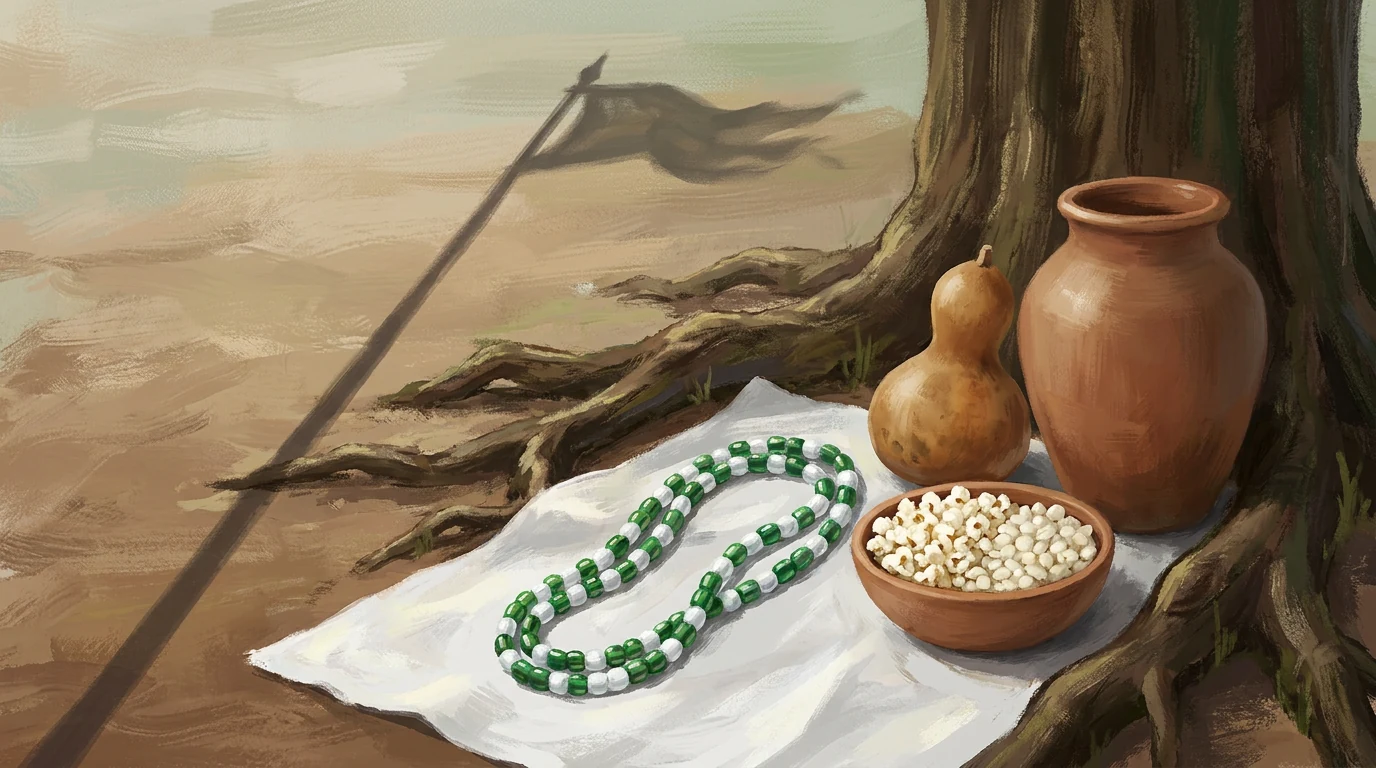
The colors of Tempo are the predominant white, with details in green. The bead necklace (fio de contas) features alternating green and white beads, or white with green stripes. Terreiro Tumbensi, of Mameto Zulmira, in Lauro de Freitas (BA), uses gray.
The festival is concentrated in August, with emphasis on August 10, the day of Saint Lawrence in the Catholic calendar. Each terreiro has its own calendar. At Bate-Folha, in Salvador, the Festa de Tempo begins on August 10 and lasts sixteen days.
The greeting that appears in independent sources is “Zara Tempo”. At Terreiro Loabá, in Osasco (SP), the tata leads the greeting and everyone responds “Zaraa Tempo!”. Other greetings of the nation are in greetings of the candomblé de angola.
Among the offerings, the research highlights popcorn, white corn, and meladinha. Meladinha is a drink of leaves, cane, aguardente, and honey, shared at the festival. The rest of the menu varies from house to house.
Frequently asked questions
Is Tempo an orixá?
Tempo is an inquice, a deity of the candomblé de nação angola. Some sources associate him with Iroko, in ketu, and with Loko, in jeje, and in a house in São Paulo there is no correspondence at all. In umbanda, there are houses that call him an orixá.
What is the greeting of Tempo?
“Zara Tempo” is the greeting recorded in more than one source, academic and from the terreiro. At Terreiro Loabá, in Osasco, the community responds “Zaraa Tempo!” when the tata calls. Some houses also use the formula “Tempo dia Banganga”.
Is Kitembo Obaluaê?
No. Kitembo is another name for Tempo, inquice of the Angola nation. August brings the two devotions together: it is the month of the Tempo festival and also the period of worship to Kavungo and Obaluaê, as recorded in the research by Veridiana Machado.
What is the day of Tempo?
The most recorded date is August 10, the day of Saint Lawrence, with a festival throughout the month. The day of the week varies between houses and there is no record that settles it. Ask the terreiro you attend.
Where to buy bead necklace, quartinha and white cloth
At Joia Mística Laroyê you find material for your house:
- Green and white bead necklace, in the colors registered for Tempo
- Clay quartinhas and quartinhões
- White cotton fabric, for the flag that the house changes in August
- Coast straw and gourds
- White corn and popping corn
Setting up the assentamento and preparing the mastro is the work of your house leadership. Visit the shop at Rua Benedito Zingari, 460, Bela Vista, in Extrema-MG, or call on WhatsApp with delivery to all of Brazil.
References
- Elizabete Umbelino de Barros: Línguas e linguagens nos candomblés de nação Angola, thesis, USP, 2007
- Veridiana Silva Machado: O cajado de Lemba, dissertation, USP, 2015
- Pedro Cabral: a bandeira de Kitembo, Salvador e Suas Cores, UFBA, 2024
- Inzo Tumbansi: Festa de Tempo no Bate-Folha, 2016
- Marlon Marcos: Hoje é dia do inquice Tempo, Correio Nagô, 2015



