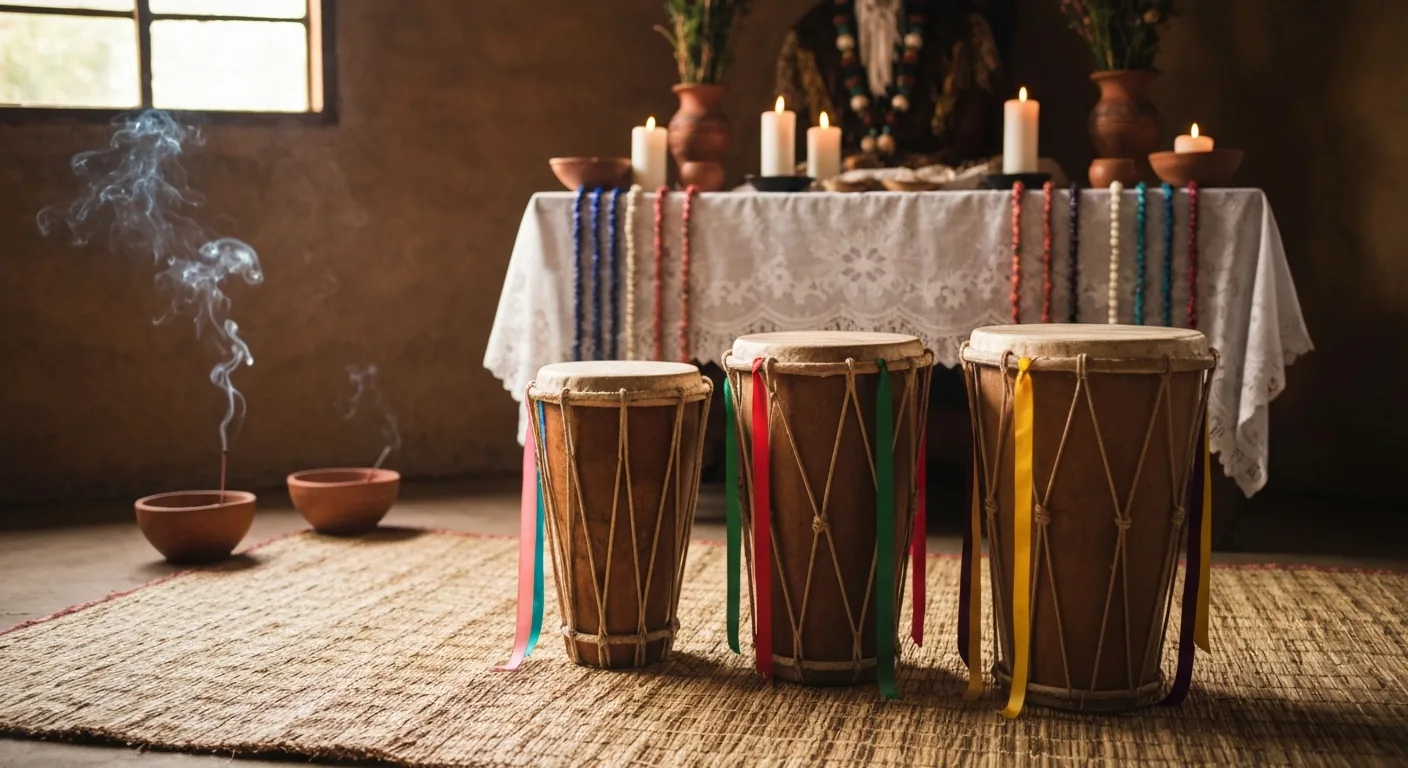
The barracão is full. Someone approaches the newly initiated person and asks their name. They ask once, they ask twice, and only on the third time does the answer come, shouted loudly for everyone to hear. This is the moment of the orunkó, the initiation name (nome de santo) of Ketu Candomblé, and it is the most anticipated scene of the entire exit party.
This guide explains what orunkó is, where the name comes from, how it is announced, and what changes from one nation to another. It also addresses what cannot be explained: fundamento is a matter of the house, not of the internet.
What is orunkó and what the word means in Yoruba
Orunkó is the religious name that the person receives in the initiation process of candomblé ketu. From then on, the community of the terreiro begins to call them by this name in the daily life of the house.
The word comes from the Yoruba orúkọ, which simply means "name". You find the spellings orunkó, orunkô, orucó, and oruncó circulating around. All point to the same thing.
It is worth noting the shift in meaning. In Nigeria, orúkọ is the name that any person receives at birth, formed from the circumstances of birth or the divinity linked to the family. In Brazil, the term narrowed and began to designate the name of the orixá, the one that is born from initiation.
The civil name does not disappear. It continues to be valid for documents, banks, and work. What changes is the space of the terreiro, where the new name takes its place.
Where the name comes from: seclusion (recolhimento), divination (jogo), and the house leader
The initiate does not choose their own orunkó. The name arrives during the recolhimento, the period in which the person remains secluded in the roncó fulfilling the rites of the feitura, a theme that we detail in what is iaô.
The sources of the terreiro describe two layers that coexist, and the weight of each one changes from house to house:
- The orixá announces. The name is spoken by the divinity in a trance, on the day of the public festival.
- The house settles. The babalorixá or the ialorixá conducts the process, supported by the godfather or the godmother of initiation, and the jogo de búzios confirms.
In practice, many houses combine both: the authority of the house conducts, the orixá announces. There is no single formula, and there is no public manual.
The one who answers about your name is your leader. No blog text replaces the foundation of your house, and no answer found on the internet is worth more than the word of the one who conducted your feitura.
The researcher Vivaldo da Costa Lima, one of the pioneers of the Center for Afro-Oriental Studies at UFBA, recorded the mechanism in A família-de-santo nos candomblés jeje-nagôs da Bahia. He describes the initiatic name as something shouted in the barracão by the orixá, on the day of confirmation.
The exit of iaô and the shout of the name
The exit of iaô is the festival that ends the recolhimento and presents the initiated person to the community. It unfolds in stages, and the announcement of the name happens in one of the public exits.
This stage is called the exit of the orunkó or the exit of the ekodidé, in reference to the red feather of the parrot, associated with speech and used on the forehead of the initiate. The visible mechanics of the rite follow a recognizable script:
- One is chosen to take the name. It is usually a babalorixá or an ialorixá, often from another house.
- The question is asked three times. The first two receive no answer.
- On the third, the orixá shouts the name. The entire audience hears.
The moment carries real tension. The correct pronunciation works as a certificate that the initiation was well conducted, and for this reason, the priests who conducted the recolhimento live this instant with expectation.
Note that the festival is public. What happens inside the roncó, however, remains private, and is not a subject for any blog.
How the names are formed (and why there is no list to choose from)
Yoruba names are short phrases. They usually open with the element that points to the divinity or the lineage, followed by a verb or noun that closes the sentence.
Among the names of devotees of Exu (Eshu), for example, formations like Èsùlopé, which translates as "Exu is gratitude", and Èsùfémi, "Exu loves me", appear. The pattern repeats with other orixás: the beginning says who the name refers to, the rest says a phrase about that relationship.
These examples serve to show how the phrase is built, and nothing more. You do not choose or adopt an orixá name. It comes from the cowrie-shell divination (jogo), from the orixá and from the house leader, within an initiation process that lasts months.
Be suspicious of any list of the type "names by orixá" or "discover your orunkó". Those who are not initiated do not have an orunkó, and presenting oneself with an orixá name without having done santo offends the tradition.
Orunkó, dijina and the name in jeje
Each nation of Candomblé has its liturgical language, and the name of the initiate follows that language.
| Nation | Origin | Name of the initiate | Language |
|---|---|---|---|
| Ketu | Yoruba (Nagô) | orunkó | Yoruba |
| Jeje | Fon-Ewe | name announced by the vodun upon the exit of the vodunsi | Fongbé |
| Angola | Bantu | dijina | Quimbundo and Quicongo |
In the Candomblé de Angola, the name is called dijina, from the Quimbundo rijina, which also means "name". The delivery rite appears among the sacraments of the nation under the name of kizuá dijina, the day of the name. Other terms from the Angola vocabulary are gathered in Angola Candomblé dialect.
Two precisions matter here. The dijina is the name, while muzenza and ndumbe designate people, not names: muzenza is the initiate under three years old, ndumbe is who has not yet undergone initiation. Furthermore, Angola keeps an extra layer, because the name of the person's inquice receives reserved treatment, under the guard of the leader and the godfather or godmother.
Is the orunkó secret? It depends on the nation and the house
This is the most poorly answered question on the internet, and the honest answer is that there is no single rule for all of Candomblé.
- Ketu: in many houses the orunkó circulates normally. The naming ceremony is a public ceremony, so treating something shouted in front of the audience as an absolute secret makes little sense.
- Jeje: the tradition tends to be more closed and tends to extend the secrecy to the names.
- Angola: separates the layers. The dijina circulates, the name of the inquice remains restricted.
Practitioners who discuss the subject usually debunk the argument of the "name used to do harm." The civil name is much more exposed, in documents and on social media, than the name of the orixá.
This does not authorize anyone to demand the names of others. The etiquette is simple: do not demand anyone's orunkó, do not ask for an explanation, and do not publish a third party's name without authorization. Whoever wants to tell, tells.
Inside the house, the name also places the person in a family of santo and in a place in the hierarchy, a subject treated in positions and hierarchy in candomblé.
Frequently asked questions
What does orunkó mean?
Orunkó is the orixá name (nome de santo) received in the initiation of Ketu Candomblé. The word comes from the Yoruba orúkọ, which means name. In Brazil, the term came to specifically designate the religious name, the one by which the terreiro community calls the initiate from the initiation.
Who gives the name of the orixá in Candomblé?
The name comes from the orixá and the leadership of the house. In many terreiros, it is shouted by the divinity in trance, during the public naming. The babalorixá or the ialorixá conducts the process, with the support of the godfather or godmother of initiation. The weight of each part changes according to the foundation of the house.
Does the orunkó reveal who my orixá is?
It does not work as a test. Those who have not undergone initiation do not have an orunkó, so there is no name to interpret. The path to knowing the orixá owner of the head is the cowrie-shell divination performed by a terreiro leader, never the reading of a name found on an internet list.
What is the difference between orunkó and dijina?
They are the same place in different languages. Orunkó is the term of Ketu Candomblé, of Yoruba matrix. Dijina is the term of Angola Candomblé, of Bantu matrix, delivered in the rite called kizuá dijina. In Jeje, the vodun announces the name of the vodunsi at the exit.
Does the nome de santo (religious name) change the document?
It does not change anything in civil life. The registered name continues to be valid for documents, work, and banks. The orunkó is valid inside the terreiro and among irmãos de santo (fellow initiates), and many people also start using it in presentations and social networks, by their own choice.
Where to buy items for initiation and obligations
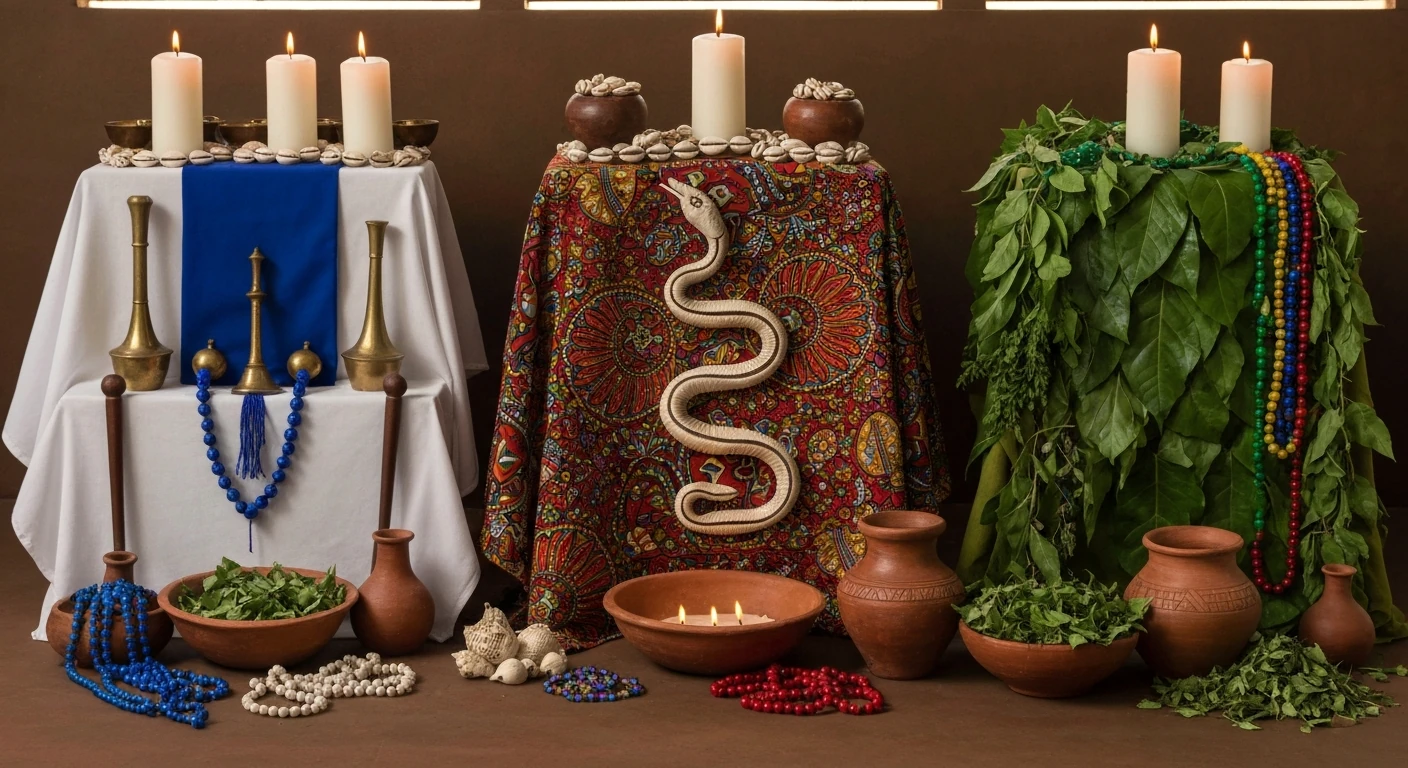
At Joia Mística Laroyê, you find material for the house and for the journey of the filho de santo:
- Bead necklaces and guias: in the colors of the orixás, to wash and to consecrate
- Pottery, alguidares, and gamelas: clay and porcelain pieces for assentamento and offering
- Fresh and dry herbs: separated by orixá, for ritual bath and for the preparation of leaves
- Ritual candles: in the colors of each orixá, in various sizes
- Smoke-cleansing blends and incense: for cleaning the environment before the ritual work
Visit our shop in Extrema, Minas Gerais or contact us on WhatsApp with delivery to all of Brazil.
References
- Falcão, Christiane Rocha: article in Horizontes Antropológicos that cites Vivaldo da Costa Lima about the initiatic name shouted in the barracão, via SciELO
- Cultural Mapping of UFBA: entry about the researcher Vivaldo da Costa Lima and his work on the family of santo
- Wikipedia: Orucó entry, with the description of the public ceremony of the name
- Wikipedia: Dijina entry, with the quimbundo etymology and the treatment of the inquice name