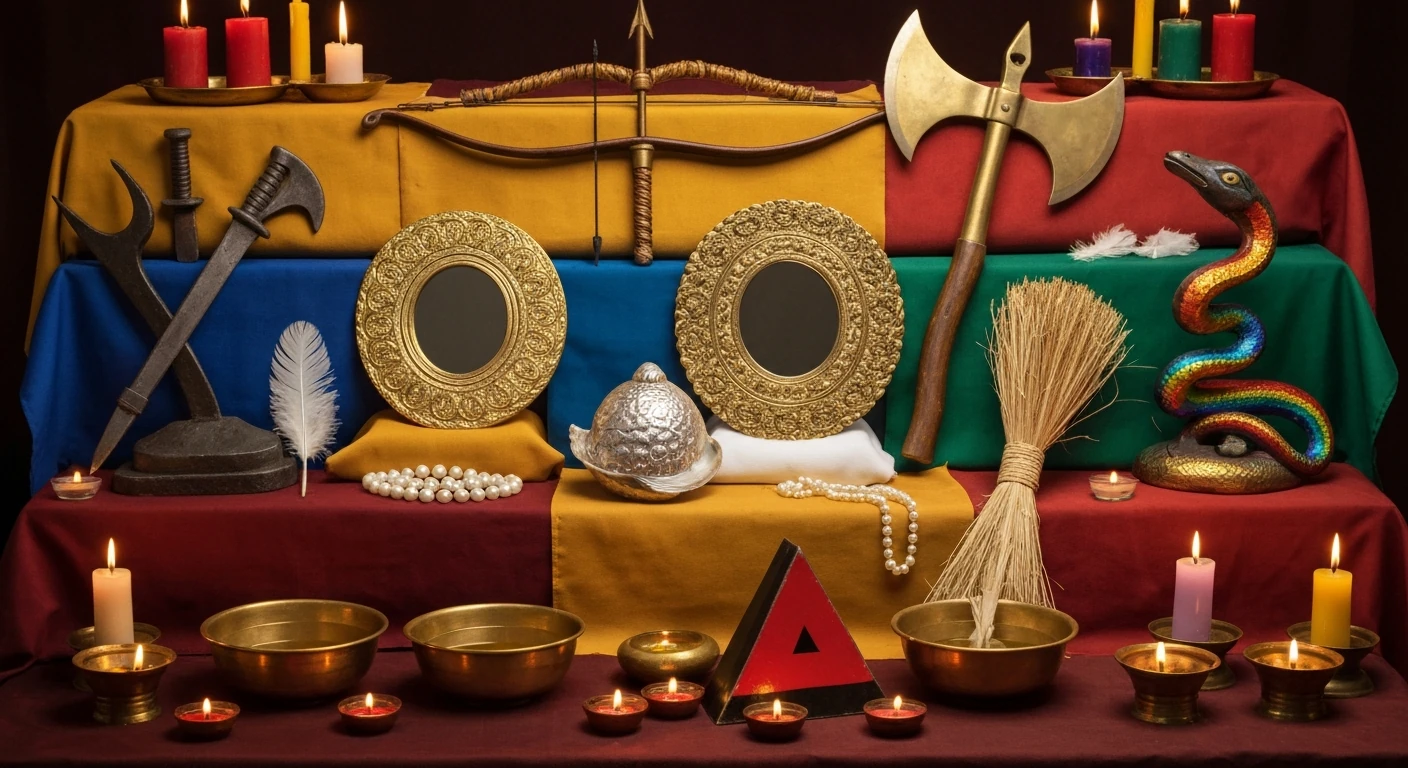
The elements of the orixás are the forces of nature that each one governs: Oxum is fresh water, Iemanjá the sea, Xangô thunder and the lightning stone. Iansã is lightning and wind, Ogum iron, Oxóssi the forest. Omolu is earth, Nanã mud, Oxumaré the rainbow and Oxalá the air.
In Ketu Candomblé, Reginaldo Prandi's chart gives each orixá a precise natural element. Beside it, place one of the four elements: fire, water, earth, or air. In Umbanda, the element becomes a place: the ponto de força, where the house delivers the offering. The table combines the three things.
Elements of the orixás: the table for each one
In parentheses, the element that Prandi's chart gives among the four. The domain comes from the same chart. The ponto de força follows FUCESP and the Santuário Nacional da Umbanda.
| Orixá | Nature element (of the four) | Dominion | Power point in Umbanda |
|---|---|---|---|
| Exu | Iron ore (fire and earth) | Messenger, crossroads, entrance of houses | Crossroads and road |
| Ogum | Forged iron (earth) | Metallurgy, agriculture, and war | Road and railroad |
| Oxóssi | Forest (earth) | Hunting | Woods |
| Ossaim | Leaves (earth) | Vegetation and medicine | According to the house |
| Oxumaré | Rain and rainbow (water) | Wealth of the harvests | Forest near fresh water |
| Omolu or Obaluaê | Earth, soil (earth) | Disease and healing | Cemetery, the small calunga |
| Xangô | Thunder and lightning stone (fire) | Justice | Quarry and mountain |
| Iansã | Lightning and wind (air, water and fire) | Storm and spirits of the dead | Waterfall, at FUCESP |
| Obá | Rivers (water) | Woman's power | According to the house |
| Oxum | Rivers, lagoons and waterfalls (water) | Love, gold and fertility | Waterfall, river and spring |
| Logun-Edé | Rivers and forests (water and earth) | The same as Oxum and Oxóssi | According to the house |
| Ewá | Springs and streams (water) | Sources | According to the house |
| Iemanjá | Sea and great rivers (water) | Motherhood and family | Sea, the great calunga |
| Nanã | Mud and swamp (water) | Seniority and death | Lake, mud and clay |
| Oxalá | Air (air) | Creation | According to the house |
"According to the house" means that the sources do not bring the place. Color, day and tool remain in the sister tables: colors of the orixás, days of the week of the orixás and tools of the orixás.
Why nature is the house of the orixá
In Pierre Verger's reading of the Yoruba religion, the orixá begins as a person: he is an ancestor who, in life, gained power over a force of nature.
“The orixá would be, in principle, a divinized ancestor who, in life, established bonds that guaranteed him control over certain forces of nature.” Pierre Verger, in Orixás, cited by Caldas and Lima in Revista Philologus.
That is why the thunder belongs to Xangô and the sea belongs to Iemanjá. The element is the part of the world that that ancestor began to govern. Prandi tells us that Africa records the worship of about 400 orixás. Only about two dozen survived in Brazil. For each one, he writes, "it is their role to rule and control the forces of nature."
Nature is also an address. Ana Maria Amaral, from USP, recorded in the Candomblé of Bahia that the orixás "inhabit certain elements." The stones, she writes, are "their favorite dwellings." It is the logic of the consecrated foundation (assentamento) of the orixá, the fixed dwelling of the orixá in the terreiro. For an overview of the pantheon, see what the orixás are.
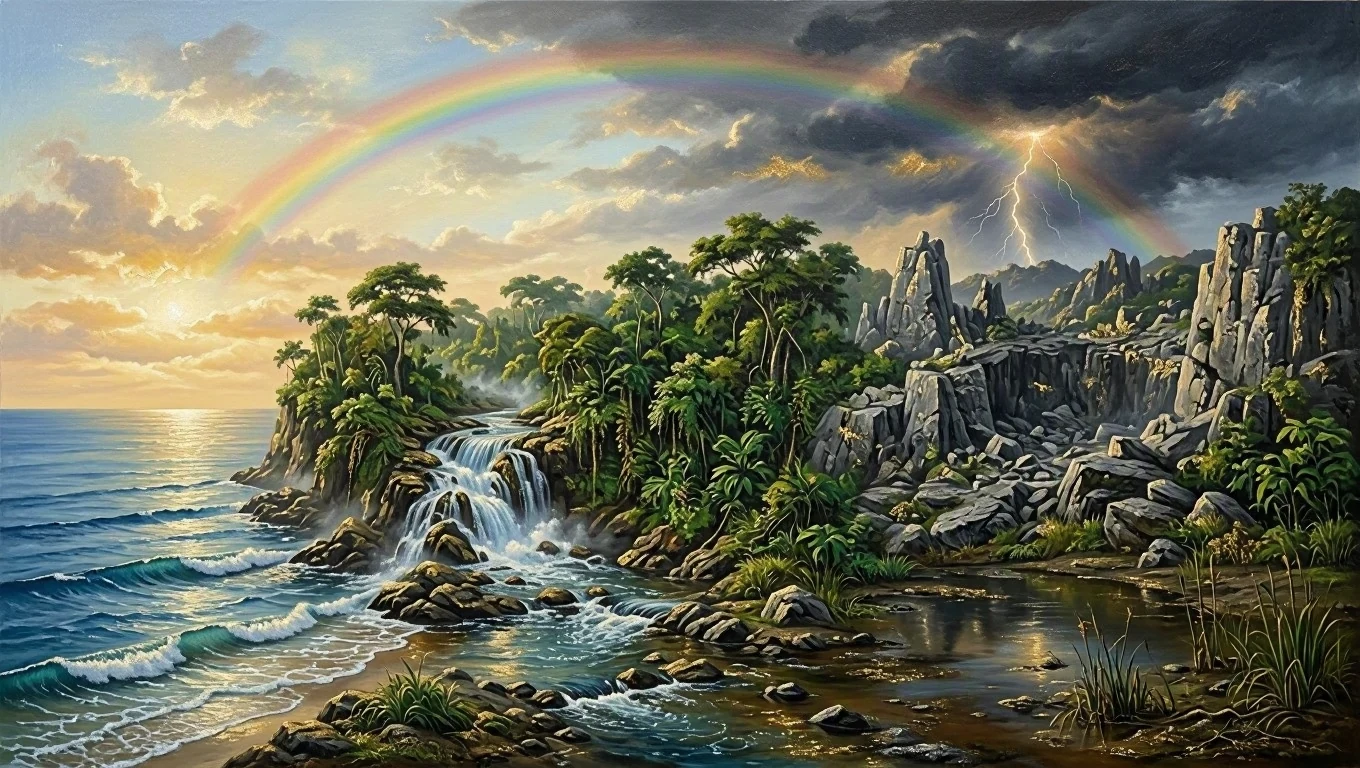
The four elements: where this reading comes from
Many pages separate the orixás into fire, water, earth, and air. This division has authority in the bibliography. Ana Cristina Mandarino and Estélio Gomberg, from UFBA, point to Roger Bastide, in O Candomblé da Bahia. He read the pantheon as a classification system with four compartments, one for each element. Juana Elbein (1986) and José Flávio Pessoa de Barros (1993) revisited the idea.
Prandi's table keeps the two layers. One column gives the "natural element": forged iron, mud, lightning stone. The other gives the "mythic element", one of the four. In the drawer of the four, the sources disagree:
- Ogum: earth in the Prandi frame, fire in the FUCESP.
- Nanã: water in the Prandi frame; clay, mud and earth at FUCESP.
- Obá (Oba): water in Prandi, fire at FUCESP.
- Oxumaré: water in Prandi, earth in FUCESP.
- Iansã: three at the same time in Prandi, air, water and fire; air in movement and fire at FUCESP.
So "what is my element" has more than one answer. The precise name says more: Ogum is the forged iron, Nanã is the mud at the bottom of the waters. Still do not know your orixá? The Discover your Orixá test is a gateway.
Power point in Umbanda: where the offering is delivered
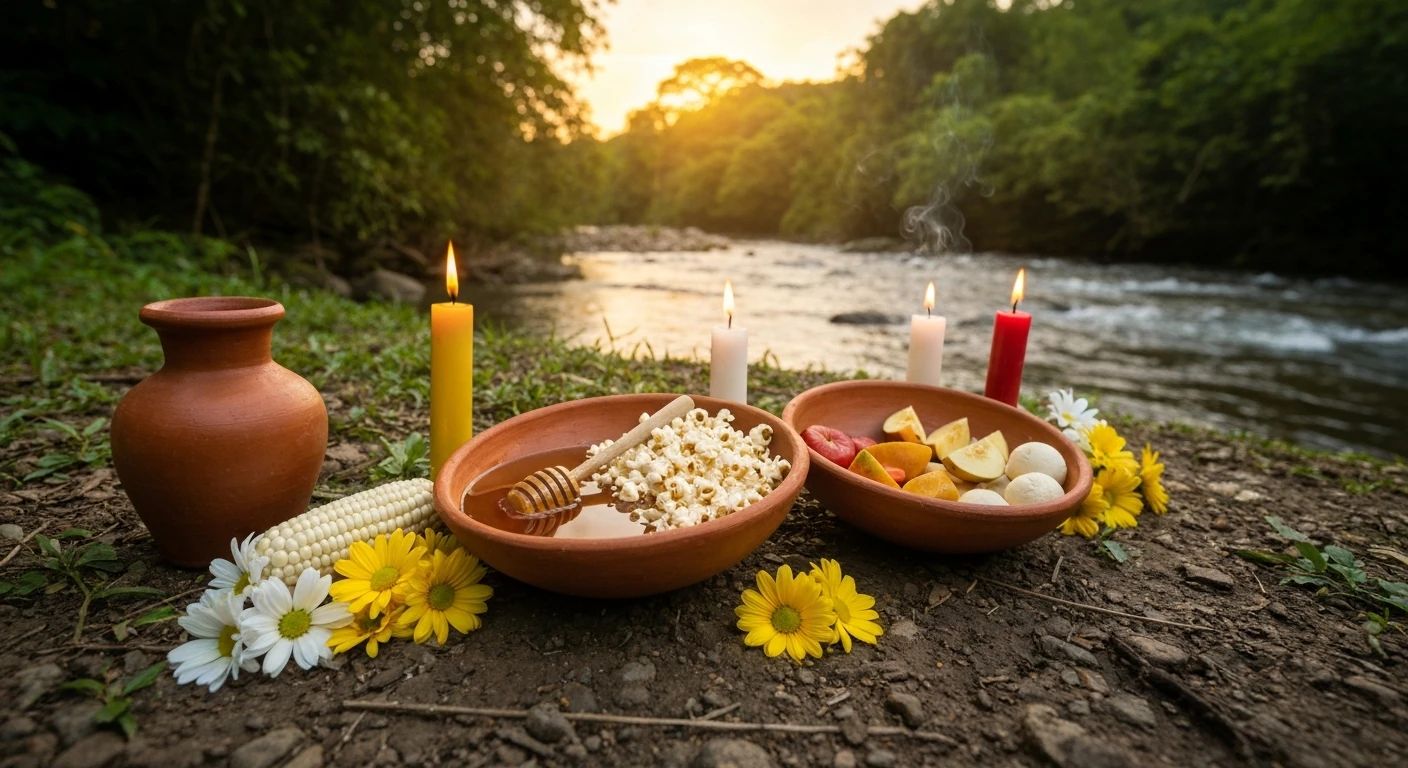
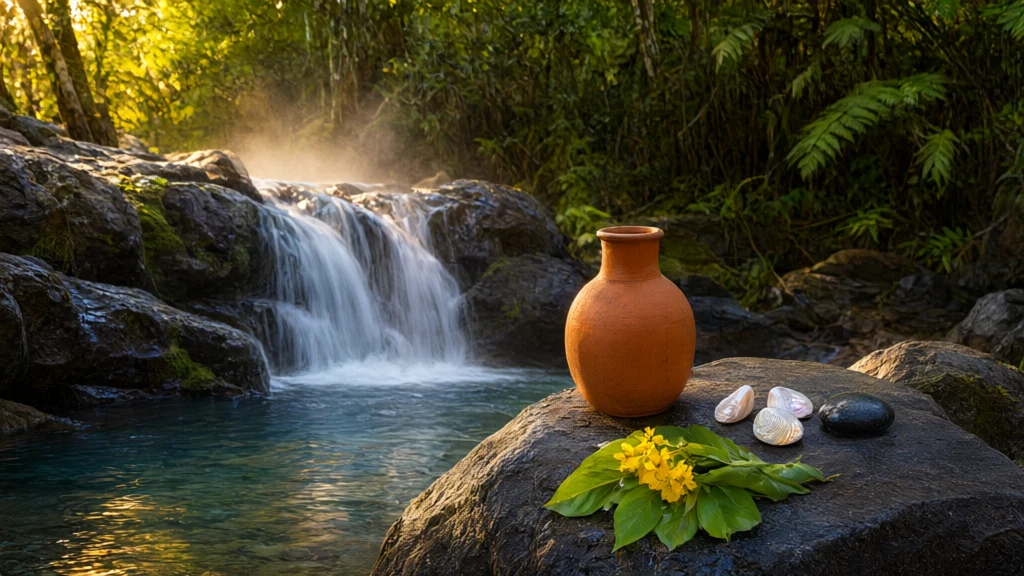
In Umbanda, the element gains an address. At the Santuário Nacional da Umbanda, in Santo André (SP), the offering to Iemanjá goes to the sea, the "calunga grande". The force field of Abaluaiê is the cemetery, the "calunga pequena". Oxum stays in the waterfalls and rivers, Oxóssi in the forests, Xangô in the quarries. Nanã stays in the lakes and in the mud.
FUCESP, the federation of São Paulo, completes the list. Ogum receives on the roads and railways, Exu (Eshu) at the crossroads. The offering to Iansã goes to the waterfall. The Núcleo Umbandista São Sebastião says that the waterfalls "are also domains of Xangô", consecrated together with Oxum. The same waterfall serves more than one orixá. Who decides is the leader of the house, according to the 7 lines of Umbanda that it follows.
Power point is a sacred place, and a sacred place is not a warehouse. The NUSS complains about beaches, forests, waterfalls and quarries transformed "into true garbage dumps". Take only what nature absorbs and bring back the rest.
The Sanctuary does not accept offerings with dead animals, as it is a preservation area. The step by step is in how to make offerings to the orixás, and the tool which offering to make helps to choose.
Those who do not reach the sea settle the orixá at home, with the 7-day candle and the plaster statue on the congá. Both are in the Joia Mística shop, in Extrema. Via WhatsApp, we check the material that your terreiro requested.
Divergences by nation: queto, jeje, angola and batuque
The table in this article is for candomblé queto. The other nations worship their own deities, and the correspondence with the orixá is an approximation. In Prandi's chart, Oxumaré corresponds to the vodun Dã, or Bessém, in jeje. In angola, to the inquice Angorô. The element remains, the name and the foundation change.
In batuque do Rio Grande do Sul, Exu is called Bará and is the first to be honored, before any other orixá. The names and the order of the gaúcha line are in orixás do batuque.
In umbanda, the variation is from house to house: FUCESP gives the waterfall to Iansã, NUSS to Xangô. If your house teaches differently, follow your house. The festival dates are in the calendário dos orixás.
Frequently asked questions
Which orixá is of the fire element?
In Prandi's chart for queto, Xangô is the orixá of fire. Exu appears with fire and earth, and Iansã with air, water and fire. FUCESP, in umbanda, also puts Ogum and Obá in fire.
What is the element of Iansã?
Iansã's natural element is lightning and wind. In the four elements, Prandi gives her three: air, water and fire. FUCESP records moving air and fire. Therefore, she appears in different lists on each site.
What is ponto de força in umbanda?
It is the place in nature where the orixá receives the offering: Iemanjá's sea, Oxum's waterfall, Xangô's quarry, Oxóssi's forest, Omolu's cemetery and Ogum's road. The list changes from federation to federation, and the house defines the place.
Are Iemanjá and Oxum of the same element?
Both are water, but different waters. In Prandi's chart, Iemanjá is the sea and the great rivers, and Oxum is the fresh water of rivers, lagoons and waterfalls. In umbanda, Iemanjá's offering goes to the sea and Oxum's to the waterfall.
References
- Reginaldo Prandi, Horizontes Antropológicos (1995): African deities in contemporary Brazil, with the framework of attributes of the orixás in the queto
- Ana Cristina Mandarino and Estélio Gomberg, Textos de História, UnB (2009): Water and jeje-nagô ancestry
- Viviane Caldas and Leonardo Lima, Revista Philologus (2022): Xangô and Ayrá, with the citation of Pierre Verger
- Ana Maria Amaral, Sala Preta, USP (2001): Ritual objects in the Candomblé of Bahia
- FUCESP: Iansã, element and place of offering
- Santuário Nacional da Umbanda: Valley of the Orixás and places for offerings
- Núcleo Umbandista São Sebastião: The waterfalls as a sacred place
- Wikipedia: Batuque (religion)