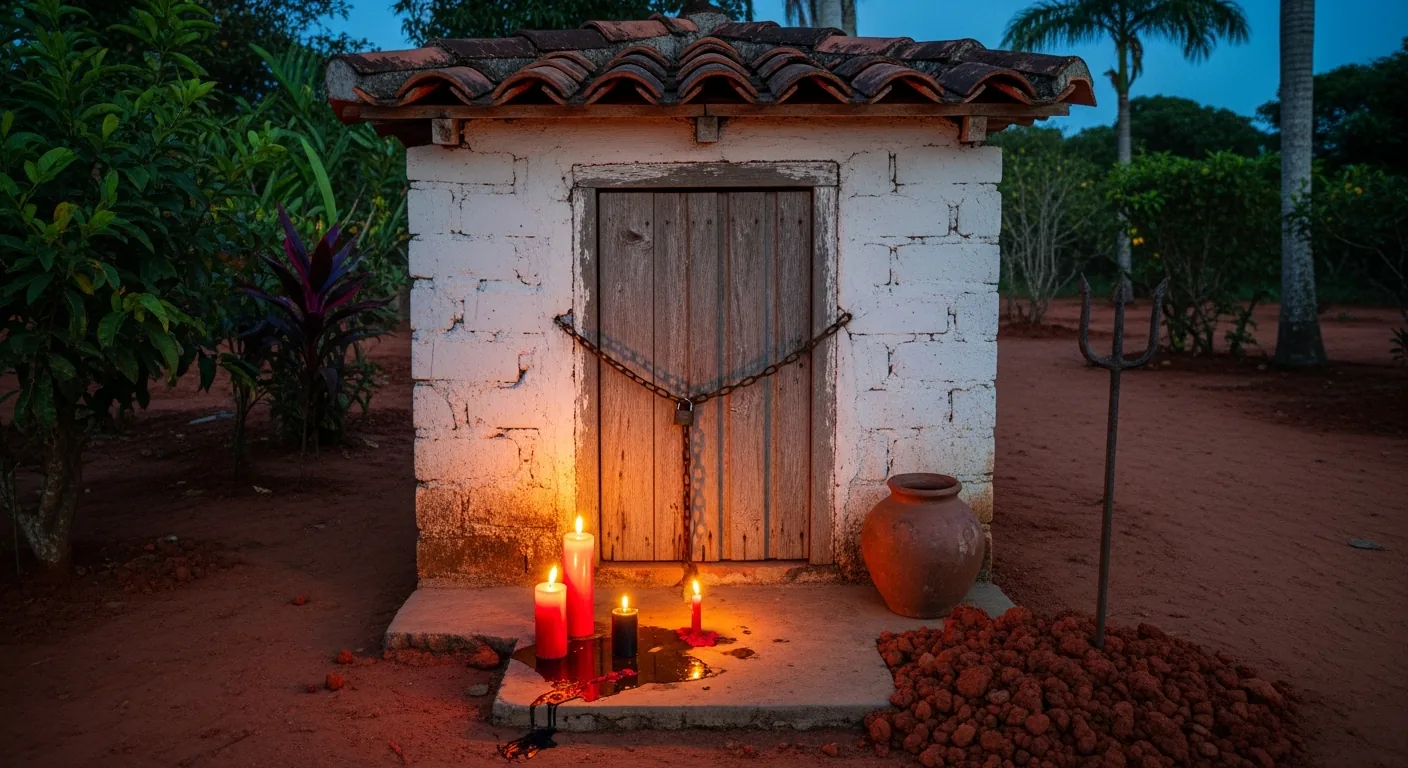
Those who arrive at a terreiro for the first time usually notice a closed little house right at the entrance, often with a chain and padlock. No one enters it. Everyone greets it.
This little house is the tronqueira, the consecrated foundation (assentamento) of the Exus and Pombagiras who guard the house. It is not a decoration or a forbidden place: it is the spiritual gatekeeper of the terreiro, the point where what comes from outside is blocked, filtered, and directed. This guide explains what the tronqueira is, what lives inside it, who can touch it, and why it is not the same thing as the cafua. The consecrated foundation (assentamento) of Exu itself, in Candomblé and Umbanda, is in assentamento de Exu.
What is the tronqueira
The tronqueira is a ritual structure in the shape of a little house, generally made of masonry or wood, with a door. Inside it, the consecrated foundations (assentamentos) of the Exu and the Pombagira who guard that house are settled, along with the firmezas of the other guardians who work there.
The entry about the templo de umbanda describes the space as a point of spiritual protection and control of the forces that transit between worlds. It stays on the border between the consecrated inside and the profane outside, and this borderline position is its very foundation.
It is worth separating three things that the internet mixes all the time:
- Exu Orixá: Yoruba divinity of Candomblé. Appears as Bará in the Ketu nation of the south, Aluvaiá or Pambujila in Angola, and Legba in Jeje. He is the first to eat during the obligations.
- Exu guardian of Umbanda: spirit that works under the law of the house. The entry for Exu de umbanda is explicit in saying that it is not confused with the Orixá and is not present in Candomblé terreiros.
- Exu of Quimbanda: the central spirit of the cult, organized into kingdoms and peoples, with its own pragmatic logic.
The tronqueira houses guardians, not the Exu Orixá. The house of Exu of Candomblé is another space, with another foundation and another nation of reference.
Why is it at the entrance, and on the left
The logic is simple and territorial. Whoever guards the door stays at the door.
Everything that arrives at the terreiro passes through the tronqueira first: people, spiritual burdens (carrego), the evil eye, whatever the person brought without knowing they were bringing. The guardian receives, evaluates, and directs. The barracão, where the gira takes place, receives what has already passed through this filter.
Custom dictates setting the firmeza on the left side of the person entering. But attention: this is a strong custom, not a dogma. Many houses record that the land does not allow it, and they set it where it is possible. What defines it is the foundation of the house, not an internet rule.
The tronqueira is not the dark place of the terreiro. It is the gatehouse. And whoever works at the gatehouse of a house of axé is who most protects those who are inside.
That is why there is the custom of greeting the tronqueira upon arrival. You greet whoever is on guard before entering.
What lives inside the tronqueira
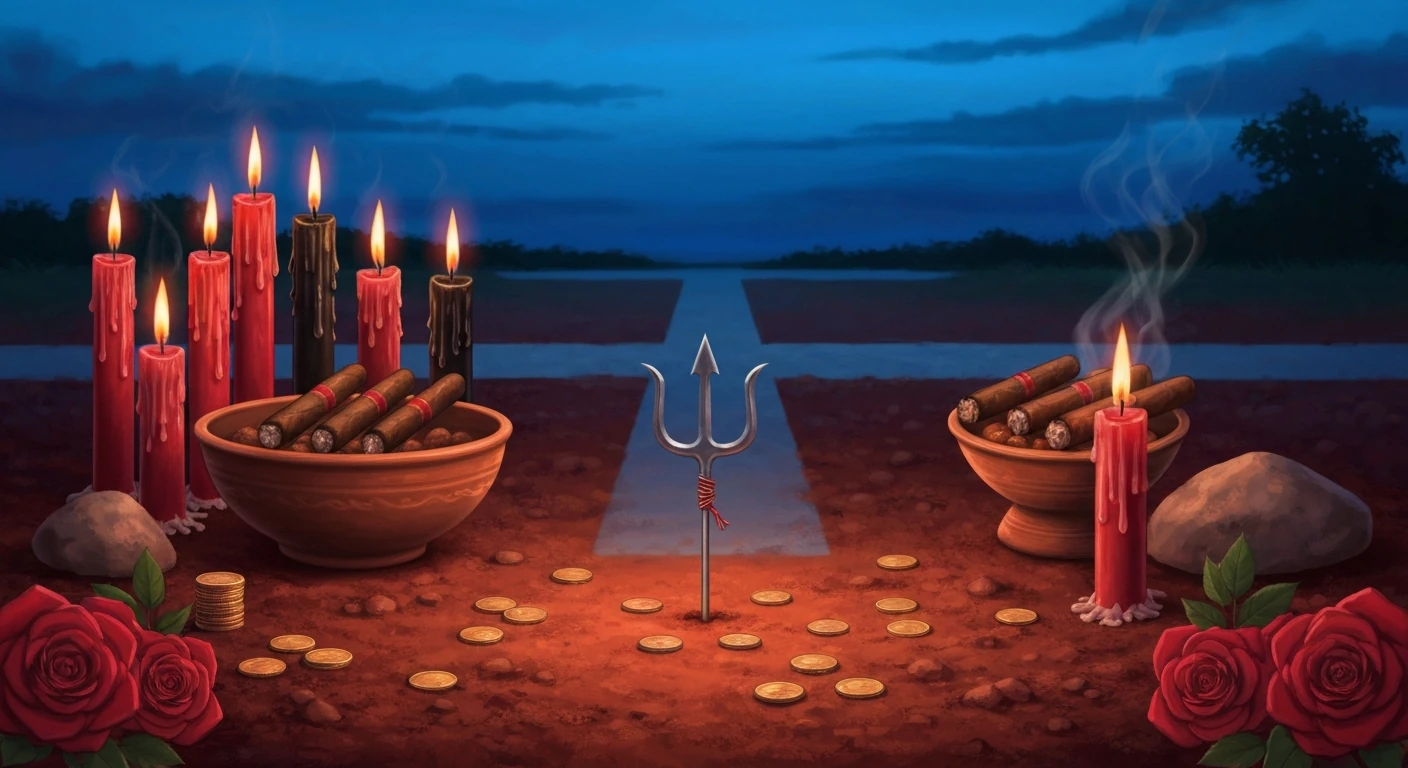
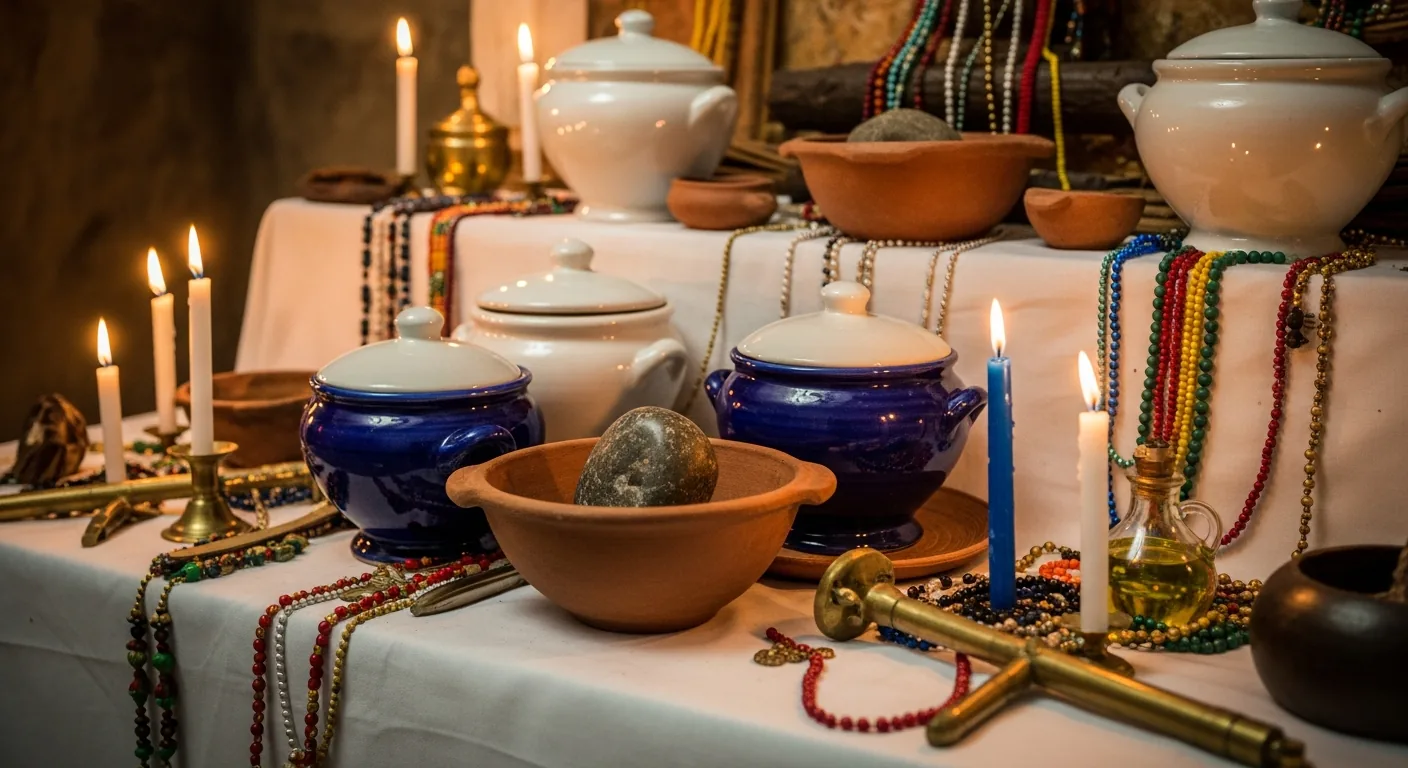
The repertoire varies from house to house and from line to line. There is no closed list. But some elements appear frequently in the public descriptions of terreiros:
- Assentamentos of the house's male and female guardians, and sometimes of Exu Mirim
- Firmezas of the other Exus and Pombagiras who assist in the ritual work
- Tridents, straight for the Exus and worked for the Pombagiras, according to local custom
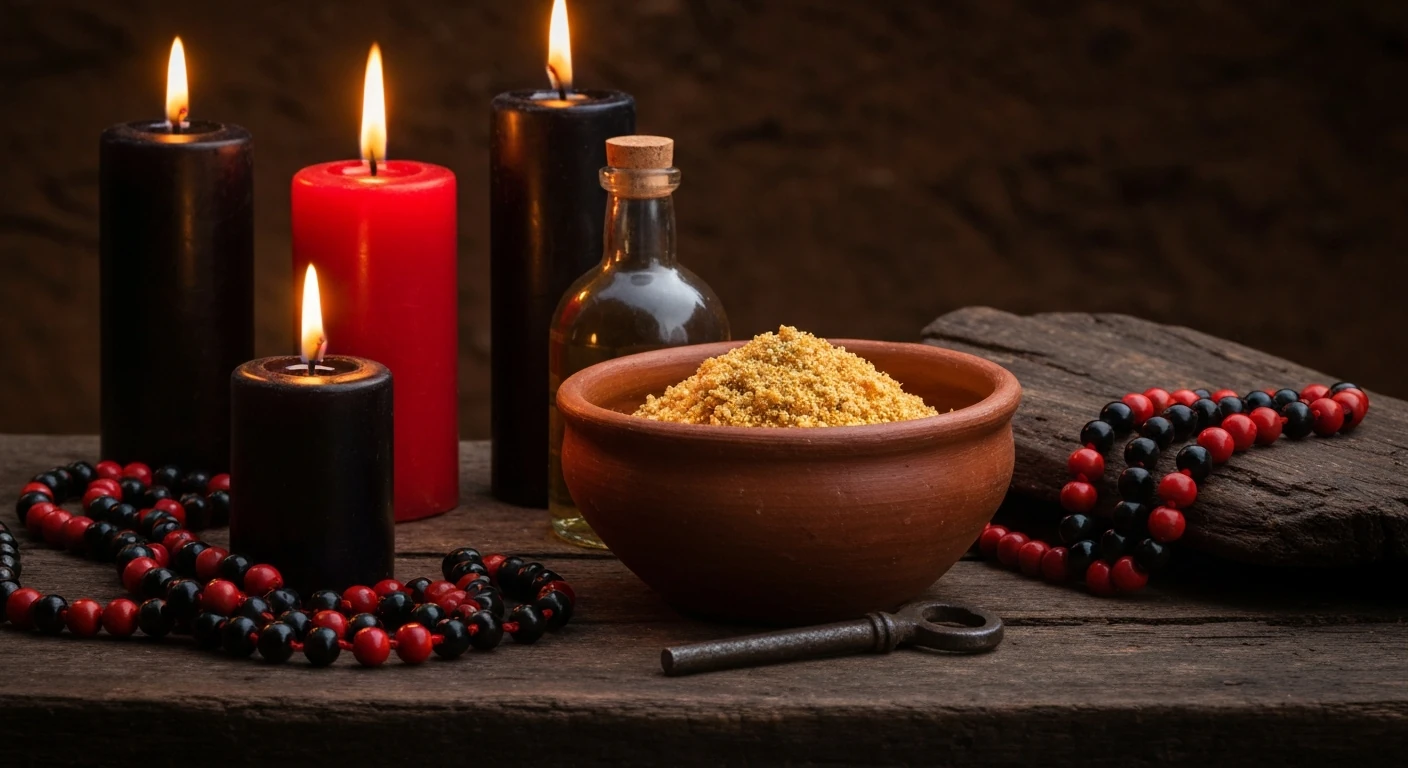
- Daggers and horseshoes, iron tools linked to cutting, defense, and firmeza
- Stones and earth, which link the assentamento to the ground
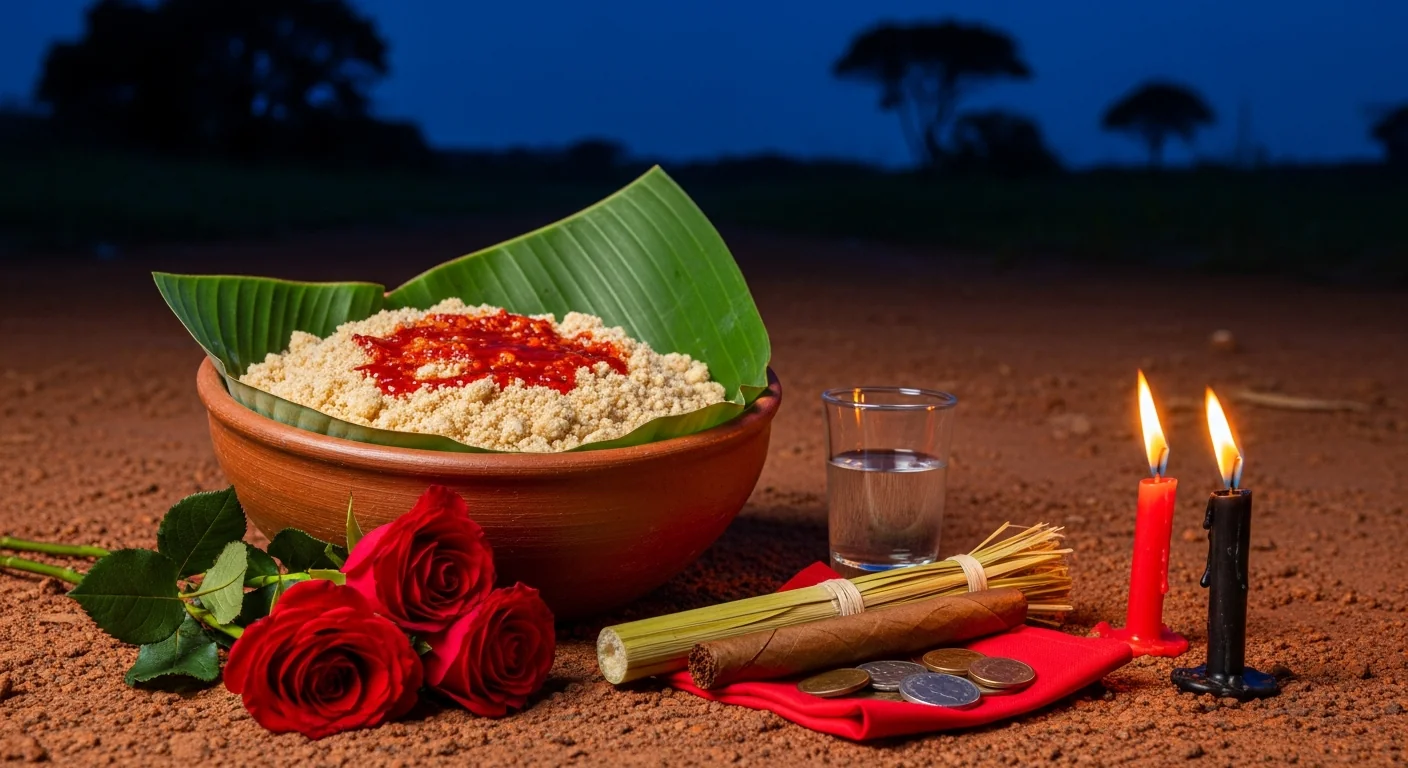
- Quartinha and clay alguidar, for ritual liquids and food
- Marafo and other drinks according to the spirit
- Red and black candles, cigars and straw cigarettes
- Herbs, seeds, and pontos riscados, when the house works with them
Describing what usually exists there is ethnography, and this is already published by terreiros. Teaching the assembly order, the layers, and the consecrations is something else, and it does not fit in an article.
Who assembles and who feeds the tronqueira
The one who assembles is the house leader, the pai or the mãe de santo, within the foundation of the tradition. It is not an assembly on one's own, and no kit sold on the internet replaces this.
The tronqueira is also fed regularly. Candles lit before the giras, renewed drink, offering on the days of the line. Monday is the most cited day for Exu in Umbanda, and Friday also appears in many houses. The cleaning and the exchange of elements follow the terreiro calendar.
And what about those who do not have a terreiro? The honest answer is that tronqueira is a terreiro structure. What exists for the practitioner at home is the personal firmeza, much simpler: a candle, a quartinha, a reserved corner. The difference between firmeza and assentamento is already explained in oferenda para Exu and in assentamento de santo.
Here, opinions diverge. Some advise to set only in a quartinha in an apartment. Others advise against any firmeza of this type inside a resting space without adequate structure. The divergence is real. The path is to ask your leader, not to copy a video.
Where does the word tronqueira come from
The claim that "tronqueira" comes from Tupi circulates on dozens of sites. This is not supported by any dictionary.
The word is Portuguese. The Dicionário Priberam records the formation tronco + -eira and the Brazilian meaning: each of the vertical timbers where the ends of the bars of a gate enter. The Ciberdúvidas consulting office confirms the same formation and even separates "tronqueira" from "tranqueira", which means palisade and has another history.
In other words: tronqueira was the name of the rustic farm gate, made of logs, the barrier that marks where the property begins. Religious tradition took a word from the Brazilian rural vocabulary and applied it to the same function in the spiritual plane. The name already said everything: the guarded gate.
What not to do in front of a tronqueira
Few rules, and all of religious respect, not of threat.
- Do not open and do not touch. Someone else's consecrated foundation (assentamento) is not to be touched. This applies to the tronqueira of your terreiro and, even more strongly, to that of any other house.
- Do not take photos without authorization. Many houses do not allow it, and the rule is of the house.
- Do not deposit anything there on your own. Tronqueira offering is internal and follows the foundation of the terreiro. Delivery in a public way is another thing, with another orientation.
- Do not treat it as a street ritual offering (despacho). It is not an improvised spiritual cleansing (descarrego) point nor a place to leave what was left over from a ritual work.
- Do not confuse with the visitation altar. You greet from the outside. Those who enter are those who have a function.
Tronqueira and cafua are not the same thing
This is the point that almost no text on the subject explains, and which separates the practitioner from the curious.
| Tronqueira | Cafua | |
|---|---|---|
| Origin of the name | Portuguese: trunk plus the suffix -eira, the log gate | Quimbundo kafua: pit, cave, dark and isolated place |
| Where it is located | Outside the barracão, at the entrance, by custom to the left | Internal and reserved room, closed to the public |
| Function | Border and guard. Blocks and directs what comes from outside | Center of work and dwelling of the Exus chiefs of the house |
| Who accesses | Everyone greets from outside. Only those with a function may touch | Restricted space, for initiates |
In terreiro Umbanda, the tronqueira is usually the main point of Exu of the house. In established Quimbanda, with its own worship and complete structure, the center of the ritual work shifts to the cafua. Understanding the difference helps in reading any terreiro you visit. If you want to deepen your knowledge of the worship organization, the kingdoms of quimbanda explain the logic behind the peoples of Exu.
Frequently asked questions
What is tronqueira in Umbanda?
It is the ritual house at the entrance of the terreiro where the consecrated foundations (assentamentos) of the Exus and Pombagiras who are guardians of the house are set. It functions as a spiritual gatekeeper: it blocks, filters, and directs what arrives from outside before entering the barracão where the gira takes place.
Why is the tronqueira at the entrance of the terreiro?
Because its function is that of a border. Whoever guards the door needs to be at the door. Everything that arrives passes first through the guardian, who evaluates and directs. Custom dictates setting it to the left of those entering, but the terrain does not always allow it and the house decides.
What is placed in the tronqueira?
It varies by house. The consecrated foundations (assentamentos) of the guardian and the guardianess, tridents, daggers, horseshoes, stones, earth, quartinha, clay alguidar, marafo, red and black candles, cigars, herbs, and seeds usually appear. The one who defines the composition is the foundation of the terreiro.
Who can touch the tronqueira?
Only the leader of the house and those with a function assigned by him. A visitor greets from outside and does not open it, does not take photos without permission, and does not deposit anything on their own. Touching someone else's consecrated foundation (assentamento) is a serious lack of religious respect.
Can I have a tronqueira at home or in an apartment?
A tronqueira strictly speaking is a terreiro structure, set up by the leader. At home, what exists is the personal firmeza, which is much simpler. Houses differ on what is appropriate in an apartment, so the correct guidance comes from your Pai or Mãe de santo.
Where to find candles, quartinhas, and firmeza items
The tronqueira is a terreiro assentamento and is set up with the house leader. What Joia Mística Laroyê offers are the items of current use in religious life:
- Red and black candles: in ritual use sizes
- Clay quartinhas and alguidares: liturgical pottery pieces
- Iron tridents and tools: individual pieces for use according to the house guidance
- Marafo, cigars, and straw cigarettes: offering items
- Dried and fresh herbs: for smoke cleansing (defumação) and space cleansing
Visit our physical store in Extrema, Minas Gerais and we ship to all of Brazil. Talk to us via WhatsApp and Joice will help you choose.
References
- Wikipedia: Umbanda Temple, about the space of spiritual protection and control of the forces that transit between worlds
- Wikipedia: Exu of Umbanda, about the distinction between the terreiro guardian and the Candomblé orixá
- Priberam Dictionary of the Portuguese Language: tronqueira entry, with the trunk formation plus the suffix eira
- Ciberdúvidas of the Portuguese Language: consultation about the difference between tronqueira and tranqueira