The axero is the intermediate state between the orixá and full consciousness, in which the filho de santo remains in the batuque when the manifestation ends. In it, the person acts like a child and uses their own speech. When they leave the axero, they do not remember what happened.
What is the axero in the batuque
In the batuque of Rio Grande do Sul, the filho de santo does not "incorporate" or "turn into the santo." Tradition says that the filho is occupied by the Orixá. And the orixá, as a rule, does not leave the filho suddenly. Between the exit of the orixá and the person's return to themselves, there is a passage, and this passage is the axero.
Researcher Marcus Vinicius de Souza Nunes describes the axero as "an intermediate stage between the Orixá and full consciousness." A speech recorded by Norton Corrêa, from Mãe Ester de Iemanjá (Yemoja), summarizes it like this:
“It is the same orixá, but it stays like a child, neither here nor there, no longer really an orixá, nor a person.”
Mãe Ester de Iemanjá, in a speech recorded by Norton Corrêa
Name: axero, also axêro, axerê, axêre, acherê or axerô | Where: gaúcho batuque | When: upon the exit of the orixá | After: the filho does not remember
The word changes from house to house, and the term only exists in Rio Grande do Sul. For those coming from candomblé, the vocabulary change is in batuque and candomblé: the differences.
When the axero happens at the festival
The axero comes at the end. When the toque reaches the closing, the orixás are despachados, generally by older and more experienced filhos de santo of the house. After the despacho, and before definitively ascending, the orixá leaves the filho in a state of axero.
The order has rules. According to babalorixá Erick Wolff, of the Cabinda tradition, the axero does not come before the orixá. In his house, when the axero leaves, the orixá returns once more to give his axé, and only then does he say goodbye.
And he does not always appear. The orixá can leave without the axero arriving. Therefore, it is not possible to predict, from the outside, who will stay in axero during a party.
How the axero acts and speaks
The trait that sources repeat is the childlike way. The axero plays, laughs, and talks with a grammar that Nunes calls "its own and incomprehensible to those who do not know the ritual".
Part of this speech is exchanged. In a Cabinda house, the axero says black for white and open for closed. In a Porto Alegre house, it swaps yes for no and front for back. For those who do not know the ritual, the conversation sounds meaningless, and that is exactly how it is.
What the axero receives also changes from house to house:
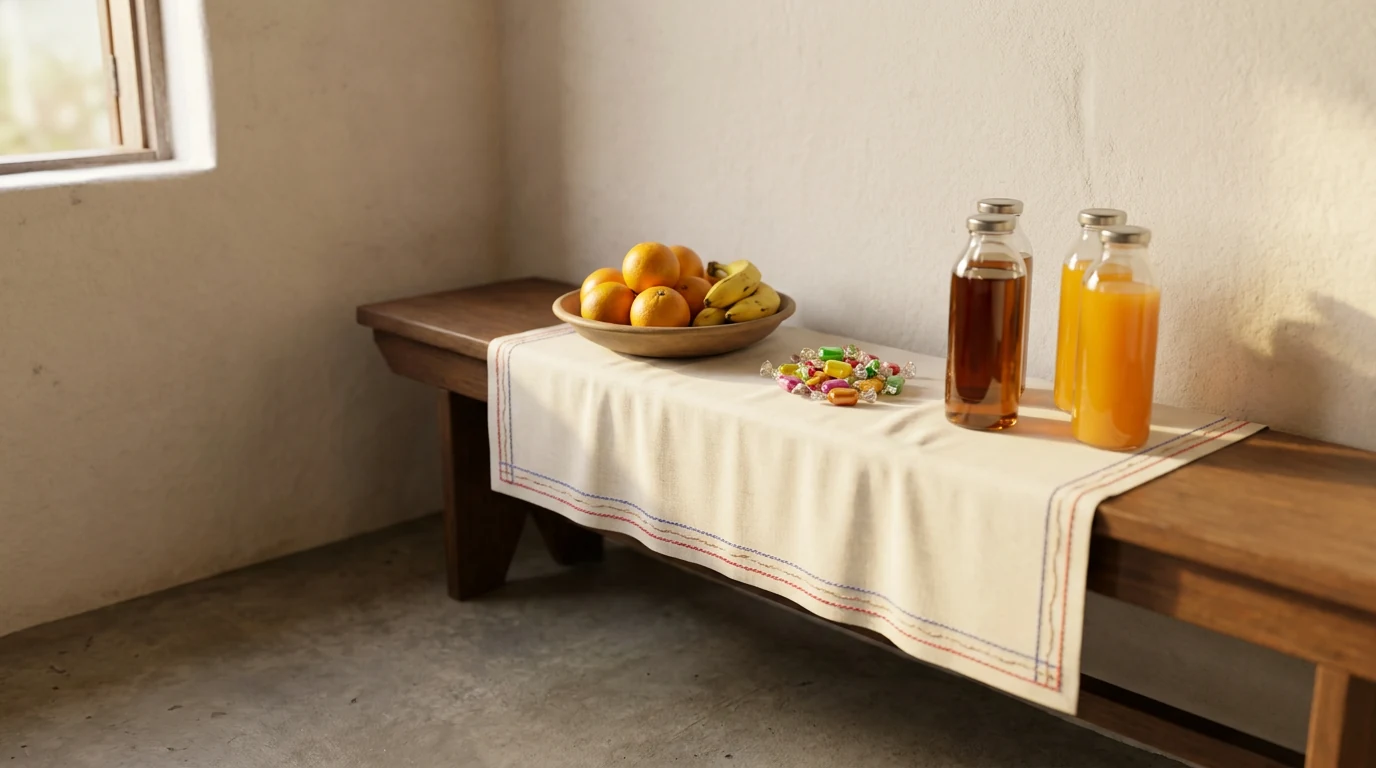
- In an Arroio Grande house, the research recorded soda distributed to the orixás "after they were in the moment of axerô".
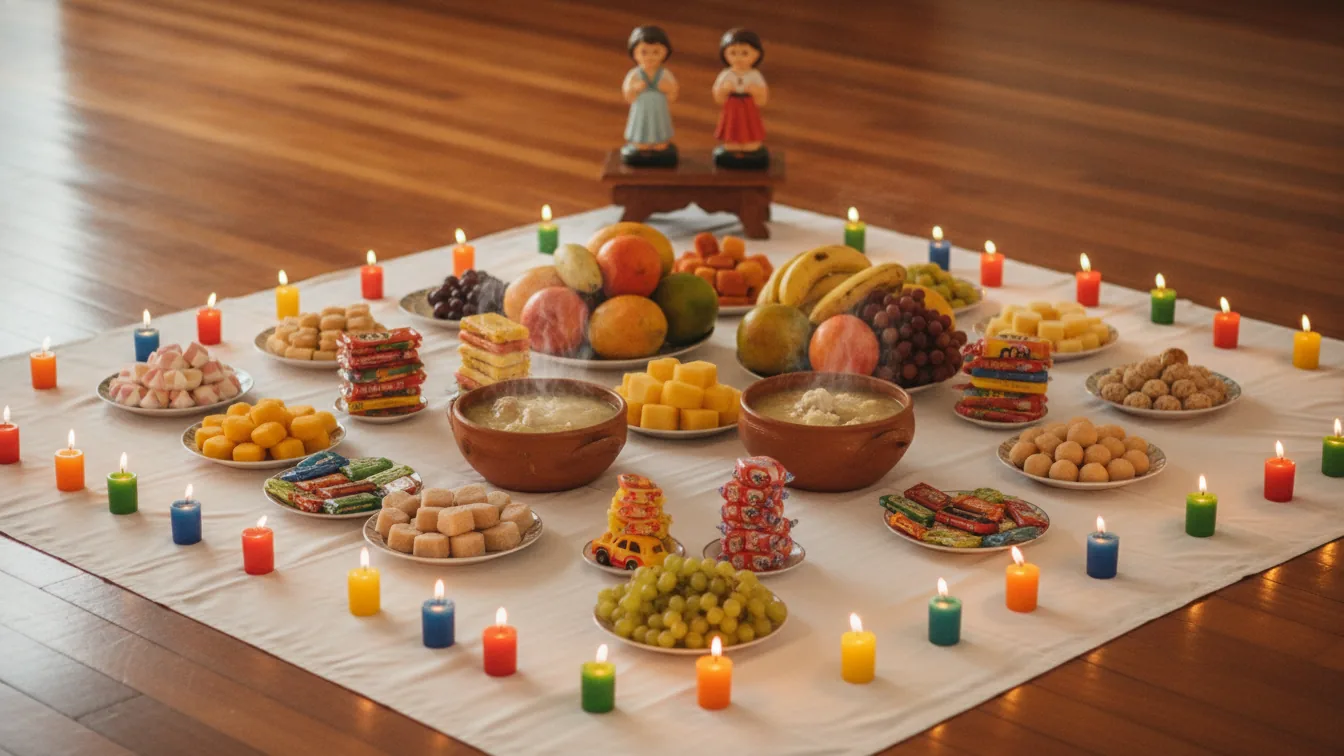
- In a Porto Alegre house, the axero receives fruits and sweets.
- There are leaders who do not let the axero eat, drink, or smoke, according to the foundation of the house.
The axero also does not have its own cult. There is no assentamento or initiation for him, and there is no "front" of axero. The house serves: the visitor does not bring soda or sweets for the axero.
Why the axero exists, according to the houses
The explanation of the houses goes through the secret of Orixá. In the Batuque, the filho de santo cannot know that he is occupied with his orixá. Nunes describes the rule as a prohibition to any person present, including the religious family, "to say anything about the manifestation that occurred".
The axero enters there. In a house in Arroio Grande, the mãe de santo explained to the research what happens in that moment. The orixás "work with the head" of the son, so that he does not suspect anything. The lack of memory after the axero, which Nunes records, goes in the same direction.
The rigidity of this secret varies. According to Nunes' research, it is more rigorous in Jeje-Ijexá houses; in Cabinda houses, it ranges from rigid to loose; in Oyó houses, it is almost not observed. The portrait of each nation is in the nations of batuque.
The origin of the word has a hypothesis. Nunes sees it in asiwère, a Yoruba term that Verger used for a stage after the manifestation in Oyó, "a possible origin of the term axero". The author himself warns that he cannot close the matter.
Is axero the same as erê?
They look alike because of their childlike manner, but the houses do not agree that they are the same thing. In ketu nation candomblé, the erê is "the child of the orixá" and corresponds to his childlike state, with a role in the seclusion of the feitura. In umbanda, the erês are child spirits that work in the gira.
| Tradition | Name | What is it |
|---|---|---|
| Batuque | axero | passage between the orixá and consciousness, without its own cult |
| Candomblé ketu | erê | infantile state of the orixá, present in the feitura |
| Umbanda | erês | infantile spirits with their own gira |
The babalorixá Erick Wolff says that the name axero "is not associated" with the erê of candomblé. A blog from a Jeje-Ijexá house claims the opposite, that in candomblé they are called erês. The erês of umbanda have their own article in erês in umbanda, and the children of batuque, in Ibeji in batuque.
How the visitor treats the axero
The axero is a moment of relaxation, and even so, it asks for respect. A Jeje-Ijexá house summarizes: despite the jokes, the axeros "still preserve the essence of the orixá". In practice, this means:
- Do not comment with the filho de santo later about what he did or said. The secret applies to everyone present.
- Do not ask anyone from the house if that person was occupied.
- Keep the camera away. In the batuque, the orixás cannot be filmed or photographed after they arrive at the terreiro. From the arrival of the orixá to the end of the toque, the rule of the houses is not to film.
- Follow those who are from the house. If in doubt about what to do, ask quietly someone from the house, without interrupting the toque.
The houses treat the breach of secrecy as a serious offense. The clothing, the time of arrival, and the rest of the etiquette of a party are in batuque party: how it is and what to do.
Frequently asked questions
What is being in axero?
Being in axero is staying in the state of passage between the orixá and full consciousness, at the end of the occupation. The person acts like a child, speaks in their own way, and, when they leave this state, they do not remember what happened. It is a state specific to the batuque of Rio Grande do Sul.
Is the axero the orixá?
The houses say that the axero still preserves the essence of the orixá, which is why it asks for respect. But it is not worshiped separately: it has no assentamento, initiation, nor its own front. In a speech recorded by Norton Corrêa, "it is the same santo", but "neither here nor there".
Does the axero change from nation to nation?
What changes the most is the secret surrounding it. According to Nunes, the rule is more rigid in Jeje-Ijexá, variable in Cabinda, and almost absent in Oyó. They also change what the axero eats and drinks, and whether it can be eaten, according to the fundamento of each house.
Where does the word axero come from?
The origin is uncertain. Nunes points to the Yoruba asiwère as a possible root, which Verger recorded at a stage after the manifestation, in the rites of Oyó. He himself says he cannot settle the matter. Among the batuqueiros, the word has various spellings, such as axêro, axerê, and axêre.
References
- Marcus Vinicius de Souza Nunes: the secret of Orixá in afro-southern Batuque, Revista Calundu, UnB, 2020 (archived copy)
- Dênis Moura de Quadros: the batuque of Rio Grande do Sul in two short stories, R. Letras, UTFPR, 2020
- Anderson Machado: religious trajectory of Mãe Preta D’Ogum in Arroio Grande, TCC, Unipampa, 2023
- Emerson Giumbelli and Leonardo Oliveira de Almeida: The enigma of Quimbanda, Anthropology Journal, 2021
- Camargo, Santos and Scorsolini-Comin: The initiation of the orixá, Psicologia & Sociedade, 2018
- Yuri Prado: the two brothers in the caruru of Cosme and Damião, GIS, USP, 2022
- Babalorixá Erick Wolff de Oxalá (Obatala): the axêro in the tradition of Batuque, 2017
- Hendrix Silveira: Who is the axerê?, 2008
- Jêje-Ijexá RS nation: the axerês, 2012
- Iyalorixá Fernanda d’Oxum (Oshun) Alaorô: the acherê or axêro