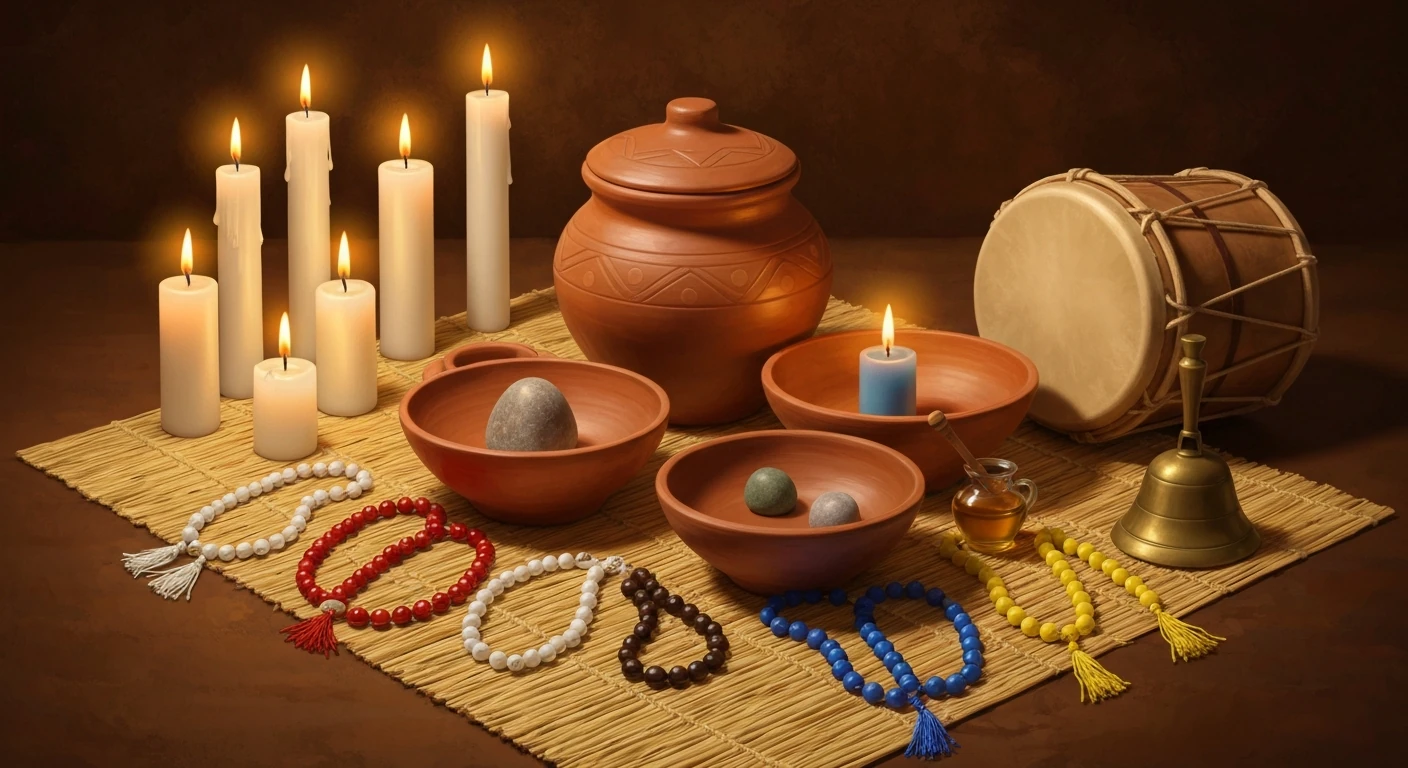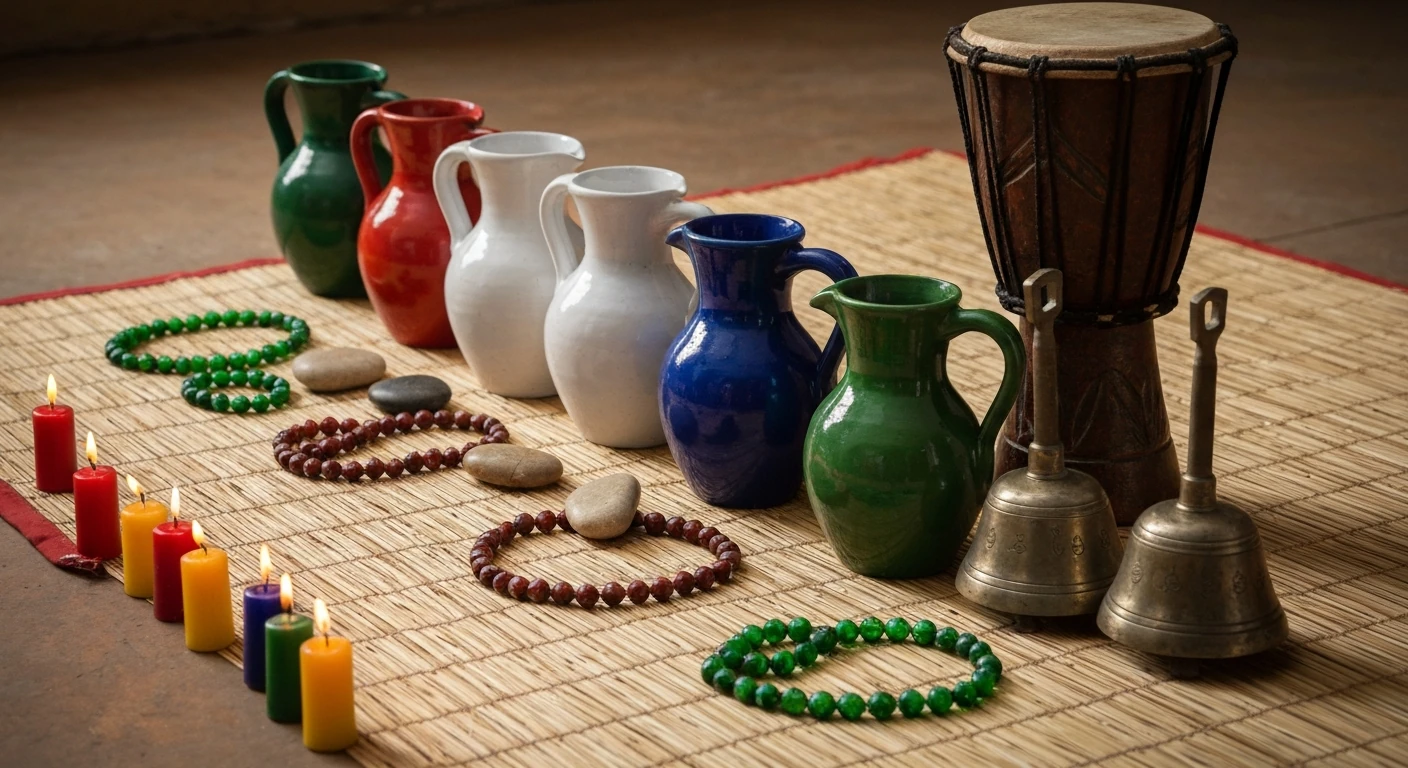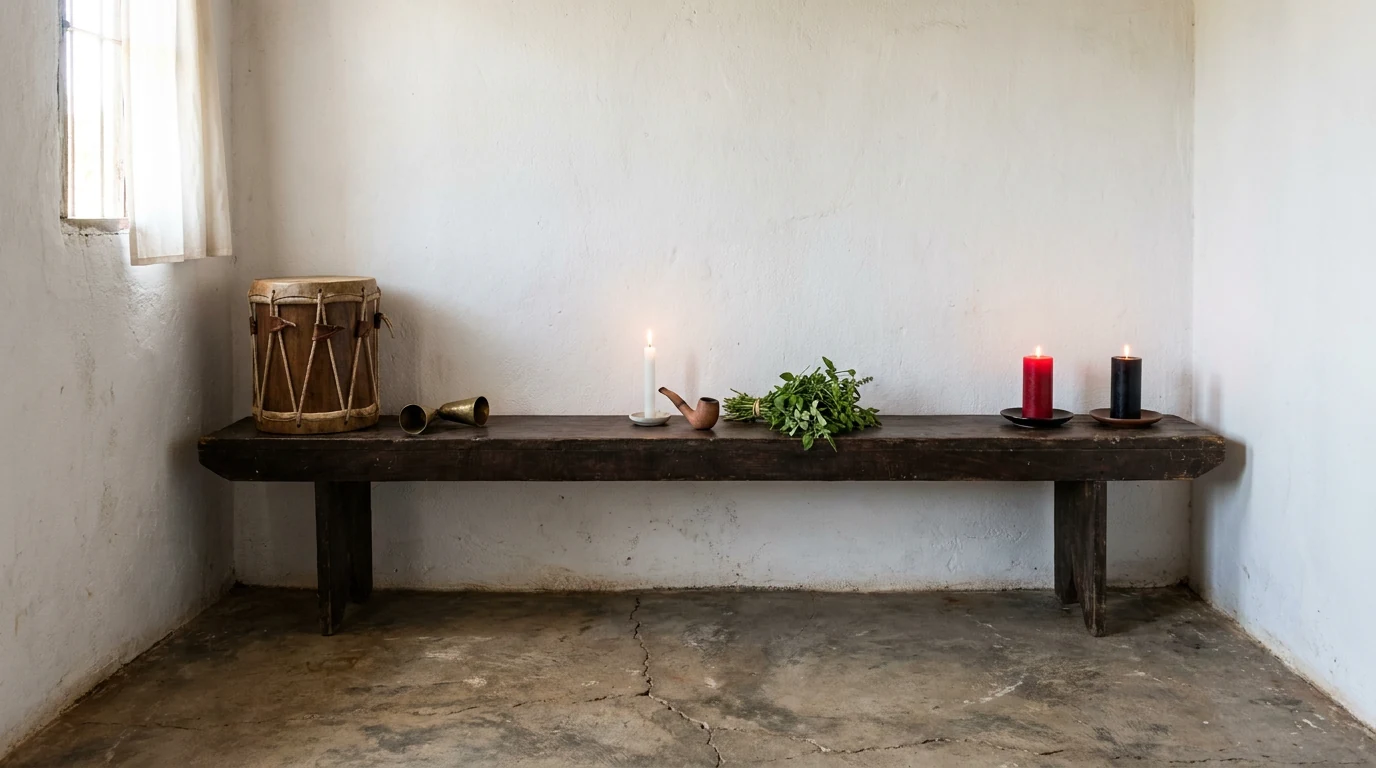
The Linha Cruzada is the religious form of Rio Grande do Sul that joins three sides in the same house. There, they worship the orixás of batuque, the caboclos and pretos-velhos of Umbanda, and the exus and pombagiras of Quimbanda. Each side has its own rite, and in most temples, each one has its own session.
This guide shows where the name comes from, when Linha Cruzada emerged, and how the house organizes the three sides. It also shows why the famous "80% of houses" is an estimate that no one actually counted.
What is Linha Cruzada
Linha Cruzada is the Gaúcho name for the house that joins three religious modalities in the same temple. The anthropologist João Daniel Dorneles Ramos, a doctor from UFRGS, describes at least three lines. They are Batuque or Nação, of the orixás; Umbanda, of the caboclos, pretos-velhos, and Ibejis; and Quimbanda or Gira, of the exus and pombagiras.
The houses are concentrated in the metropolitan region of Porto Alegre. Among themselves, the Afro-Gaúcho people usually call the set simply "religião," "povo de religião," or "nação."
Each side keeps what is its own, and the house does not merge the three into a single rite. To understand the orixá side from its origin, the starting point is the guide on what is batuque.
Where does the name Linha Cruzada come from
The most cited explanation is from the anthropologist Norton Corrêa, recorded by Ari Pedro Oro in the magazine Estudos Afro-Asiáticos:
The modality "is called Cruzada [...] because, while Batuque worships only orixás and Umbanda worships caboclos and pretos-velhos, Linha Cruzada brings them together in the same temple."
Norton Corrêa, cited by Ari Pedro Oro (2002)
In the same sentence, Corrêa adds that the house adds the exus and pombagiras to these two universes.
The word circulates in the houses and in research. The pai de santo Cesar de Xangô (Shango) has a "terreiro cruzado" in Alvorada, with umbanda, quimbanda and batuque. But there are houses that practice batuque and umbanda without calling themselves Linha Cruzada. In a 2011 mapping in Porto Alegre, the term appeared in less than 3% of the responses.
The researchers also do not use the name in the same way:
- Ari Pedro Oro treats Linha Cruzada and Quimbanda as names of the same cult to exus and pombagiras
- Rodrigo Marques Leistner sees Linha Cruzada as a predecessor of quimbanda
- Barbosa (2012) reads the name as a logic that connects and separates the spirits at the same time
- Ramos speaks of a complex of at least three lines
In the daily life of the house, the field word is "lado": people speak of the lado of batuque and the lado of exus.
When Linha Cruzada emerged
There is no founding year with a source. The authors give different ranges:
- End of the 1950s and beginning of the 1960s, for Leistner
- 1960s, for Oro in 2002 and in 2008
- 1970s, for the same Oro in 2012, citing Corrêa
The path that the sources describe is that of priests initiated in batuque or in Umbanda. They joined the other modality and began to practice both in the same temple.
The background helps to understand. Umbanda arrives in Porto Alegre in the 1930s and gains the first federation in 1953. At the time, it is "white", without drums and without animal sacrifice. Until the mid-1960s, the worship of exus in the first crossed terreiros still followed Umbanda, and the change began inside these temples.
The three sides of the house
Each side has its spirits and its entry rite. The names of the rites are those that Ramos recorded.
| Side | Who is worshiped | Entry rite |
|---|---|---|
| Batuque or nation | Orixás, with liturgy in nagô | Apronte |
| Umbanda | Caboclos, pretos-velhos and bejis, with a ritual in Portuguese | Herbal amaci |
| Quimbanda or Gira | Exus, pombagiras, Romani people and People of the Orient | Crossed amaci |
On the batuque side, the nations are Jeje, Ijexá, Oió, Cabinda and Nagô. There Bará is orixá: he occupies his children and is owner of the head, like the other orixás. It is the name that batuque gives to the orixá that corresponds to Exu (Eshu), and a "pure" batuque house does not have a statue of Exu. The profile is in who is Bará, and the pantheon in orixás of batuque.
On the quimbanda side, the exu is "crossed". He receives ritual treatment similar to that of an orixá and has his own consecrated foundation (assentamento), and those who work with him need to be initiated. The Romani people, who had their own line in Gaúcho Umbanda, began to be worked as an exu line. In other states, the Romani line has other arrangements, as shown in the article about Romani spirits in Umbanda.
The caboclos and pretos-velhos on the umbanda side appear as a result in the test of your spirit. Animal sacrifice is outside of umbanda and is present in batuque and in the Crossed Line. The entry ritual in any side is done in the house, with the pai or mãe de santo.
How the house separates sessions and consecrated foundations (assentamentos)
In most crossed temples, each side has its session. When the session is batuque, no umbanda ritual enters, and exu is not worshipped in a batuque session.
The days change from house to house. A documented example in Porto Alegre is that of the house of Mãe Teresinha de Oxalá (Obatala): pretos-velhos on Tuesdays, caboclos on Thursdays and, at the request of the exu, ritual works on Fridays. It serves as a portrait of a house.
The settlements are also kept separate. Leistner recorded a terreiro with distinct houses for the exus, for the barás, and for the eguns of the batuque and the quimbanda. In general, the arrangement is simpler, but it maintains the division between inside space and outside space.
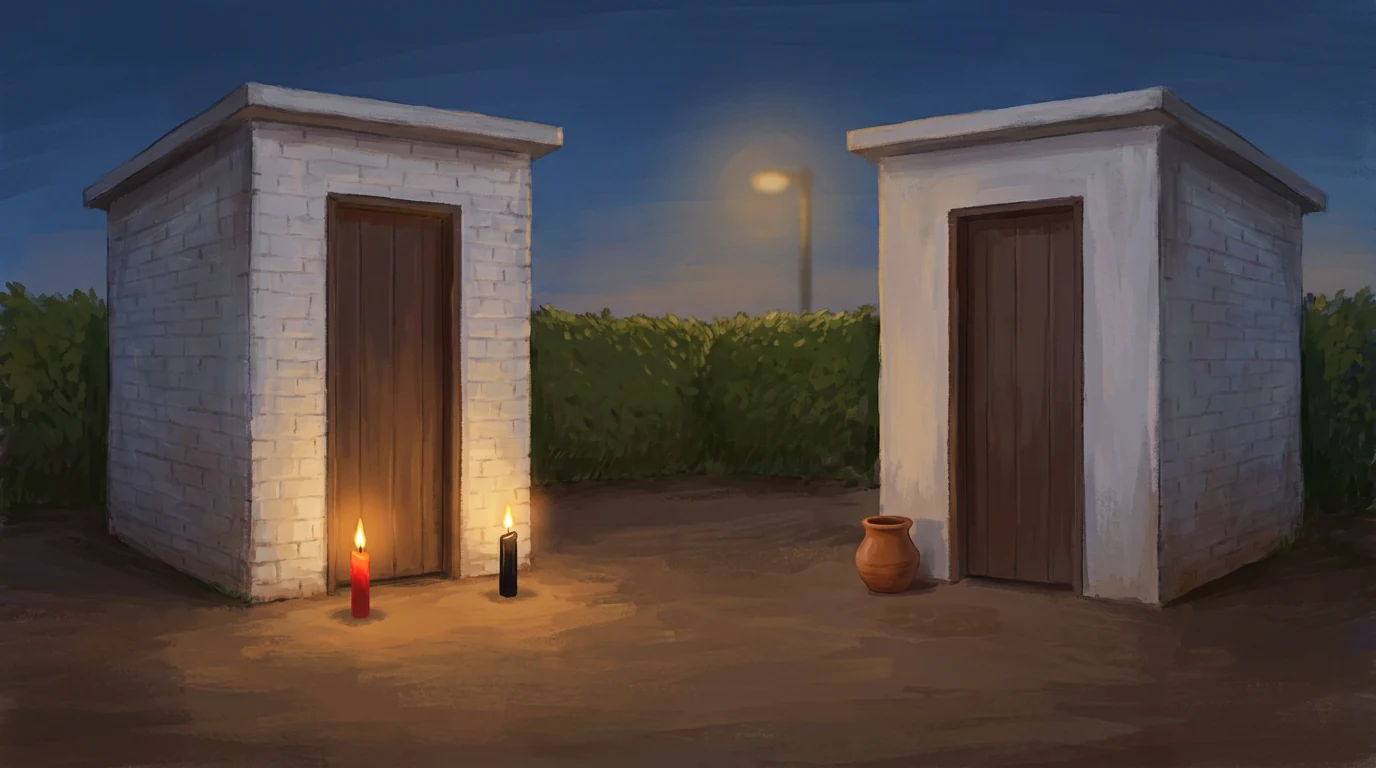
Whoever visits one of these houses needs to know a rule of the batuque: orixá is not filmed or photographed after arriving at the terreiro. Other visiting guidelines are in festa de batuque.
How many houses are of Linha Cruzada
The most repeated number is 80%, and it is an estimate:
- Norton Corrêa (1994): 80% of Linha Cruzada, 15% of pure batuque and 5% of pure umbanda
- Ari Pedro Oro (2002): about thirty thousand terreiros, with 80% of Linha Cruzada, 10% only of umbanda and 10% only of batuque, and the warning that the numbers are "extremely precarious"
- Rodrigo Leistner (2014): about 80%
In 2012, Oro himself wrote that the investigation into the distribution of the three modalities "has not yet been carried out". The 2011 mapping in Porto Alegre, with less than 3% of self-declaration, also differs from the estimate.
The measured data that exists is different. In the 2010 Census, 157,599 Gaúchos declared an Afro-Brazilian religion, 1.47% of the state and 3.35% of Porto Alegre, as shown by Oro in the Civitas magazine. The census counts people by declared religion and does not separate Linha Cruzada from batuque.
Linha Cruzada and the Gaúcha quimbanda
The relationship between the two is where researchers diverge the most. Oro calls both by the same name. Leistner sees in Linha Cruzada the predecessor of an autonomous quimbanda.
Emerson Giumbelli and Leonardo Oliveira de Almeida, in the Revista de Antropologia, question this autonomy: "Specific does not mean autonomous". For them, a temple only of quimbanda is rarer.
Corrêa explains the growth of Linha Cruzada with three reasons: a cheaper ritual than that of batuque, simpler learning, and the sum of the mystical force of batuque with that of umbanda. The expansion also generated conflict between generations, and some of the elders speak of "distortion." What separates umbanda from quimbanda is in the difference between umbanda and quimbanda.
Frequently asked questions
What does linha cruzada mean in umbanda?
It is the Gaucho name for the house that worships the orixás of batuque, the caboclos and pretos-velhos of umbanda, and the exus and pombagiras of quimbanda, in separate sessions. According to Norton Corrêa, the name comes from gathering in the same temple what the other modalities worship separately.
Is Umbanda cruzada the same thing as Linha Cruzada?
Not always. Linha Cruzada, with that name, is registered in Rio Grande do Sul and has the orixás of batuque as one of the sides. "Umbanda cruzada" is a broader expression, used for umbandas that work with other traditions, and is explained in branches of umbanda.
Are Batuque and Linha Cruzada the same thing?
No. Batuque worships only the orixás, with liturgy in nagô, and a pure batuque house does not have a statue of Exu. Linha Cruzada adds umbanda and quimbanda to that side, and in most houses, each one has its own session.
Where to buy items for a Linha Cruzada house
At Joia Mística Laroyê you find what each side of your house uses:
- Red and black candles for the side of exus and pombagiras
- Statues of caboclo, preto-velho, exu and pombagira for the umbanda and quimbanda sides
- Herbs for ritual bath for the umbanda side
- Ritual clothing, the axó, for the house sessions
The Exu statue stays outside the side of the batuque, and your house guides what goes in each space. Stop by the shop at Rua Benedito Zingari, 460, Bela Vista, in Extrema-MG, or call on WhatsApp with delivery to all of Brazil.
References
- Giumbelli and Almeida: The enigma of Quimbanda, USP, 2021
- Ari Pedro Oro: The current Afro-religious field in Rio Grande do Sul, Civitas, 2012
- Ari Pedro Oro: Afro-Brazilian religions of Rio Grande do Sul, 2002
- João Daniel Dorneles Ramos: Aprontamento as cosmopolitics, ReACT
- Aline Speroni: Afro-Gaúcho religions in history teaching, UCS, 2018