



In the week, the day of Ossaim is Thursday in most sources; in the year, the most cited date is October 5, in Umbanda. In 2026, October 5 falls on a Monday.
The two answers seem simple and they are not. The literature gives five days of the week for the orixá (orisha). No open source explains why Umbanda puts the date on October 5.
What is the day of Ossaim in the week and in the year?
The day of Ossaim in the week is Thursday in most open sources. In the year, the date that Umbanda houses record is October 5. In Gaúcho batuque, the day is Monday and the cited date is August 16.
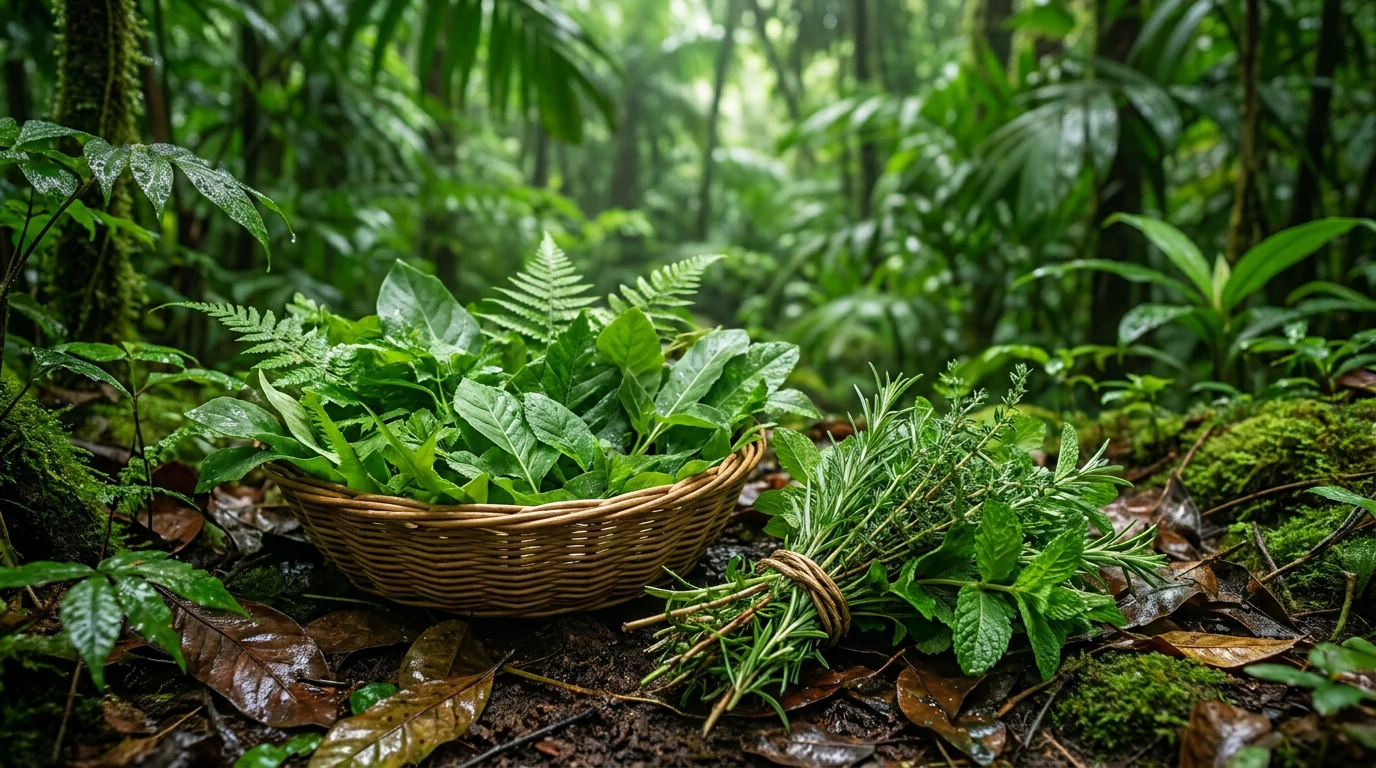
Ossaim, also written as Ossain and, in batuque, Ossanha, is the orixá of the leaves. The complete profile is in who is Ossaim.
What is the day of the week of Ossaim: five answers
The day of the week of Ossaim has five answers in open sources: Thursday, Tuesday and Thursday, Saturday, Monday and Wednesday. The difference follows the tradition of the writer. The day varies from house to house.
- Thursday. Reginaldo Prandi gives this day in the São Paulo Candomblé Ketu terreiros he studied, in the table of the annex of his article. FUCESP and an Umbanda tent in São José dos Campos say the same. In Terreiro Tumbenci, of Candomblé Angola, it is the day of Catendê.
- Tuesday and Thursday. Pedro Botelho, in Bahia, writes "on Tuesday on Thursday", "varying according to each Ilê". Bianca Purcino, from UFSB, repeats Tuesday and Thursday.
- Saturday. Verger records Saturday as the day consecrated to Ossain in Brazil. It is the sole source for this day.
- Monday. It is the day in batuque, according to Sociedade Africana Reino de Xangô (Shango), in Viamão (RS), and two more Gaúcho houses. The batuque excerpt is in Ossanha in batuque.
- Wednesday. A Umbanda blog from 2010, weak source.
None nullify the others. Each house follows the day it received. See also the day of the week of each orixá.
The day of Ossaim in the year: October 5 in Umbanda
The day of Ossaim in the year is October 5 in the Umbanda houses that record it. FUCESP, the federation of São Paulo, gives Saint Benedict "celebrated on October 5". The São José dos Campos tent writes that Ossain is "celebrated on October 5". Both pages only record the date. They do not say since when it has been valid or what the house does on that day.
A tent in Bom Despacho (MG) has recorded it since at least 2017. The Giras de Umbanda portal and Terra repeat the formula. The Giras entry has the same form as FUCESP and does not count as an independent source. The 2010 blog gives the saints without the October date. Not all Umbanda brings the date.
In Candomblé, the date does not appear in academic sources
Prandi (ketu), Botelho (Bahia), Purcino and Verger give the day of the week and no festival date. Botelho heard from an ialorixá that the worship of Ossaim, a rare orixá, has been decreasing.
Why October 5? What is known
October 5 is, in Brazil, the date of the feast of Saint Benedict: the Church has celebrated it on this day since 1983. It was the CNBB that granted the deference, on the day after the feast of Saint Francis, which falls on October 4. The connection of this date with Ossaim, however, no open source makes.
In the world, the feast of Saint Benedict is April 4. The biography of the saint is in Saint Benedict, the black saint.
The houses give a reason for the connection between the orixá and the saint, not for the date. The Minas tent speaks of "healing power and knowledge associated with this Catholic saint".
What is not known
No open source explains Ossaim's October 5th. They remain unanswered:
- Since when. The oldest dated record the search found is from 2017, which only shows where the search stopped.
- If it is prior to 1983. If it comes from before the Church's date, or if it copied theirs, no one says.
- What the houses do on the day. No academic or institutional source was located.
Which saint is Ossaim? Each house answers in a different way
There is no single saint for Ossaim. Open sources give at least three, and four if the press is counted.
- Saint Benedict, in umbanda. It is the pair of FUCESP, of the São José dos Campos tent, of Giras, and of the Minas tent. A thesis from UFPel says that Ossaim "presents itself more popularly as Saint Benedict," without citing a source.
- Saint Onofre, in Prandi. It is the only syncretism of Ossaim that an open academic periodical brings, in ketu candomblé. The Church celebrates Saint Onofre on June 12. No open source says that any house celebrates Ossaim on this date.
- Saint Roch, in batuque. Reino de Xangô says "in some terreiros it is with Saint Roch." A gaúcho babalorixá gives August 16 as the day of Saint Roch, syncretized with Ossanha.
- Saint Francis of Assisi, only in a list from Terra, without authorship and without a source.
In another tradition, the pair changes: in an academic article about Saint Benedict, the saint appears linked to Averequete, in tambor de mina, and Ossaim is not cited. Some calendars bring Saint Blaise, and other lists put Saint Gabriel, Saint Christopher, Saint Jude Thaddeus, and Saint Joseph. No reliable source for this was located. The feast of Saint Blaise is February 3.
Syncretism is not identity. The São José dos Campos tent itself warns that it "does not mean that the two figures are exactly the same deity."
What the houses do on October 5
No reliable source for what the houses do on October 5 was found. FUCESP and tents only record the date. The text of Giras de Umbanda about the month of Ossaim does not bring a rite for the day.
Umbanda websites say there is a rite on this date, but no open academic or institutional source confirms it. Therefore, this text does not describe a rite of fundamento. What the house does on the day, the house decides.
What open sources record is an everyday gesture. In a thesis from UFPel about the Umbanda of Pelotas, a leader says he does not practice direct worship to Ossaim, but he greets him when using the herbs. An ogan says:
“whenever a herb is used, Ossaim is paid with a greeting (which was not specified) and a green or green and yellow candle”
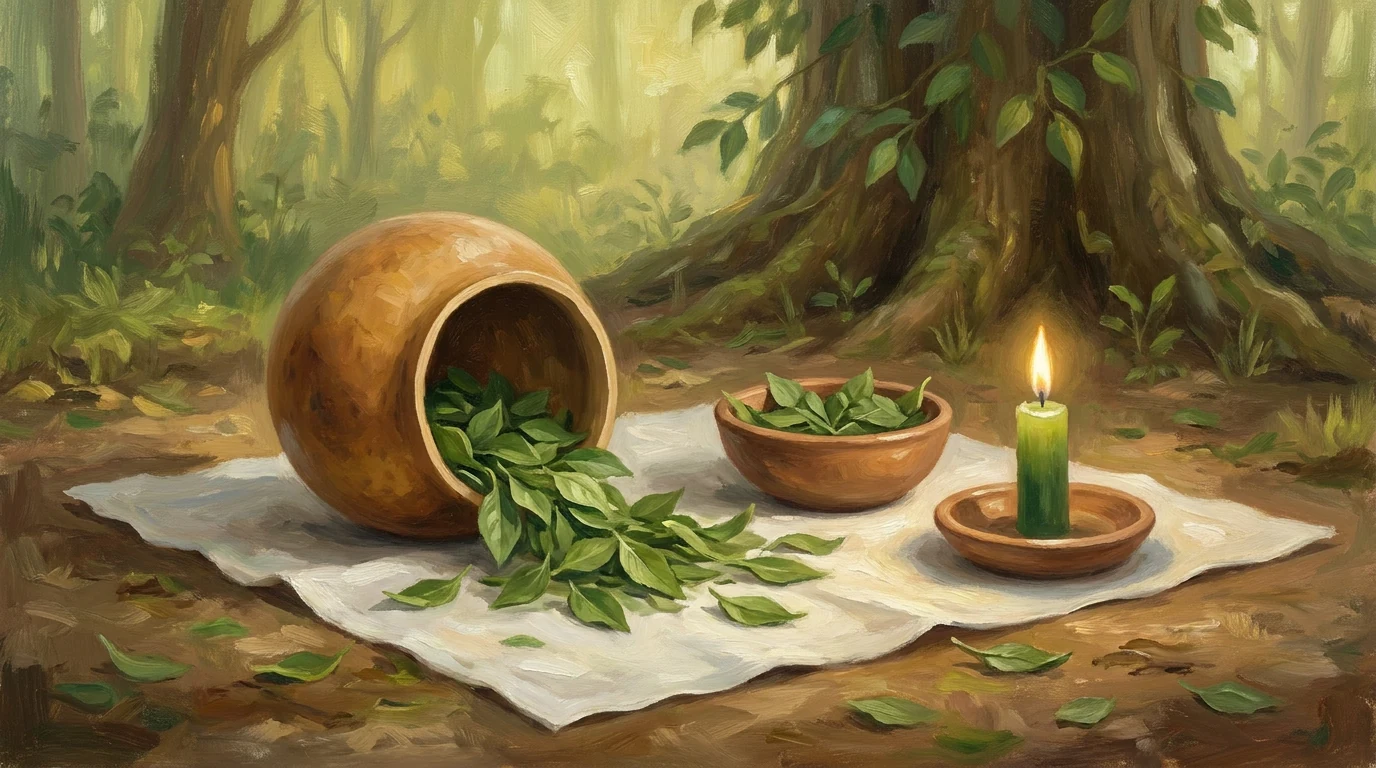
Costa and Vitorino, citing a researcher, write that in the Candomblé ritual one must “pay reverence to the leaf and ask permission from its patron, who is Ossain”. The greeting that Verger notes is “Ewé Ô!” (“Oh! The leaves!”), which in another passage is the cry of Ossain when the gourd of the leaves falls and breaks.
If your house asked for a candle or a herb and you do not know which to choose, Joia Mística clears up the doubt via WhatsApp.
And in 2026: October 5 falls on a Monday
In 2026, October 5 falls on a Monday. Tuesday is the 6th, Thursday is the 8th, and Saturday is the 10th. Only Monday falls on October 5 itself. It is the day of Ossaim in the batuque.
The day of your house is worth more than the one in this text. If in doubt, ask your leader. The dates of the year are in the calendar of the orixás, and the same question, week or year, appears in the day of Oxum.
Frequently asked questions
What is the day of Ossaim in the week?
Thursday, in most open sources. There are other answers: Tuesday and Thursday in Botelho and Purcino, Saturday in Verger, Monday in batuque. Botelho says the day varies according to each ilê, so the day of your house applies.
Is the day of Ossaim October 5?
In umbanda, yes: FUCESP and a tent in São José dos Campos record this date. In candomblé, open academic sources do not provide a festival date. It is the date of Saint Benedict in Brazil since 1983, and no open source explains the connection.
Is Ossaim Saint Benedict? Which saint is Ossaim?
There is no single answer. Umbanda records Saint Benedict, Prandi records Saint Onofre in ketu candomblé, and batuque records Saint Roch.
References
- Reginaldo Prandi, Horizontes Antropológicos: African gods in contemporary Brazil
- Pierre Verger, Corrupio: Orixás, work record
- Pedro Freire Botelho: Ewé Awo, the secret of the leaves
- FUCESP: Ossain
- TUCTVC: Umbanda, Ossanha
- Reino de Xangô: Osanha
- Franciscanos do Brasil: Saint Benedict
- Frades Capuchinhos: Saint Benedict and the different dates
- Bianca Purcino, UFSB: dissertation, Ossaim and the leaves
- Hildete Costa and César Vitorino, Fragmentos de Cultura: Terreiro Tumbenci and the use of healing plants
- CNBB: Saint Brás, bishop and martyr
- Archdiocese of Belo Horizonte: Feast of Saint Onofre
- Renata Penachio, Revista Calundu: The self-translation of Saint Benedito
- Angélica Mortagua, UFPel: TCC on herbs and orixás in Pelotas



