The gira de quimbanda is the session in which Exus and Pombagiras, the Povo de Rua, descend to work: to listen, advise, cleanse, and open paths. It is also called gira de esquerda, and carries a heavy reputation because of an old prejudice that confuses Exu with the Christian devil. That is not it.
This guide shows what really happens in a gira de quimbanda: what gira de esquerda is, the stages of the ritual from beginning to end, what is offered, and how to behave when you visit a house.
What is the gira de quimbanda
The gira de quimbanda is the ritual meeting dedicated to Exus and Pombagiras. While Umbanda organizes its giras around caboclos, pretos-velhos, and erês, Quimbanda works with the Povo de Rua: spirits that dominate communication, crossroads, strength, and work.
Before anything else, it is necessary to undo the most common confusion. Contrary to what Christian prejudice repeats, Exu is not the demon of the Abrahamic traditions. He is the spirit of paths and communication, the first to be greeted so that the ritual works can happen. Quimbanda is a Brazilian religion with Bantu and Yoruba roots, with its own structure and liturgy, and deserves the same naturalness given to any faith.
“Laroyê, Exu! Salve a Pombagira!” The greeting opens the circle and recognizes who arrives to work.
If you are still situating yourself in the tradition, it is worth starting with the general overview in what is Quimbanda, which explains origin, realms, and the place of Exu and Pombagira.
Gira de esquerda and gira de direita: the difference
In the language of terreiros, the ritual works are divided into direita and esquerda. The division between esquerda and direita organizes fields of action, it is not a moral judgment: esquerda does not mean "of evil" nor direita "of good".
- Right-side gira: caboclos, pretos-velhos, erês and other Umbanda lines, with ritual work more focused on healing, counsel, and welcoming.
- Left-side gira: Exus and Pombagiras, specialists in solving concrete life issues in the street, in the justice of the paths, in protection, and in breaking demands.
Many houses do both, on different days. Monday and Friday are common for left-side ritual work. Those who want to understand why Umbanda and Quimbanda are not the same thing find the complete contrast in difference between Umbanda and Quimbanda.
The stages of a Quimbanda gira
Each house has its foundation, and no script describes them all. Even so, a left-side gira usually follows a recognizable sequence, from preparation to despacho.
1. Firmeza of the Tronqueira
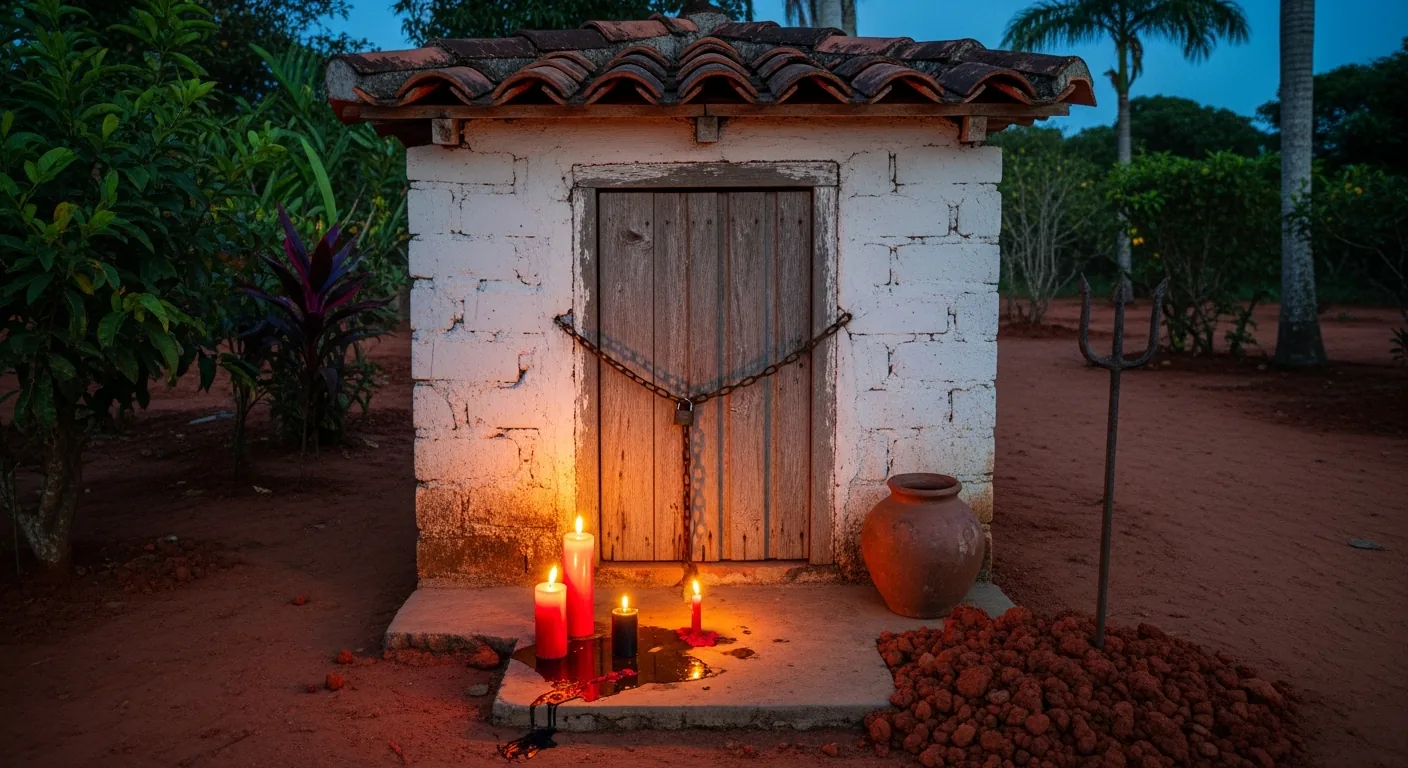
Everything begins at the Tronqueira, the house of Exu at the entrance of the terreiro. The leader firms candles, greets the guardians, and asks permission to open the ritual work. It is the spiritual gatekeeper of the house: nothing enters without passing through there. The functioning of this guard is detailed in what is the tronqueira.
2. Defumação
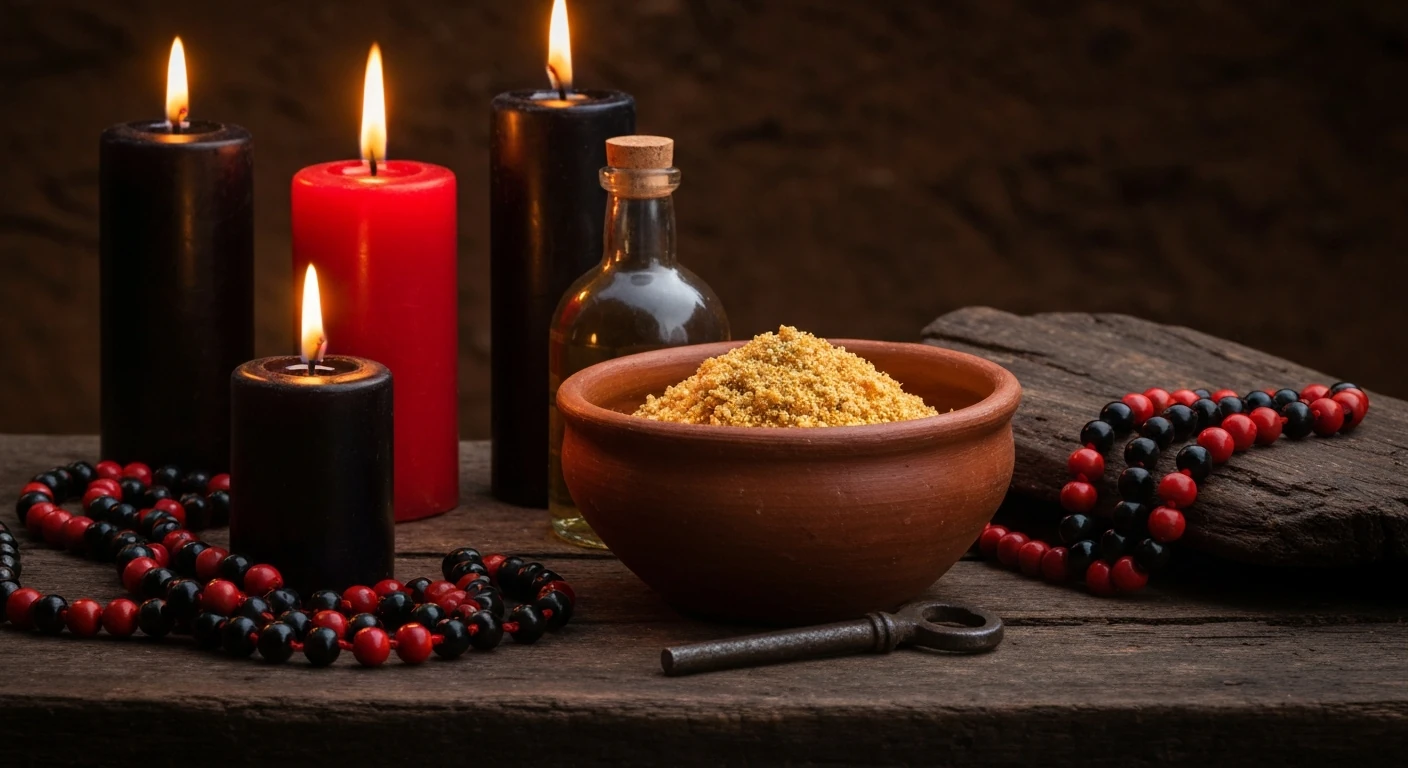
Next comes the defumação of the space and the people present. The smoke of herbs cleanses the environment, disperses dense energies, and prepares the mediums and the consultants for the arrival of the spirits.
3. Opening sung chants
The pontos cantados are the chants that invoke and greet Exu and Pombagira. To the sound of the atabaque and clapping, they mark each phase of the gira and call the spirits to the circle. The ponto is not decoration: it is ritual language that opens and conducts the ritual work.
4. Arrival of the spirits
With the circle warmed, the spirits incorporate into the prepared mediums. The arrival of an Exu or a Pombagira has its own gestures, laughter, greeting, and way of presenting itself. Each spirit has its name, its line, and its own style, from Tranca-Ruas to Maria Padilha.
5. Consultations and ritual work
It is the heart of the gira. The spirits attend to the seekers one by one, give passes, provide guidance, and indicate baths, firmezas, and offerings. Here, issues of protection, closed paths, justice, and love are addressed, always within the field of spiritual preparation.
6. Closing and ritual offering (despacho)
At the end, the closing pontos (sacred songs) give thanks and bid farewell to the spirits. The leader closes the firmeza of the Tronqueira and, when there is an offering, it is despachada at the correct spot. The house returns to rest until the next gira.
What is offered in a gira of Exu and Pombagira
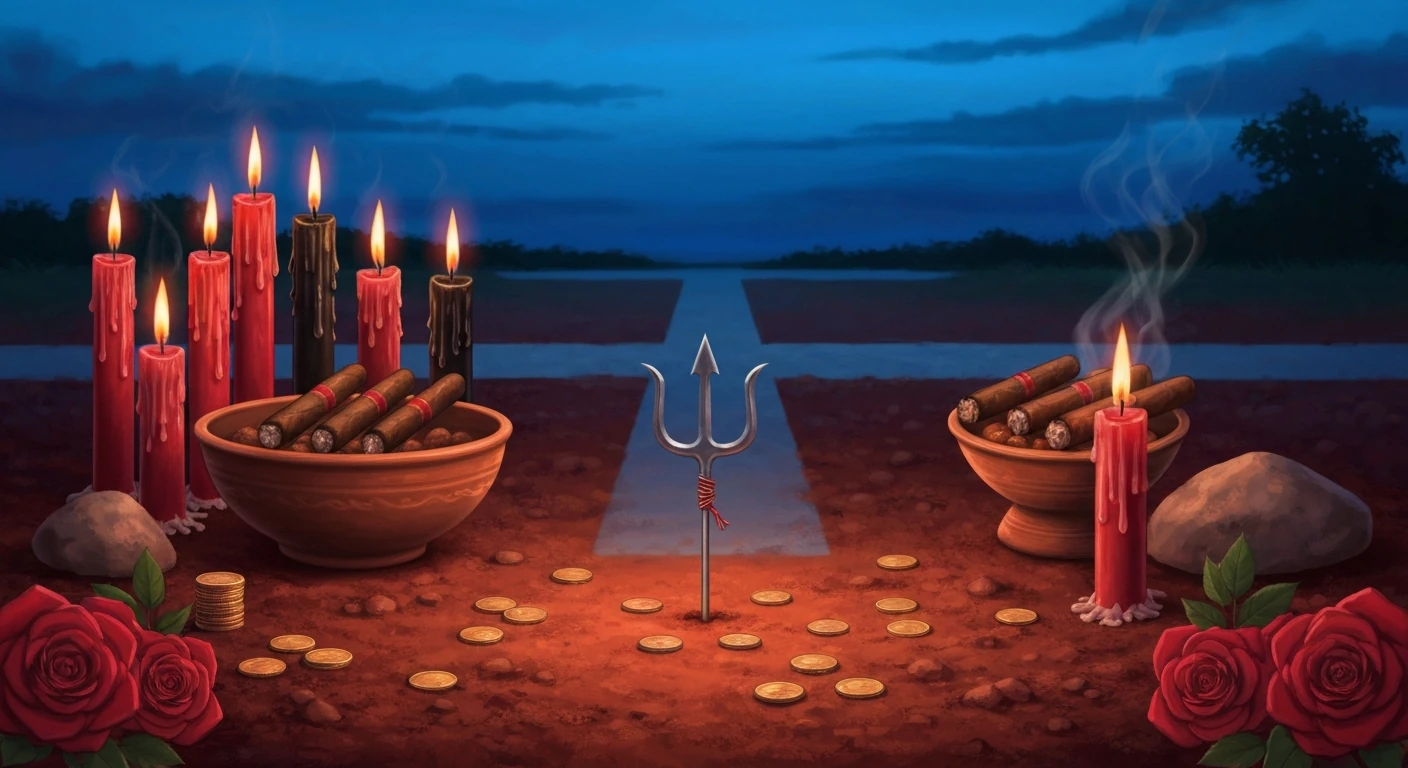
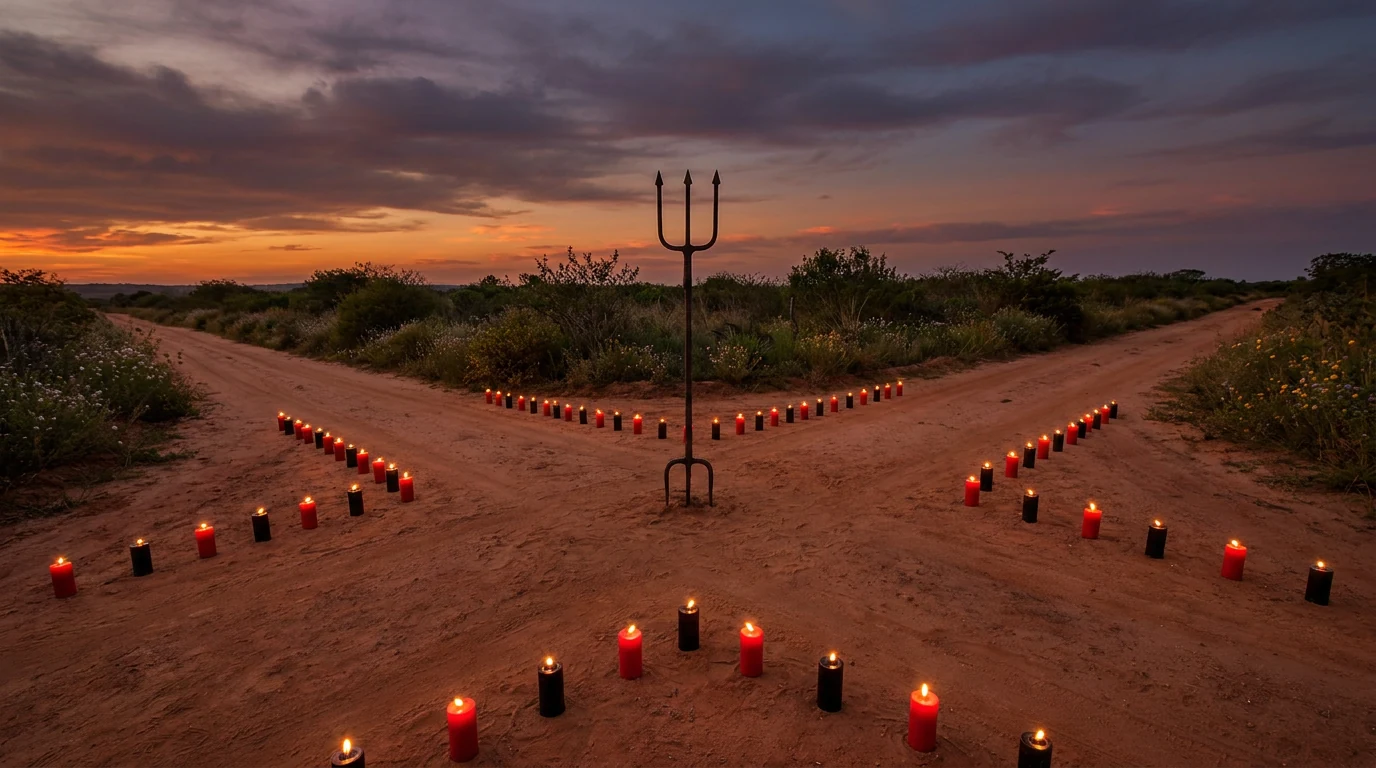
The offerings vary by spirit and by house, and it is always the leader who defines them. In the most common repertoire, red and black candles, marafo (the drink), cigars and straw cigarettes, farofa de dendê, and, for the Pombagiras, cups, red roses, and perfume appear.
None of this works as an automatic transaction. The offering is a gesture of respect and connection, not payment for a guaranteed result. To understand what each guardian usually asks for and where to deliver it, see offering for Exu.
Golden rule for the visitor: do not take or give an offering on your own inside a house. Guidance always comes from the leader or from the spirit itself during the consultation.
How to behave in a Quimbanda gira
You do not need to be initiated to attend an open gira, but you do need proper posture. Some precautions that every house expects:
- Arrive with respect and discreet clothing. Many houses ask for white or sober colors; ask before you go.
- Greet upon entering. A sincere "Laroyê, Exu!" is enough. Revere the Tronqueira from the outside, without touching any assentamentos.
- Do not take photos without permission. Filming mediums and altars without authorization is a serious offense.
- Silence and attention. No side conversations during the pontos and the incorporations.
- During the consultation, be honest and listen. The spirit provides guidance; it is up to you to follow or not, with responsibility.
- Do not ask for guarantees. Serious ritual work is spiritual preparation, never a promise of a miracle with a set date.
Anyone who treats Exu and Pombagira with the same dignity they would give to any religious entidade is welcome. Prejudice stays at the door.
Frequently asked questions
What is a gira de quimbanda?
It is the ritual session of quimbanda dedicated to the Exus and Pombagiras, the so-called Povo de Rua. In it, the spirits incorporate into the mediums to give passes, consultations, and guidance. It is also known as gira de esquerda, in contrast to the gira de direita of umbanda.
What is the difference between gira de esquerda and gira de direita?
The gira de direita gathers caboclos, pretos-velhos, and erês, with a focus on healing and counsel. The gira de esquerda gathers Exus and Pombagiras, specialized in protection, justice of the paths, and concrete issues. The division marks fields of action, not an opposition between good and evil.
Can I go to a Quimbanda gira without being initiated?
In open giras, yes. Just arrive with respect, greet upon entering, maintain silence during the pontos and the incorporations, and follow the house's orientation. More internal practices and ritual work of fundamento are reserved for those who have a role in the terreiro.
What is offered in a gira of Exu?
It depends on the spirit and the foundation of the house. Red and black candles, marafo, cigars, farofa de dendê, and, for the Pombagiras, cups, roses, and perfume usually appear. The composition is defined by the leader, never by the visitor on their own.
How to behave in a gira of Exu and Pombagira?
Arrive in discreet clothing, offer a greeting upon entering, do not take photos without permission, and remain silent during the ritual work. During the consultation, be honest and listen to the guidance. Treat the spirits with the same naturalness you would give to any religious tradition.
Where to find candles, cigars, and ritual work items
The gira takes place at the house, conducted by the leader. What Joia Mística Laroyê offers are the items of current use in religious life:
- Red and black candles: in ritual use sizes
- Marafo, cigars, and straw cigarettes: offering items for the Povo de Rua
- Images and tools of Exu and Pombagira: tridents, horseshoes, and firmeza pieces
- Dried and fresh herbs: for smoke cleansing (defumação) and space cleansing
- Roses, cups, and perfumes: for Pombagira offerings
Visit our physical store in Extrema-MG or contact us via WhatsApp with delivery to all of Brazil. Joice helps you choose according to the guidance of your house.
References
- Wikipedia: Quimbanda, a Brazilian religion with Bantu and Yoruba roots
- Wikipedia: Left and right in Umbanda, the division of fields of action in terreiros