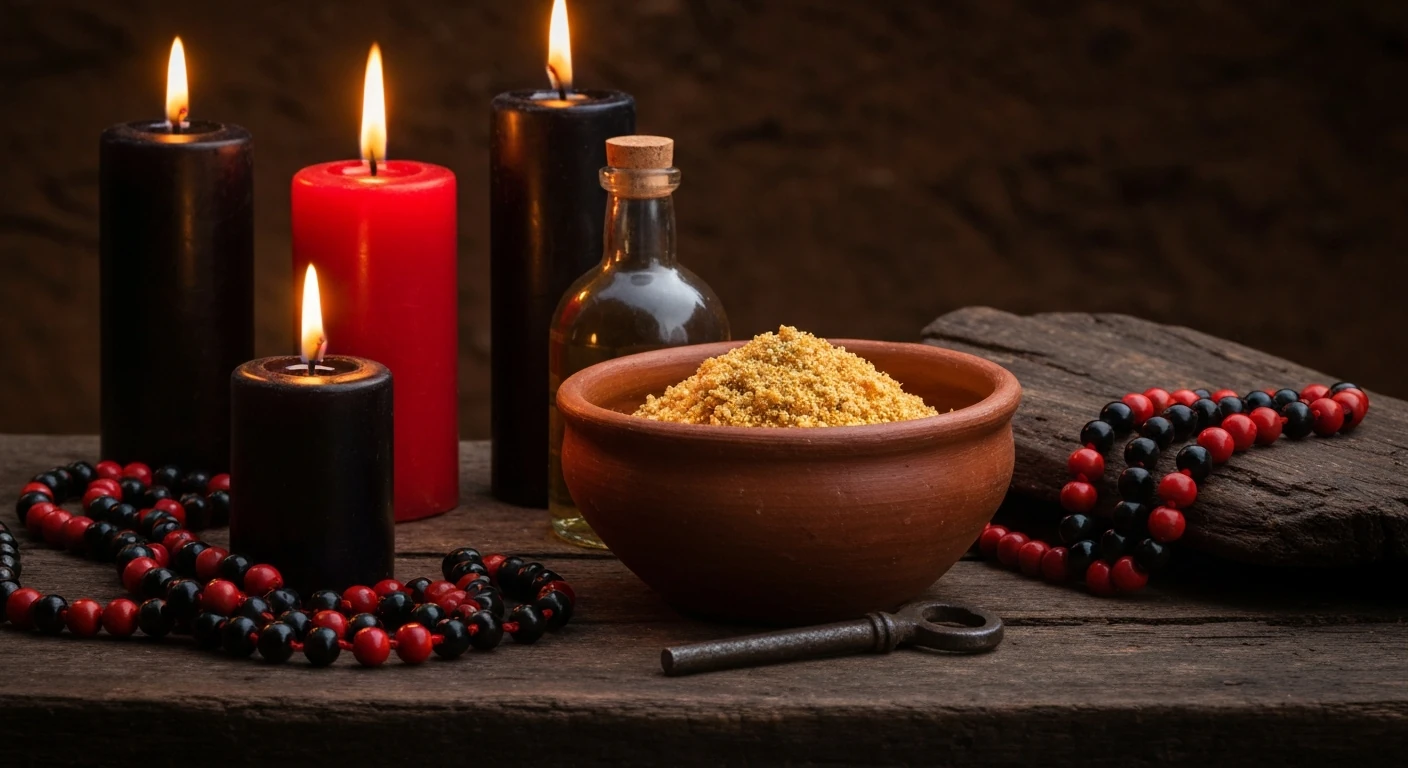
The day of Exu in the week is Monday, in Umbanda and Candomblé. In the year, the date is June 13, the day of Saint Anthony, the saint that Afro-Brazilian syncretism brought close to the orixá (orisha) of paths and communication.
June 13 was born from popular devotion and does not exist as an official national date. Pelotas, in Rio Grande do Sul, created the Day of Orixá Bará on this day by municipal law. To know the divinity in depth, the Yoruba origin, and the prejudice that painted him as the devil, see Who is Exu.
Day of Exu in the week or in the year? The difference that confuses
This is the doubt that appears most when the subject is "what is the day of Exu" and it has two answers, because they are two distinct things.
The day of the week consecrated to the orixá is Monday. This applies both in Candomblé and Umbanda: it is the day when traditionally a candle is lit, the greeting is made, and the assentamento is cared for. Monday is the beginning of the week, and he is the lord of beginnings, nothing more coherent.
As for June 13, it is an annual commemorative date, linked to the syncretism with Saint Anthony. One thing does not replace the other: you can greet the messenger every Monday of the year and make a special tribute on June 13. Think of the difference between praying every Sunday and celebrating Christmas: the weekly frequency and the annual date coexist without competing.
Laroyê Exu! This is how the Yoruba orixá is greeted, something like "Hail the messenger!" The traditional response is "Exu é Mojubá", which carries the meaning of "I respect you, Exu".
Why June 13 is the Day of Exu
June 13 is, in the Catholic calendar, the day of Saint Anthony, a saint born in Lisbon and died on June 13, 1231, known as a matchmaker and as the one who "finds what is lost." In the process of syncretism that marked the African diaspora in Brazil, various orixás were associated with Catholic saints as a form of resistance and survival of the worship. Saint Anthony, for his role in unlocking and opening paths and for his matchmaker appeal, was associated with Exu, the orixá who rules communication, crossroads, and movement.
Hence arises the custom of treating June 13 as Exu Day. It is important to say honestly: there is no "World Exu Day" or "National Exu Day" officially established at the federal level. The date is a popular and syncretic construction, a heritage of the Catholic calendar reappropriated by Afro-Brazilian faith, not a date from the original Yoruba tradition. Recognizing this does not diminish the celebration; it only places it in its proper historical context. As sociologist Reginaldo Prandi shows in the essay Exu, from messenger to devil, it was the colonial gaze and not the Yoruba tradition that tried to downgrade the orixá to a demonic figure.
The association holds more weight in Umbanda (especially in the Southeast and North) and in the Batuque of Rio Grande do Sul, where the orixá is worshipped under the name of Bará. It is worth noting the plurality: in Bahia, Saint Anthony is usually syncretized with Ogum (Ogun), not with the lord of the crossroads. Syncretism was never uniform; it varied from region to region and from house to house. If you want to understand the complete panorama of the bridges between June saints and orixás, also read June saints and orixás.
Bará Day: when a city officialized the date
There is a concrete case that shows how the date is gaining institutional recognition. The city of Pelotas, in Rio Grande do Sul, established by law the “Day of Orixá Bará”, celebrated annually on June 13. Municipal Law No. 7,025/2022 included the date in the official calendar of events of the municipality, pointed out as the first law of its kind in Brazil.
The justification recorded in the processing itself summarizes well the spirit of the celebration: “Throughout Brazil, the 13th is Saint Anthony's Day, but in Pelotas it is Day of Bará.” In the gaúcho batuque, Bará is the name of Exu. The city has a living devotion to Pai Bará of the Central Market, a point of faith that gathers an annual procession and is in the process of being recognized as intangible heritage of the state.
An honest caveat: it is a municipal law, valid in one city, not a national landmark. But it is proof that June 13 as the day of the orixá/Bará is more than folklore: it is organized faith, with history and territory. To better understand this tradition of the South, see What is Batuque, the nation where the messenger is Bará.
Technical sheet of Exu
Before paying homage, it is worth having at hand the foundations of the orixá: the colors, the day, and the elements that guide any greeting.
Colors: red and black | Day of the week: Monday | Element: fire and movement | Domains: crossroads, paths, doors, communication | Symbol: ogó (staff with gourds) | Greeting: Laroyê Exu!
Names and paths: Exu (from the Yoruba Èṣù), Elegbá/Elegbara, Bará (in the batuque of Rio Grande do Sul), Exu Odara, Exu Lonan (owner of the paths), Yangi. Syncretism: Saint Anthony in Umbanda, in the gaúcho batuque and in the North; Ogum in Bahia.
The most traditional ritual offering in Ketu Candomblé is the padê of the Yoruba ipadé, "gathering" a farofa made with dendê oil, offered to "calm" the orixá and open the path for the ritual work. It is the first to eat and the first to be greeted in any ritual: without it, nothing begins.
How to honor Exu on June 13
Honoring the orixá is a gesture of respect and consistency, never a bargain for a guaranteed result. Tradition says that Exu respects those who respect him, and this is built with affection and regularity, not with haste. See simple and safe ways to mark the date at home:
- Light a candle red or black, the colors of the orixá, in a quiet and safe place. Regarding the meaning of each color, see our guide on ritual candles and their meanings.
- Make the greeting with faith: say “Laroyê Exu!” when lighting the candle, when starting something important, or when passing through a crossroads.
- Set up a small respectful altar, with the candle and, if desired, a glass of clean water. Simplicity with reverence is worth more than excess without foundation.
- Cultivate consistency: remembering the messenger on Mondays throughout the year honors more than a single lavish offering on June 13.
An important point of respect and safety: ritual offerings of foundation such as the settled padê, the ebó, or the ritual offering at a crossroads are terreiro precepts and follow the guidance of each house. They are not something for a layperson to improvise alone. If you feel the call to deepen your devotion, seek a serious house and speak with a pai or mãe de santo. At home, candle, water, greeting, and respect are the safe path.
Tip: treat the orixá with affection and without haste. His strength is in the paths he opens when there is respect and merit, not in formulas for immediate results.
Frequently asked questions
What is the day of Exu?
There are two answers. During the week, the day of Exu is Monday, valid in Candomblé and Umbanda. In the annual calendar, June 13 is celebrated as the Day of Exu through syncretism with Saint Anthony. These are dates that coexist: Monday is the weekly frequency; June 13 is the annual tribute.
Is the Day of Exu the same day as Saint Anthony?
Yes, through syncretism. June 13 is the day of Saint Anthony in the Catholic calendar, and in Umbanda and Gaucho Batuque, the saint was associated with Exu/Bará. Important: association is not equivalence. Saint Anthony was brought close to the orixá, but each belongs to its own tradition.
How to greet Exu at home?
Say “Laroyê Exu!” with faith, lighting a red or black candle in a safe place. The traditional response is “Exu é Mojubá”. A glass of clean water and a small respectful altar complete the gesture. Deeper ritual works should be guided by a house of the orixás (casa de santo).
What is the best day to light a candle for Exu?
Monday is the day of the week consecrated to the orixá, ideal for lighting a candle and making the greeting. On June 13, the candle takes on the special meaning of the annual date. In any case, what matters is sincere intention and respect.
Where to honor Exu with the right items
At Joia Mística Laroyê, you find what is necessary to honor the orixá with respect:
- Red and black candles the colors of Exu, in various sizes
- Statues and assentamentos of Exu for your altar or devotion point
- Bead necklaces (guias) and firmas: beads in the colors of the orixá
- Herbs and incense burners to prepare the environment for the tribute
- Cigars and seven-day candles traditional items of devotion
Visit our physical store in Extrema, Minas Gerais or talk to us via WhatsApp and we ship all over Brazil. Also check out our page dedicated to the orixás to go deeper into each divinity.
References
- Reginaldo Prandi: Exu, from messenger to the devil, an essay on the demonization of the orixá
- Pelotas City Council: Municipal Law No. 7.025/2022, which establishes the Day of the Orixá Bará