There is not just one orixá of the dead: there are three, Iansã (Oiá), Omolu (Obaluaê) and Nanã. In Candomblé, Iansã is the mistress of the spirits of the dead and takes each one to Orum. Omolu is linked to the earth and cemeteries, and Nanã is the orixá of mud and death, to where the body returns.
Exu (Eshu) opens the path to the world of the souls, and Ikú, Death, does not receive worship as an orixá. The family's dead, the eguns, have their own worship.
| Orixá | Paper in death | Where | Color | Day |
|---|---|---|---|---|
| Iansã (Oiá) | mistress of the spirits of the dead; guide to Orum; patroness of the axexê | assentamento in the house of the dead; in the cemetery, "Iansã of the souls" | brown and dark red (queto); gold yellow (umbanda) | Wednesday |
| Omolu (Obaluaê) | lord of the earth and cemeteries; in umbanda, he directs the souls | cemetery (calunga pequena), gate and crucifix | red, white and black (queto); black and white (umbanda) | Monday |
| Nanã | orixá of mud and death; cares for the bodies of the dead | mud, swamp, clay | purple, blue and white (queto); purple and lilac (umbanda) | Monday (Ketu); Tuesday, Saturday or Monday (Umbanda, varies) |
| Exu | lord of the paths that lead to the world of souls | the entrance, the path | red and black | Monday |
| Ikú | Death; takes, but does not decide the hour | has no fixed place | none | none |
Ketu colors and days follow Prandi; Umbanda ones follow FUCESP and the Santuário Nacional da Umbanda.
Which orixá takes care of the dead?
In Candomblé, who takes care of the dead is Iansã, with Omolu and Nanã by their side. Ricardo Moreira de Oliveira, from PUC Goiás, lists the orixás with "direct reference to the dead": Obaluaiê (Babalu Aye), Nanã Buruquê and Ossaim (Osanyin). Exu and Iansã also have a seat in the house of the dead.
Iansã, the mother of the eguns
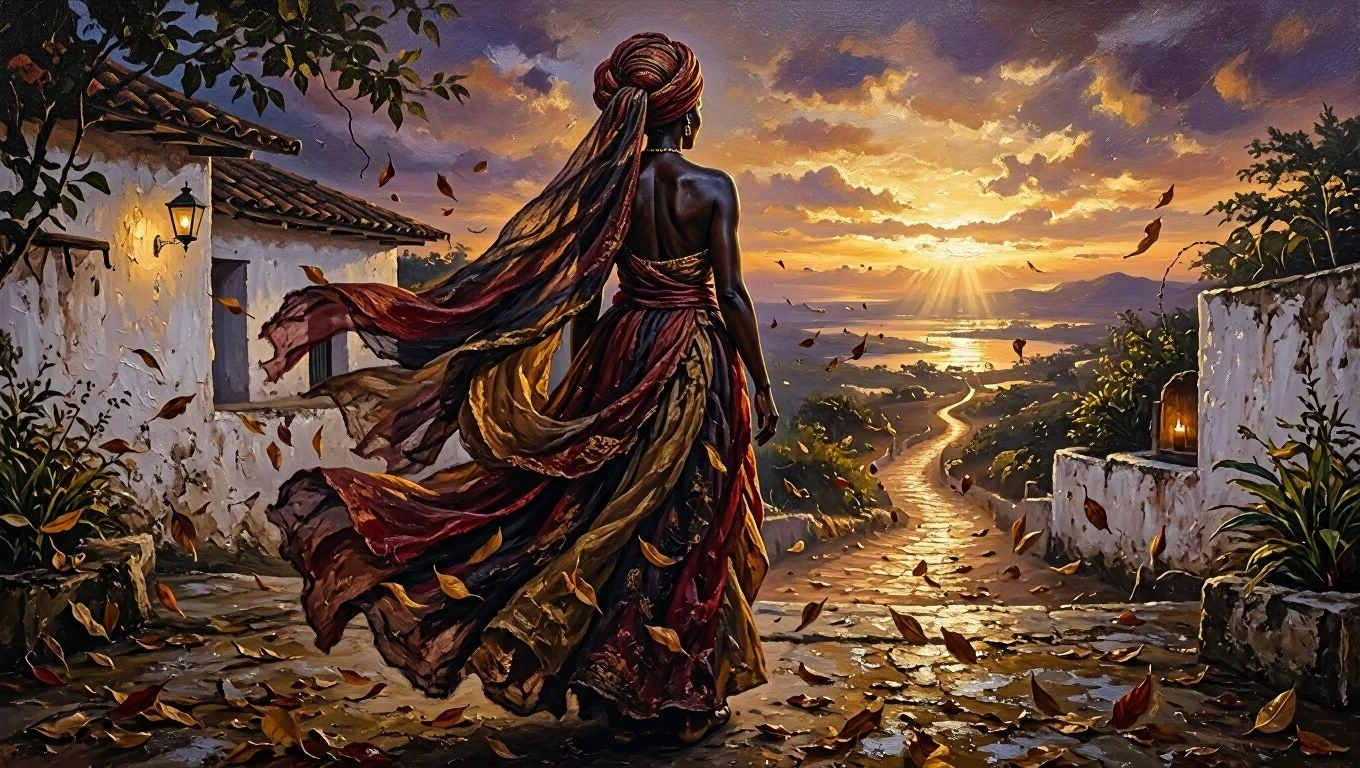
Iansã takes the spirit of those who die to Orum. In the table by Reginaldo Prandi, Oiá is the "mistress of the spirits of the dead". Pierre Verger writes, in Orixás, that she is the only orixá capable of facing and dominating the Egúngún. Oliveira calls her the "mother of all Egun".
In the myth, Oiá honored her deceased adoptive father, and Olorum (Olodumare) gave her the power to guide the dead. For this reason, Prandi registers her as the patron of the axexê, the funeral rite of Candomblé. The profile of the orixá is in who is Iansã.
“Since then, everyone who dies has their spirit taken to Orum by Oiá.” (itã cited by Bandeira, PUC-SP, 2010)
Omolu, the lord of the earth and the cemetery
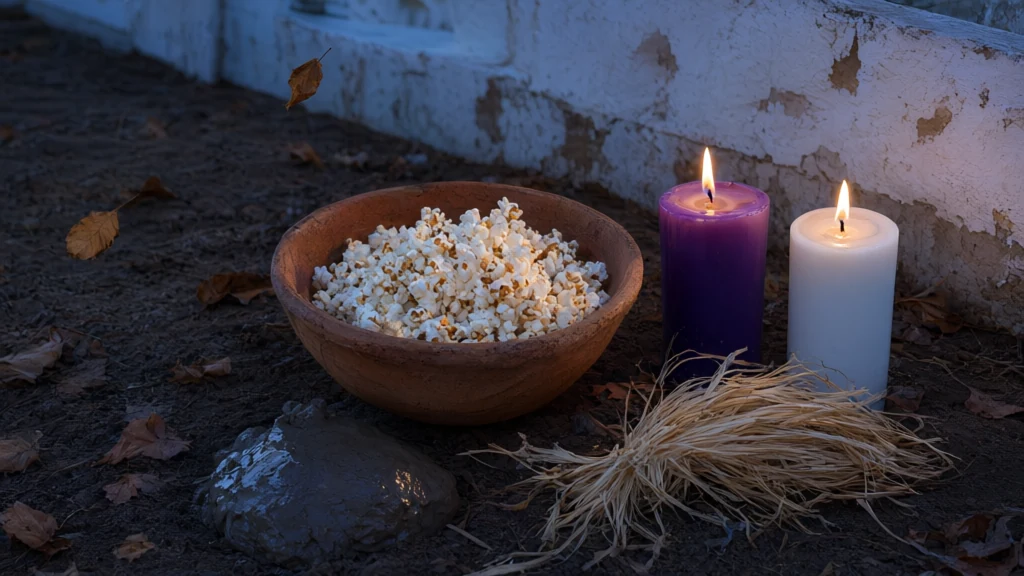
Prandi describes Obaluaiê or Omulu as the god of smallpox and diseases, "associated with cemeteries, soils, and subsoils". In an itã, Iansã dances with him when no one else wants to, and he shares with her the kingdom of the dead. Names, straw, and popcorn are in who is Obaluaê.
Nanã, the mud, and death
Death is among Nanã's domains. In Prandi's table, she is the "orixá of the mud at the bottom of the waters," with patronage over "education, seniority, and death." In a myth cited by Oliveira from Juana Elbein dos Santos, Death takes people back to the mud they were made from. FUCESP summarizes that Nanã "takes care of the bodies of the dead and recreates life." Her portrait is in who is Nanã.
Euá, Oxumarê, Ogum (Ogun), and sometimes Obá (Oba) also participate in the axexê. Bandeira gives Euá the task of helping the egum reach Orum.
Is Ikú the orixá of death?
Ikú is Death itself, and in the sources consulted, it does not receive worship as an orixá. Oliveira writes that, in Candomblé and Egungun cults, Iku is "simply identified with Death," masculine, without syncretism or ritual relationship with the orixás. The Death with a scythe and cloak is the Western image.
Luís Cláudio Bandeira, from PUC-SP, classifies Ikú as an ebóra of the warriors of the orum, without a fixed place. In the itã, Obatalá creates Death with a condition.
"Death takes, but Death does not decide the time to die." (itã "Obatalá creates Iku, Death", in Bandeira, 2010)
The hour belongs to Olodumare. Ikú seeks, Iansã leads to the Orum, and Omolu and Nanã receive the body.
The family's dead: egum is ancestor, not orixá
The worship of ancestors is of egum. In Candomblé, it stays in a separate space, the Ilê Awô, outside the main temple. The orixás rule the passage; the dead becomes egum and has its own altar.
The well-known example is the Omo Ilê Agboulá, in Itaparica (BA), founded in 1934. The IPHAN heritage report says it was the first time the agency dealt with a terreiro that is not a house of worship for the orixás. Who these ancestors are is in egum in Candomblé.
In the gaúcho batuque
In the batuque of Rio Grande do Sul, the place of the dead is the Balé, or Ighbalé, a small grave in the ground far from the house of the orixás. The funeral rite is called Aressum. There, the ancestors do not manifest in public, unlike the houses of Egungun. The nation's orixás are in orixás of batuque.
What is the cemetery orixá in Umbanda?
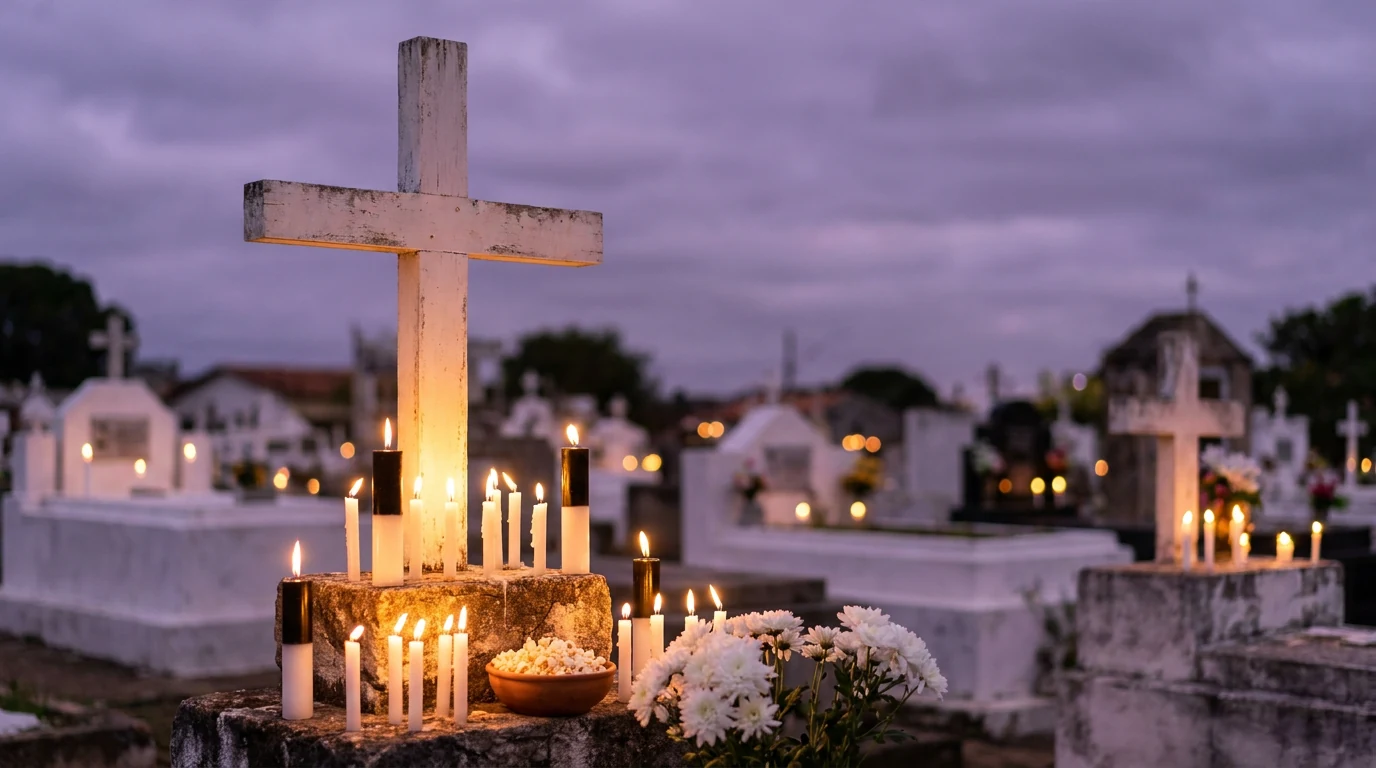
In Umbanda, the cemetery orixá is Omolu, or Abaluaiê. The National Sanctuary of Umbanda gives his field of force as "the cemetery (small calunga)". The FUCESP sets his day of the year on November 2, together with All Souls Day, and orders to greet Obaluaê and Iansã at the cemetery entrance. The NUSS says that he guides the souls of the recently deceased.
Umbanda varies. In Vitória (ES), Barbara Thompson heard that Omolu-Obaluaê, Iansã of the souls, Nanã, and two qualities of Ogum act in the cemetery. The spirits are the pretos-velhos of the line of the souls and the exus. Some give the cemetery only to Obaluaê; others also offer to Iansã and Nanã.
The National Sanctuary of Umbanda gives Nanã the command of the eguns; in Candomblé sources, the role belongs to Iansã. The rule of your house applies.
Exu Omulu is another. The NUSS separates the orixá Omulú from the Exu Omulú, chief of the cemetery line in Quimbanda. The people of the calunga are in calunga grande and calunga pequena and in Omolu in umbanda.
How to honor the orixás of the dead on All Souls Day
In 2026, November 2nd falls on a Monday, the day of Omolu. What is done on that date is in the guide of the All Souls Day in umbanda. At the Sanctuary's Cross of Souls, the prayer for the disincarnate is given to Abaluaiê, along with Inhaçã, who is Iansã.
The candle follows the color of each one. For Omolu, the Sanctuary uses white and black candles, and those who cannot go to the cemetery can light the black and white candle on the Joia Mística virtual altar. For Nanã, the candles are generally purple, and the purple candle is hers. How to light for the souls is in lighting a candle for the souls.
Offering in the cemetery and egum consecrated foundation (assentamento) are matters of the house, with the leader. The candle is a request or prayer request and a remembrance, without promise.
Frequently asked questions
Is Iansã the mother of the eguns?
Yes. Oliveira calls Iansã the "mother of all Egun", Prandi registers her as the owner of the spirits of the dead, and Verger, as the only orixá capable of mastering the Egúngún. In some umbanda houses, the command of the eguns belongs to Nanã.
How many eguns does Iansã carry?
No consulted source gives a number. The sources say that every dead person has their spirit taken to Orum by Oiá. The nine that connects to Iansã comes from the name: according to Verger, Ìyámésàn is "the mother transformed into nine"; other sources read "lady of the nine spaces of Orum". None of the readings speak of nine eguns.
Which orixá is honored on All Souls' Day?
In Umbanda, Omolu or Obaluaê. FUCESP and the Santuário Nacional da Umbanda set his day on November 2, and in Vitória he is honored in the cemetery on that date. In Candomblé, the axexê happens when the initiate dies, outside the All Souls Day calendar.
Why is Xangô (Shango) afraid of the dead?
Prandi records that Xangô does not participate in the axexê because "they say they have a dread of egum", and that the taboo of the children of Xangô includes contact with the dead and cemeteries. The children of Omolu, by taboo, do not go to funerals. The rule follows the house.
References
- PRANDI, Reginaldo. Horizontes Antropológicos, 1995. African gods in contemporary Brazil
- PRANDI, Reginaldo. In Faraimará, Pallas, 2000. Concepts of life and death in the axexê ritual
- VERGER, Pierre. Corrupio, 1981. Orixás: Yoruba gods in Africa and the New World
- BANDEIRA, Luís Cláudio Cardoso. Último Andar (PUC-SP), 2010. Death and the cult of ancestors in Afro-Brazilian religions
- OLIVEIRA, Ricardo Moreira de. Habitus (PUC Goiás), 2012. Rituals to the dead of the batuque and Candomblé tradition
- IPHAN, 2015. Heritage listing report of Omo Ilê Agboulá, Itaparica (BA)
- THOMPSON, Barbara (UFBA). Proceedings of the IV Seminar of Social Sciences PGCS-UFES, 2019. At the gates, tombstones and crosses of the souls
- FUCESP. Pages of Obaluaê, Nanã and Iansã
- Santuário Nacional da Umbanda. Pages of Abaluaiê, Nanã Buruquê and Cross of Souls (Cruzeiro das Almas)
- NUSS. Omulú (Abaluaê, Xapanã)