Knowing who Logun Edé is is knowing the orixá who carries two worlds within himself: the sweetness of Oxum's waters and the firmness of Oxóssi's forests. Also written as Logunedé (Logun Ede) or Logum Edé, he is the young prince of the orixás, lord of beauty, wealth, hunting, and fishing, one of the most charming and enigmatic of the Afro-Brazilian pantheon.
This guide explains who Logun Edé is, the legend that divides him between the river and the forest, his colors, his greeting, his symbols, the personality of his children, and the syncretism with Saint Expedite.
Who is Logun Edé
Logun Edé is a young orixá, son of two of the most beloved orixás of the pantheon: Oxum, the queen of fresh waters, and Oxóssi, the king of the forests. From this union was born the "prince of the orixás," a skilled hunter and a haughty noble who reigns, at the same time, in the domains of the father and the mother. In books, the father has another name: in Pierre Verger, he is Erinle, the hunter god who "would have had, with Oxum Ipondá, a son named Lógunede," and the houses take Erinle, also called Inlé, as Oxóssi.
Heir to the beauty of Oxum, Logun Edé is described as one of the most beautiful, jovial, and vain orixás, a lover of gold and jewelry. From Oxóssi's hunt, he inherited the ofá, the bow and arrow, and the skill of one who enters the forest and returns with sustenance. Wikipedia, based on Prandi and Verger, also highlights a striking trait of his character: Logun Edé detests lies.
The legend of the six months: half water, half forest
The strongest image of Logun Edé is that of an orixá divided between two worlds. Tradition says that he spends six months in the waters, alongside Oxum, feeding on fish, and six months in the forest, alongside Oxóssi, feeding on game. This alternation is the key to understanding him.
That is why Logun Edé is the orixá of duality and surprise. At times he is sweet, generous, and seductive like the mother; at other times he is serious, reserved, and solitary like the father. In him, opposites coexist without canceling each other out; he is the lord of the unexpected, of that which changes form according to the season.
One of his symbols is the seahorse, inherited from grandmother Iemanjá (Yemoja): half horse, which refers to Oxóssi, and half fish, which refers to Oxum. No image summarizes the prince's dual nature better.
Colors, day, and greeting of Logun Edé
Every house has its foundations, but there are attributes that repeat in most terreiros:
Colors: turquoise blue and gold yellow | Day: Thursday (the same as Oxóssi) | Elements: fresh waters and forests | Domains: wealth, beauty, hunting, and fishing | Greeting: “Logun ô!” (in some houses, “Loci Loci!”)
The colors say everything about his origin: the turquoise blue of Oxum's waters and the gold yellow that unites the mother's precious metal to the shine of abundance. Tradition says that Logun Edé has an aversion to brown and red. As a young orixá, he is celebrated with joy, sweetness, and the refinement that suits a prince.
The symbols of Logun Edé
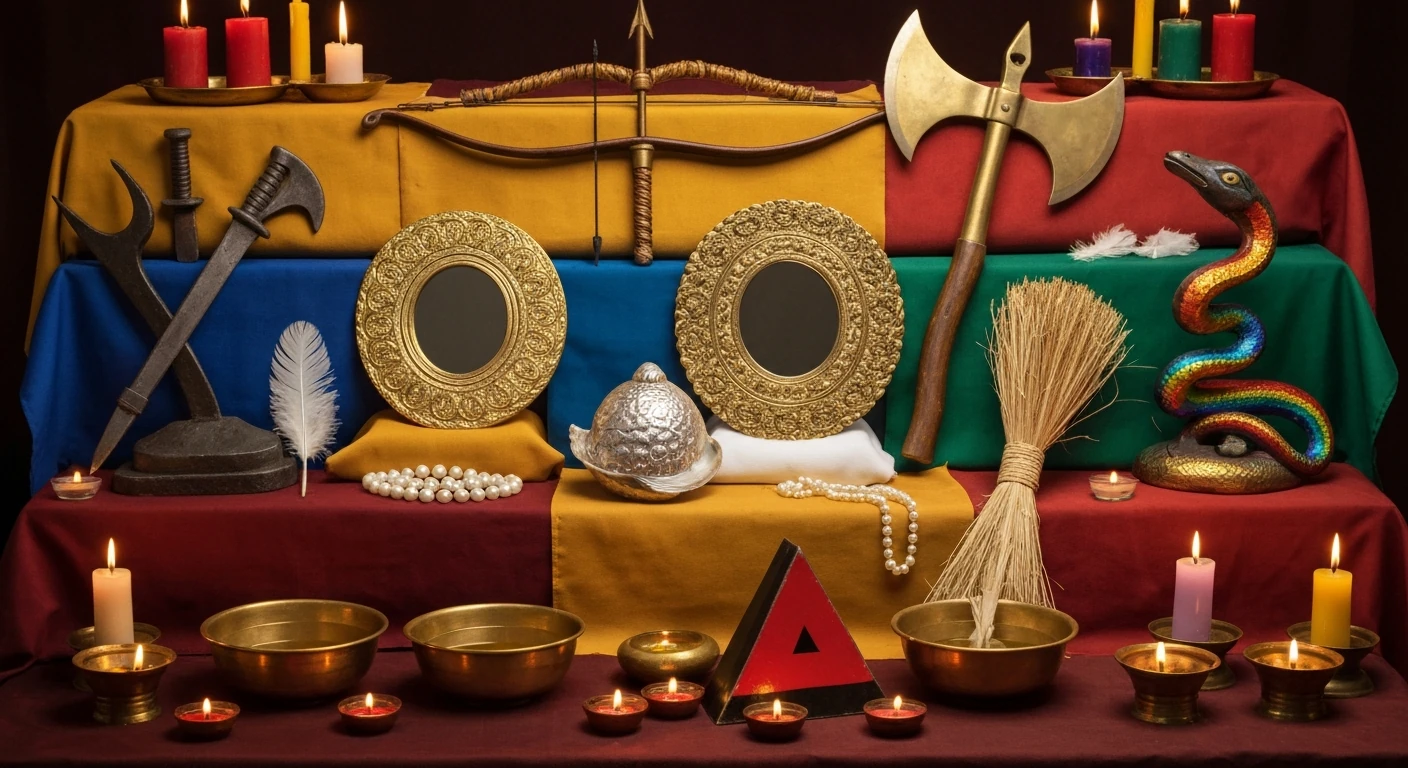
The sacred objects of Logun Edé tell the story of his lineage. Each one comes from one of the parents or from the grandmother:
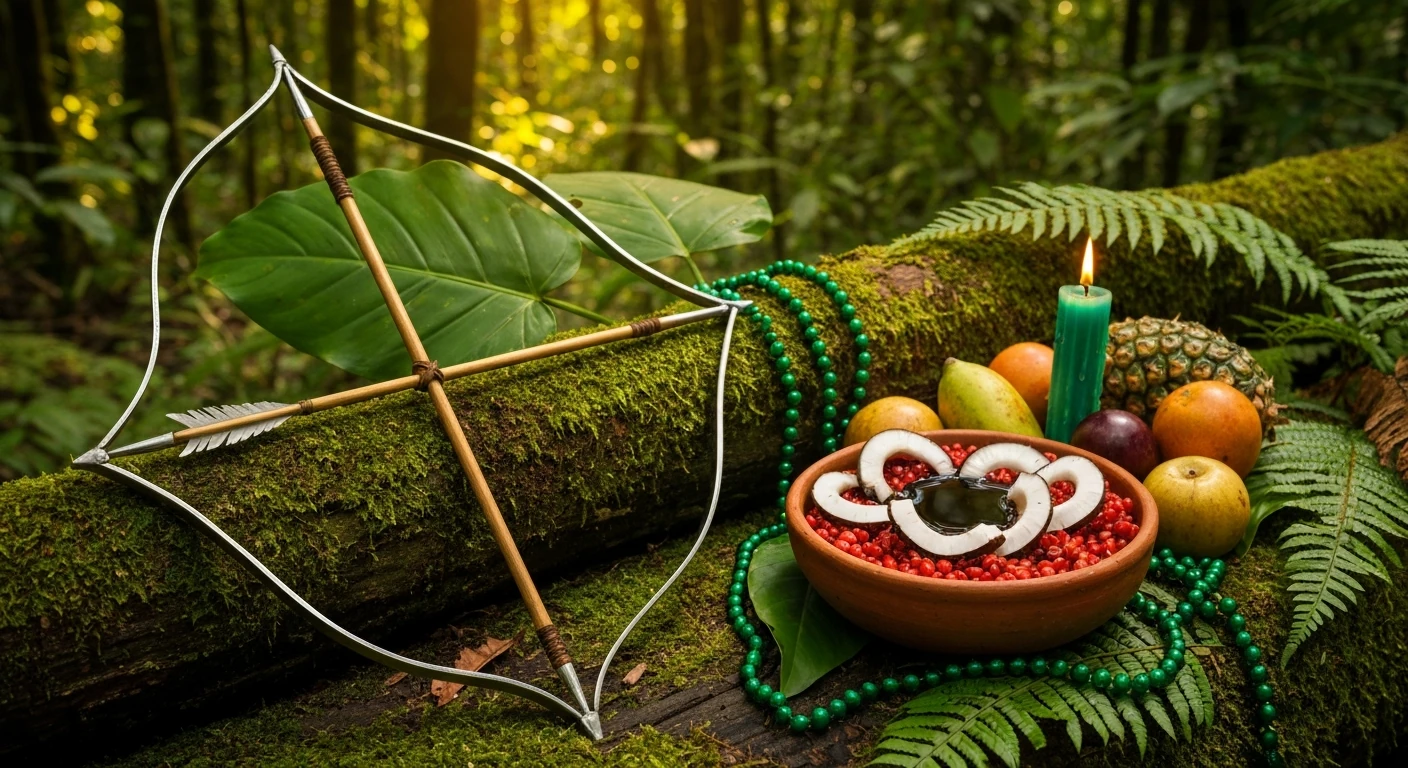
- Ofá (bow and arrow): heritage of Oxóssi, the hunter. It is the weapon of the forest.
- Abebé (mirror or fan): heritage of Oxum, the queen of the waters. It is the symbol of beauty and vanity.
- Scale: represents the instability of the orixá, always leaning now toward the mother's side, now toward the father's.
- Seahorse: a gift from Iemanjá, the grandmother, uniting water and earth in the same figure.
- Peacock: symbol of beauty, luxury, and royalty that define the prince.
The jewels of Logun Edé are golden or copper-colored, reinforcing the connection with the wealth of Oxum.
The foods and offerings of Logun Edé
The offerings to Logun Edé mirror his dual heritage. From the mother, Oxum, come the sweet dishes and delicacies of the waters, such as the omolocum fradinho beans sautéed with shrimp and honey-based desserts. From the father, Oxóssi, comes the axoxô, corn cooked with coconut slices, the classic food of the hunter. Fruits, especially yellow and citrus ones, also please the prince, as does the environment that gathers water and greenery on the same altar. As with everything involving the orixá, the right offering is always the one defined by the house's foundation and the guidance of the babalorixá or the ialorixá.
The children of Logun Edé
Those of Logun Edé usually carry the duality of the orixá in their own personality. They are people of evident charm, seductive, elegant, and who value beauty and good taste inherited from the vanity of Oxum. But they also bring the reserve of Oxóssi: they know how to be alone, keep secrets, and have a serious side that few know.
The most striking trait is unpredictability. The child of Logunedé can be expansive and warm one moment and withdrawn the next, changing moods as the orixá changes dwellings. They are intelligent, versatile, move well in different worlds and, like the spiritual father, usually have a horror of lies and falsehood. To compare archetypes, it is also worth looking at the children of Oxum, with whom they share part of the sweetness, and the children of Oxóssi, from whom they inherit the reserve.
The syncretism of Logunedé
In religious syncretism, Logunedé is more frequently associated with Saint Expedite, the saint of urgent causes, celebrated on April 19. The connection makes sense: Saint Expedite was a young soldier, and youth and nobility combine with the figure of the prince orixá.
The same note applies to all syncretism: the correspondence varies according to the house and the region. Some traditions link Logunedé to Saint Michael Archangel or to Saint Bartholomew. And, as always, syncretism is not equivalence: Saint Expedite is Saint Expedite for the Catholic, and Logunedé is Logunedé for the people of santo. To situate your parents and the other deities, see what the orixás are.
Frequently asked questions
Who is Logunedé?
Logun Edé, also spelled Logunedé, is a young orixá, son of Oxum and Oxóssi. Known as the "prince of the orixás," he rules beauty, wealth, hunting, and fishing. His mark is duality: he alternates the sweetness of the mother's waters with the steadfastness of the father's forests, being the orixá of surprise and the unexpected.
Who are the parents of Logunedé?
Logun Edé is the son of Oxum, the orixá of fresh waters, love, and gold, and of Oxóssi, the orixá hunter of the forests and abundance. His grandmother is Iemanjá, lady of the sea, from whom he inherits the symbol of the seahorse. Therefore, he reigns both in the waters and in the forests.
What is the color of Logun Edé?
The colors of Logun Edé are turquoise blue and gold yellow. The blue comes from the waters of Oxum and the gold yellow joins the gold of the mother to the brightness of abundance. Tradition says he has an aversion to brown and red, although details may vary according to the fundamento of each house.
What is the syncretism of Logun Edé?
Logun Edé is most frequently syncretized with Saint Expedite, the saint of urgent causes, celebrated on April 19. Some houses associate him with Saint Michael Archangel or Saint Bartholomew. Like all syncretism, the correspondence varies by region and tradition, and it does not mean that the orixá and the saint are the same figure.
What is the personality of the children of Logun Edé?
The children of Logun Edé are usually charming, elegant, and seductive, valuing the beauty inherited from Oxum. At the same time, they have the reserved and solitary side of Oxóssi. The strongest trait is unpredictability: they change mood and posture easily, are versatile, intelligent, and usually detest lies.
Where to find items for Logun Edé
At Joia Mística Laroyê, you find what you need to honor the prince of the orixás:
- Logun Edé statue: for your altar
- Turquoise blue and gold yellow bead necklaces: the colors of the orixá
- Ofá and abebé: the symbols of the hunter and of beauty
- Blue and gold candles: for consecrations (firmezas) and offerings
- Herbs from the forests and waters: for baths linked to Oxum and Oxóssi
Visit our shop in Extrema, Minas Gerais and we ship all over Brazil.
References
- Wikipedia: entry on Logunedé, based on Prandi and Verger
- Wikipedia: entry on Oxóssi, hunter orixá
- Verger, book (Corrupio, 1981): Orixás: Yoruba gods in Africa and the New World