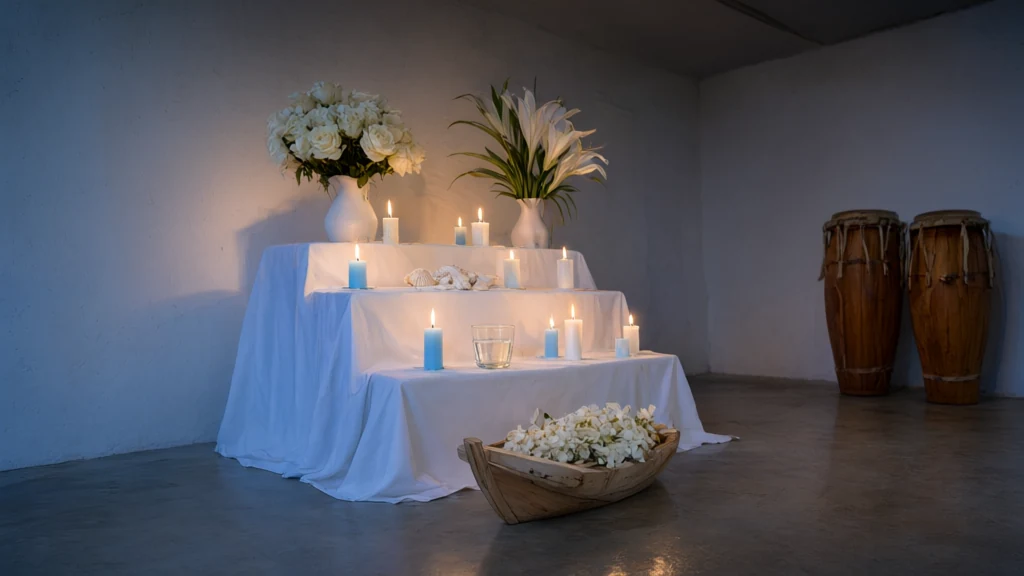
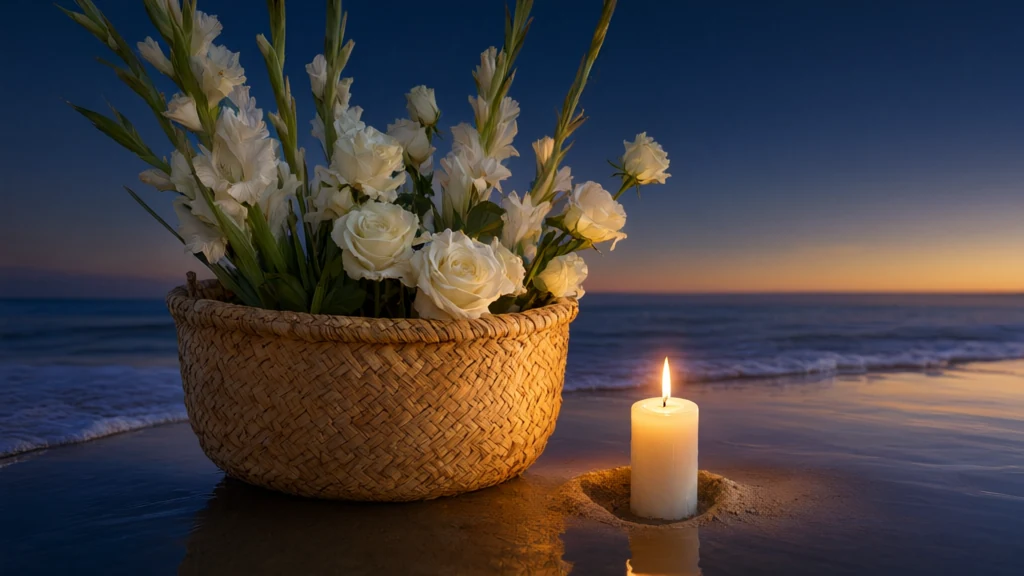
Perhaps no orixá is as well known and loved in Brazil as Iemanjá, the Queen of the Sea. On New Year's Eve, crowds, religious or not, throw white flowers at the waves in her honor. A welcoming and powerful mother, she is the lady of the salt waters and, according to tradition, the Great Mother of almost all the orixás.
This article traces the complete profile of Iemanjá: who she is, the mythology that makes her the mother of the gods, her colors and symbols, her qualities, and the plural syncretism that links her to various saints and dates across the country. All with respect to tradition and to her home, the sea.
Who is Iemanjá
Iemanjá is the iabá, the feminine orixá, who reigns over the salt waters, the seas, and the oceans. Her name comes from the Yoruba Yèyé omo ejá, which means "mother whose children are fish," a beautiful image of her infinite motherhood. In Africa, among the Egbá people of present-day Nigeria, she was linked to a river. It was during the crossing of the diaspora, in the pain and hope of enslaved Africans, that she became the immense Brazilian sea and earned the title of Queen.
Her domains are motherhood, fertility, family, and protection. She is the one who supports the fishermen and sailors who live from the sea, and who, according to tradition, cares for one of the most sacred parts of each person: the ori, the spiritual head. For this reason, she is called with such affection Great Mother, the one who welcomes everyone in her lap of water.
"Odoyá!" This is the greeting that echoes on the beaches and in the terreiros, a call of love and respect to the "mother of the river," as Verger and Armando Vallado translate Odò Ìyá. She is the lady of the great river that turned into sea.
The mother of the orixás
In a myth narrated by Armando Vallado, a PhD from USP, Ogum, Xangô (Shango), Oiá, Obá (Oba), Oxóssi (Oshosi), Omolu (Omulu), and Oxum (Oshun) were born from the womb of Iemanjá. From her breasts, the rivers and the sea emerged. In an Ifá story recorded by Pierre Verger, she has ten children, including Oxumaré (Oshumare) and Xangô. Reginaldo Prandi summarizes: in Brazil, she is worshipped as the "mother of many orixás".
However, an honest caveat is necessary. The genealogies of the orixás vary depending on the source and the nation, and not every relationship is mother and son: in Verger's list, Iemanjá Ogonté is married to Ogum. Mythology is not a closed document, but rather a treasure of many versions. What they all share in common is the maternal greatness of the orixá, she from whom axé springs as life springs from the sea, and before whom the entire pantheon bows with the respect of a child.
Iemanjá's profile
Knowing the symbols of the Queen of the Sea helps to understand her energy. Remembering that everything varies depending on the house and the nation, these are the most traditional elements:
- Colors: light blue, white, and silver or crystal.
- Day: Saturday, in most houses. In the gaúcho batuque, Friday is also hers, and that is where her name comes from as the ruling orixá of 2027, a year that begins on a Friday.
- Greeting: "Odoyá!", also written as Odô Iyá, "mother of the river".
- Symbols: the abebé, a white metal fan in Verger and Prandi; in ketu, it is brass with a cutout of a mermaid, star, or moon. There are also shells, stars, pearls, anchors, and the figure of the mermaid.
- Offerings: roses and white or blue flowers, perfume, mirror, comb, jewelry, and the white manjar, delivered by the seaside with devotion.
These are objects that speak of royalty, beauty, and the silvery shine of the waters under the moon. How she became a mermaid and a white woman in a blue dress is in the statue of Iemanjá.
The qualities of Iemanjá
As with the great orixás, Iemanjá does not manifest in only one way. There are several qualities, different paths of the same divinity, and some are so distinct that certain houses almost treat them as separate orixás. See some of the most cited, always remembering that this changes a lot from house to house:
- Iemanjá Ogunté: the warrior, owner of the alfanje, linked to Ogum, who lives where the wave hits the rock.
- Iemanjá Assabá: the one who limps and is always spinning cotton, according to Verger. Wikipedia lists her as the oldest; in Lydia Cabrera's Cuban list, the oldest is Awoyó.
- Iemanjá Assessu: "very headstrong and respectable," according to Verger; in Cuba, messenger of Olokum, who lives in agitated water.
- Iemanjá Iamassê: remembered as the mother of Xangô, much celebrated in the festivals of the orixá of justice.
Each quality shades the Great Mother in a way, sweeter or more warrior-like, younger or more ancestral. The list, with the source of each name, is in qualities of Iemanjá.
Syncretism and the many dates
Here lies one of the most interesting points about the Queen of the Sea: she does not have a single Catholic face or a single date. Syncretism, born as a strategy of resistance by enslaved Africans, varied from region to region.
Pierre Verger and Reginaldo Prandi give Our Lady of the Conception as the saint of Iemanjá in Brazil, and Leal de Souza, in 1933, already linked her line to the Conception. But the saint changes with the location. Armando Vallado records Our Lady of the Candeias in Salvador, of Carmo in Recife and of the Conception in São Paulo. FUCESP, the São Paulo federation, gives Our Lady of the Navigators in Rio Grande do Sul and of Glory in Rio de Janeiro.
In Salvador, Verger explains that February 2 comes from another connection, that of Oxum with Our Lady of Candeias. Each place dressed her with the saint who was closest to the heart and the sea.
That is why there are also many of her dates. The biggest festival happens on February 2, in Rio Vermelho, in Salvador, with more than a century of tradition. Inside the terreiros of Umbanda, the festival usually takes place on December 8, the day of Conceição, according to research by Cristiane Barros (UFJF). August 15 is the date of Rio de Janeiro, linked to Glória, and of Pampulha, in Belo Horizonte. On the turn, on December 31, the entire coast is covered in flowers.
Her line, those who descend in the gira and the December festival are in Iemanjá in Umbanda. August 15 has its own guide in the day of Iemanjá, and all dates are in the calendar of the orixás.
Iemanjá and Oxum: the two ladies of the waters
A very common confusion is mixing Iemanjá with Oxum, since both are iabás of the waters. But they are very different, and the distinction is simple to keep.
| Iemanjá | Oxum | |
|---|---|---|
| Waters | Salty, the sea | Sweet, the river and the waterfall |
| Dominion | Motherhood, royalty, protection | Love, beauty, wealth |
| Metal | Silver | Gold |
| Colors | Blue and white | Yellow and gold |
Iemanjá is the immense mother of the sea; Oxum is the sweet lady of the river. To also know the archetype of those who belong to the Queen of the Sea, it is worth reading about the children of Iemanjá.
Offerings with respect to the sea
A word of caution is needed, in the name of Iemanjá herself. During festivities, offerings thrown into the sea should avoid plastic, glass, styrofoam, and bottles, which pollute the very home of the orixá. This care is recent: the gift that Verger saw in Rio Vermelho carried "perfume bottles" and soaps wrapped in paper. Today, the city of Salvador asks for the perfume to be placed in the basket, without the glass, and 100% natural flowers.
Honoring the Great Mother is also caring for her waters. Bringing natural flowers and materials that the sea absorbs, and collecting what remains on the sand, is a concrete form of devotion. In Salvador, the Z1 Fishing Colony refuses plastic baskets, and Cici de Oxalá (Obatala) prefers to give the comb rather than throw it into the sea. A house of umbanda, TUCTVC, asks that natural domains be visited "with respect and environmental awareness".
The step by step for any date is in offering for Iemanjá. What to bring for the turn of the year and what not to throw into the sea are in Iemanjá on New Year.
Frequently asked questions
Who is Iemanjá in Candomblé?
Iemanjá is the iabá of the salt waters, the Queen of the Sea and the Great Mother, considered in mythology the mother of almost all the orixás. In Candomblé, she is worshipped as the lady of motherhood, protection, and fertility, and in many houses she is linked to the care of the ori, the spiritual head of each person.
What is Iemanjá the orixá of?
Iemanjá is the orixá of salt waters, of the seas and oceans. She rules motherhood, fertility, family and protection, and is the protector of fishermen and all who live from the sea. She is revered as the Great Mother, a symbol of welcoming, strength and unconditional love.
What is the greeting of Iemanjá?
The greeting of Iemanjá is "Odoyá!", also written as Odô Iyá, which Verger and Vallado translate as "mother of the river". It is said on the beaches and in the terreiros as a call of love and reverence to the Queen of the Sea, especially during festivals and when delivering the offerings by the water.
What is the difference between Iemanjá and Oxum?
The two are orixás of the waters, but Iemanjá reigns over the salt waters, the sea, linked to motherhood and royalty, with the color blue and silver. Oxum reigns over the fresh waters, the rivers and waterfalls, linked to love and beauty, with yellow and gold. They are distinct iabás.
What is the day of Iemanjá?
Iemanjá has several dates throughout Brazil. The biggest festival is on February 2, in Rio Vermelho, in Salvador. Within the terreiros of umbanda, the festival is usually on December 8; August 15 is the date for Rio de Janeiro and Belo Horizonte. There is also the New Year's Eve, on December 31. During the week, her day is usually Saturday.
Where to find items for Iemanjá
At Joia Mística Laroyê, you find what you need to honor the Queen of the Sea:
- Bead necklaces and blue and crystal beads: the colors of Iemanjá
- Statues and abebês: for your altar
- Blue and white candles: for prayers and offerings
- Flowers and perfumes: traditional items for the agrado (offering)
Visit our shop in Extrema, Minas Gerais or talk to us via WhatsApp and we ship all over Brazil.
References
- Wikipedia: entry about Iemanjá, origin of the name and mythology
- Candomblé: article about Yemonjá and syncretism as a strategy of resistance
- Agência Brasil: report on the festival of Iemanjá in Rio Vermelho, in Salvador
- Pierre Verger: Orixás, book entry
- Reginaldo Prandi, Horizontes Antropológicos (UFRGS): African gods in contemporary Brazil
- Armando Vallado, Le Monde Diplomatique Brasil: Iemanjá, the powerful mother
- Cristiane Amaral de Barros, UFJF: Iemanjá and Pomba-gira, images of the feminine in Umbanda
- Raphael Felipe da Silva de Jesus, In Society (PUC Minas): In the balance of the sea
- FUCESP: Iemanjá
- Prefeitura de Salvador: biodegradable gifts for Iemanjá