Oxumaré is the great serpent that rises to the sky and descends to earth through the rainbow, the orixá of movement, of cycles, and of all renewal. Unlike the deities linked to a fixed element, he is the very image of what transforms: the snake that sheds its skin, the arch that joins sky and ground, the cycle that ends to begin again. Whoever seeks to understand who Oxumaré is discovers one of the most unique orixás of the Afro-Brazilian pantheon.
This guide brings together the complete profile of the lord of the rainbow, his technical sheet, the duality that defines him, his Yoruba and Jeje roots, and why Oxumaré's day is celebrated on August 24, in syncretism with Saint Bartholomew.
Who is Oxumaré, the lord of the rainbow
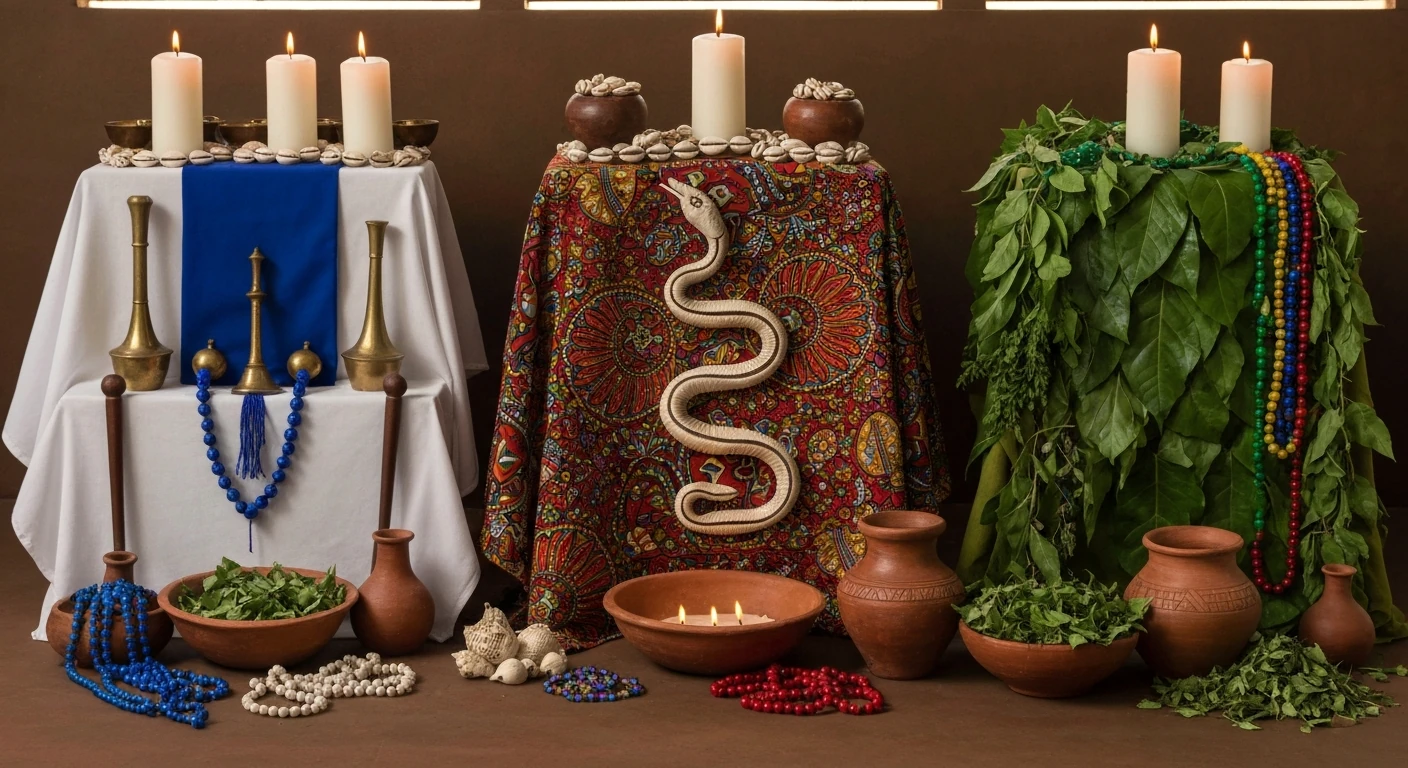
Oxumaré is the orixá of continuity and permanence, ruler of all movements and all cycles. His name, from the Yoruba Òṣùmàrè, means "rainbow", and the image that accompanies him is that of the great serpent that wraps the earth with its own body, biting its tail so that the world does not fall apart. He is the one who guarantees the unity of the planet and the renewal of the universe, making the connection between what is above and what is below.
Like the snake that sheds its skin, the orixá rules everything that renews: the phases of life, the new beginnings, the relationships that transform, the projects that end so that others may be born. For this reason, he is also invoked for wealth, fortune, and prosperity, being remembered in requests for plenty, business, and abundance. The serpent that moves without stopping is the guarantee that nothing stagnates, that life continues in motion.
In the set of Yoruba deities, he occupies a unique place: he does not rule a water, a wind, or a forest, but the principle of dynamism itself. To situate him among the others, it is worth reading the overview on what the orixás are. The Wikipedia entry on Oxumaré, well referenced in Prandi and Verger, gathers these attributes and his African origin.
Oxumaré technical sheet
Before deepening his history, it is worth fixing the elements that identify the orixá. The correspondences below follow what is most consensual among the houses, with nation variations signaled.
- Domains: movement, cycles, renewal, continuity, wealth and fortune, fertility
- Colors: yellow and green, in addition to all the colors of the rainbow; in jeje, the beads are usually striped in yellow and black
- Day of the week: Tuesday, with variation according to the house
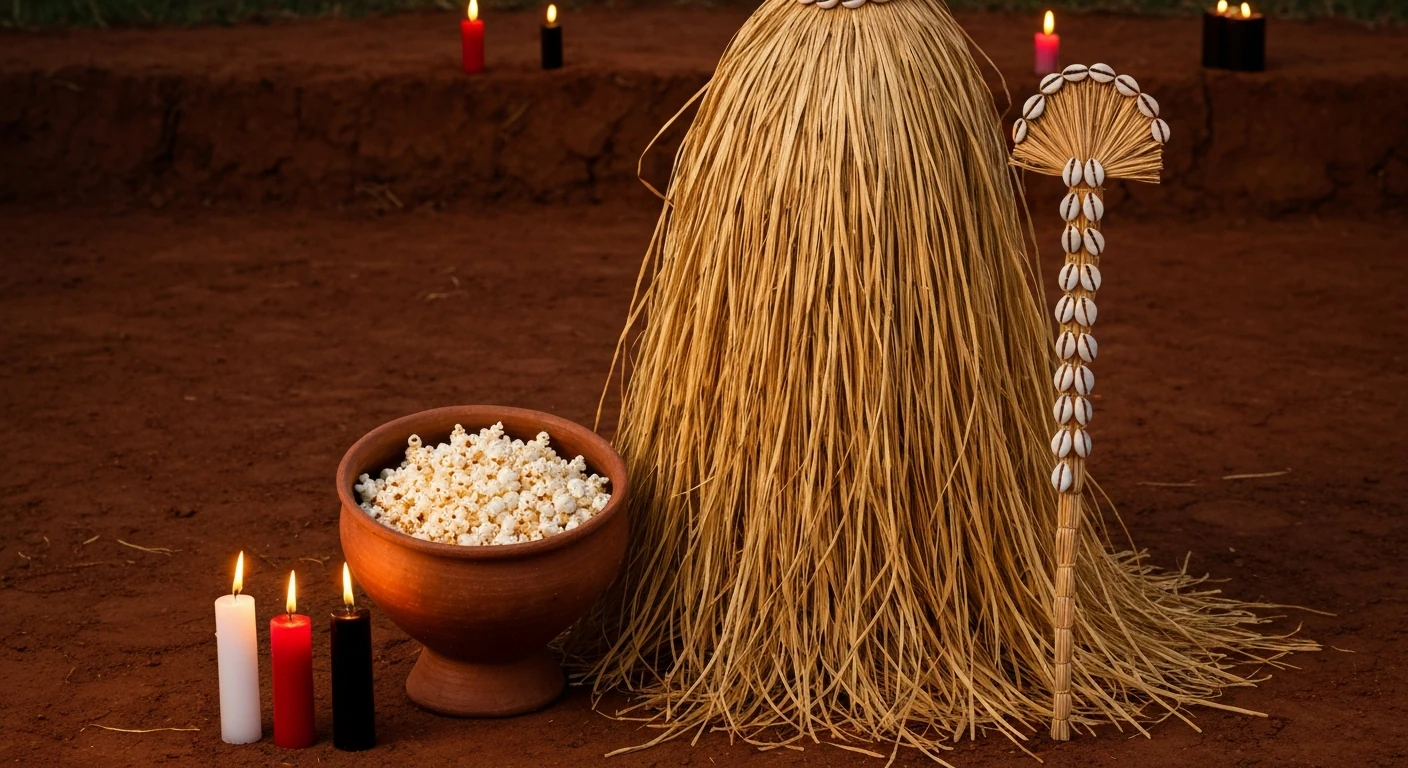
- Symbols: the serpent (often two-headed or biting its tail), the rainbow, the ebiri and the brajá, a necklace of intertwined cowrie shells that resembles the snake's scales
- Greeting: “Arroboboi, Oxumaré!”, understood as “hail the lord of the rainbow” or “hail the lord of the cycles”
- Offerings: the “snake” made of sweet potato and plantain fried in oil, arranged in the shape of a serpent, in addition to beans, corn, and shrimp in dendê
- Origin: Yoruba (Oxumaré) and Jeje, where he is worshipped as Bessém, linked to the vodun Dã
- Syncretism: Saint Bartholomew, on August 24
Arroboboi, Oxumaré! The greeting reveres the lord who unites opposites, the arch that touches the sky and the earth at the same time. To greet the orixá of the cycles is to recognize that everything that lives moves, renews, and begins again.
Regarding the day of the week, Tuesday is the most cited for the orixá, even though some houses keep another marking. The spelling also varies: Oxumaré, with an acute accent, is the most used form, but Oxumarê, with a circumflex, appears frequently in Brazilian sources, and both are correct.
The duality of Oxumaré: the two halves of the rainbow
No trait defines the orixá as much as his duality. Oxumaré is the lord of everything that is double and completes itself: the sky and the earth, the water and the soil, what begins and what ends. The rainbow, with its two ends touching the ground on opposite sides, is the perfect image of this nature that unites opposites.
Pierre Verger describes Oxumaré as "at the same time, male and female." In an itã gathered by Reginaldo Prandi (Mitologia dos orixás, p. 227), his destiny was to spend six months as a monster and six months as a beautiful woman, alternating his faces throughout the year, just as the rainbow appears and disappears. Ewá (Yewa), the orixá of the springs, appears in the itãs now as his sister, now as his wife, as we show in Oxumaré e Ewá. From this narrative comes the reading of sacred androgyny: the orixá who carries within himself the masculine and the feminine, the strength and the delicacy, without one canceling the other. It is a foundation of balance and completeness, not a curiosity.
Even though he is predominantly treated as a male figure, it is this capacity to contain opposites that makes him the orixá of movement. Where there is alternation, there is a cycle; where there is a cycle, there is Oxumaré. Those who turn to him usually live phases of intense change, and find in his energy the serenity of those who understand that every transformation is part of the path.
Yoruba and Jeje origin: Oxumaré, Bessém and the serpent Dã
Understanding the orixá requires recognizing that he arrives in Brazil through more than one root, and that confusing them erases the richness of each tradition. In the Yoruba root, of the ketu candomblé, he is Òṣùmàrè, the rainbow, also called in Ifé as Ajé Sàlugá. He is like a celestial serpent that appears in the itans of Oyó and Ifé.
In the jeje tradition, of Fon roots, coming from the ancient Daomé, present-day Benin, the orixá corresponds to the vodun Dã, the cosmic serpent, and is worshipped under the name of Bessém. The sacred serpent of Uidá, called Dangbé, is at the origin of this worship, born in the Mahi region, the same hub from which Nanã (Nana Buruku) and Obaluaê come. Not by chance, in many itans Oxumaré is considered a son of Nanã and a brother of Obaluaê, forming the family of the oldest cults. To understand these differences in origin, it is worth reading about the candomblé nations.
This family connection helps to situate him. Knowing who Nanã is, the lady of mud and ancestry, and who Obaluaê is, the orixá of healing, illuminates the place of Oxumaré among the jeje voduns, linked to the earth, to the origin, and to the cycles of life and death. The candomblé file gathered by ocandomble.com details the names and qualities of the orixá in each nation.
Why is Oxumaré's day August 24th
Whoever looks for the orixá's date on the calendar finds August 24th, the same day the Church celebrates Saint Bartholomew, with whom he is syncretized. Saint Bartholomew, identified with the apostle Nathanael, was one of the twelve disciples of Jesus and, according to tradition, died martyred on August 24th. It is the date of his death that the Church celebrates.
There is no single, closed explanation for this association. Some symbolically link the skin of the saint, who according to tradition was flayed, to the serpent that sheds its skin, but this is a possible interpretation, not a certainty. What is known with certainty is that syncretism was born as a strategy of resistance: faced with the prohibition of worshipping the orixás, enslaved Africans hid their divinities under the Catholic saints of the day to continue revering them. Orixá and saint are not the same thing, and associating one with the other was a way to survive, not a declaration of equivalence.
Therefore, as the end of August approaches, many houses prepare tributes to the lord of cycles, with requests for prosperity, renewal, and good new beginnings. This logic of linking each orixá to a saint and a date organizes the entire cycle of Afro-Brazilian festivals, as shown by the calendar of the orixás. The Wikipedia entry about Oxumaré records August 24 as the date of the orixá in Bahia.
How to honor Oxumaré
Devotion to the orixá of the rainbow is done with gratitude and respect for what is sacred. What follows is a devotional reference, remembering that each house has its own orientations and that foundational offerings are made under the guidance of a pai or mãe de santo.
- Light a yellow or green candle in a clean place, visualizing gratitude and asking for serenity in the phases of change in your life
- Offer fruits and sweets linked to abundance, with thoughts of renewal and prosperity, without promising yourself a magical result
- Greet the orixá with the "Arroboboi!", recognizing the lord who unites heaven and earth
- Observe your own cycles, because honoring Oxumaré is also accepting that everything transforms, like the serpent that renews its skin
Devotion tip: seek the lord of the rainbow when you are experiencing a turning point, a change in job, home, or phase. The energy of Oxumaré teaches that movement is life itself, and that every new beginning carries the promise of renewal.
The conscious choice of candles is part of the reverence. To understand the meaning of each color, see the guide of ritual candles and their meanings.
Frequently asked questions
Who is the orixá Oxumaré?
Oxumaré is the orixá of the rainbow snake, lord of movement, cycles, and renewal. Represented by the serpent that wraps around the earth and by the arch that joins the sky to the ground, he is linked to continuity, wealth, and the transformations of life. He has Yoruba origin and a strong presence in the Jeje nation, where he is worshipped as Bessém.
What is the day of Oxumaré?
The day of Oxumaré is August 24, in syncretism with Saint Bartholomew. The day of the week most associated with the orixá is Tuesday, with variations depending on the house and tradition. The date in August is the moment when many terreiros prepare tributes to the lord of cycles.
What is the color of Oxumaré?
The colors most associated with the orixá are yellow and green, in addition to all the colors of the rainbow, which is his greatest symbol. In the Jeje nation, the beads usually appear striped in yellow and black. These colors mark the candles, the bead necklace, and the cloths used in his tribute.
Is Oxumaré a man or a woman?
Oxumaré is predominantly treated as a masculine orixá, but is marked by duality. The itans speak of an alternation between faces throughout the year, an image of the two halves of the rainbow, which gives him a nature that unites the masculine and the feminine. It is a foundation of completeness, not a curiosity.
What is the greeting of Oxumaré?
The greeting is “Arroboboi, Oxumaré!”, understood as “hail the lord of the rainbow” or “hail the lord of cycles.” It is the traditional way to revere the orixá, recognizing his force of movement and his connection between the sky and the earth.
Where to buy items for Oxumaré
At Joia Mística Laroyê, you find everything to honor the lord of the rainbow with respect and devotion:
- Statues of Oxumaré for your altar or consecrated foundation (assentamento)
- Yellow and green candles, in the colors of the orixá of cycles
- Bead necklaces and brajás connected to the energy of the sacred serpent
- Herbs and incense for the cleaning and renewal of environments
- Dried fruits, honey and offering items for prosperity tributes
Visit our shop in Extrema-MG and we ship to all of Brazil. For guidance on the correct use of products and the best way to honor Oxumaré, talk to us via WhatsApp.
References
- Wikipedia: entry about Oxumaré
- ocandomble.com: Candomblé profile about Oxumaré