Obá is one of the strongest and least understood Orixás of the Afro-Brazilian pantheon. A fearless warrior, mistress of the turbulent river waters, the rapids, and the waterfalls, she often lives in the shadow of her more famous sisters. Many people confuse Obá with Iansã or do not even know she exists.
This guide shows who Obá really is: the myth of the ear that explains her reputation for being fierce, her relationship with Xangô and Oxum, the colors, the day, the greeting, the offerings, and the syncretism with Saint Joan of Arc.
Who is Obá
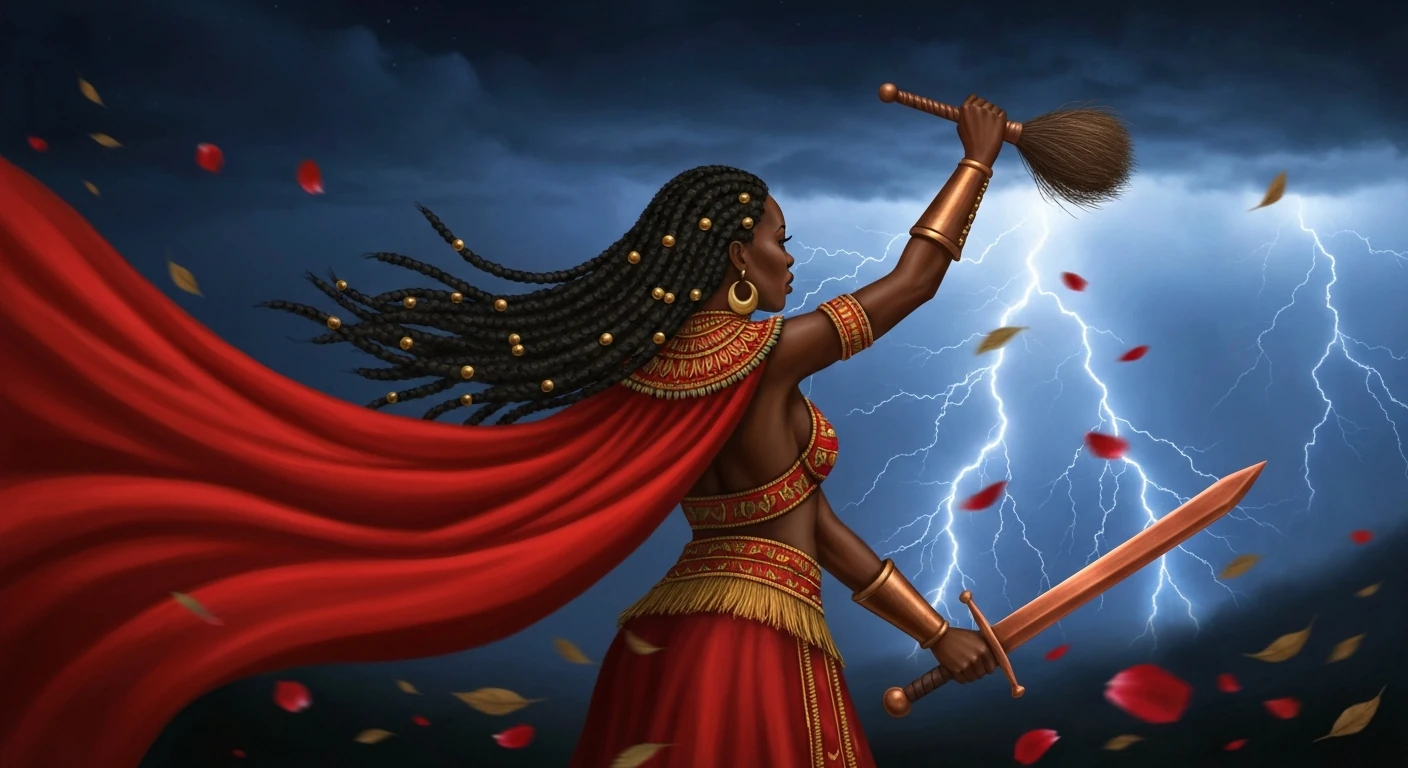
Obá is the Orixá of turbulent waters: the rapids, the waterfalls, and the pororocas, where the river meets the sea and the water boils with force. She represents the warrior woman, the one who works, fights, defends herself, and does not bow her head. It is no coincidence that she carries a sword and shield, in addition to the ofá, the hunting bow.
In the Yoruba origin, Obá is the name of a river in West Africa, a tributary of the great Niger River. Tradition says that when the waters of the Obá river meet those of the Oxum (Oshun) river, everything agitates and stirs. Nature, here, tells a myth: the rivalry between the two Orixás turns into foaming water.
Domain: turbulent waters, war, feminine strength | Symbols: sword, shield, and ofá | Element: moving water
Daughter of Oxalá and Iemanjá (Yemoja) in some traditions, sister of Iansã (Oya), wife of Ogum and later the third wife of Xangô, Obá is an Orixá of intense bonds. It is from these bonds that the most told story about her is born.
The myth of the ear: why Obá lives in the turbulent waters
Here is the itan, the founding myth that practitioners tell to explain the nature of Obá. It is not a recipe to imitate, but rather a lesson on deception, pride, and the origin of the foaming waters.
Obá was the wife of Xangô, but the heart of the Orixá of fire leaned toward Oxum, the favorite. Suffering from neglect, Obá sought out the rival and asked what the secret was to please her husband. Oxum, clever, lied: she said she had cut off her own ear, cooked it, and served it on a plate to Xangô, and that since then he had loved her without end.
Since Oxum always covers her head with a turban, Obá had no way of suspecting the farce. She believed it. And, so as not to lose her husband, she cut off her own ear and offered it to Xangô in a stew. When the Orixá discovered what was on the plate, he was disgusted and expelled Obá from the house.
In the myth, Obá's gesture is not praised: it is the price of a deception. The lesson is about not erasing oneself for love and not trusting the advice of someone competing for the same place. Obá returns strong, not humiliated.
Since then, tradition says, Obá lives in the turbulent waters, and in the dance she takes her hand to her ear to cover the mark. The rivalry with Oxum was recorded in the very geography of the rivers that meet and agitate. This is the version consecrated by Reginaldo Prandi in Mitologia dos Orixás, one of the most respected academic records on the theme.
Obá, Iansã and Oxum: similar, but distinct
It is common to mix Obá with Iansã, because both are warriors and, in tradition, sisters. But they are not the same Orixá. Iansã is the wind, the lightning and the storm, mistress of the eguns and the movement of the air. Obá is the water that flows with fury, the force that comes from below, from the earth and the river.
With Oxum, the relationship is one of contrast. Oxum is the calm fresh water, the gold, the beauty, the seduction that conquers without effort. Obá is the water that faces the stone. In the myth, one deceives and the other is deceived, and it is from this tension that the explanation for turbulent currents is born.
Understanding this difference is respecting each Orixá in their own strength. Confusing the three erases what each one teaches. If you want to discover which energy you identify with, it is worth also reading about how to know which is your Orixá.
The colors, the day, and the greeting of Obá
Obá's ritual sheet changes a bit from house to house, and this is normal in Afro-Brazilian religions. It is always worth confirming with the leader of your terreiro. In general, the most cited points are:
- Colors: red and yellow. Some houses use red and white.
- Day of the week: Wednesday is the most common in Umbanda, but there is variation by tradition.
- Greeting: “Obá Xirê!”, also written as “Obá Siré”.
- Symbols: the sword, the shield, and the ofá, which mark her nature as a warrior.
- Domains: rivers of turbulent waters, rapids, waterfalls, and war.
The axé of Obá is that of the woman who is self-sufficient. That is why she is remembered by those who need courage to turn a difficult page, defend their own space, or start over after a loss.
What are the children of Obá like
The children of Obá usually carry a bit of the strength and reserve of the Orixá. They are sincere people, sometimes too direct, who do not make friends easily, but are loyal to the end with those who enter their circle.
Workers and independent people tend to value their own autonomy and not depending on anyone. They may seem closed off or curt at first glance, when in reality they are just protecting themselves. When they trust, they reveal a deeply dedicated side.
This mixture of armor and tenderness is very much like Obá: a warrior who is also a housewife, a dreamer, and passionate. Strength does not cancel sensitivity, it only defends it.
Offerings and syncretism of Obá
Offerings to Obá are delivered to the banks of rivers and waterfalls, her territory. Among the dishes mentioned in tradition appear black-eyed peas, okra, and acaçá, always according to the guidance of the house and the nation. As in every Afro-Brazilian cult, what matters is the foundation of the terreiro, not a random recipe from the internet. If you want to better understand the subject, see how to make an offering to the Orixás.
In the syncretism formed during colonization, Obá was associated with Saint Joan of Arc, the warrior who fought in armor, and in some regions with Saint Catherine. It is worth remembering: syncretism was a strategy of resistance so that the cult could survive repression, and not an equivalence between the figures. Obá and the saint are distinct in their traditions, as well explained in the entry about the Orixá. The same happened with other Orixás, as in the case of Saint Barbara and Iansã.
Frequently asked questions
Who is the Orixá Obá?
Obá is the Orixá of the turbulent waters of rivers, of rapids, and of waterfalls. A warrior, she carries a sword and shield and represents the strong and independent woman. Sister of Iansã and linked to Xangô and Ogum, she is one of the less known Orixás, but of intense axé and linked to courage.
Why did Obá cut her ear?
According to myth, Oxum deceived Obá by saying she had cut off her own ear to win Xangô. Obá believed her and cut off her own, but Xangô rejected her upon finding out. The story is an itan that explains why Obá lives in turbulent waters and covers her ear while dancing, not a gesture to be imitated.
What is the day and the colors of Obá?
In Umbanda, the day most associated with Obá is usually Wednesday, with variations by house. The most cited colors are red and yellow, and some traditions use red and white. Always confirm with the leader of your terreiro, as each house has its own fundamento.
What is the difference between Obá and Iansã?
Obá and Iansã are sisters and both are warriors, but distinct. Iansã rules the wind, the lightning, and the storm, as well as the eguns. Obá rules the turbulent waters of the rivers and the force of war on land. They are different energies and should not be treated as the same orixá.
With which saint is Obá syncretized?
Obá is syncretized mainly with Saint Joan of Arc, the warrior who fought in armor, and in some regions with Saint Catherine. This syncretism was born as a strategy of resistance during colonization to protect the worship, and it does not mean that the orixá and the saint are the same figure.
Where to find statues and items of Obá
At Joia Mística Laroyê, you find what you need to worship Obá with respect to the fundamento of your house:
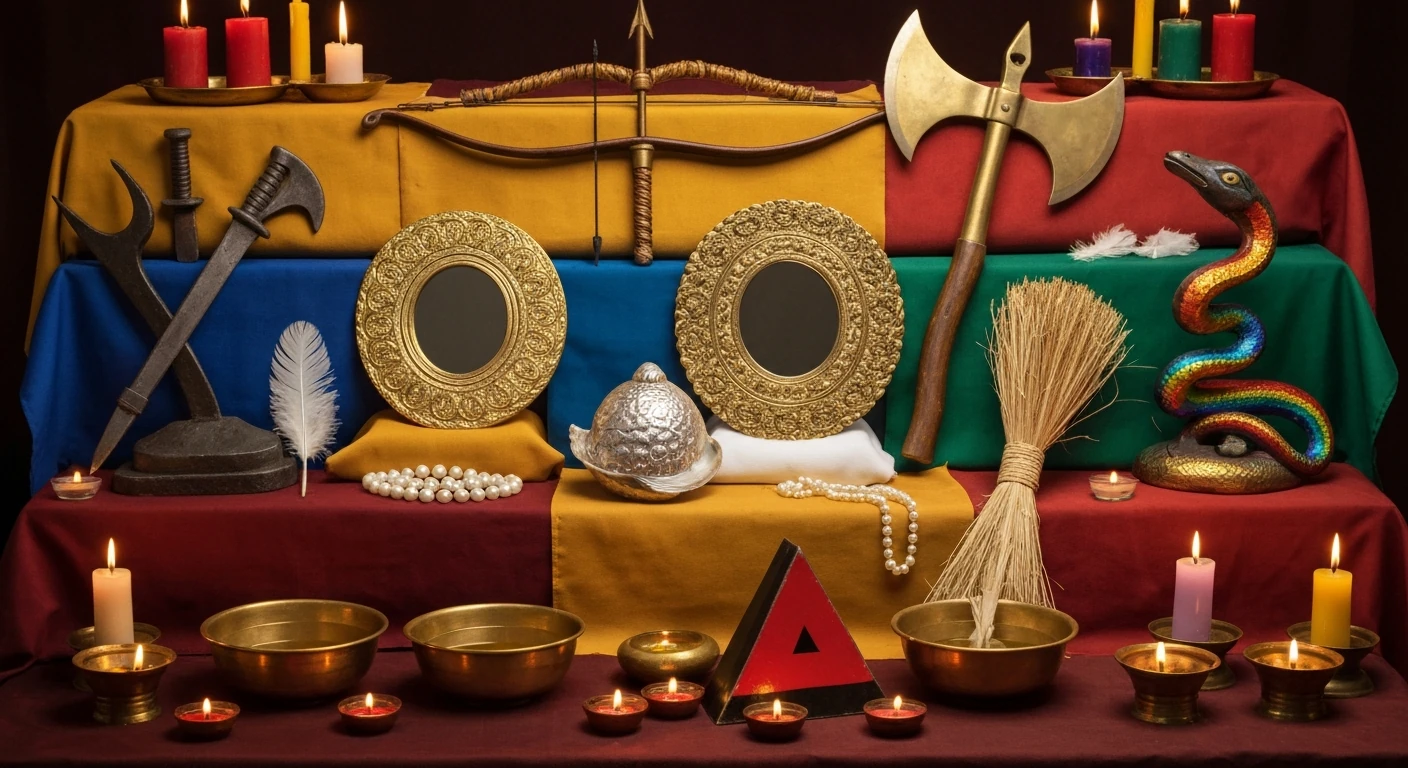
- Statues and figurines of Obá: for the altar and the consecrated foundation (assentamento)
- Candles in the colors of the orixá: red and yellow
- Bead necklaces (guias) and other necklaces: in the colors of Obá
- Herbs and offering items: to prepare what the house directs
- Ofá, sword and shield: symbolic tools of the warrior
Visit our physical store in Extrema-MG or receive it at home with delivery to all of Brazil. Do you have questions about which item fits your worship of Obá? Talk to us via WhatsApp and receive guidance with care and axé.
References
- Reginaldo Prandi: Mythology of the Orixás, academic record on the myth of Obá and Xangô
- Meanings: entry about Obá, the Orixá of the waters in Afro-Brazilian religions