Iemanjá (Yemoja) candle
The firmeza of the Queen of the Sea to care for the head, the children, and the peace of those who live together
Iemanjá candle
7-day candle · stays lit for 7 days7 dias
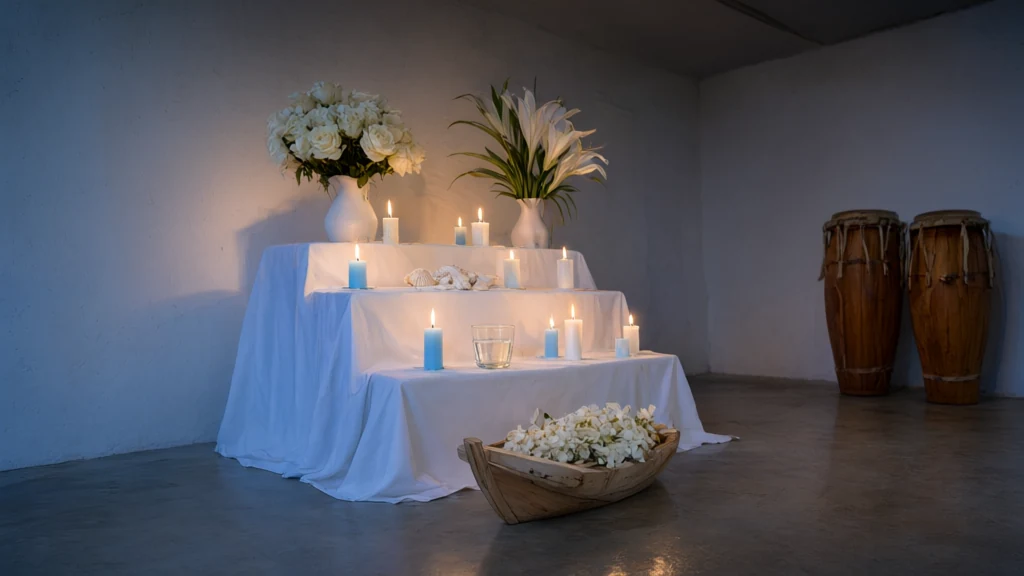
The Iemanjá candle is the one that arrives with the face of the orixá (orisha) stamped on the glass or on the label paper. Those who look for it usually already know what they want: it is not just any blue candle, it is a candle addressed. In Umbanda and Candomblé it goes to the congá, to the foot of the statue of the Queen of the Sea, or to a corner of the room that becomes, for a few days, her place inside the house.
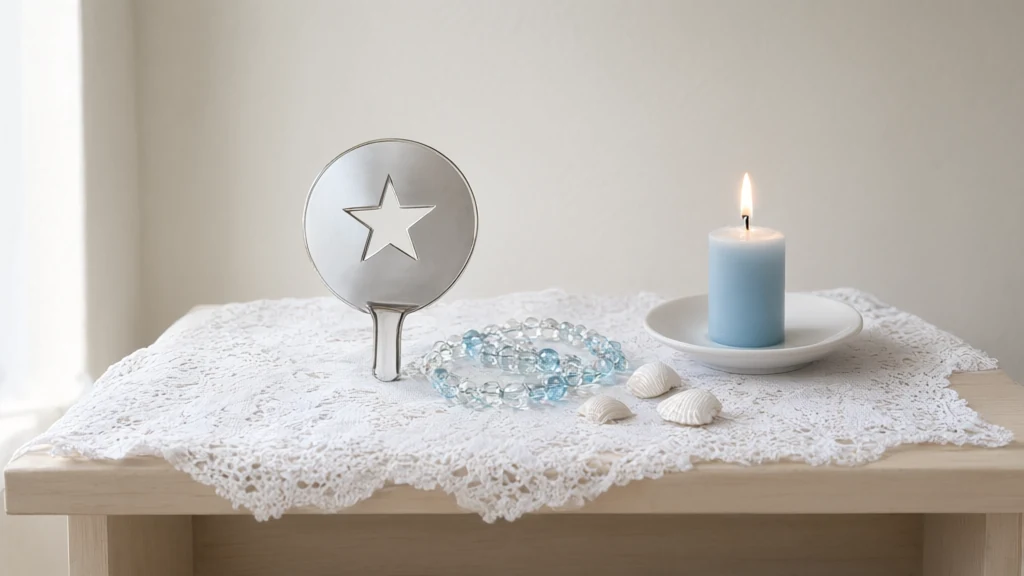
The name comes from the Yoruba Yèyé omo ejá, the mother whose children are fish. Among the egbá, in present-day Nigeria, she was worshipped in a river; it was in the diaspora that she became the entire sea and gained a queen's crown. Saturday is her day in most houses, and the colors are light blue, white, and the silver of the abebé, the metal fan she carries in her hand. The festivities vary: February 2 in Salvador, December 8 in many Umbanda terreiros, August 15 in Rio, and the New Year's Eve on the beach.
As it is a 7-day candle, it asks for consistency. The request is not made once and finished: every day the person returns, looks at the statue, changes the water if needed, and prays again. It does not replace obrigação or assentamento, which are things of the terreiro, but it keeps Iemanjá present in the routine for an entire week.
What is it for
What is the purpose of the Iemanjá Candle
The Iemanjá candle features the image of the orixá on the label and the light blue of the shallow waters. It is the candle for those who want to consecrate their own Iemanjá, not just her color: to care for the ori, protect the children, calm the house, and thank the mother of the salt waters.
-
Caring for a head that is always full
Iemanjá is the owner of the heads. When thoughts do not stop and a decision does not come, the week with her candle helps to consecrate the ori and see with more clarity.
-
Entrusting the children to the mother's protection
Mothers and fathers light the Iemanjá candle for a child who left home, who is sick, or who is on a bad path. The child's name is spoken aloud when lighting.
-
Consecrating the peace of those who live together
A house where everyone shouts or no one talks. The candle stays in a passageway, with water beside it, and the prayer request is that coexistence becomes calmer.
-
Asking for support during pregnancy
From waiting for the positive result until childbirth, many women consecrate Iemanjá for seven days. The candle accompanies the prenatal period with faith, without replacing medical follow-up.
-
Protecting those who travel or work at sea
Fisherman, marinheiro, those who will cross water or spend a season away: the Iemanjá candle lit at home asks for a peaceful crossing and a safe return.
-
Greeting the Queen on festival days
Those who cannot go to the beach in February, August, or December set the candle at home with white flowers. It is the way to be at her party even from afar.
Who rules this candle
Orixás and spirits of the Iemanjá Candle
-

Iemanjá
Yèyé omo ejá, the mother of the fish children
The candle is hers by the label, by the color, and by the purpose. Iemanjá cares for the ori, the family, and motherhood, has Saturday as her day, and receives light blue and white in the firmezas of the home and the terreiro.
Know Iemanjá
Also settled for
- Sailors
- Water People
- Caboclas do Mar
- Mermaids
Prayer to light
Iemanjá candle prayer for the week of firmeza
“My mother Iemanjá, I bring your statue inside my home and light your light so that it stays here for seven days. You who have known my head since before I arrived in this world, settle what is restless in it. Guard my children wherever they may be, and the children who are yet to arrive. Put your salt water between me and what harms me, and let only what comes for good pass through. If I get lost, call me back as the tide calls the sand. During this week I come to see you every day, and each day I give thanks. Odoyá, Queen of the Sea!”Light the candle and pray
Step by step
How to set the Iemanjá Candle
- 1
Prepare the corner on Saturday
Start the firmeza on Saturday, her day. Clean the table or shelf, cover it with white or light blue, and leave the label facing whoever enters the room.
- 2
Put the sea water in the house
The bowl with water and a little coarse salt acts as the sea. It stays next to the candle during the seven days and can be changed if it becomes cloudy.
- 3
Present the prayer request to the statue
Look at the face of Iemanjá on the label and say what you want, whose head it is, and who the children are that you pray for. Speak as if talking to your mother.
- 4
Light it greeting Odoyá
Use a match, greet the orixá, and say the prayer. If you have a gift, such as a mirror or perfume, place it now next to the flowers, without opening the perfume bottle over the flame.
- 5
Return every day
Each day of the week, pass by the corner, change the water if needed, and repeat the prayer request. Constancy is what gives body to the 7 day firmeza.
- 6
Close the week with care
Do not blow out the candle. When the glass goes out on its own, the water goes to the ground or the drain, the flowers go to a garden, and the empty glass can be washed and recycled.
Precautions before lighting
- 7-day candle stays lit overnight. Keep the glass inside a deep plate, away from curtains, fabric, and children or animals that can reach the table.
- Iemanjá is the mother of everyone. Do not set her candle to separate a couple, trap someone, or wish ill: this is not a prayer request that is made to the Queen of the Sea.
- Making the head (fazer cabeça, initiation), giving bori, or consecrating Iemanjá is terreiro foundation. This must be coordinated with the zelador of your house; a candle at home is devotion, not obligation (obrigação).
- A prayer request for pregnancy, childbirth, or a child's illness goes along with a doctor. The candle brings faith to the treatment, but it does not replace a consultation or medicine.
Ceromancy
What the flame of the Iemanjá Candle shows
Traditional terreiro reading. Before interpreting, check if there is no wind, crooked wick, or poor quality candle.
- Good sign
Clean glass and constant flame
Many houses read the votive that burns evenly, without staining the glass, as a sign that the firmeza was accepted and the week passed in peace.
- Good sign
Flame that grows while praying
When the flame rises at the moment you call the name of Iemanjá, the followers of the orixá religion usually say that she heard. Give thanks and proceed with your request.
- Attention
Dark glass on only one side
It could be a crooked wick or air blowing from one side. If that is not the case, some read it as an unresolved matter at home: talk with those who live with you and pray again.
- Attention
Glass that cracks or bursts
First, safety: move what can catch fire. Some read this as a strong charge being cut. Restart with another candle and, if it repeats, seek a serious terreiro.
- Observe
Candle that ends before 7 days
Heat, wind, and a thick wick accelerate the burning. It is not a punishment or a refusal. If the prayer request still weighs on you, light another candle and complete the week calmly.
Ritual bath and smoke cleansing (defumação)
Herbs that combine with the Candle of Iemanjá
-

Pariparoba / Capeba
Piper umbellatum
Iemanjá leaf to relieve the tightness in the chest. A warm ritual bath of pariparoba on the Saturday of the firmeza prepares the body to start the week.
See the herb -

Seaweed
Fucus vesiculosus and related species
They bring the sea inside the house. A dry handful in the bowl of water next to the candle reinforces the connection with the salty waters of the Queen.
See the herb -

Pata-de-Vaca / Unha-de-Vaca
Bauhinia forficata
Herb of maternal harmony and a milder temperament. Use in the ritual bath of the person living with you when the firmeza is for family peace.
See the herb -

White Rose
Rosa alba
The flower offered to her. Leave the roses at the foot of the statue during the week and, on the last day, use the petals in a ritual bath from the neck down.
See the herb
Virtual Candle
Light the Candle of Iemanjá now
Choose the type, write your request, and pay by PIX. The flame stays on the altar and you follow along through the link.
Place on the altarFrequently asked questions
Questions about the Candle of Iemanjá
What is the Iemanjá candle for?
It is used to set Iemanjá herself at home, with her image on the label. The most common requests are to care for the head, protect children and pregnant women, bring peace to the family, and to give thanks. Since it is a 7-day candle, it accompanies the request for an entire week.
What is the difference between the Iemanjá candle and the light blue candle?
The color is the same, the address changes. The light blue one is consecrated to Iemanjá at the time of lighting. The Iemanjá candle already arrives with her image, so the request goes directly to the orixá and stays in firmeza for a week. Use the votive when the matter requires more time.
What is the best day to light the Iemanjá candle?
Saturday, which is her day in most houses, starting the week of firmeza and ending on the following Saturday. On festival dates, such as February 2, December 8, and August 15, she is also very much lit. The dates change from region to region.
Can I light the Iemanjá candle at home, away from the sea?
You can, and that is how most people do it. A bowl of water with a little coarse salt next to the candle represents the sea. Iemanjá does not need a beach to receive your prayer: she needs respect and a clean place.
Can I blow out the Iemanjá candle before the 7 days are up?
Avoid it. The purpose of the votive is to stay lit all week. If necessary, for safety, smother the flame with a saucer, without blowing, and relight it as soon as you can. Blowing is understood as undoing the request with your own breath.
What to do with the glass and the water after the candle?
The water goes into the soil of a pot or down the drain. The empty glass can be washed and recycled, and the rest of the wax goes into the common trash, wrapped. There is no need to take anything to the beach, and leaving glass in the sand hurts the sea that belongs to her.
Can a man light a candle for Iemanjá?
Yes. Iemanjá is the mother of all children, men and women, and she cares for the head of anyone who seeks her with respect. Many fathers light her candle for their children and many fishermen for their own crossing.