The orixás of Batuque follow their own order, different from what is seen in Baiano Candomblé. In Batuque, the Afro-Brazilian religion of Rio Grande do Sul, the orixás are called in a ritual sequence that goes from the youngest to the oldest, always starting with Bará and ending with Oxalá. Knowing this line is knowing the backbone of the Gaúcho tradition.
This guide presents the orixás of Batuque in the order of the line, with the proper names that the tradition uses, what each one rules, and their colors. A note is necessary from the start: all of this varies according to the nation and the house, and that is how it should be.
What is the Batuque line
In Batuque, the sequence in which the orixás are greeted and played in the festival, the Gaúcho xirê, is called the line. It is not just any order: it follows a logic of age, from the youngest orixá to the oldest. Therefore, the line opens with Bará, who moves and opens the paths, and closes with Oxalá, the oldest, the father of creation.
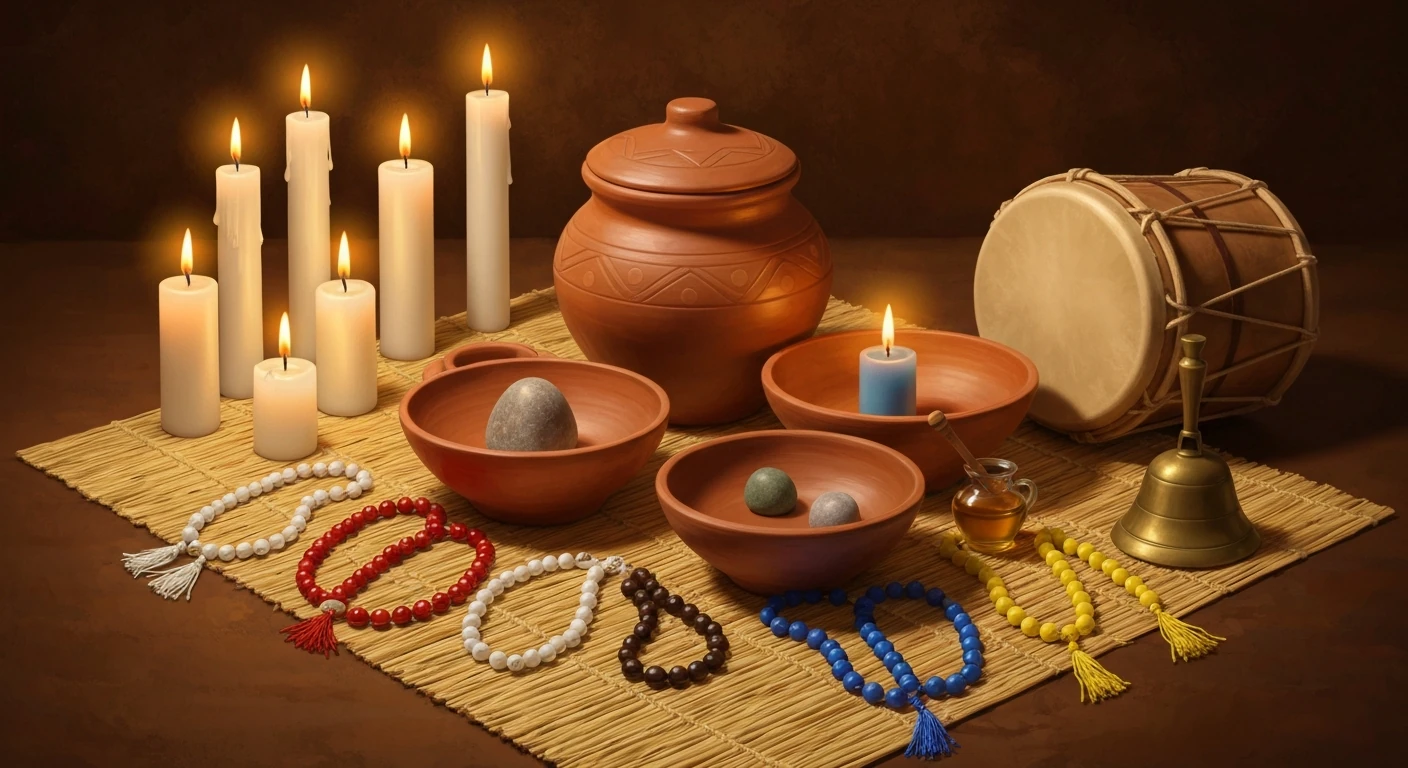
The orixás are usually divided into two classes: the "new" ones, which go from Bará to Obá, and the "old" ones, which start at Oxum and end at Oxalá. Each orixá has their assentamento, their otá (the stone that guards their axé), and their quartinha. These foundations are cared for by the babalorixá or the ialorixá, and they belong to the world of the initiate.
Each person, in Batuque, also has their orixá. It is the so-called owner of the head, the front orixá that rules the life and temperament of the filho de santo, often accompanied by a second orixá, the adjunto or juntó. Those from this religion usually recognize themselves in the characteristics of their orixá, and this discovery happens in the cowrie-shell divination, with the pai or mãe de santo. If you want to better understand this bond, see how to know which is your orixá.
The orixás of Batuque in the order of the line
The table below shows the most common sequence of the line, with the name used in Batuque, the known equivalent in Candomblé and Umbanda, what the orixá rules, and the color generally associated with them.
| orixá (in Batuque) | Equivalent | Rules | Color (usually) |
|---|---|---|---|
| Bará | Exu (Eshu) | Paths, communication, crossroads | Red |
| Ogum | Ogum | Iron, labor, war, roads | Red and green |
| Oiá | Iansã (Oya) | Winds, lightning, storms | Red |
| Xangô | Xangô | Justice, thunder, fire, quarries | Red and white |
| Odé | Oxóssi (Oshosi) | Forests, hunting, abundance | Blue and white |
| Otim | (Oxóssi pair) | Forests and waters, beside Odé | Variable |
| Obá | Obá | Struggle, rivers, feminine strength | Pink |
| Ossanha | Ossain | Leaves, herbs, healing | Green and yellow |
| Xapanã | Obaluaê | Health and disease, skin healing | Red and black |
| Oxum | Oxum | Sweet waters, gold, fertility | Yellow |
| Iemanjá | Iemanjá | Sea, motherhood | Light blue |
| Oxalá | Oxalá | Creation, peace, closes the line | White |
The Ibeji, the twin orixás of children, appear in some houses as a specific orixá within the line and, in others, are treated in a different way. It is a good example of how the sequence is not rigid.
The Batuque line is not the same everywhere. The order of the orixás, the colors, and even the presence of some of them change according to the nation and the house. What always matters is the foundation of your terreiro, and who teaches this is your pai or mãe de santo.
What makes Batuque different
Those who know Candomblé or Umbanda notice particularities in the way Batuque worships its orixás. Some of them are the registered trademark of the Gaúcho tradition:
- Bará opens everything. He is the Exu of Candomblé, but in Batuque he is worshiped exclusively as an orixá, and not as a street spirit. No ritual work begins without greeting him first. See more in who is Bará.
- Odé and Otim form a pair. What in Candomblé is the orixá Oxóssi, in Batuque unfolds into two hunters who live together, Odé and Otim.
- Xapanã is the name of the lord of healing. The orixá of skin diseases and health, known as Obaluaê or Omulu in other traditions, in Batuque goes by Xapanã or Sapatá.
- Xangô is the center. Batuque has been called the "religion of Xangô," given his great importance. In the Oyó nation, Xangô and Oiá are greeted as the king and queen who sustain the house, and many houses keep his name and his foundation as the heart of the terreiro.
It is these proper names and these arrangements that give Batuque its identity, distinct from any other Afro-Brazilian religion.
Batuque, Candomblé and Umbanda
It is common to confuse Batuque with Candomblé, but they are different traditions. Candomblé was born in Bahia. Batuque is the expression of Rio Grande do Sul, with its own liturgy, its ritual language, and its order of the line. As the anthropologist Norton Corrêa, a reference in the study of the theme, summarizes, it is not a "southern Candomblé," but a religion with its own worldview.
The organization by nations, such as Oyó, Jeje, Ijexá, Cabinda, and Nagô, is also central, and is detailed in the article about the nations of Batuque. Each nation has its own particularities of order and worship.
There is also the Linha Cruzada, which emerged in Rio Grande do Sul in the mid-20th century, which brings together in the same house the orixás of Batuque and the spirits of Umbanda, such as exus and pombagiras. Today, a large part of the houses in Rio Grande do Sul are Linha Cruzada, while the Batuque that worships only the orixás is one of the branches of the tradition. To better understand the deities in general, it is worth reading what the orixás are.
The xirê: the festival where the line comes to life
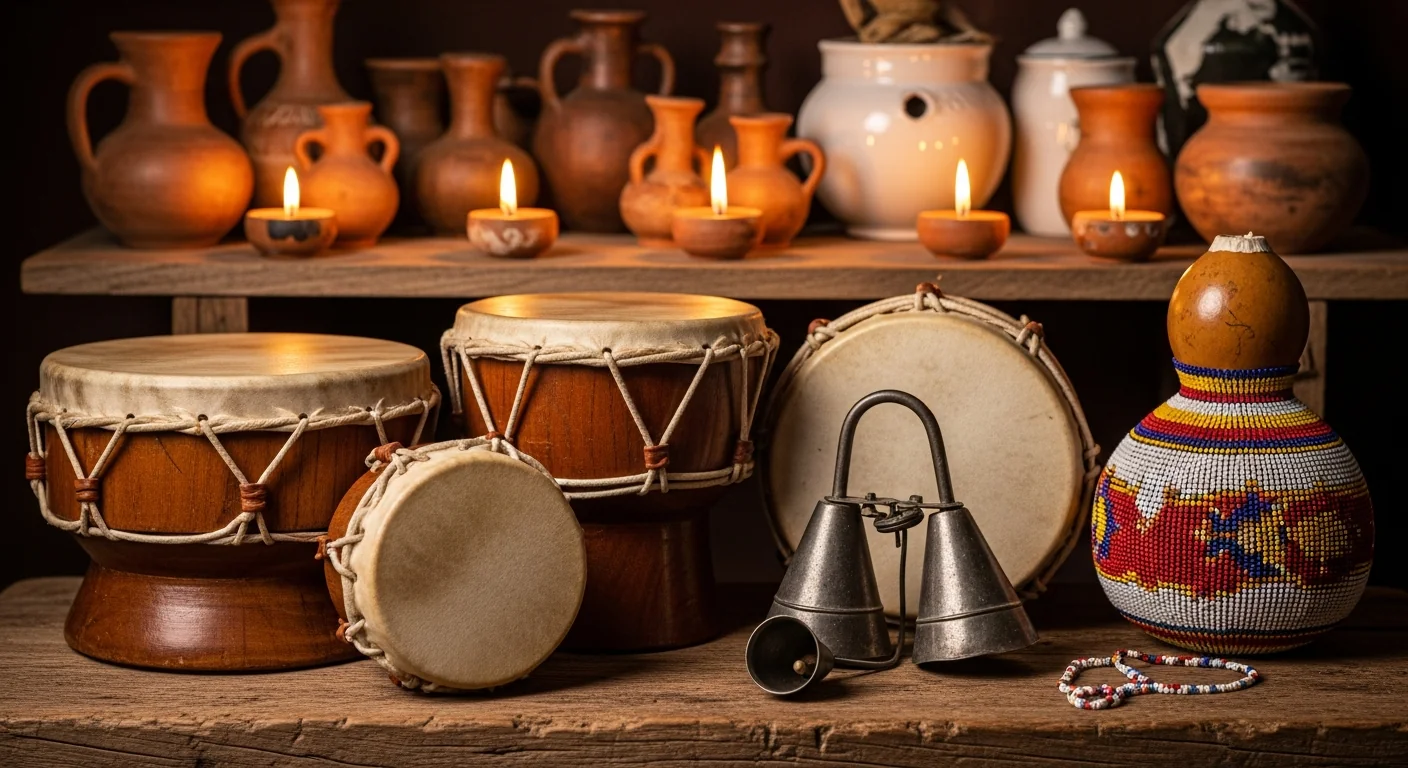
The order of the orixás is not just a list to study. It truly happens in the festival, the xirê, when the terreiro gathers to the sound of the drums to greet each orixá in their turn. The beats call them one by one, from the youngest to the oldest, and the children of the house dance receiving the vibration of each divinity.
It is in the xirê that theory turns into axé. The drum, led by the alabê, marks the unique rhythm of each orixá, and the circle responds with chants in the ritual language. Bará opens the festival ensuring that the paths are clear, and the sequence continues until Oxalá, in a crescendo that gathers the entire community.
Each orixá also has their own date and festivities throughout the year. Those who wish to locate these celebrations within the calendar of Afro-Brazilian religions can consult the calendar of the orixás, always remembering that, in Batuque, the dates and customs also vary according to the nation and the house.
Frequently asked questions
Who are the orixás of Batuque?
The main ones are Bará, Ogum, Oiá (Iansã), Xangô, Odé and Otim, Obá, Ossanha, Xapanã, Oxum, Iemanjá and Oxalá. In some houses, the Ibeji also enter the line. The relationship and order may vary according to the nation and the foundation of each terreiro.
How many orixás are worshiped in Batuque?
It is common to speak of twelve orixás in the Batuque line, from Bará to Oxalá, although the count changes slightly depending on the house, especially due to the presence or absence of the Ibeji and the unfolding of Odé and Otim. The number is not a closed rule in the tradition.
What is the order of the orixás in the Batuque line?
The line goes from the youngest orixá to the oldest. It begins with Bará, follows with Ogum, Oiá, Xangô, Odé and Otim, Obá, Ossanha and Xapanã, and ends with the oldest, Oxum, Iemanjá and Oxalá. The exact sequence varies according to the nation.
What is the difference between Batuque and candomblé?
Candomblé is the Afro-Brazilian religion born in Bahia, and Batuque is the tradition proper of Rio Grande do Sul. Although they worship common orixás, they have different liturgies, names and orders. Batuque is not a version of Candomblé, but rather an autonomous religion.
Who is Bará in Batuque?
Bará is the orixá who corresponds to the Exu of Candomblé, the lord of the paths and communication. In Batuque, however, he is worshiped only as an orixá, and he is always the first to be greeted, as he opens the paths so that the others can be called.
Where to find items for the orixás
At Joia Mística Laroyê, you find what you need to honor the orixás of Batuque:
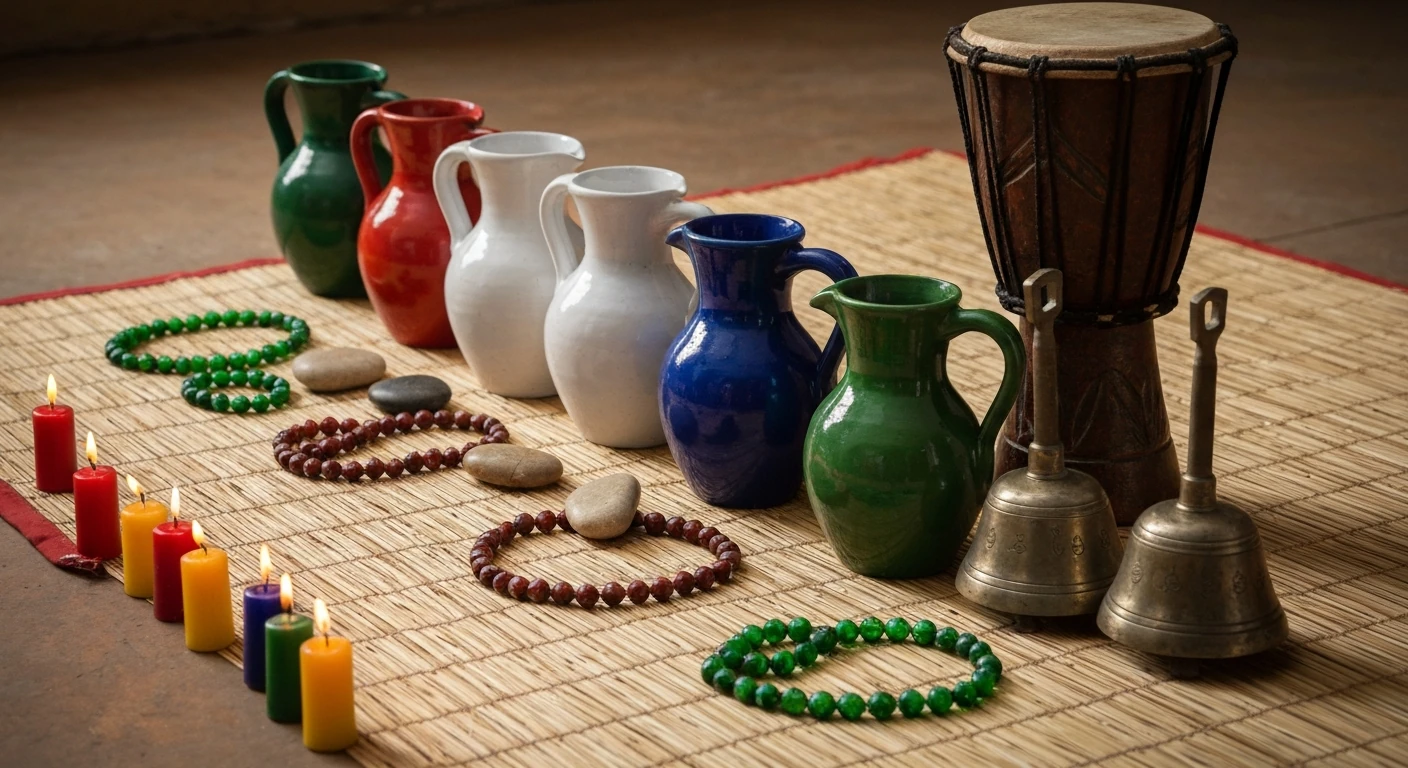
- Bead necklaces and beads: in the colors of each orixá
- Quartinhas and alguidares: for the assentamentos
- Colored candles: red, white, yellow, blue and more
- Statues of the orixás: for your altar
Visit our shop in Extrema, Minas Gerais or talk to us via WhatsApp and we ship all over Brazil.
References
- Wikipedia: Batuque (religion)
- Kingdom of Xangô: Orixás no Batuque RS
- IHU Unisinos: Interview with anthropologist Norton F. Corrêa about Batuque