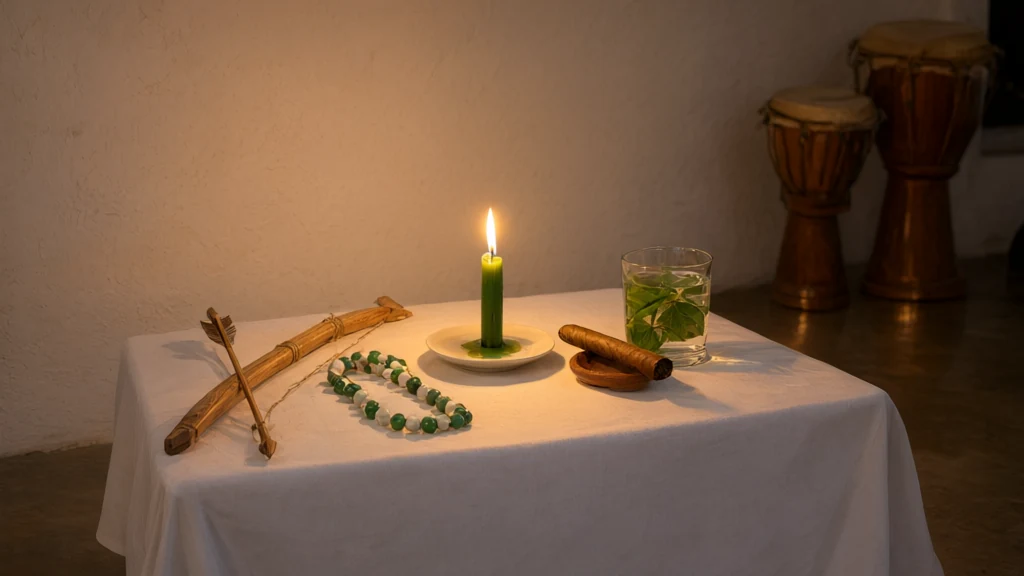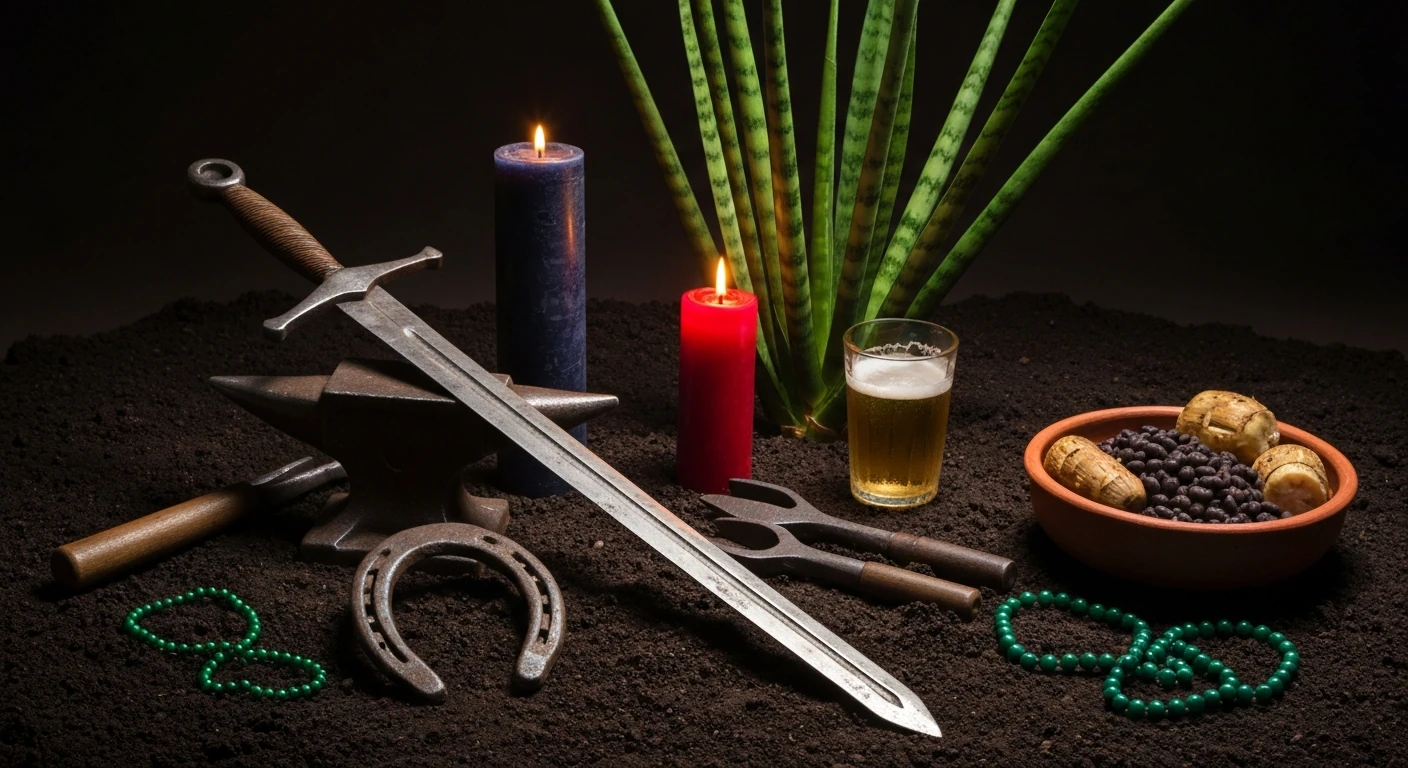
Who is Oxóssi: the orixá of hunting and abundance, also called Odé. In the table by sociologist Reginaldo Prandi, he is the "orixá of hunting (fauna)," linked to forests and the "abundance of food." Lord of the forest and the knowledge of leaves, he is not a figure of violence, but rather the provider: the one who guarantees food and returns from the forest with sustenance in his hands.
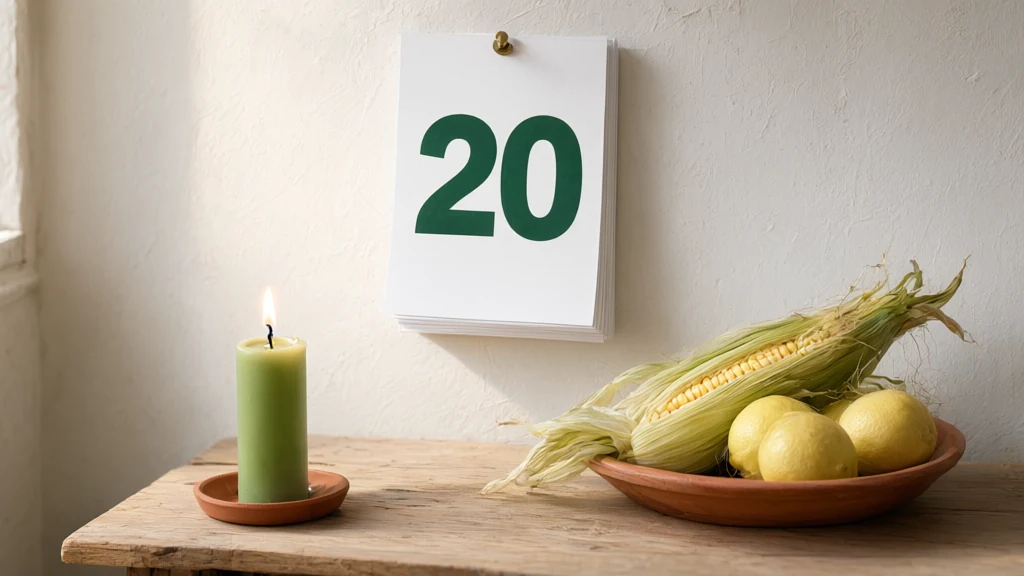
His day is Thursday, the greeting is "Okê arô!" and, in Rio de Janeiro and in Umbanda, the festive date is January 20, the day of Saint Sebastian.
Who is Oxóssi, the hunter of a single arrow
Oxóssi is the orixá of hunting and the forests, worshipped as the provider who knows every trail, every leaf, and every animal of the forest. The Yoruba tradition recognizes him by the epithet of hunter of a single arrow: the one whose aim is so precise that he does not need a second shot. This image says a lot about the orixá, because hunting here is not death for death's sake, it is focus, sustenance, and respect for the time of nature.
The myth of the hunter of a single arrow takes place in Ifé. Pierre Verger tells that, in the festival of the new yams of Olofin, king of Ifé, a bird sent by the witches landed on the palace, and only the hunter managed to take it down, with a single arrow. In this version, the prize is wealth, not the throne.
The connection with the Yoruba city of Ketu is another story. "In Bahia, it is even said that he was the king of Kêto," writes Verger. Among the 301 myths gathered by Prandi, there is one in which "Oxóssi receives the title of 'Alaketu'," according to the review by anthropologist Andreas Hofbauer, who notes the doubt over who gave the city to the hunter: Orunmilá (Orunmila) or Oxum (Oshun). In Salvador, the name remained in a terreiro: historian Renato da Silveira tells that the founders of Alaketo leased a plot in Matatu, "there founding a terreiro dedicated to Oxóssi, the Alaketo".
Verger also observes that the worship of Oxóssi "is almost extinct in Africa, but widely spread in the New World," which he links to the destruction of Ketu by Daomé in the 19th century and the sale of the orixá's initiates as slaves to Brazil and Cuba. It is in the chapter "Oxóssi" of the book Orixás, from 1981. The Wikipedia has an entry dedicated to Oxóssi that gathers his correspondences and myths. To situate him within the set of deities, it is worth reading the overview on what the orixás are.
Technical sheet of Oxóssi
Before deepening the domains of the orixá, it is worth fixing the elements that identify him. The correspondences below mostly follow the ketu nation (Yoruba), with the most common variations in Umbanda noted where they exist, because they do exist, and treating everything as a single rule would erase the real diversity of the houses.
- Domains: hunting, thickets and forests, plenty, abundance, food and knowledge of the leaves
- Colors: in Ketu Candomblé, "turquoise blue and green" clothes and "turquoise blue" beads, in Prandi's table; in Bahia terreiros, light blue is more common, and in Rio's, green, according to Raphael de Jesus (UFJF) based on Lody; in Umbanda, green predominates, linked to the forest
- Day of the week: Thursday in most houses
- Element: the earth covered by forest, the living forest
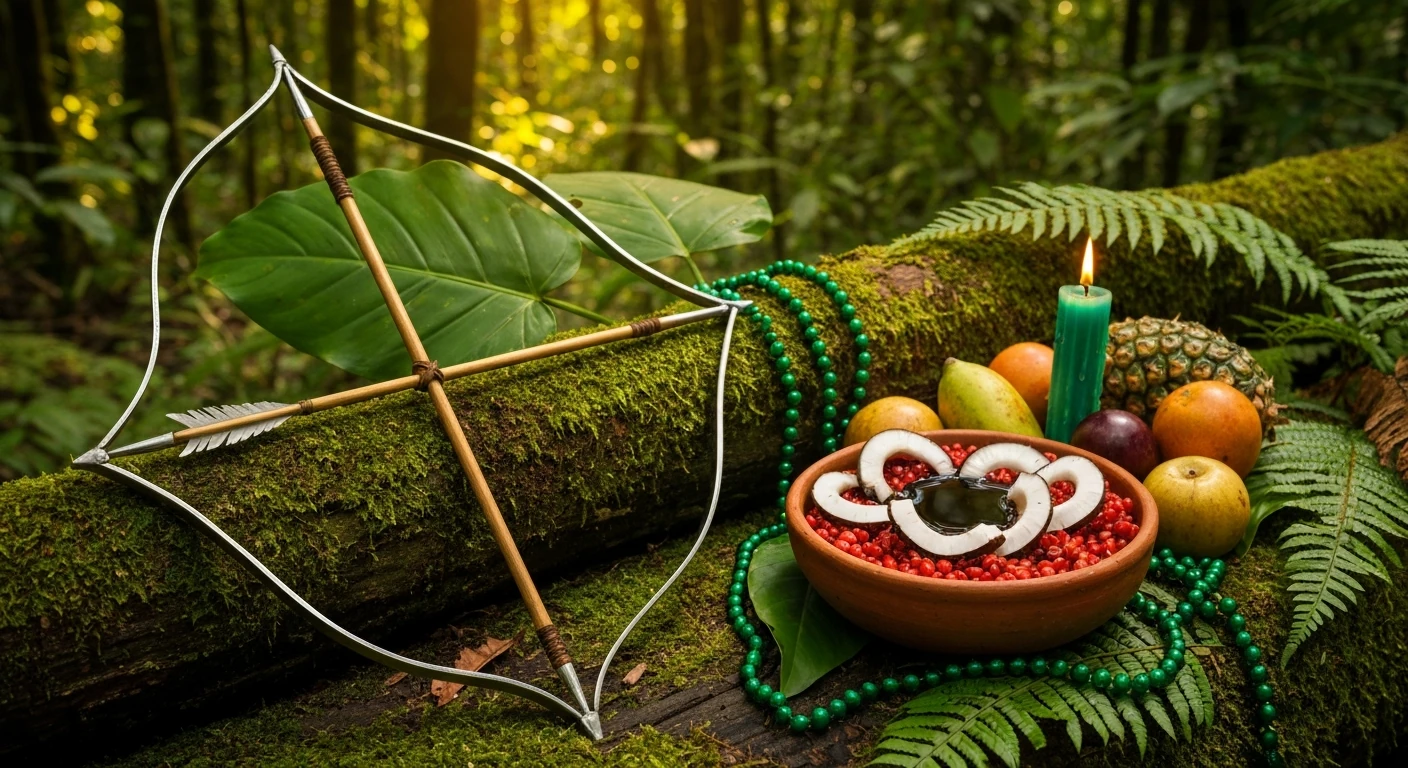
- Symbol: the ofá, the metal bow and arrow, next to the erukerê and hunting tools
- Greeting: "Okê arô!", in Prandi's spelling; Verger records only "Okê!", and MASP translates "Okê arô" as "Hail the great hunter"
- Votive food: "boiled corn with coconut slices; fruits", in Prandi's table; the axoxô with cane syrup and coconut is the version Wikipedia records, citing Lody
- Taboo: "eating honey" is a taboo for the children of Oxóssi in Ketu, according to Prandi
- Herbs: forest leaves in general, under the domain he shares with Ossain, the orixá of the leaves
Okê Arô, my father Oxóssi! The greeting is a call to the hunter who provides. To greet him is to recognize the abundance that comes from the forest and the wisdom of those who know the path of the leaves and the sustenance of the forest.
Honey requires attention. In Ketu Candomblé, bee honey is excluded: in Prandi's table, "eating honey" is the taboo of the children of Oxóssi, and therefore the axoxô takes cane syrup. In Umbanda, the rule changes from house to house: the Terreiro de Umbanda Pai Maneco, in Curitiba, offers the orixá an amalá with "well roasted moganga with corn inside covered with honey". What matters is what your house instructs. To understand how to prepare offerings with respect to what each orixá accepts, see the guide on how to make offerings to the orixás.
Oxóssi, the provider of abundance and knowledge
Oxóssi's hunt is not cruelty, and understanding this clears up the most common misunderstanding about the orixá. His arrow does not seek blood, it seeks sustenance: the animal that feeds the village, the fruit that kills hunger, the clearing that becomes a roça. He is the orixá of abundance conquered with effort and knowledge, the one who teaches that plenty does not fall from the sky, it comes from those who know where to look and have the patience to wait for the right moment.
Therefore, the hunter is invoked by those who need prosperity, work, plenty of food on the table, and luck in business. Those who turn to him do not ask for a miracle, they ask for the skill of the good hunter: the vision to see the opportunity and the firmness to hit the target on the first try. The forest, his domain, is also the pharmacy and the pantry of the people of santo, and governing it is holding the secret of life that renews itself.
There is also the dimension of knowledge. Whoever enters the forest needs to know how to read the signs, recognize the leaves, and respect the animals. Oxóssi is the orixá of this practical and ancestral wisdom, the intelligence of those who observe before acting. FUCESP, the São Paulo federation of Umbanda and Candomblé, writes that Oxóssi "maintains a close connection with Ossaim (Òsanyìn), from whom he learned the secret of the leaves".
Oxóssi's family: Logunedé (Logun Ede), Ossain and the hunters
Like every orixá, Oxóssi does not walk alone in the Yoruba cosmology, and knowing who surrounds him helps to understand his strength. The most well-known bond is with Logunedé, son of Oxum, the lady of the fresh waters. Houses usually say that the father is Oxóssi. In Verger, the father is Erinle, the hunter god who "would have had, with Oxum Ipondá, a son named Lógunede", and the summary of the Mythology of the Orixás, by Prandi, has the section "Logum Edé is born of Oxum and Erinlé". Raphael de Jesus recalls that this lineage "is not mythical unanimity", but that Logunedé "will always have a kinship bond with Oxum and Oxóssi in some quality". The orixá is in who is Logun Edé. Logunedé inherits from his parents beauty, abundance, and grace, living six months in the forest with his father and six months in the river with his mother. To know Logunedé's mother, read about who is Oxum.
Another essential bond is with Ossaim (Osanyin) (Òsányìn), the orixá of the leaves. The two are partners in the forest, but are not confused: while Oxóssi dominates hunting and the forest as territory, Ossaim holds the secret of each herb and its axé. In the itã that Pierre Verger records, Iemanjá (Yemoja) fears that Oxóssi will find Ossain in the forest, and Ossain gives him a potion of leaves that makes him forget who he is: he stays living in the forest with Ossain until Ogum (Ogun) goes to fetch him. The comparison of the pair, nation by nation, is in Ossaim and Oxóssi: why are they confused. Respecting this distinction is respecting the foundation of each one.
The names of other hunters, such as Erinlé, Inlé, Ibualama and Odé, require care. Odé is Oxóssi himself: Prandi's table calls the orixá "Oxóssi or Odé". Erinlé, Inlé and Ibualama are another figure, with a triple name: Prandi gives Erinlé, also called Inlé or Ibualama, its own section in the Mythology of the Orixás, separate from that of Oxóssi, and another to Otim. Verger describes Erinle as the god of hunting of a river in Ijexá, who "in Brazil and in Cuba is known by the name of Inlé"; Ibualama, for him, is one of the deep places of this river, with worship mainly in Bahia. In the houses, these names usually appear as qualities of Oxóssi. Each house and each nation has its own reading, and the blog does not close the matter, it only records the plurality.
In an itã that Verger records as told in Brazil, Oxóssi "was the brother of Ogum and of Exu (Eshu), all three children of Iemanjá". Among Prandi's myths, according to Hofbauer, there is the doubt "if Ogum is the father or brother of Oxóssi". Ogum is the warrior with whom the hunter shares the courage to face the unknown.
Oxóssi in Umbanda and in Candomblé
Although it is the same orixá, Oxóssi is not lived in the same way in the two traditions, and confusing them erases what each one has of its own.
In Candomblé, the orixá is worshipped in the xirê, with his assentamentos (consecrated foundations), his hunting tools, his qualities and his specific foods by nation. It is an ancestral divinity linked to lineage and initiation, with foundations kept by the pai or mãe de santo. In Ketu Candomblé, the turquoise blue colors and the metal ofá mark his presence.
In Umbanda, the hunter rules the line of caboclos, the spirits of indigenous Brazilians who descend in the giras bringing the strength of nature and healing through herbs. In 1933, the writer Leal de Souza recorded that the line of Oxóssi "is, par excellence, that of the indigenous Brazilians," and the Núcleo Umbandista São Sebastião (NUSS) says it is "the line of the great majority of the Caboclos." For most houses, the one who embodies is the caboclo: the historian Lourival Andrade Júnior (UFRN) cites the Revista Espírita de Umbanda, for which it is the caboclos "who manifest in the giras, not the Orixá itself." The line, the color, the day, and the ponto (sacred song) are in Oxóssi in Umbanda. This is why, in Umbanda, the orixá is so associated with green and the image of the indigenous person with a headdress and bow and arrow.
The portrait of the children of Oxóssi changes from author to author. Prandi describes them as "curious and solitary"; Verger, as people who are "smart, quick, always alert." The portraits side by side, the honey, and how the orixá is confirmed are in children of Oxóssi. To better understand what separates the two traditions, see the difference between Umbanda and Candomblé.
Oxóssi, São Sebastião, and the Day of Oxóssi
Those looking for the date of the orixá of the hunt find, in much of Brazil, January 20, the day of Saint Sebastian. During colonization, faced with the prohibition of worshipping the orixás, enslaved Africans associated their deities with Catholic saints to continue revering them under another name. It was a survival strategy, resistance, and not a declaration that orixá and saint would be the same thing.
In Rio de Janeiro and most of the country, the hunter was associated with Saint Sebastian, the martyr saint represented covered in arrows, an image that speaks directly to the ofá of the orixá. But syncretism varies across Brazil, and this needs to be said. In Bahia, Verger records the orixá syncretized with Saint George, in a curious inversion, since in the Southeast Saint George is Ogum. And the festival of Oxóssi of the traditional houses of Salvador does not fall on the saint's day: according to the column of Pai Paulo de Oxalá (Obatala) in the Extra newspaper, Opô Afonjá, Engenho Velho (Casa Branca), and Gantois celebrate Oxóssi "on the day of Corpus Christi" and open the liturgical calendar with this festival. In 2023, the "Mass of Oxóssi," a mass of thanksgiving to Saint George at the Igreja do Rosário dos Pretos, gathered Catholics and the community of Casa Branca on the Thursday of Corpus Christi, according to Bahia Notícias. In Pernambuco, according to Wikipedia, the link with Saint Michael the Archangel appears.
Why January 20 is a holiday in Rio, what day of the week it falls on in 2027, and what the Salvador festival is like are covered in Oxóssi's day. During the week, Thursday belongs to the hunter, in the Prandi table and in Verger, and this is the preferred day to light your candle and renew your requests. To follow the dates of each orixá throughout the year, consult the calendar of the orixás.
How to honor Oxóssi
Reverence to the orixá of the hunt is done with respect to the forest and the abundance he governs. What follows is a devotional reference, remembering that each house has its own guidelines and that foundation offerings are made under the guidance of a pai or mãe de santo.
- Light a green candle (or turquoise blue, according to your house's custom) on a Thursday, in a clean place, asking for abundance, work, and the opening of prosperity
- Offer wild fruits or an axoxô made with respect, remembering that in Ketu Candomblé bee honey is left out; in umbanda, follow the guidance of your house
- Greet the hunter with "Okê arô!", standing and with firmness, like one who gives thanks for sustenance
- Take care of nature in your daily life, because honoring the forest is honoring the orixá who is its lord
Devotion tip: Oxóssi does not respond to those who want abundance without effort. Seek him to ask for the skill of the good hunter, the vision to see the opportunity, and the steadiness to hit the target. The orixá points out the path of the forest, but the one who walks and harvests is you.
Thursday, the day of Oxóssi, is also good for lighting candles with intention. To choose the right color with awareness, see the guide of ritual candles and their meanings. And to know the warrior orixá considered the brother of the hunter, read about who is Ogum.
Frequently asked questions
Who is Oxóssi and what does he represent?
Oxóssi is the orixá of hunting, of the forests, and of abundance in the Yoruba tradition. Known as the hunter of a single arrow, he represents the provider who guarantees sustenance, the prosperity conquered with focus, and the knowledge of the leaves and the forest. In umbanda, he rules the line of the caboclos.
What is the color of Oxóssi?
In Ketu candomblé, the Prandi table gives turquoise blue and green clothes and turquoise blue beads. In the terreiros of Bahia, light blue is more common, and in those of Rio, green. In umbanda, green predominates, linked to the forest and the nature that the orixá governs. Combinations vary by nation and by house, so it is always worth confirming with the custom of your terreiro.
What is Oxóssi's favorite food?
In Prandi's table, Oxóssi's food is boiled corn with coconut slices and fruits. The most cited dish is axoxô, boiled corn with cane syrup and coconut. In Ketu Candomblé, eating honey is a taboo for the children of Oxóssi; there are Umbanda houses that use honey in the orixá's food. Follow the guidance of your house.
What is Oxóssi's day and with which saint is he syncretized?
The hunter's day of the week is Thursday in most houses. The most widespread festive date is January 20, the day of Saint Sebastian, in Rio and in Umbanda. In Bahia, the saint is Saint George, but the festival of the traditional houses of Salvador is on the day of Corpus Christi. In Pernambuco, according to Wikipedia, the link is with Saint Michael.
What is Oxóssi's greeting?
The traditional greeting of the orixá is “Okê arô!”, in Prandi's spelling; Verger records only “Okê!”. It is a call of recognition to the hunter who provides. Pronounced standing up and with firmness, it reveres the abundance that comes from the forest and the wisdom of those who master the path of the leaves and the sustenance of the forest.
Where to buy items for Oxóssi
At Joia Mística Laroyê, you find everything to honor the hunter of abundance with respect to his foundation:
- Statues of Oxóssi with the ofá and the headdress, for your altar or consecrated foundation (assentamento)
- Green and turquoise blue candles, in the colors of the orixá of the forest
- Bead necklaces and beads in green for devotion to the hunter and the caboclos
- Herbs and leaves of the forest for baths and fumigations of abundance and prosperity
- Bows, arrows, and hunting symbols linked to his providing strength
Visit our shop in Extrema-MG and we ship to all of Brazil. For guidance on the correct use of products and the best way to reverence Oxóssi, talk to us via WhatsApp.
References
- Prandi, Horizontes Antropológicos (UFRGS, 1995): Deuses africanos no Brasil contemporâneo
- Prandi, book (Companhia das Letras): Mythology of the Orixás, index and summary
- Hofbauer, Anthropology Journal (USP, 2001): review of Mythology of the Orixás
- Verger, book (Corrupio, 1981): Orixás: Yoruba gods in Africa and the New World
- Silveira, Afro-Asia (UFBA, 2003): On the foundation of the Alaketo terreiro
- Jesus, Sacrilegens (UFJF, 2024): The chromatics of the Orixás
- Leal de Souza, 1933 book: O Espiritismo, a Magia e as Sete Linhas de Umbanda
- Andrade Júnior, Mneme (UFRN, 2014): The caboclos in Afro-Brazilian religions
- Núcleo Umbandista São Sebastião: Oxóssi Line
- FUCESP: Oxóssi
- Terreiro de Umbanda Pai Maneco: Oxóssi, King of the forests
- MASP: Okê Oxóssi, by Abdias Nascimento
- Pai Paulo de Oxalá, Extra (2015): Oxóssi and Corpus Christi
- Bahia Notícias (2023): Mass of Oxóssi on the day of Corpus Christi in Salvador
- Wikipedia: entry about Oxóssi, with correspondences and myths of the orixá