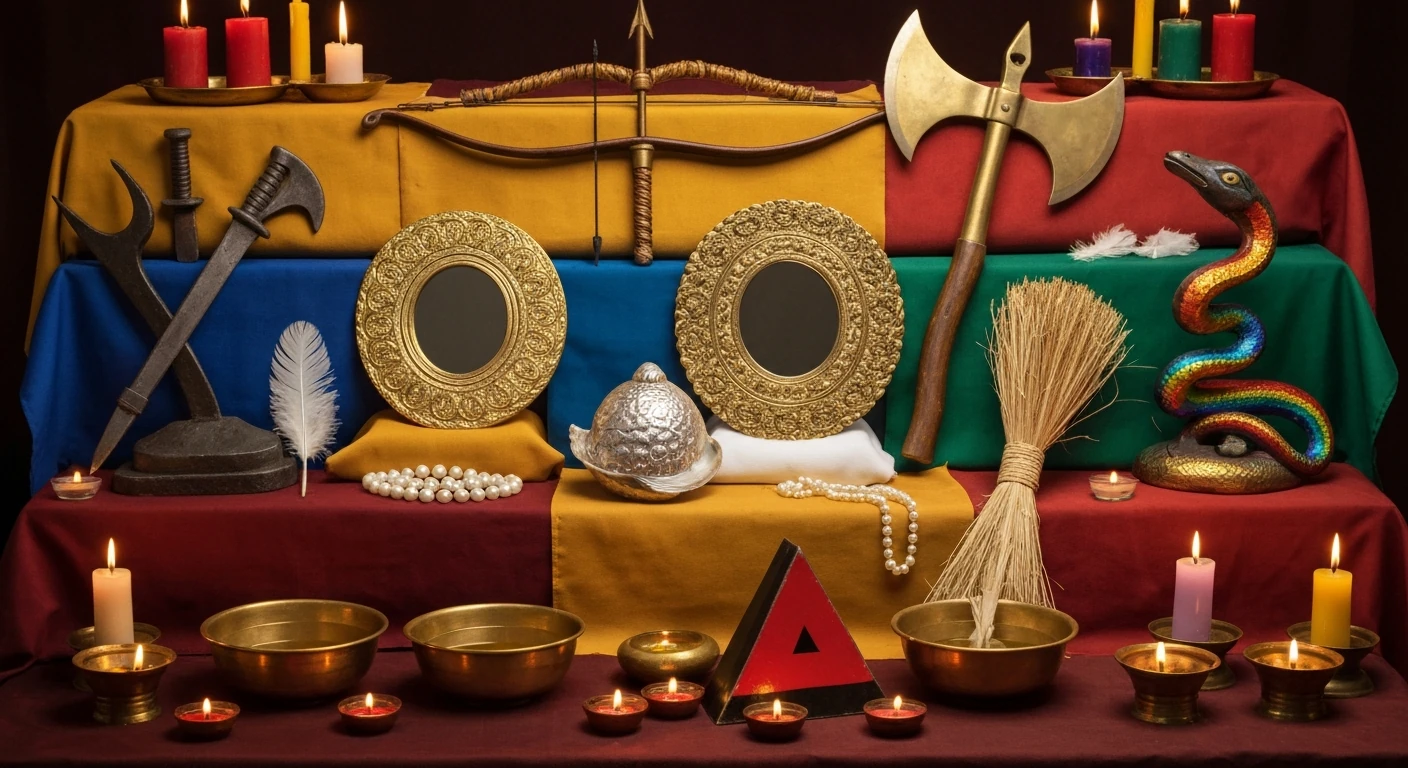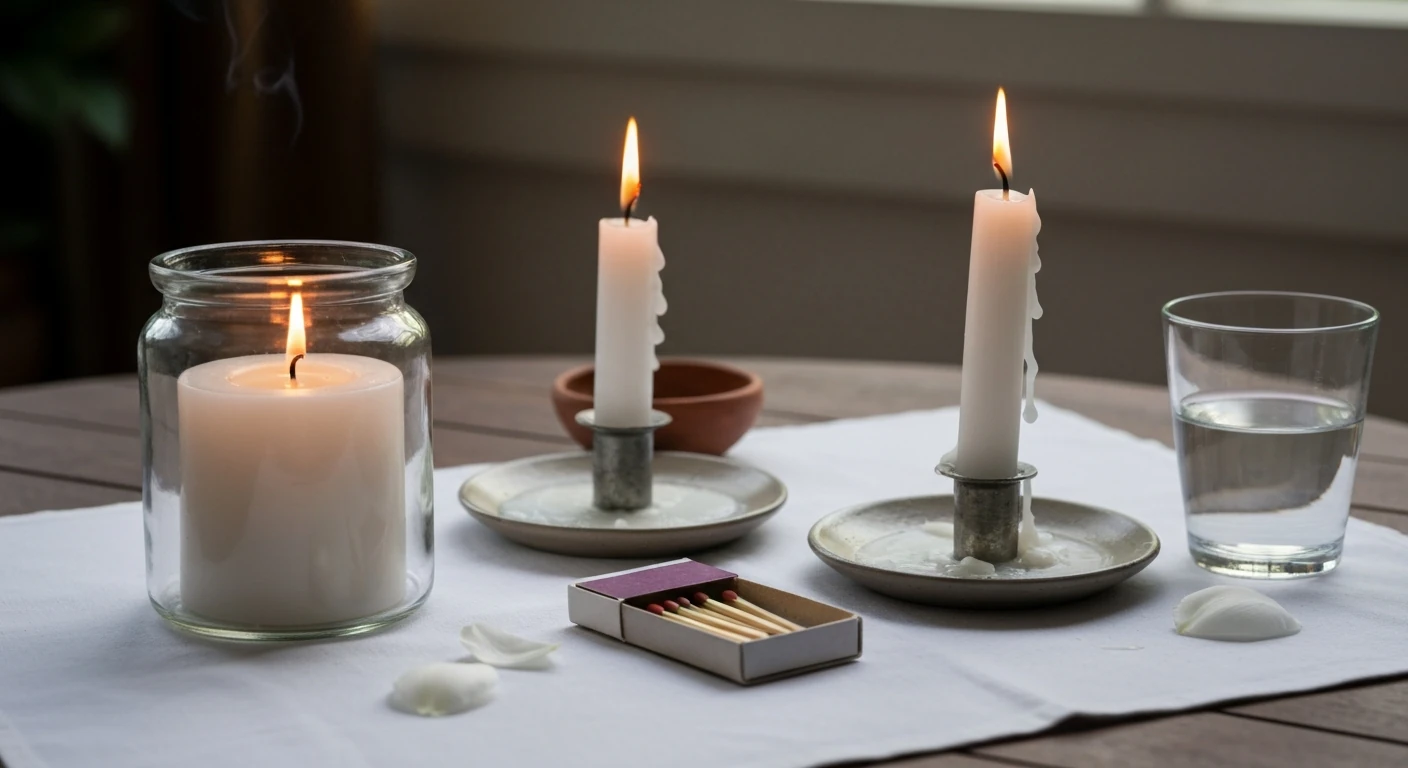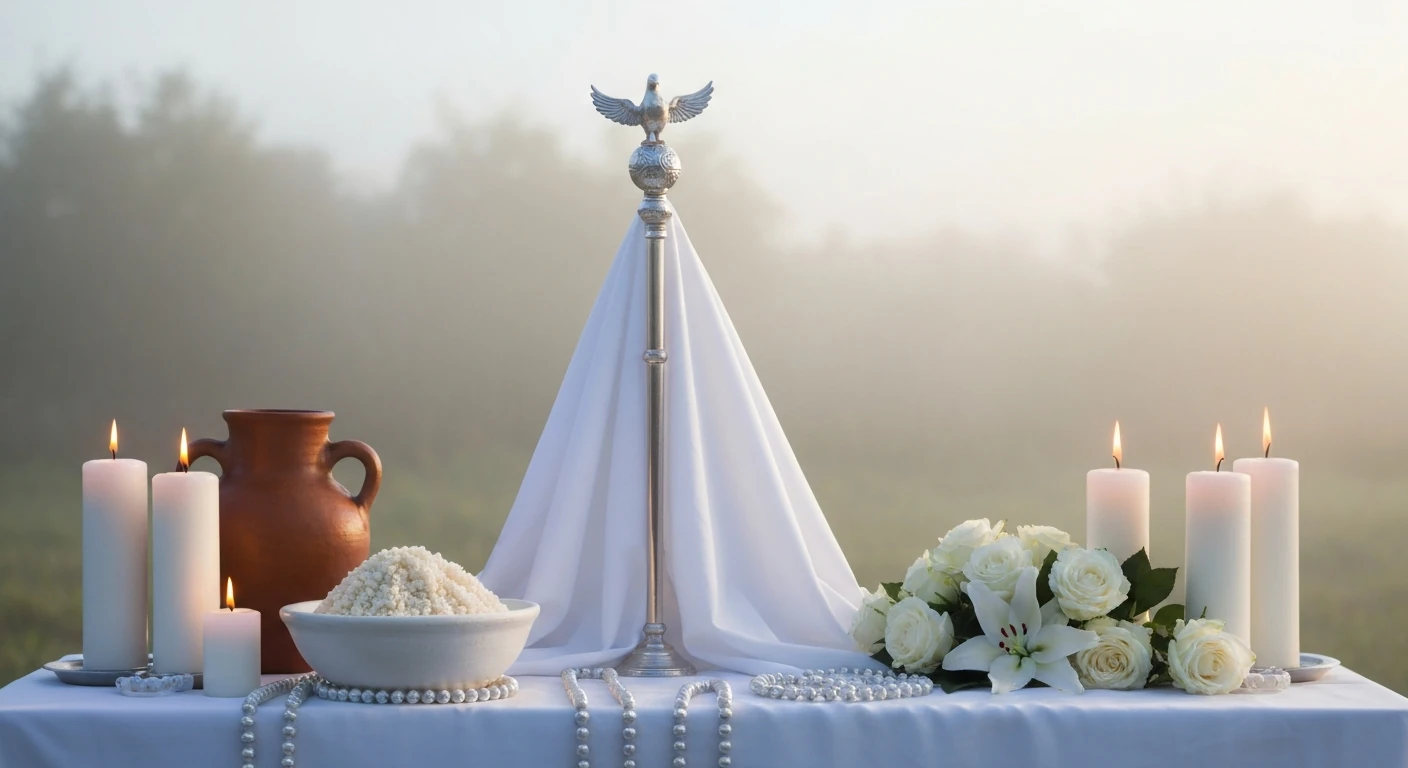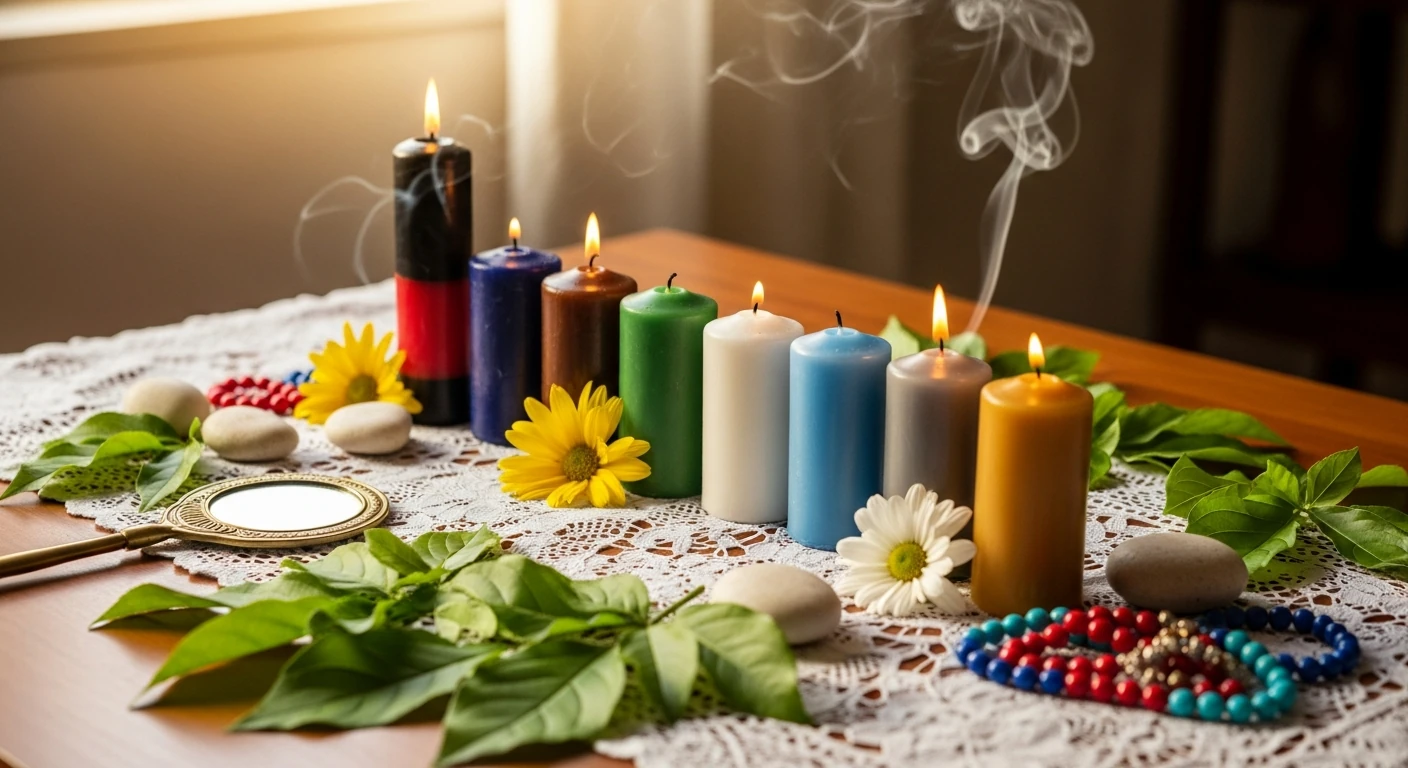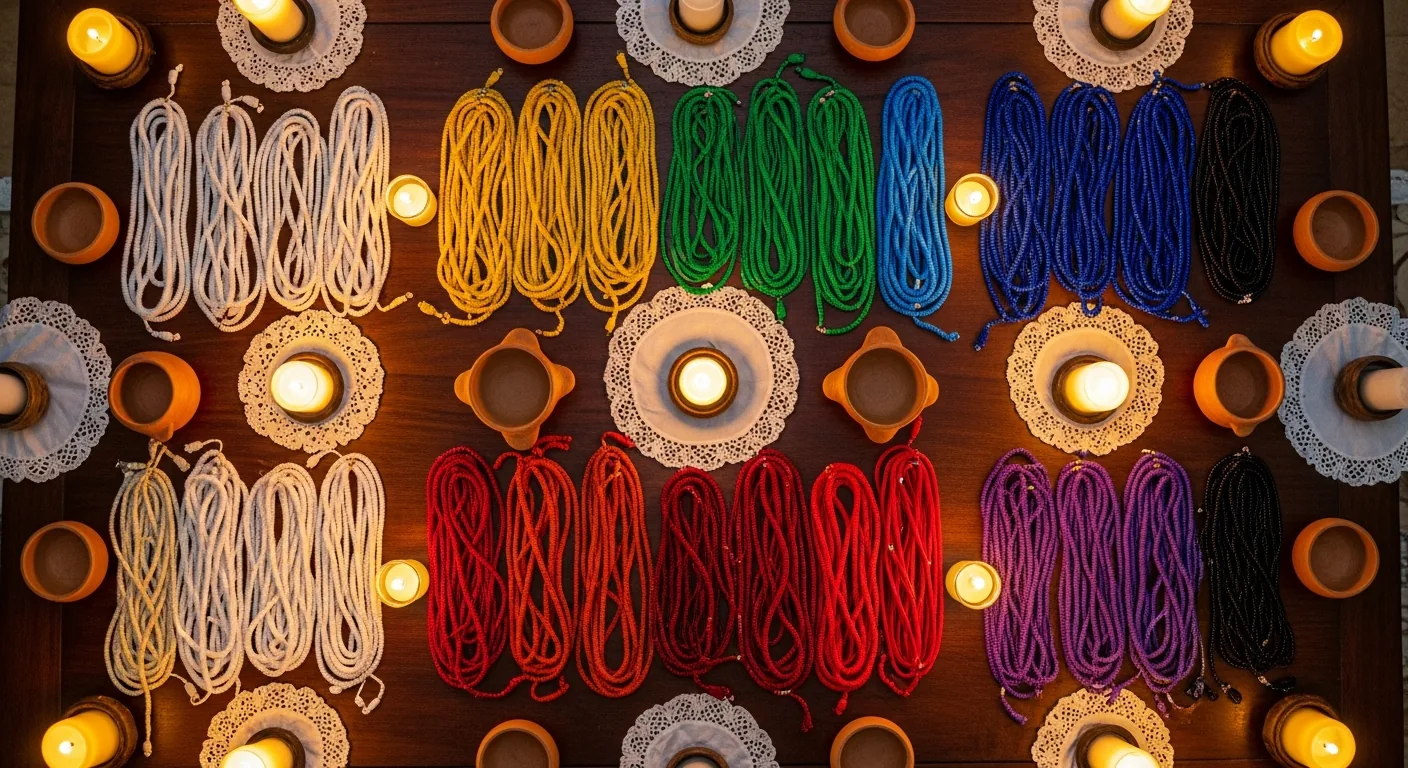
Each orixá has its color, and this color is much more than decoration. It is the visible signature of the axé of that force of nature, that which you see in the bead necklace (guia), in the candle, and in the altar cloth. Knowing the right color is speaking the orixá's language.
This guide brings together the colors of the orixás one by one, explains what each color represents, and shows why they change between Candomblé and Umbanda. In the end, you will know how to choose the right candle and bead necklace (guia) for each energy.
What the color of an orixá represents
In Afro-Brazilian religions, color is language. Each orixá is a force of nature, one of the yoruba deities represented by nature, and the color translates that force for the eyes. The yellow of gold speaks of the river and the wealth of Oxum (Oshun). The white speaks of the peace of Oxalá (Obatala). The red speaks of fire and movement.
In daily practice, color appears in three main places:
- The guias (bead necklaces): the beads in the color of the orixá firm the connection of the child with their energy.
- The candles: lighting the candle in the right color directs the intention to the desired orixá.
- The altar and the ritual clothing: the cloths and the clothes follow the colors of the house and the orixá.
Color does not change the axé, but it organizes the devotion. It is the code that the practitioner learns early and carries throughout their entire life.
Why colors change from house to house
Before the list, a warning that separates those who know from those who repeat: the color of an orixá is not a single rule. It changes for two reasons.
The first is the nation. Candomblé is not a single block. In the ketu, jeje, and angola nations, the same orixá can have beads of different colors. In jeje, for example, the beads of Oxumaré (Oshumare) are usually striped in yellow and black.
The second is tradition. The colors in Candomblé and Umbanda do not always match. Oxóssi is blue in ketu Candomblé, but in Umbanda, the green of the forest predominates. Oxum is yellow in ketu, and in some Umbanda houses, she appears in light blue.
The correct color is always the color of your house. If the list below differs from what your terreiro teaches, follow the fundamento of your pai or mãe de santo. Living tradition is worth more than any table.
With that in mind, see the palette of each orixá.
The color of each orixá
The list follows the most widespread reference in Brazil, with variations of nation and tradition signaled.
- Exu: red and black. The colors of movement and the cruzo. Exu opens and closes paths, and the red with black marks his strength as the guardian of the gates.
- Ogum: dark blue and green. In ketu Candomblé, the navy blue and the green of the warrior blacksmith. In Umbanda, red takes over, due to the influence of Saint George.
- Oxóssi: turquoise blue or green. Light blue and turquoise in ketu, green in Umbanda. Green is the forest, the hunting territory of the orixá of abundance.
- Ossaim (Osanyin): green. The owner of the leaves wears the green of all the axé that heals. Without Ossaim, no herb has strength.
- Logun Edé: turquoise blue and gold-yellow. The young prince unites the colors of the father Oxóssi and the mother Oxum, half forest, half river.
- Xangô: red and white. In ketu Candomblé, the red and white of justice and thunder. In Umbanda, the brown of the quarry is very present.
- Iansã: red, garnet, and pink. The colors of the wind, the lightning, and the fire that she carries. Some houses lean more toward garnet, others toward pink.
- Obá (Oba): red and yellow. The warrior orixá of the turbulent waters. Some houses use red and white.
- Oxum: yellow and gold. The gold of the river and of wealth. In some Umbanda houses, she appears in light blue, and the variation is legitimate.
- Iemanjá: light blue, white and silver. The colors of the calm sea and the foam. The same light blue is worn by the marinheiros da umbanda, spirit guides of the water people connected to her.
- Nanã: purple and lilac. The colors of the elder, almost always with white. Some houses include indigo, the tone of still water and primordial mud.
- Obaluaê: black and white, with red in Candomblé. FUCESP writes: "Your colors are Black and White. (In Candomblé, in addition to these colors, red is also used)." In Reginaldo Prandi's table, the Candomblé clothing is "red, white and black, with a straw hood." The color and the candle in Umbanda are in Omolu na umbanda.
- Oxumaré: yellow and green. Plus all the colors of the rainbow, which is the orixá itself. In Jeje, the beads are striped in yellow and black.
- Ewá (Yewa): bright red, coral, and pink. The orixá of clairvoyance and mystery wears the coral and pink of beauty and enchantment.
- Ibeji: pink and blue. The colors of the twins and of children. Many houses still adopt the colors of the parents, Xangô and Iansã.
- Oxalá: white. The father of the pantheon wears white from head to toe. White is the sum of all colors and the peace that gives shape to life.
What each color means
Looking at the set, some meanings repeat and help to understand the logic of the colors.
- White: peace, purity and cleansing. It is the color of Oxalá and serves any orixá in requests for harmony. Where the white of the turn comes from is in why use white on New Year.
- Blue: the waters. Light blue for Iemanjá (Yemoja) and for the people of the sea, deeper blue for Ogum (Ogun) in ketu.
- Yellow and gold: the river, the gold and the prosperity of Oxum and of Logun Edé.
- Red: the fire, the vital blood and the movement of Exu, Xangô and Iansã.
- Green: the forest and the healing of the leaves, of Oxóssi and of Ossaim.
- Purple and lilac: the ancestry and the mystery of Nanã.
- Black: transformation and passage, present in Exu and Obaluaê, never a sign of "evil".
How to use the colors in daily life
Knowing the color is the first step. Using it well is what matters. See how to apply it in your devotion:
- Light the candle in the color of the orixá you want to greet. For doubt or general peace, the white candle of Oxalá always serves. It is worth understanding before how to use ritual candles.
- Wear the bead necklace (guia) in the color of your head orixá, always firmada by your house. A guia is not jewelry: it is firmeza, and it is firmada in the terreiro.
- Wear the color on the orixá's day. Matching the color with the orixá's day of the week reinforces the connection.
- Set up the altar with the correct colored cloth and respect the colors of your house above any list.
Color is a gesture of respect. When you light the correct candle, you show the orixá that you know his path.
Frequently asked questions
What is the color of each orixá?
In summary: Exu wears red and black, Ogum blue and green, Oxóssi green or blue, Xangô red and white, Iansã red and garnet, Oxum yellow, Iemanjá light blue, Nanã purple, Obaluaê black and white, Oxumaré the colors of the rainbow and Oxalá white. The shades change according to the nation and the house.
Do the colors of the orixás change between umbanda and candomblé?
Yes. Several orixás have different colors in the two traditions. Oxóssi is blue in candomblé ketu and green in umbanda. Oxum is yellow in ketu and sometimes light blue in umbanda. Therefore, the final reference is always the foundation of your house, not a closed list.
What is the color of the candle for each orixá?
The candle follows the color of the orixá: yellow for Oxum, light blue for Iemanjá, red and white for Xangô, white for Oxalá, green for Oxóssi in umbanda. The white candle is a joker and serves for any orixá in requests for peace, cleansing, and harmony.
What does the color white represent in the orixás?
White is the color of Oxalá, the father of the pantheon, and symbolizes peace, purity, and the sum of all colors. Therefore, white can be used for any orixá, especially in requests for harmony, spiritual cleansing, and serenity. It is the most versatile color of all the axé.
Where to buy candles and bead necklaces in the colors of the orixás
At Joia Mística Laroyê, you find everything in the correct colors of each orixá:
- Colored candles: all colors of the orixás, to light on the congá and for requests
- Bead necklaces and strands of beads: assembled in the colors of each orixá, to set your connection
- Statues of the orixás: to set up and consecrate your altar at home
- African-style cloths (panos da costa) and ritual fabrics: in the colors of the energies you worship
- Herbs and incense: to complete the greeting of each orixá
Visit our physical store in Extrema-MG or receive at home with delivery to all of Brazil. Talk to us via WhatsApp to know the right color of your orixá.
References
- FUCESP: Obaluaê page
- Reginaldo Prandi, Horizontes Antropológicos, 1995: African gods in contemporary Brazil
- Wikipedia: entry about Orixá, Yoruba deities represented by nature
- Wikipedia: entry about Candomblé and its nations