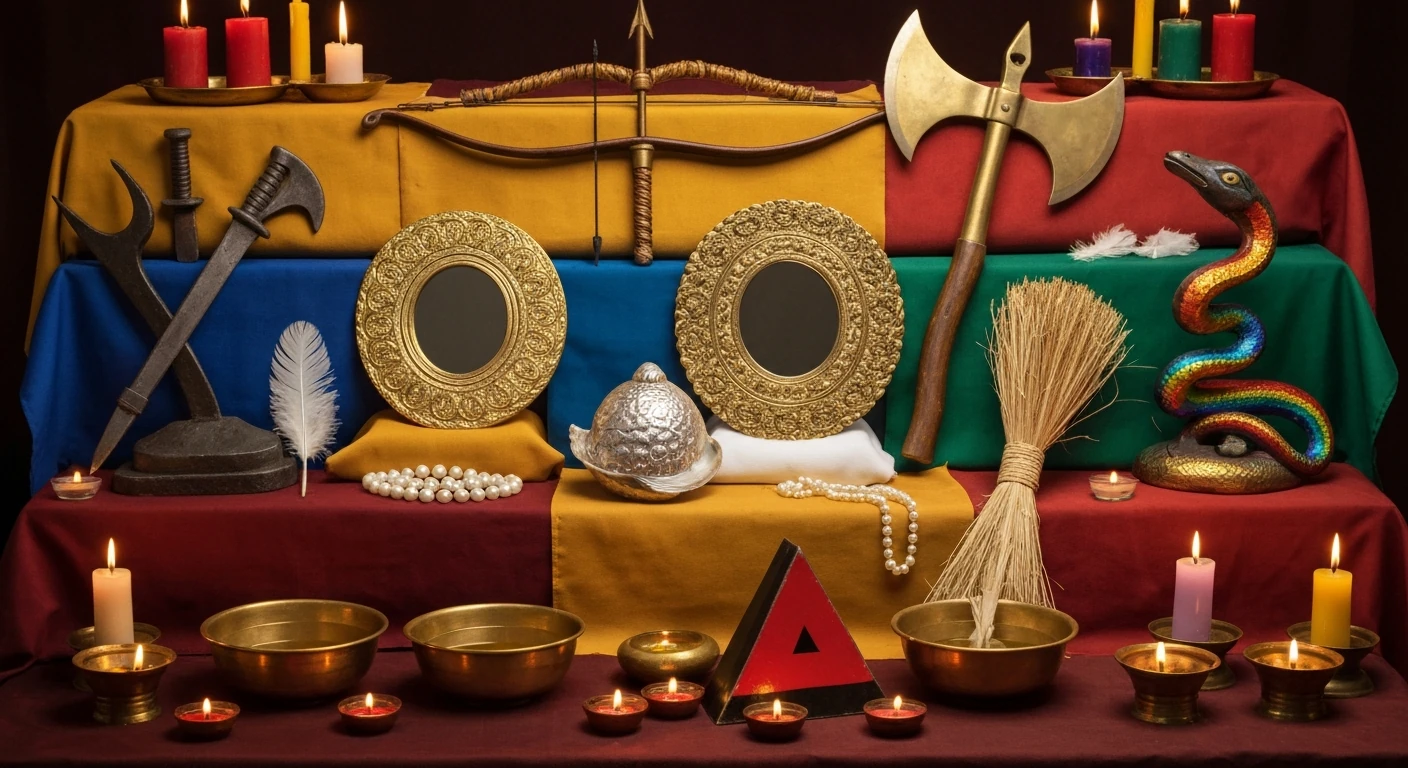
One of the most frequent questions from those starting to learn about Afro-Brazilian religions is: what is the difference between Umbanda and Candomblé? Both are Afro-Brazilian, both worship spiritual spirits and Orixás, but they are distinct traditions, with different histories, rituals, and purposes.
Different origins
Candomblé the preserved tradition
The Candomblé arrived in Brazil directly with enslaved Africans, mainly from the yorùbá people (from Nigeria and Benin), but also from the bantu (Angola, Congo) and the jeje (Daomé). Each group formed its own "nation":
- Ketu Nation (yorùbá base) the most widespread in Brazil
- Jeje Nation (Ewe-Fon people base)
- Angola Nation (bantu base)
Candomblé preserves African tradition to the maximum. The rituals use the nagô language (yorùbá), the Orixás have names and characteristics directly linked to Africa, and the initiation (called "feitura" or "fazer o santo") is a long process, which can last months of seclusion.
Umbanda the Brazilian birth
Umbanda was born in Brazil in the early 20th century (the most cited date is 1908, in Rio de Janeiro). It is a genuinely Brazilian spiritual synthesis: it unites elements of Candomblé, Kardecist Spiritism, popular Catholicism, and indigenous traditions.
In Umbanda, the Orixás manifest through spirits of humans who lived on Earth: Caboclos (indigenous people), Pretos-Velhos (wise Africans), Exus, Pombagiras, Children, among others. The rituals are in Portuguese, more accessible to the general public.
The main differences
| Aspect | Umbanda | Candomblé |
|---|---|---|
| Origin | Brazil, 20th century | Africa, brought in the 16th-19th centuries |
| Ritual language | Portuguese | Nagô/yorùbá (and other African languages) |
| Entidades | Caboclos, Pretos-Velhos, Exus, Pombagiras | Orixás (without manifestation of human spirits in most nations) |
| Initiation | Less formal, varies by house | Rigorous and long ("feitura do santo") |
| Syncretism | Strong Catholic and Kardecist influence | Less syncretism, more African preservation |
| Liturgy | Chants in Portuguese, pontos cantados | Chants in nagô/yorùbá |
| Hierarchy | Pai/Mãe de Santo, mediums | Babalorixá/Yalorixá, filhos de santo |
What they have in common
Despite the differences, Umbanda and Candomblé share a lot:
- They worship the Orixás as supreme spiritual forces
- They use sacred herbs, candles, ritual offerings and ritual baths
- They perform rituals in terreiros (sacred worship spaces)
- They have as a base the axé the sacred energy that sustains everything
- They value ancestry and the relationship with nature
The date of 1908, and what the research says about it
Umbanda tells its own origin in a scene. On November 15, 1908, in a session of the Federação Espírita de Niterói, the young medium Zélio Fernandino de Moraes manifested a spirit that presented itself as Caboclo das Sete Encruzilhadas and announced a new religion, open to everyone.
The historian José Henrique Motta de Oliveira, from UFRRJ, examined this scene in a theoretical discussion about the founding myth of umbanda. The minutes of that session do not record the episode, and the narrative gained shape in the 1960s, when Zélio was already elderly. The author does not treat this as a fraud. He treats it as a founding myth, and shows that what was at stake was legitimizing the practice in the face of police persecution at the time.
This does not diminish umbanda. Every religion keeps a story of origin, and this fulfills that function. But it helps to understand why Candomblé does not have a foundation date: it was not born from an episode, but rather from terreiros that organized themselves over centuries, the oldest documented in Bahia still in the 19th century.
What changes for those who will visit
In umbanda, the gira is usually open to the public, the service is free, and the consultation happens with the spirit incorporated in the medium. White or light-colored clothing works in most houses.
In candomblé, the public festival receives visitors, but what happens there is celebration, not consultation. Those who want a reading or guidance should schedule at another time, with someone who has the foundation for that.
In both, consultations with spirits are not charged. The rest of what is expected from someone arriving for the first time is in first time in umbanda.
Which one is more correct?
Neither. They are different paths to the same source of light. What matters is the faith, the respect, and the seriousness with which it is practiced.
Religious prejudice still exists and causes harm. Knowing these traditions in depth is an act of resistance and love.
Frequently asked questions
Are Umbanda and Candomblé the same religion?
No. Both worship the orixás and were born from the same African root, but they are distinct religions in history, ritual language, initiation, and form of ritual work. Candomblé came with the Yoruba, Jeje, and Bantu peoples during the colonial period. Umbanda was born in Brazil, at the beginning of the 20th century, bringing together Candomblé, Kardecist Spiritism, popular Catholicism, and indigenous tradition.
Which one is older, Umbanda or Candomblé?
Candomblé. It arrived with enslaved Africans between the 16th and 19th centuries and organized the Ketu, Jeje, and Angola nations here. Umbanda has a Brazilian birth date, and the most cited is 1908, in Rio de Janeiro.
In Umbanda, do the orixás incorporate?
In Umbanda, it is the entities who incorporate, spirits of people who lived on Earth: caboclos, pretos-velhos, exus, pombagiras, and children. The orixás appear as divine irradiations, not as spirits that descend into the medium. In Candomblé, the orixá is settled and manifests in the initiate.
In which one can you arrive without being initiated?
Both receive visitors, but the door is different. Umbanda works with public service, consultation, and spiritual pass, and the initiation is less formal and varies by house. In Candomblé, the feitura de santo is a long process of seclusion, and the one who decides the path is the babalorixá or the ialorixá of the house.
Religious items for Umbanda and Candomblé
At Joia Mística Laroyê, you find products for both traditions:
- Statues of Orixás and spirits
- Bead necklaces (guias) and collars for each Orixá
- Sacred herbs for baths and fumigations
- Ritual candles in all colors
- Vestments for giras and rituals
- Instruments (atabaques, agogôs, maracás)
Come visit us in Extrema, Minas Gerais or talk to us via WhatsApp.
References
- José Henrique Motta de Oliveira: a theoretical discussion on the interpretations of the founding myth of Umbanda, UFRRJ
- Eufrazia Cristina Menezes Santos: O Preto Velho na Umbanda, Debates do NER, UFRGS, 2010, on the Bantu heritage in Umbanda