Few spirits gather as much strength and as much prejudice as Exu Sete Encruzilhadas. Also known as Exu Rei das Sete Encruzilhadas, he is one of the most evoked guardians of Quimbanda and Umbanda, lord of paths, of choices, and of life turns.
This guide explains who Exu Sete Encruzilhadas is, what the seven crossroads mean, his day, colors, greeting and offerings and, with the same seriousness, why he is not the devil. This association is a historical distortion, and undoing it is an act of respect toward Afro-Brazilian religions.
Who is Exu Sete Encruzilhadas
Exu Sete Encruzilhadas is a guardian spirit: a spirit that works in Quimbanda and Umbanda, opening and closing paths, bringing clarity to difficult decisions and removing obstacles from the life of those who seek him with respect.
His archetype is that of a figure of command and authority. Tradition describes him as an elegant "noble" with a cape, top hat, and cane, a communicator, intelligent, tireless worker, and executor of spiritual justice. He is not a spirit of fear: he is a firm lord, who demands responsibility and returns movement to those who are stagnant.
He figures among the Exu-kings, the chiefs of the falanges that act in the realms of Quimbanda. Like every Exu of work, he respects the hierarchy of the house and only acts within the limits and foundations of the terreiro, never "on his own." Do not confuse him with the Caboclo das Sete Encruzilhadas, a caboclo line guide linked to Zélio de Moraes: the name is similar, the line is different.
The meaning of the seven crossroads
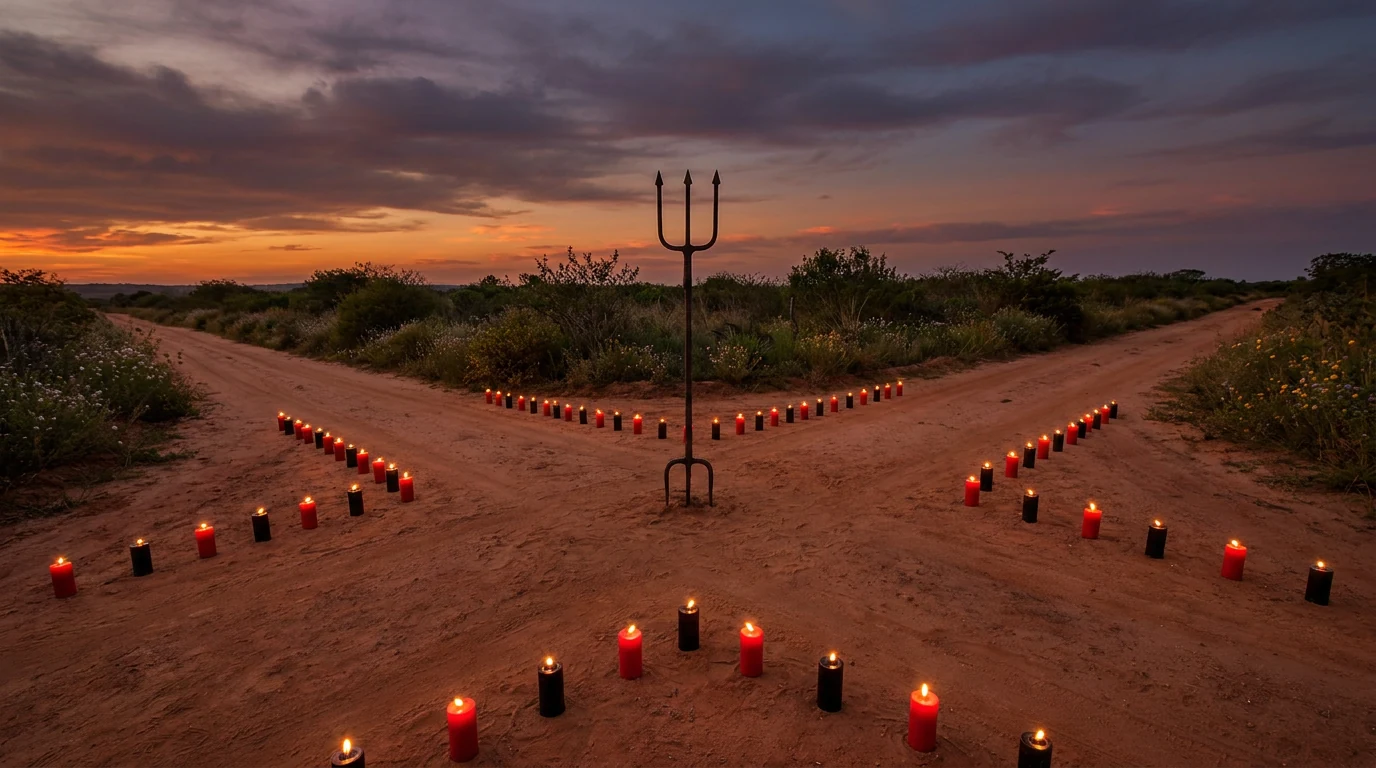
The crossroads is the symbol-territory of Exu. It is the point where paths cross, the exact image of every moment of choice: moving forward, going back, turning left or right. It is there, at the intersection, that life demands decisions.
If one crossroads already concentrates this power, imagine seven of them. The number seven, in Afro-Brazilian traditions, indicates totality and plenitude. Exu Sete Encruzilhadas is, therefore, the lord of all paths and of all directions at the same time, the one who sees the seeker's entire life, not just a stretch of it.
Laroyê, Exu! The greeting reminds us that, before any path opens, it is necessary to greet the one who guards the gate. Exu is the first to be revered, because without him, nothing moves.
That is why he is sought in moments of real crossroads: job changes, the end or beginning of relationships, decisions that stall. His ritual work is not to "solve magic"; it is to unlock movement so that the person can walk.
Exu Sete Encruzilhadas profile: day, colors, greeting and offerings
Gathering what the houses most record about the spirit, always remembering that the details vary from terreiro to terreiro:
- Greeting: "Laroyê!", often in the form "Laroyê, Exu Rei das Sete Encruzilhadas!"
- Day: Monday is the most cited as Exu's day; some houses link his ritual work to the midnight hour and the turn of the day.
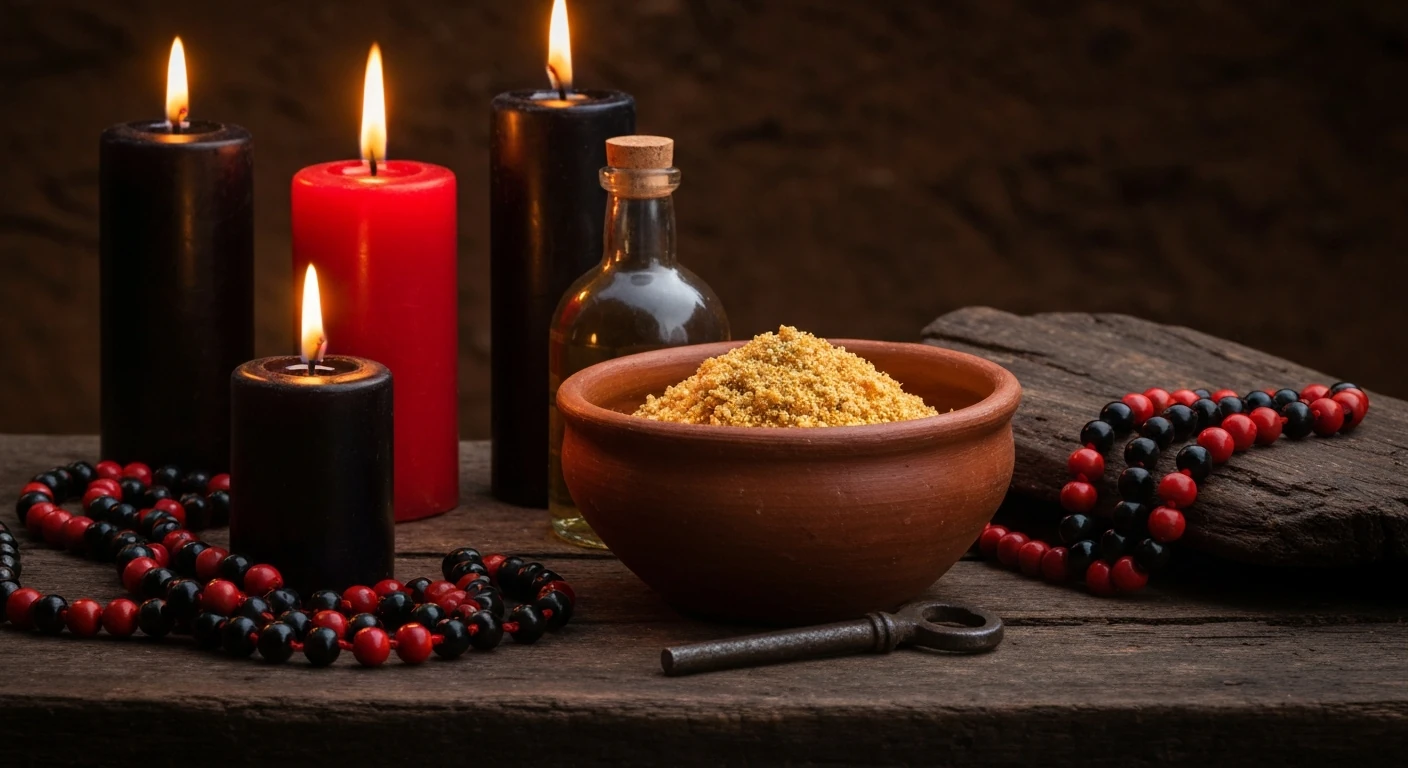
- Colors: black and red, the classic colors of Exu.
- Offerings and firmezas: usually include black and red candles, cigars, drinks such as cachaça and farofa, delivered at a crossroads with respect. The exact composition depends on the house, the line, and the specific Exu of the person.
- Sung chant: has its own sung chants and drawn points used to greet and identify the spirit in the terreiro.
An important and honest warning: none of this is a guaranteed result formula. An offering is a gesture of relationship and devotion, not a button that delivers love, money, or revenge. And serious ritual work is done inside a house, with the guidance of a pai or mãe de santo, never as a standalone recipe taken from the internet. See the necessary care in the offering for Exu guide.
Exu is not the devil: the distortion that needs to end
Here is the most important point of this article. Exu is not the devil. It never was.
The confusion has a well-documented historical origin. When Christian missionaries translated religious texts into African languages, they chose the word Èṣù (Exu) to name the "devil" of the scriptures. It was a translation error loaded with intent: by demonizing Exu, the persecution of African religions was justified. The forced syncretism of the colonial period completed the distortion. The sociologist Reginaldo Prandi documented exactly this path, "from messenger to devil".
The problem is that the idea of the devil simply does not exist in Yoruba cosmology nor in Umbanda or Quimbanda. In these traditions, there is no figure of absolute evil at war against good. Orixás and spirits have an ambivalent nature of light and shadow, like any human being. The devil is a Christian concept; applying it to Exu is about superimposing one religion over another and erasing the original meaning.
As recorded in the entry about Exu in the tradition of the orixás, he is the messenger, the guardian of the crossroads, the one who opens all rituals. Reducing this force to "demon" is prejudice, not theology.
Exu orixá (orisha) and Exu of quimbanda: same name, different cosmologies
There is still a common confusion that is worth clearing up: not every "Exu" is the same thing. In fact, there are distinct meanings that simply share the name.
- Exu-orixá (Èṣù): in Candomblé and the Yoruba tradition, is a deity, a force of nature and a messenger between humans and the orixás. It was never an incarnated being. It is he who opens all rituals: nothing begins without greeting Exu.
- Exu of umbanda and of quimbanda: are spirits who once lived as people and today work as guardians and messengers, providing guidance in consultations and acting within the kingdoms and phalanges of quimbanda.
Exu Sete Encruzilhadas belongs to this second group: it is a spirit of ritual work, not the African orixá. Same name, different cosmologies. Understanding this distinction is what allows one to respect each tradition on its own terms, without mixing what should not be mixed. Those who wish to go deeper can start with the guide who is Exu.
Frequently asked questions
Who is Exu das Sete Encruzilhadas?
It is a guardian spirit of quimbanda and umbanda, known as Exu Rei das Sete Encruzilhadas. Lord of the paths and choices, he opens and closes doors, brings clarity to decisions, and unlocks situations. The seven crossroads symbolize the totality of life's directions.
What is the day of Exu Sete Encruzilhadas?
Monday is the day most cited as Exu's day, and some houses link its work to the midnight hour. As with all practices, the day and the details of the worship may vary according to the tradition of each terreiro.
What is the offering for Exu Sete Encruzilhadas?
Offerings usually gather black and red candles, cigars, drinks such as cachaça and farofa, delivered at a crossroads with respect. The correct composition depends on the house and the person's Exu, and must be guided by a pai or mãe de santo. It is not a formula for guaranteed results.
Is Exu Sete Encruzilhadas the devil?
No. This association is a historical distortion, born from mistaken Christian translations and colonial syncretism. In Afro-Brazilian religions, there is no figure of the devil or absolute evil. Exu is a guardian of the paths, revered with respect, and not a demon.
What is the difference between Exu orixá and Exu of Quimbanda?
The Exu-orixá (Èṣù) is a divinity of Candomblé, a messenger between humans and orixás, who never incarnated. The Exus of Umbanda and Quimbanda are spirits who once lived as people and today work as guardians. They share the name, but belong to different cosmologies.
Where to buy candles, statues, and items for Exu
At Joia Mística Laroyê, you find what your devotion to Exu asks for, with respect and foundation:
- Black and red candles: the classic colors of Exu, for firmezas and tributes
- Statues and figurines of Exu: for your altar and assentamentos
- Bead necklaces and firmas in the colors of the spirit
- Cigars, drinks, and ritual farofa: traditional offering items
- Herbs and incense for opening paths
Visit our physical store in Extrema, Minas Gerais or receive it at home with delivery to all of Brazil. Talk to us via WhatsApp: Joice guides you on the right items and reinforces that all serious ritual work is done with the guidance of your house of the orixás (casa de santo).
References
- Wikipedia: Exu (orixá)
- Wikipedia: Quimbanda