Few names awaken as much respect and as much misplaced fear as that of Exu Tranca Ruas. Guardian of the paths, lord of the crossroads, and one of the most worshipped Exus in Umbanda and Quimbanda, he carries a reputation for being severe. But those who know the tradition know: Tranca Ruas does not close doors to harm, but rather to protect. What he locks against the child of faith, he opens in their favor.
This guide presents who Exu Tranca Ruas is, his falanges, the greeting, the day of devotion, the offerings and, mainly, why the idea that "Exu is the devil" is a historical error that needs to be undone.
Who is Exu Tranca Ruas
Exu Tranca Ruas is not a single spirit, but a falange, that is, an entire line of guardian Exus who work under the same vibration. "Tranca Ruas" is a spiritual title, not just a name. That is why people speak of "the Tranca Ruas," each with their own history and field of action.
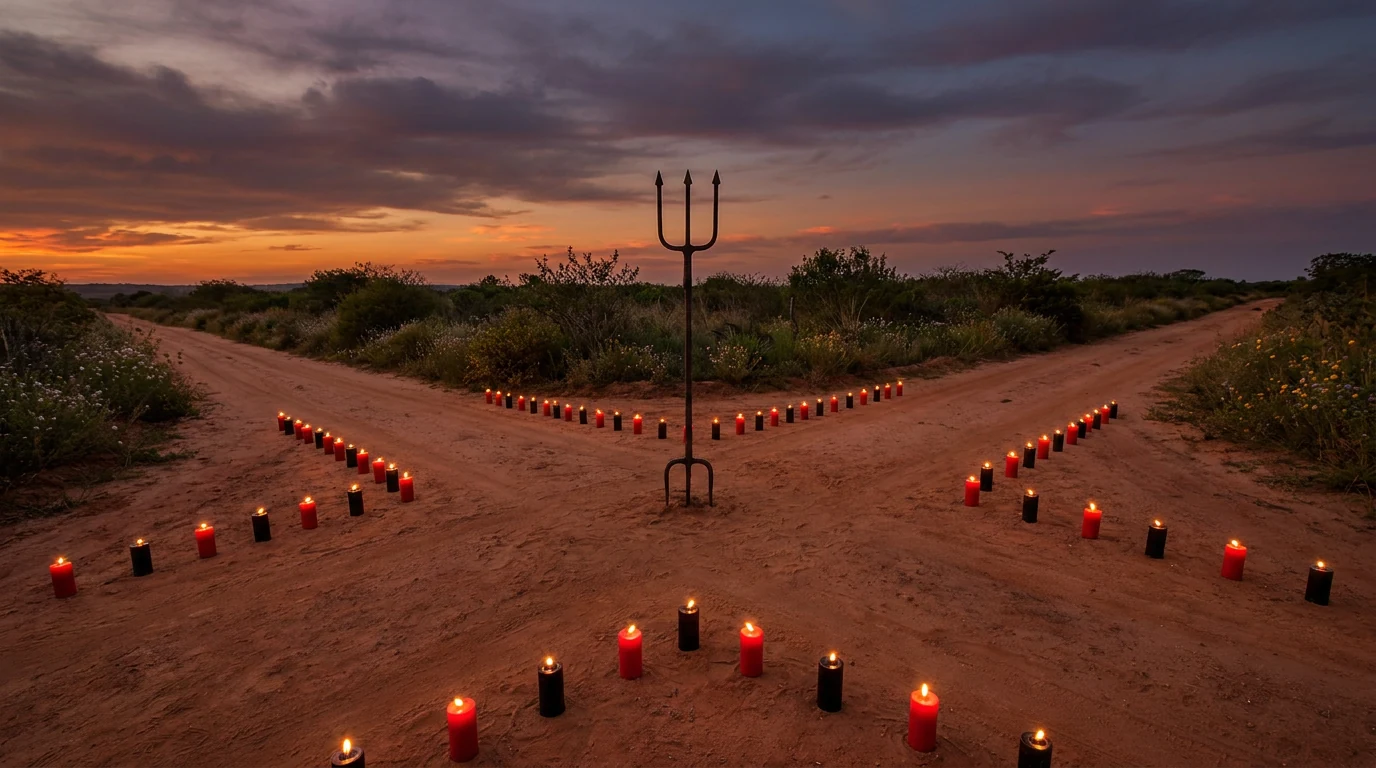
He is the guardian of the paths and the crossroads. In Umbanda, he acts as a protector, securing the guard of the houses of worship and of people. In quimbanda, he is one of the central spirits, lord of movement, defense, and justice. The traditional statue shows him in a red cape and top hat, with a cigar, stationed at the crossroads, the point where paths cross and decisions are made.
Before anything else, it is necessary to contextualize the name. The guardian Exu of Umbanda and Quimbanda, such as Tranca Ruas, is not the same figure as the Exu Orixá of Candomblé. To understand this difference calmly, it is worth reading the profile on who is Exu, the orixá of the paths, and the overview on what is quimbanda.
Greeting: "Laroyê Exu!" It is the traditional way to greet the Exus, and one also hears "Salve os Compadres" and "Exu Mojubá".
Is Exu Tranca Ruas the devil? The answer is no
This is the most common and most unjust confusion about the spirit, so it is worth saying clearly: Exu Tranca Ruas is not the devil. The association between Exu and the Christian demon is a colonial distortion. When enslaved Africans were forcibly catechized, the colonizers pointed to Exu, lord of movement and communication, as a "dangerous" figure to demonize the other's religion.
In the Afro-Brazilian tradition, Exu is vital force and messenger, the one who makes the connection between worlds. Tranca Ruas, within this, is the guardian who works for order, not for chaos. He acts within the spiritual Law: his function is to block energetic abuses, defend those under his guard, and demand responsibility, including from those who seek him.
The respect he inspires does not come from "evil", but rather from firmeza. Tranca Ruas does not coddle anyone. He protects with rigor, and that is why he is so sought after by those who need real defense.
The spiritual legions of Tranca Ruas
As a spiritual legion, Tranca Ruas unfolds into subdivisions, and the "surname" indicates where each one acts. The best known are:
- Tranca Ruas das Almas: acts in the field of souls and ancestry, linked to the cemetery and the evolution of spirits. He is strong in defense against spiritual dangers linked to the dead.
- Tranca Ruas das Sete Encruzilhadas: works in the opening and closing of paths and destinies, at the crossroads where choices are decided.
- Tranca Ruas de Embaré: linked to cleansing and regeneration, helps to renew what was stagnant or ailing.
Each house, each terreiro, can receive and firm these guardians in its own way. There is no single manual: there is living tradition, transmitted in the axé of each community.
The day, the colors, and the offerings
Devotion to Tranca Ruas has its own marks. Knowing them helps to understand, and to respect, the spirit:
- Day of the week: Monday is traditionally the day of Exu and the souls
- Strong votive date: All Souls' Day, November 2, is very linked to Tranca Rua das Almas
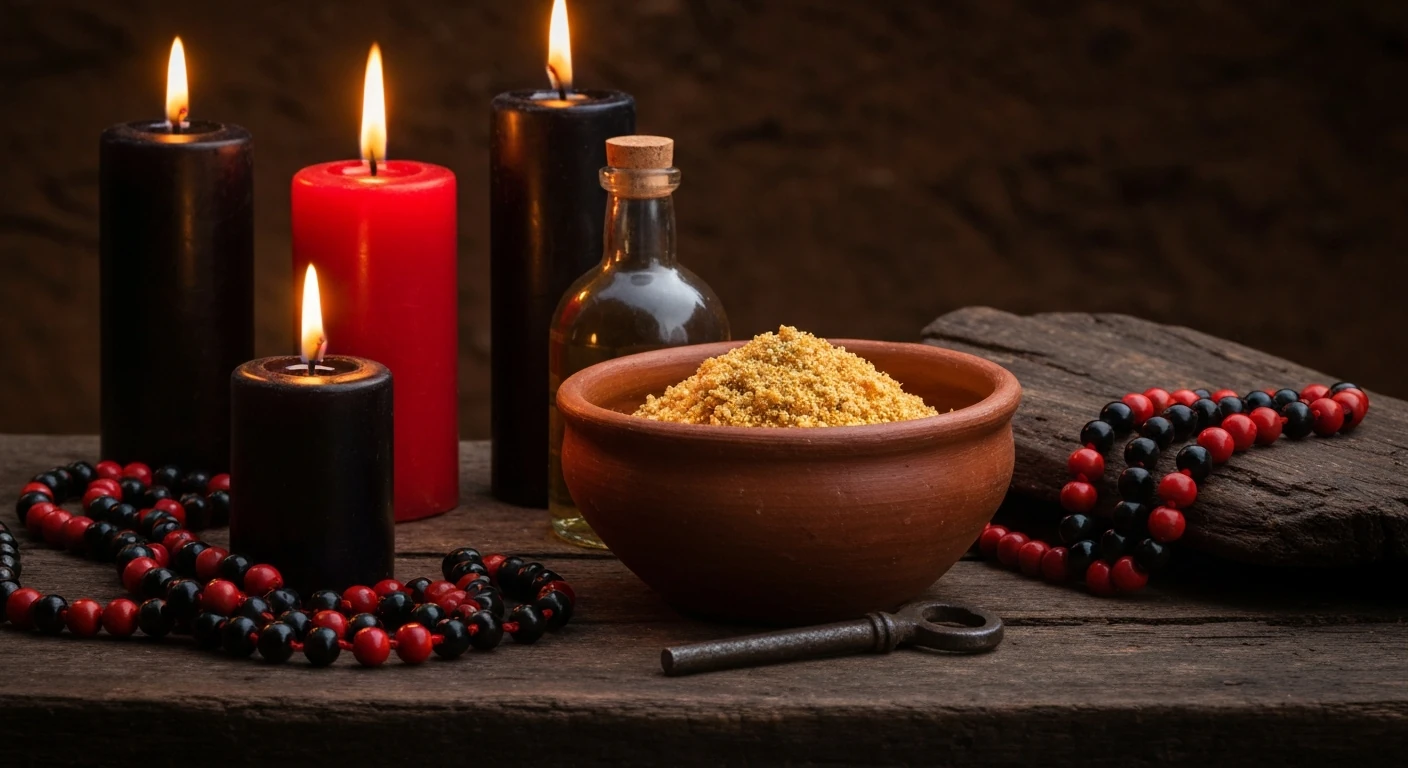
- Colors: red and black, its colors of assentamento and spiritual strengthening (firmeza)
- Symbols: the cape, the top hat, and the cigar, marks of its guardian statue
The offerings usually include red and black candles, a cigar, marafo (cachaça), farofa, red flowers, and coins, delivered at the crossroads or in the terreiro. Here is an important caution: an offering is not a "payment" for a guaranteed result. It is a gesture of respect and firmness of faith, always done with the guidance of a pai or mãe de santo. For details of the traditional source, Wikipedia provides an entry on Tranca Ruas and another specific one about the spiritual legion of Tranca Rua das Almas.
Important: do not make an offering on your own asking for "ritual work" against someone. The relationship with Exu is one of responsibility. Seek a serious house and follow the guidance of someone who understands the fundamento.
How to worship Tranca Ruas with respect
Those who feel a connection with the guardian can approach with faith and common sense. Some paths within the tradition:
- Light a candle red and black on Monday, with thoughts of respect and protection
- Hail the entity with "Laroyê Exu!", firming the greeting with sincerity
- Seek a terreiro of Umbanda or Quimbanda to experience the worship in practice, with those who hold the proper foundation
- Take care of your conduct, because the protection of Tranca Ruas comes with the responsibility of those who worship him
Tranca Ruas works side by side with other guardian spirits, such as the Pombagiras, who act in the same line of protection and firmeza. Knowing this group helps to understand the richness and logic of Quimbanda, away from stereotypes.
Frequently asked questions
Who is Exu Tranca Ruas?
Exu Tranca Ruas is a falange of guardian Exus, worshipped in Umbanda and Quimbanda as the lord of the paths and crossroads. Linked to protection, justice, and movement, he secures the guard of people and houses of worship. The name is a spiritual title, and it does not refer to a single spirit.
Is Exu Tranca Ruas the devil?
No. The idea that Exu is the devil is a Christian and colonial distortion, created to demonize Afro-Brazilian religions. Exu is vital force and a messenger between worlds. Tranca Ruas acts within the spiritual Law, as a guardian who protects and demands responsibility, never as an entity of evil.
What is the day of Exu Tranca Ruas?
Monday is traditionally the day of Exu and the souls, dedicated to the devotion of Tranca Ruas. Additionally, All Souls' Day, November 2, is a strong votive date, especially for the falange of Tranca Rua das Almas, linked to the field of spirits and ancestry.
What is the greeting of Exu Tranca Ruas?
The traditional greeting is “Laroyê Exu!”, the way to revere the Exus in Umbanda and Quimbanda. You also hear “Salve os Compadres” and “Exu Mojubá”. The greeting must be made with respect and firmeza, recognizing the guardian who protects the paths.
Where to find items for Exu Tranca Ruas
At Joia Mística Laroyê, you find what you need to consecrate your devotion to the guardian with respect to the foundation:
- Red and black candles, in the colors of the assentamento and the strength (firmeza) of Tranca Ruas
- Statues of Exu Tranca Ruas, with the cape and the top hat, for your guard spot
- Ritualistic cigars and marafo, used in traditional offerings
- Bead necklaces and firmas of protection, in the colors of the guardian Exus
- Patuás and amulets of defense for those seeking protection in the paths
Visit our shop in Extrema-MG or receive at home, with delivery to all of Brazil. For guidance on the correct use of each item and how to consecrate your devotion with responsibility, talk to us via WhatsApp.
References
- Wikipedia: entry about Tranca Ruas
- Wikipedia: entry about the spiritual legion (falange) of Tranca Rua das Almas