The orixás of Umbanda most worshipped are nine: Oxalá, Ogum, Oxóssi, Xangô, Iansã, Oxum, Iemanjá, Nanã and Obaluaê, also called Omolu. Many houses add Ibeji, the orixá of Cosme and Damião, and reach ten. The list changes from terreiro to terreiro, and the table below shows what each one has.
The orixás of Umbanda: day, color, greeting and saint
| Orixá | Day | Color | Greeting | Power point | Orixá in the house |
|---|---|---|---|---|---|
| Oxalá | Sunday or Friday | white | Êpa Babá | mountains | Jesus, Senhor do Bonfim |
| Ogum | Tuesday | red | Ogunhê | roads and paths | Saint George; Saint Anthony in Bahia |
| Oxóssi | Thursday | green | Okê Arô | woods | Saint Sebastian |
| Xangô | Wednesday | brown | Kaô Kabecilê | quarries | Saint Jerome |
| Iansã | Wednesday | yellow | Eparrei | winds and bamboo groves | Saint Barbara |
| Oxum | Saturday | dark blue or yellow | Ora iêiê ô | rivers and waterfalls | Aparecida or Conceição |
| Iemanjá | Saturday | light blue | Odoyá | sea | Conceição, Glória or Navegantes |
| Nanã | Tuesday | purple or lilac | Salubá | lakes, swamps and mud | Saint Anne |
| Obaluaê (Omolu) | Monday | black and white | Atotô | cemetery and earth | Saint Lazarus and Saint Roque |
| Ibeji | Sunday | blue and pink | Oni Ibeijada | gardens and squares | Cosme and Damião |
The table combines the pages of two centers from São Paulo: the Federação de Umbanda e Candomblé do Estado de São Paulo (FUCESP) and the Tenda de Umbanda Caboclo Tupinambá e Vó Catarina (TUCTVC). Where the two diverge, both answers are provided. Oxalá's day is Sunday at TUCTVC and Friday or Sunday at FUCESP. The greeting for Ibeji is "Oni Ibeijada" in one and "Bejiróó" in the other.
The saint column shows the correspondence that the house uses. TUCTVC writes, on each orixá's page, that the syncretism "does not mean that the two figures are exactly the same deity." The saint also changes with the region. At FUCESP, Ogum is Saint George in São Paulo and Saint Anthony in Bahia. Iemanjá is Glória in Rio, Navegantes in Rio Grande do Sul, and Conceição in São Paulo. To train the pairs, there is the orixá and Catholic saint game, and the festival dates are in the calendar of the orixás.
Why the list of umbanda orixás changes
Researchers Giulia Esposito and Sênia Bastos, in an article in the magazine Religare (UFPB, 2022), link the variation to the "diversity and plurality in the terreiros" and the strength of oral transmission. Each source tells it in a different way:
- Leal de Souza, Rio, 1933. Six lines of orixá (Oxalá, Ogum, Oxóssi, Xangô, Iansã, and Iemanjá) and a seventh, the line of Saint or of the souls. Each line had a saint: Jesus in Senhor do Bonfim, Saint George, Saint Sebastian, Saint Jerome, Saint Barbara, and the Virgin of Conceição.
- Nine orixás. It is the most common list according to Religare, with Oxalá, Ogum, Oxum, Xangô, Iemanjá, Iansã, Oxóssi, Obaluaê, and Nanã.
- Ten orixás. The São Sebastião Umbandista Nucleus (NUSS), from São Paulo, writes that "Umbanda worships 10" and includes Ibeji among them. The National Sanctuary of Umbanda, in Santo André (SP), has images of the "10 Orixás of Umbanda," with Cosme and Damião.
- Fourteen orixás. In Umbanda Sagrada, Rubens Saraceni's school, the TEUSP Temple lists fourteen, with Logunan, Oxumaré, Obá, Oroiná, and Omolu separated from Obaluaê.
Note that in 1933 Oxum didn't even have a line: the children of Umbanda called Our Lady "Mãe Axum." Today she is in all the lists cited here. The lines are in the 7 lines of Umbanda, and what matters is the list of your house.
Who usually stays out, and why
Five orixás of Candomblé appear little in the Umbanda lists: Ossaim, Oxumaré, Logunedé, Ewá, and Obá. In Reginaldo Prandi's table for Ketu Candomblé, each has its own function. Ossaim is the orixá of vegetation, Oxumaré of the rainbow, and Obá of the rivers. Logunedé is of the rivers that run in the forests, and Ewá of the springs.
No source gives a single reason for the absence. The historical fact is this: in the 1933 list, each line had a saint of devotion, and none of these five had a line. They stay out of the nine of Religare and the ten of NUSS and the Sanctuary.
There are houses that worship them. The TUCTVC puts Ossain, Oxumaré, and Obá in its list of orixás. Umbanda Sagrada worships Oxumaré and Obá. Be careful with a name: the Logunan of this school is Oyá-Tempo, another divinity, and not Logunedé. The records of these orixás in Candomblé are in who is Ossaim, who is Oxumaré, who is Obá, and who is Ewá.
And Exu (Eshu)? It also changes with the house. For the National Sanctuary, Exu has the "role of a messenger and not of an orixá, as worshipped in Candomblé." The TUCTVC worships the orixá Exu and separates him from the Exus and Pombagiras who work in the gira, who are guardian spirits. More on who is Exu.
Orixá and spirit guide: who descends in the gira
In the authors and houses cited here, the orixá does not incorporate. The researcher Sônia Lages (UFJF, 2003), summarizing Matta and Silva, writes:
“the Orixás pass on their attributes to the spirits, not presenting themselves personally in the terreiro, as occurs in Candomblé.” Lages, Exu: light and shadows (UFJF, 2003)
The TUCTVC says the same in other words: in Umbanda, the orixá does not incorporate, but spirits that work under his irradiation. Who descends are the spirit guides: caboclos in the line of Oxóssi, pretos-velhos, children. Reginaldo Prandi observes that caboclos and pretos-velhos have, in the daily life of Umbanda, a more important role than the orixás themselves.
The same separation applies to the children. The TUCTVC writes that “Ibeji is Orixá; the Erês are spirits that work under infantile irradiations.” Who these spirit guides are is in umbanda spirit guides, caboclos in umbanda and pretos-velhos in umbanda.
Short profile of each orixá of Umbanda
Oxalá. White, Sunday or Friday, Senhor do Bonfim. In 1933 it was already the first line. More on Oxalá in umbanda.
Ogum. Tuesday, red, roads and paths; the bead necklace can be red, red and white or blue in the TUCTVC. See Ogum in umbanda.
Oxóssi. Thursday, green, the forests; in the TUCTVC it is “a very present force in the lines of Caboclos.” See Oxóssi in umbanda.
Xangô. Wednesday, brown in Umbanda and red and white in Candomblé, according to FUCESP; his place is the quarry. See Xangô in Umbanda.
Iansã. Wednesday, yellow, winds and bamboo groves, Saint Barbara on December 4. Leal de Souza gave her own line. The information is in who is Iansã.
Oxum. Saturday, dark blue in Umbanda and gold-yellow in Candomblé, according to FUCESP; rivers and waterfalls. See Oxum in Umbanda.
Iemanjá. Saturday, light blue, the sea, Odoyá. See Iemanjá in Umbanda.
Nanã. Tuesday, purple or lilac, lakes, swamps and mud, Saint Anne on July 26. The information is in who is Nanã.
Obaluaê and Omolu. Monday, black and white, Atotô; in TUCTVC, Omolu corresponds to Saint Roch and Obaluaê to Saint Lazarus. See Omolu in Umbanda.
Ibeji. Sunday, blue and pink, Cosme and Damião on September 27. See Cosme and Damião in Umbanda.
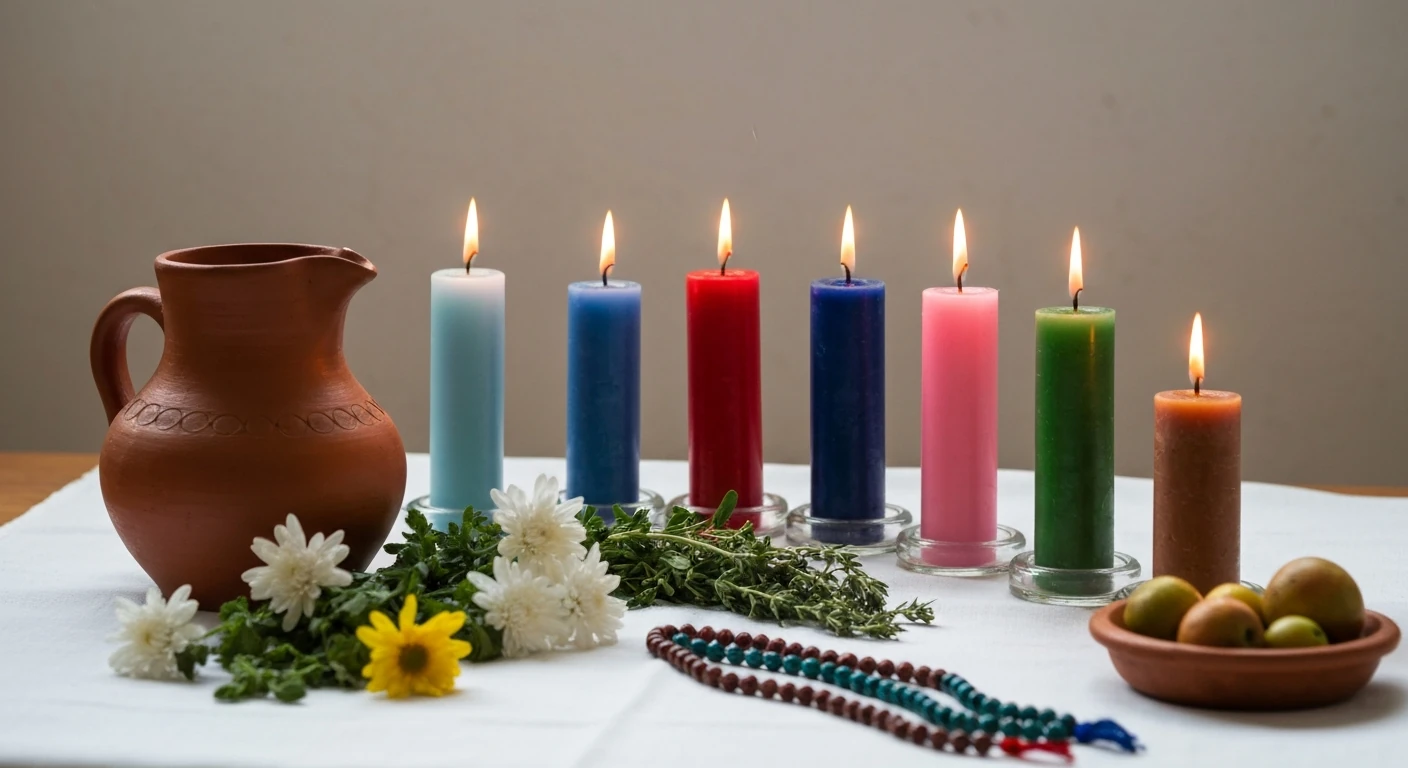
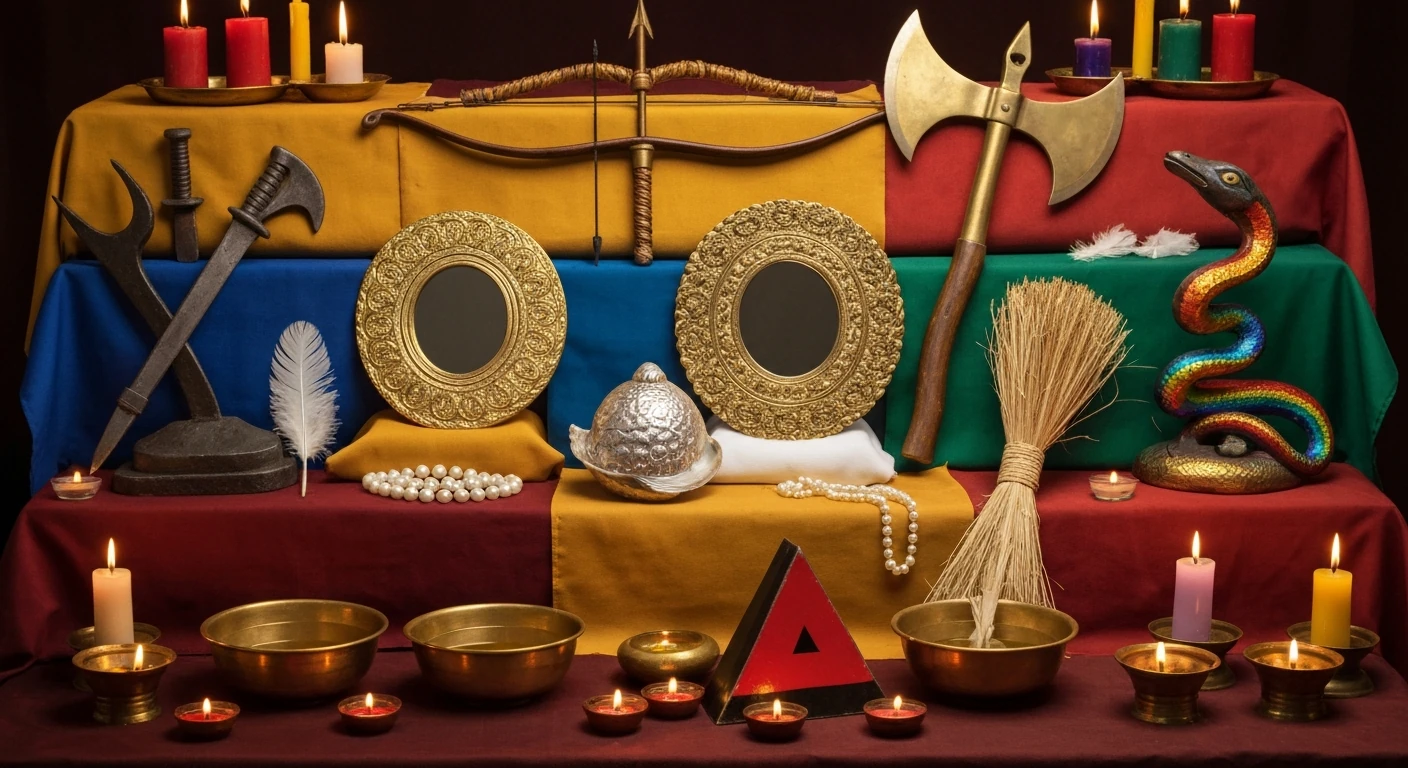
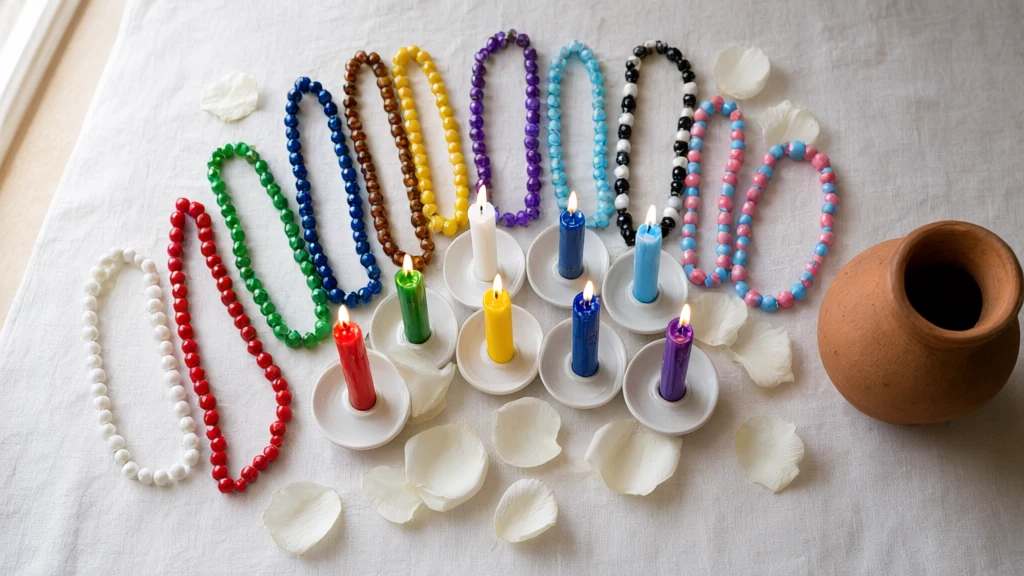
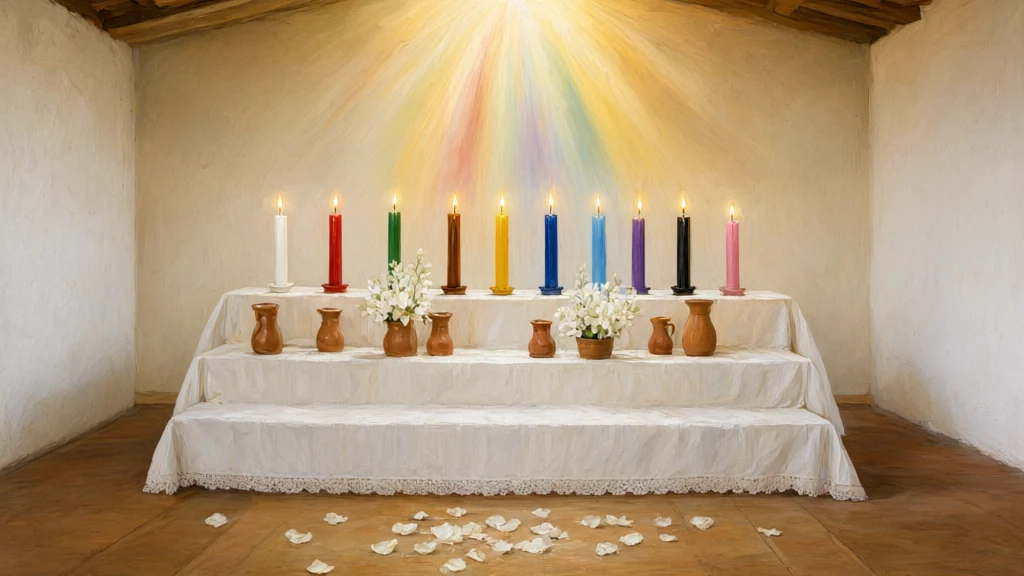
To light at home, the single color candle of the orixá is the simplest beginning, and the color of the bead necklace follows what the house teaches. The plaster statue on the congá also changes: there are houses with the saint, as shown in the statue of Iemanjá. If your house asked for a color or a bead necklace and you were in doubt, Joia Mística Laroyê checks via WhatsApp. The greeting of each one can be practiced in the game greeting of the orixás.
Frequently asked questions
How many orixás does Umbanda have?
It depends on the house. The most common list has nine orixás, according to an article in Religare magazine. NUSS and the Santuário Nacional da Umbanda count ten, with Ibeji. Umbanda Sagrada reaches fourteen. The list that counts is that of your terreiro.
Is Exu an orixá in Umbanda?
It depends on the house. The National Sanctuary of Umbanda treats Exu as a messenger, and not as an orixá. TUCTVC worships the orixá Exu and separates him from the Exus and Pombagiras who descend in the gira, who are guardian spirits.
Does an orixá incorporate in Umbanda?
In the houses and authors cited here, no. In Matta and Silva, the orixá passes the attributes to the spirits and does not present himself personally, as happens in Candomblé. Those who descend in the gira are caboclos, pretos-velhos, and children, who work under the vibration of the orixá.
What is the difference between the orixás of Umbanda and Candomblé?
The names are the same, but the worship changes. In Ketu Candomblé, Prandi's table has orixás that Umbanda almost does not worship, such as Ossaim, Logunedé, and Ewá, and the orixá manifests in the terreiro. In Umbanda, the list is smaller and the work of the gira stays with the spirit guides.
References
- Esposito and Bastos, Religare (UFPB, 2022): The importance of the mythology of the orixás for the construction of the Umbandist imaginary
- Prandi, Horizontes Antropológicos (1995): African gods in contemporary Brazil
- Lages, UFJF (2003): Exu: light and shadows
- Leal de Souza, 1933 book: O Espiritismo, a Magia e as Sete Linhas de Umbanda
- FUCESP: Oxalá page, one of the pages per orixá of the federation
- TUCTVC: The Orixás, with one page per orixá
- NUSS: The Orixás
- National Sanctuary of Umbanda: Valley of the Orixás
- TEUSP: Who are the Orixás of Sacred Umbanda?