



The most well-known Iemanjá statue in Brazil is that of a white woman with straight hair and a blue dress, which spread in plaster with Umbanda. In Africa, the orixá is a black woman with a broad body and full breasts, and the mermaid came from the mixture with the European figure.
The forms coexist in congás and in shops, and the black Iemanjá has gained space in the last two decades.
What the Iemanjá statue is like: the four forms
The profile and myths are in who is Iemanjá. Here the subject is the figure, which sources record in four forms:
- The African: black woman with voluminous breasts, sometimes pregnant, in wood sculptures.
- The mermaid: half woman, half fish, with hair loose in the wind.
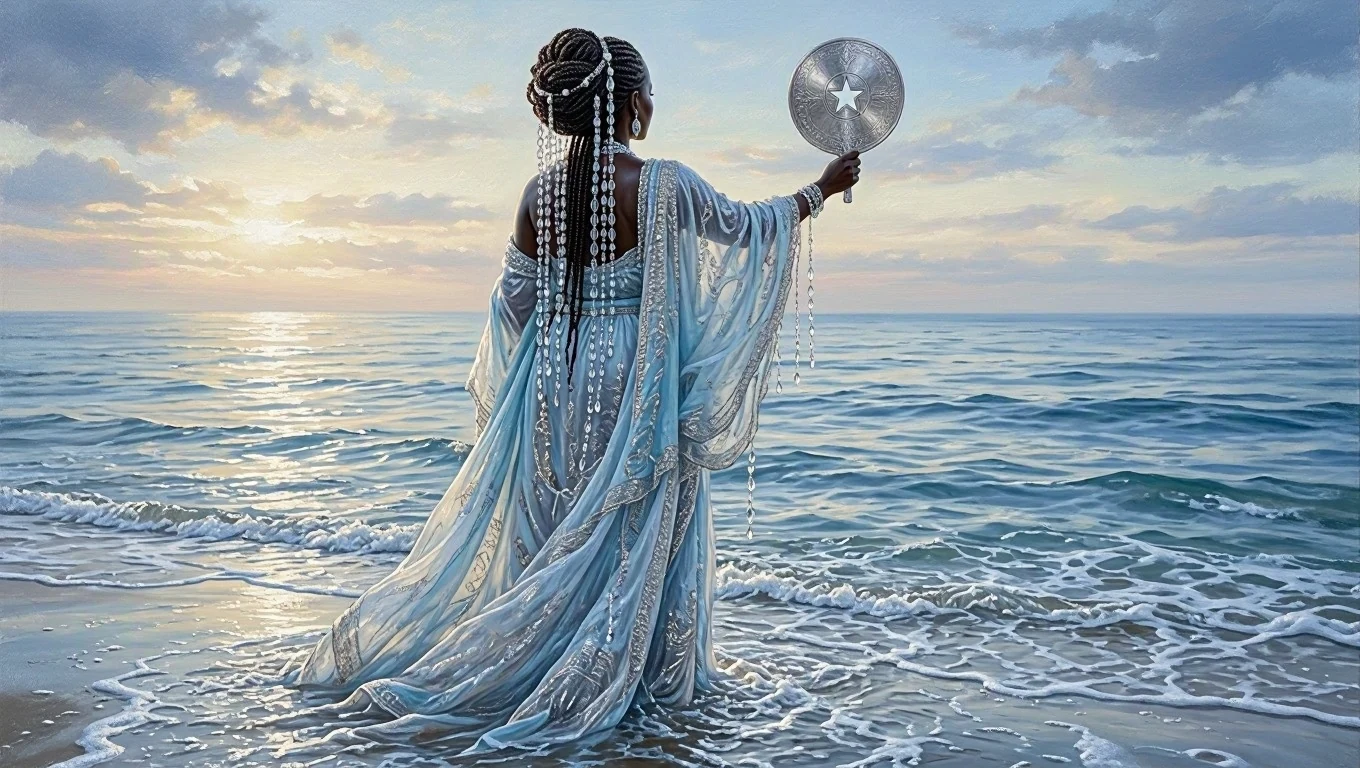
- The white one in a blue dress: the one from Umbanda, with a star diadem, close to Our Lady.
- The Brazilian black one: made in plaster and in public sculpture at the request of faithful and of pais de santo.
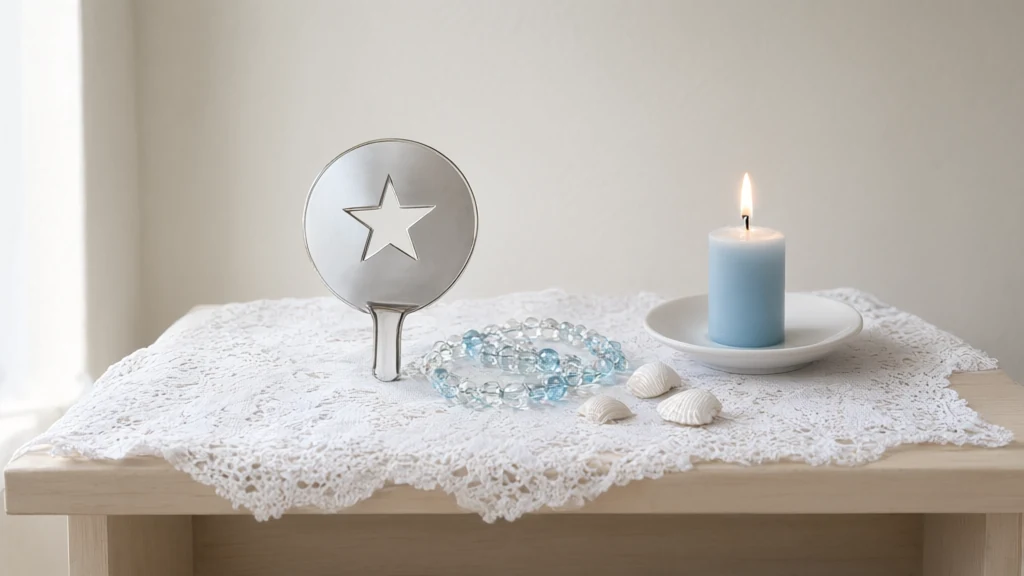
Color: light blue and white | Metal: silver | In hand: abebé or metal fan | Symbols: star, moon and mermaid
The Iemanjá of Africa: mother with full breasts
In Africa, Iemanjá is a lady with black features and very voluminous breasts, according to Wikipedia. A column in A Tarde describes the Yoruba sculpture with a broad body, almost always with a bowl on the head.
Pierre Verger, in front of the Umbanda Iemanjá, comments: "We are far from the Iemanjá" with voluminous breasts. For Duke University, she is more commonly portrayed with dark skin.
Regarding the fish tail, sources diverge. Wikipedia says there are no ancient mentions of her as a fish. Duke records Nigerian images with a fish body, "but not white".
Historian Nei Lopes reminds the BBC that the most traditional cults "do not represent the deities in human form".
Why Iemanjá became a mermaid
Pierre Verger writes that Iemanjá is "frequently represented in the Latinized form of a mermaid, with long hair loose in the wind". In 1995, Reginaldo Prandi noted the mermaid statue "in almost all cities along the Brazilian coast".
The column of A Tarde recalls that the mermaid is a figure known since Greece and was incorporated into the image of Iemanjá. Câmara Cascudo, cited by Wikipedia, noted that Angolan mermaids were black and those from Bahia were white.
In Rio Vermelho, in Salvador, the Manoel Bonfim mermaid was inaugurated on February 2, 1969, in front of the Casa de Iemanjá. In the 1970s, Yêdamaria molded a plaster mermaid for the festival, according to the Museu Afro Brasil.
Not everyone accepts the tail. "Iemanjá doesn't even have a fish tail," says Leonel Monteiro, heard by Correio. For Barros, the mermaid refers to the woman and the white virgin, to the mother: "But both are Iemanjá". The paths of the orixá are in qualities of Iemanjá.
The white Iemanjá in a blue dress: Umbanda and Stella Maris
Armando Vallado, who holds a doctorate from USP, dates the white Iemanjá to the Umbanda of the 1930s and the closeness to Our Lady:
“She is now white, with long black straight hair, wearing a blue long-sleeved dress, with a star-shaped tiara on her head. She is Stella Maris, as Our Lady is.”
Verger saw the same Iemanjá in the Umbanda practitioners who went to the beach on the last night of the year: “a kind of fairy, with alabaster skin.” This night is in Iemanjá on New Year.
According to the BBC, the mass production of white plaster Iemanjá came with Umbanda, and Nei Lopes says that this statue “was born, very likely, in the Umbanda environment.” Her place in the giras is in Iemanjá in Umbanda.
Plaster took the statue to religious items stores, a UnB thesis records. Imagens Bahia, from São Paulo, was born from a candle shop in 1934. For Patrícia Rodrigues de Souza, from PUC-SP, it is the oldest manufacturer of Afro-Brazilian spirit statues.
The name of who painted the first white Iemanjá does not appear in the research cited here. In Praia Grande, an ogã heard by the Diário do Litoral says that the city's statue is based “on the account of a Brazilian medium.” The syncretism of each region is in orixá and Catholic saint.
Black Iemanjá: the debate in the terreiros
The account from Correio shows the weight of the white statue. In 2026, of the 129 statues at the Casa de Iemanjá, in Rio Vermelho, 92 were light-skinned, 73% of the total. In 2021, only four of 115 were black.
Voices diverge. Pai Ari de Ajagunã tells the newspaper: “This white statue does not exist in Candomblé.” For the president of Fauers, heard by the BBC, the Cidreira statue is Iemanjá syncretized with Navegantes and “has nothing to do with the African-rooted Iemanjá.” Gildeci Leite, from Uneb, proposes another path:
“I think Iemanjá must have a black representation, but for that, I do not need to disparage other representations.”
In 2007, Imagens Bahia began manufacturing a black Iemanjá with Candomblé clothing, at the request of faithful followers and pais de santo. The factory heir says that the white one still sells much better.
In Rio Vermelho, Washington Santana made a black Iemanjá in 2010, still with straight hair, which accompanied the sea procession. In 2023, the fishing colony and Muncab designed a black mermaid by Rodrigo Siqueira, now at the Casa de Iemanjá. The piece was molded at the terreiro Ilê Obá (Oba) L’okê.
Statues of Iemanjá across Brazil
The public statues show the forms side by side:
- Salvador (BA), 1969: the mermaid by Manoel Bonfim, in Rio Vermelho.
- Praia Grande (SP), 1976: about 9 meters, white, donated by an umbanda organization and repainted white in 2023.
- Belo Horizonte (MG), 1982: the Iemanjá of Pampulha, replaced by a bronze one in 1988.
- Vitória (ES), 1988: the Camburi statue had its skin whitened compared to the project and was repainted with black skin in 2017.
- Cidreira (RS): more than 8 meters, a white woman in a blue dress.
- Teresina (PI), 2024: the first black Iemanjá of the state, in place of a white one from 1980.
How to choose the Iemanjá statue for the congá
The house decides. Mãe Néia, a mãe de santo from Vitória, says: "In our faith, we do not have the statue itself." In Umbanda, the statue has a place on the congá, and the house says which one to use.
Souza records that the statues can be "crossed" by the incorporated spirit and that there are consecration rituals for the congá. In her research, this care weighs more than the model.
Three details from the sources help to recognize Iemanjá:
- The abebé: in Ketu Candomblé is made of brass with a cutout of a mermaid, star, or moon, to distinguish it from Oxum (Oshun)'s, whose cutout can be a heart; the crown, the chorão, and the abebé of the other iabá are in the Oxum statue.
- The silver: is her metal, and Mãe Néia replaced the golden crown of the Vitória statue because "Iemanjá's crown is silver."
- The light blue: the color of clothing that Verger and Prandi record.
In the shop, there are statues of orixás, and the right choice is the one your house uses. Joice clears up doubts about the statues via WhatsApp. The arrangement of the altar is in how to set up an umbanda altar and in set up your altar.
Frequently asked questions
Is Iemanjá white or black?
The origin is African, and in Africa she is represented as a black woman. The white statue became established in Brazil, with Umbanda and the proximity to Our Lady. Both are in the congás, and Gildeci Leite defends the black representation without depreciating the others.
Is Iemanjá a mermaid?
It is one of her forms in Brazil. Verger and Prandi record the mermaid, and the Rio Vermelho monument has this form. Some disagree: for Leonel Monteiro, heard by Correio, "Iemanjá doesn't even have a fish tail".
Is Iemanjá Our Lady of the Navigators?
Syncretism brings the two closer, but changes the location: Verger and Prandi give Conceição, and Vallado gives Candeias in Salvador and Carmo in Recife. Navegantes inspired the statues of Cidreira and the old one in Teresina. The TUCTVC, an Umbanda house, writes that syncretism does not make the two "exactly the same deity." The dates are on Iemanjá day.
Which statue of Iemanjá to use in Umbanda?
In Umbanda, the widespread statue is the "white girl with long black hair and a blue dress," according to Barros. But the choice belongs to the house, which can cross or consecrate the statue before it goes to the altar. What to bring to her is in offering for Iemanjá.
References
- Armando Vallado, Le Monde Diplomatique Brasil: Iemanjá, the powerful mother
- Pierre Verger: Orixás, book entry
- Reginaldo Prandi, Horizontes Antropológicos (UFRGS): African gods in contemporary Brazil
- Cristiane Amaral de Barros, UFJF: Iemanjá and Pomba-gira, images of the feminine in Umbanda
- Patrícia Rodrigues de Souza, Field Notebooks (Unesp): The imaginary of the Umbanda spirits
- Raphael Felipe da Silva de Jesus, In Society (PUC Minas): In the balance of the sea
- BBC News Brasil, via O Povo: Why Iemanjá became a white woman in Brazil
- Correio: After all, who painted Iemanjá's skin white?
- A Tarde: Black Yemanjá, forms of the deity
- Duke University: Plaster Statue of the Afro-Brazilian Goddess Iemanjá
- Fundação Gregório de Mattos: Yemanjá, monument entry
- A Gazeta: White or black? The change in the statue of Iemanjá in Vitória
- Wikipédia: Iemanjá


