Omolu in Umbanda is the orixá of the earth, of diseases and of healing, also called Obaluaê or Omulu, greeted with “Atotô, my lord”. The houses mentioned here give him the black and the white and Monday. Those who descend through him in the gira are pretos-velhos and falangeiros covered in cloth. And the orixá is not the Exu Omulu of Quimbanda.
Who is Omolu in Umbanda
In the Umbanda houses mentioned here, Omolu is the orixá of disease and healing who also guides the souls of the dead. He is the same “orixá of smallpox, plagues and diseases” of Candomblé, worshipped in a different way. His history and the two faces are in who is Obaluaê.
The Núcleo Umbandista São Sebastião (NUSS), from São Paulo, uses three names for him, “with Omulú being the most heard”. The São Paulo federation FUCESP writes that “speaking of Obaluaê or Omulú is speaking of the same Orixá”. For them, Obaluaê is the young and warrior face, and Omulu, the old face, of the wise man and guardian. For the NUSS, Omulú and his followers “guide the souls of the recently deceased to the spiritual world”.
“There is no disease that can defeat me / I am protected (a) by Obaluaê.” Hymn of the Orixás, sung in Umbanda terreiros, according to Baldiotti (UNINCOR, 2020)
In which line is Omolu
It depends on the codification. In the oldest ones, he does not have his own line. In 1933, Leal de Souza listed seven lines: Oxalá, Ogum (Ogun), Oxóssi (Oshosi), Xangô (Shango), Iansã (Oya), Iemanjá (Yemoja) and “the line of Santo, also called the Line of Souls”. The list by Matta e Silva, summarized by the researcher Sônia Lages (UFJF), also leaves Omulu out. The comparison is in the 7 lines of Umbanda.
Newer houses place the orixá within another line. NUSS writes "Omulú and Ibeji in the Line of Oxalá". At the National Sanctuary of Umbanda, it is to him, along with Iansã, that the prayer for the disincarnate is offered. This connection is in the line of souls in umbanda.
In Umbanda Sagrada, Rubens Saraceni's school, the two names become two orixás. Obaluaiyê stays in the Evolution line, which he forms with Nanã (Nana Buruku), "the sixth line of Umbanda". Omulú "rules death" and forms a pair with Yemanjá in the Generation line, the seventh. This design is from Umbanda Sagrada, not of all umbanda.
Does Omolu incorporate? Who descends in the gira
In most of the houses mentioned, those who arrive are spirit guides of his vibration. For NUSS, "the evocation is always made by the guides", and many pretos-velhos work in the vibration of Omulú. Their line is in pretos-velhos in umbanda.
In a terreiro in Ribeirão Preto (SP), studied by Rafael de Nuzzi Dias (USP), the pretos-velhos of Obaluaê incorporate right at the beginning of the gira. These spirits circulate "slightly bent" around the congá, and the bad energies will be "discharged into the land of calunga".
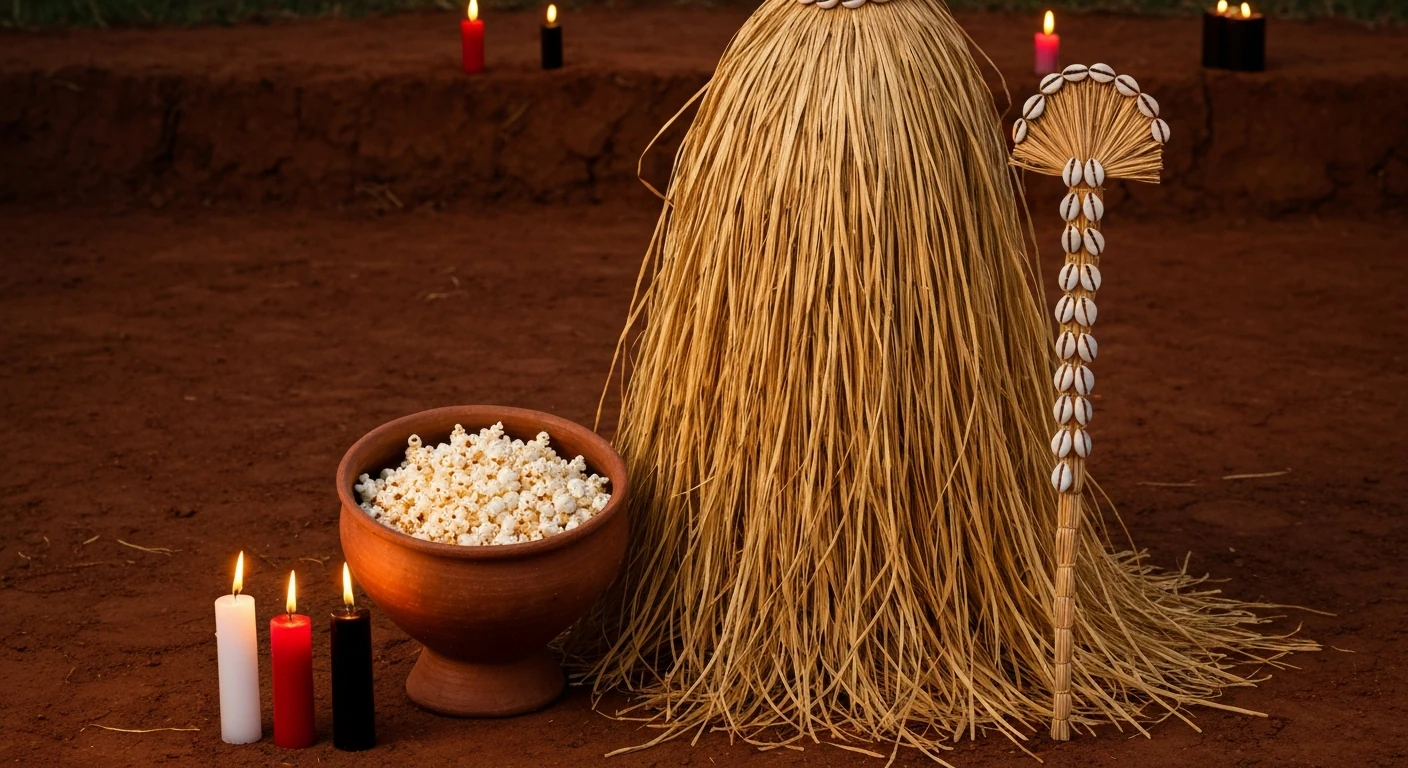
FUCESP describes the falangeiros of Obaluaê: entities "who arrive bent", generally with the head "covered by a white cloth". For the Sanctuary, the figure of the orixá is that of a bent man who does not show his face and "hides under a cloth when he incorporates".
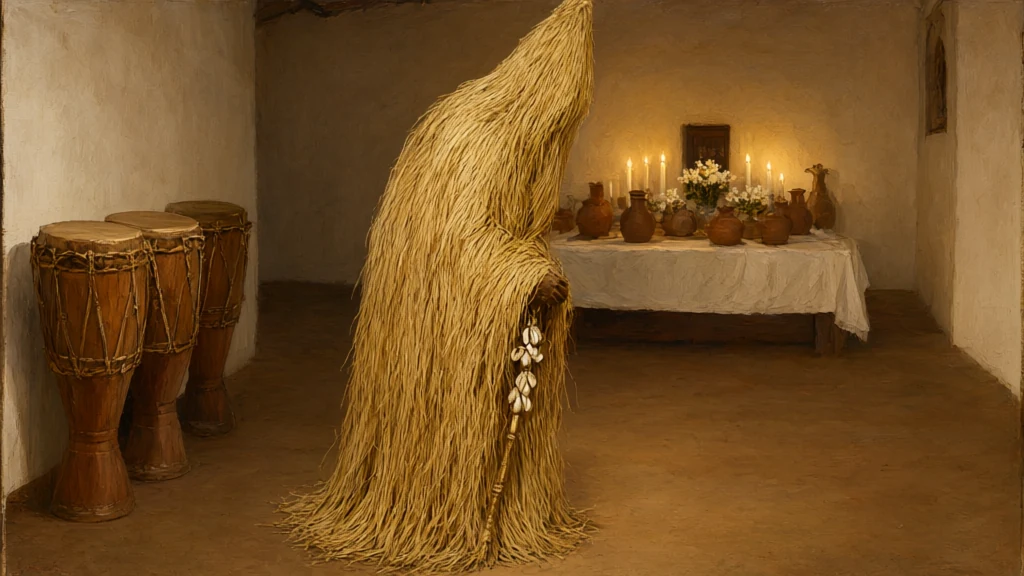
There are houses that reserve a room for him. In the Grupo de Umbanda Aprendizes do Amor, in Vila Velha (ES), the house of Omulu is outside the hall. At the opening of the gira, the incorporated caboclo "greets the rooms of Exu, of Omulu, and of Egungun". If the doubt is about his gira, ask the leader.
Color, candle, day and dates of Omolu in umbanda
Color: black and white | Candle: white, or white and black | Day: Monday | Greeting: Atotô
- Color. NUSS and FUCESP give black and white; FUCESP reminds that Candomblé also uses red.
- Candle. NUSS uses "white or white and black" candles. The Tenda de Umbanda Caboclo Tupinambá e Vó Catarina (TUCTVC), from São José dos Campos (SP), adds straw. For those who do not know how to handle the two-colored candle, NUSS says: "use only the white color". Other colors are in which candle to light.
- Greeting. "Atotô, my lord" in NUSS and "Atotô Abaluaiê" in the Sanctuary. The others are in greeting of the orixás.
- Day. Monday, in FUCESP and in the Sanctuary.
- Dates. FUCESP gives November 2 and December 17. TUCTVC gives August 16 and December 17. In Barreiras (BA), umbanda and candomblé houses held a gira in the square for Omulu in August 2025, closed with a popcorn ritual bath. Finados is in Finados day in umbanda.
The saint also changes. Leite records, in the Bahian imagination, Omolu with Saint Lazarus and Obaluaê with Saint Roch. TUCTVC does the opposite. The same house warns that syncretism "does not mean that the two figures are exactly the same deity". The stories are in Saint Lazarus and Obaluaê and Saint Roch and Obaluaê.
Omolu in the cemetery and at the Cross of Souls (Cruzeiro das Almas)
In the cited houses, the cemetery is his field of force. The Sanctuary writes that this field "is the cemetery (calunga pequena)". FUCESP says that, upon entering a cemetery, Obaluaê is greeted. The two calungas are in calunga grande and calunga pequena.
In the Vitória (ES) cemetery, researcher Barbara Thompson heard that Obaluaê-Omulu "acts at the gate and at the Cross of Souls". There, he is honored on November 2 and August 16. She saw an alguidar with popcorn at the white cross. The place is at the Cross of Souls. The TUCTVC asks that the cemetery be treated "with respect and never with reckless curiosity".
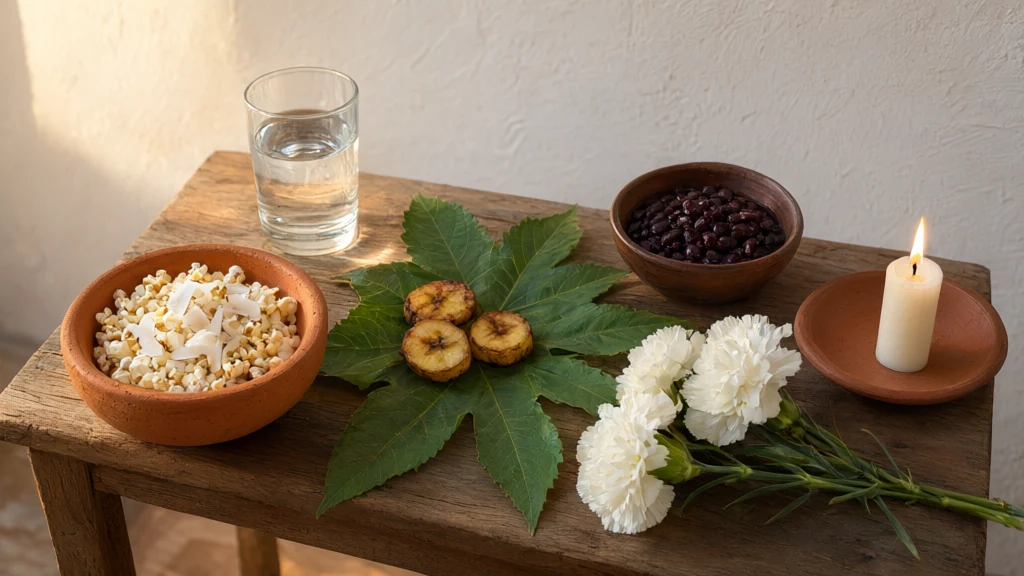
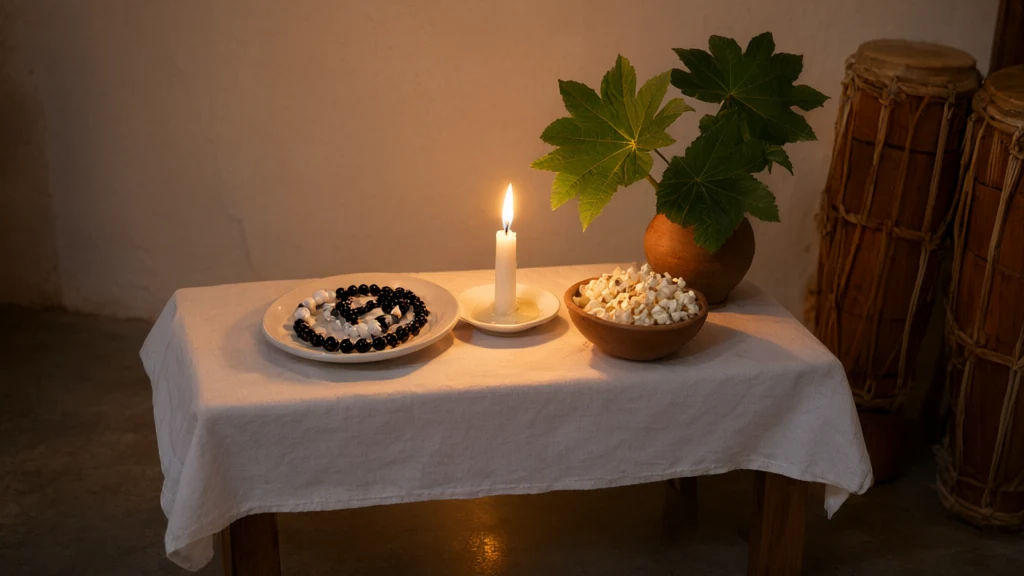
The offering follows the house. At FUCESP, it takes popcorn in dendê and without salt, white and black candles, white flowers and water, preferably at the cemetery cross. In Umbanda Sagrada, Saraceni puts sliced coconut with honey and popcorn for Obaluaiyê. The entire plate is in offering for Omolu. To check the material the house requested, Joia Mística Laroyê helps via WhatsApp. The TUCTVC reminds that the force of the orixá "does not replace medical treatments".
Omolu is not the Exu Omulu
There are two. The NUSS writes that the orixá "should not be confused with the spirit known as Exú Omulú, head of the cemetery line of Quimbanda". The exu with this name "is simply the exu who develops his ritual work in the cemeteries".
The connection exists. Reginaldo Prandi (USP) summarizes the Umbandist literature that speaks of "exu who work under the orders of the orixá Omulu". For FUCESP, the Caveiras falange is "submissive" to Obaluaê. In Porto Alegre, Law 13.416/2023 created the Municipal Day of Exu Sr. Velho Omulu, August 13, a date of Exu and not of the orixá.
An exu of the Caveiras falange is in Exu Caveira, and the other tradition, in what is quimbanda.
What changes from the Omolu of Candomblé
In Prandi's table for Ketu Candomblé, Omulu's clothing is "red, white and black, with a straw hood". The pipoca changes place: NUSS writes that the pipoca in dendê for descarrego is from Candomblé and that "in Umbanda, this type of descarrego is rare".
The banquet feast is in Olubajé, and the temperament of those who are of the orixá, in filhos de Omolu.
Frequently asked questions
What is the color of Omolu in Umbanda?
Black and white, in FUCESP and in NUSS. The National Sanctuary of Umbanda gives black, and the TUCTVC puts straw along with the candle. Red enters in Candomblé, according to FUCESP. The color used by your house is what counts.
What is the day of Obaluaê in Umbanda?
Monday, in the houses and federations cited. The dates of the year change from house to house. FUCESP gives November 2 and December 17. TUCTVC gives August 16 and December 17.
Is Omolu the same as Exu Omulu?
No. NUSS separates the orixá Omulú from the Exu Omulú, head of the cemetery line in Quimbanda. In the Umbandista literature summarized by Prandi, there are exus that work under the orders of the orixá, and FUCESP puts the Caveiras as submissive to him.
References
- Leal de Souza, 1933 book: O Espiritismo, a Magia e as Sete Linhas de Umbanda
- Lages, UFJF (2003): Exu: light and shadows
- Nuzzi Dias, USP (2011): Ancestral currents
- Nascimento, UFES (2017): giras de pretos-velhos
- Baldiotti, UNINCOR (2020): pontos cantados da umbanda
- Thompson, UFES (2019): umbanda no cemitério
- Prandi, Anthropological Horizons (1995): African gods in Brazil
- Prandi, Revista USP (2001): Exu, from messenger to the devil
- Leite, PUC Goiás (2019): Omolu, Obaluaê, Saint Lazarus, Saint Roque
- Saraceni, Umbanda Sagrada: Universal Orixás
- Houses: NUSS, Omulú, NUSS, Lines, FUCESP, TUCTVC, Santuário, Abaluaiê and Santuário, Cross of Souls (Cruzeiro das Almas)
- Porto Alegre: Law 13.416/2023
- Barreiras, on Conexão Tocantins (2025): tribute to Omulu