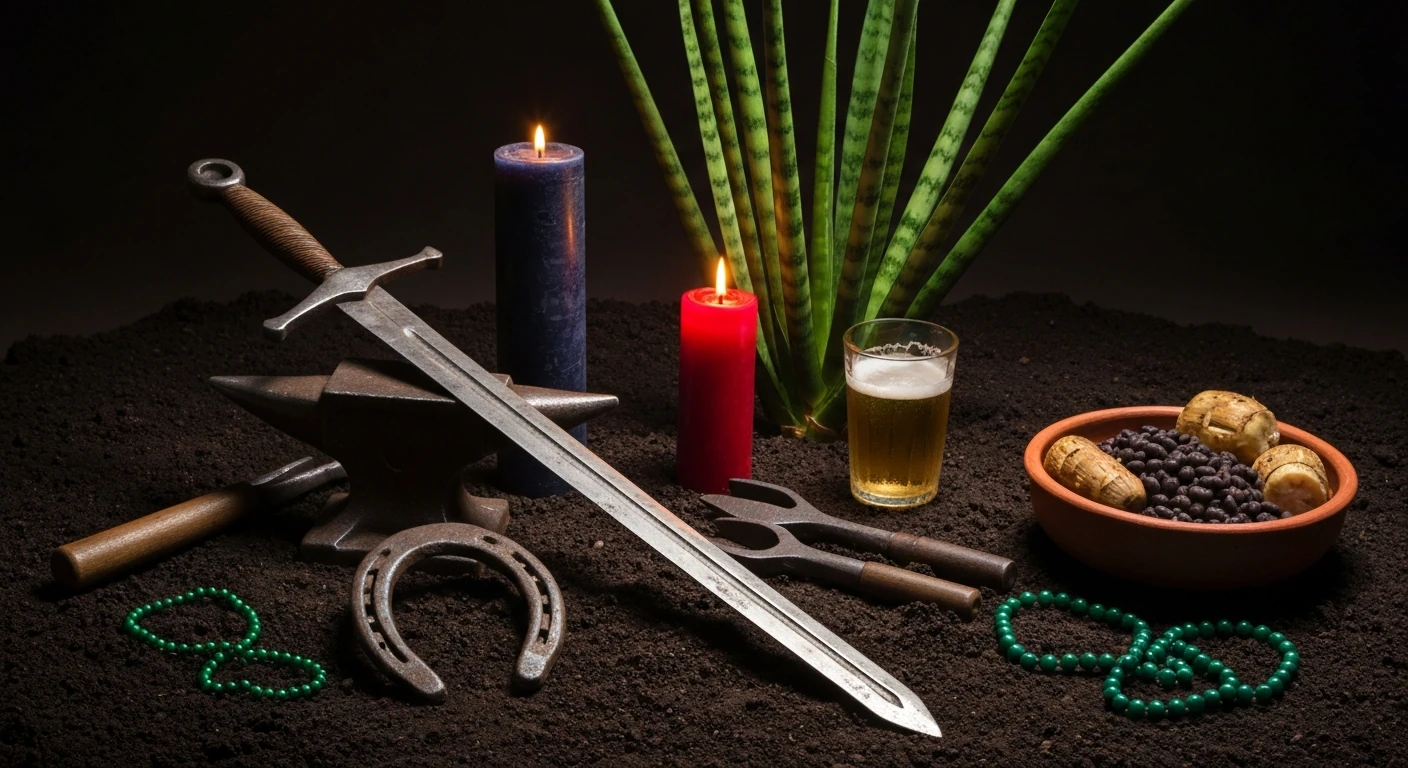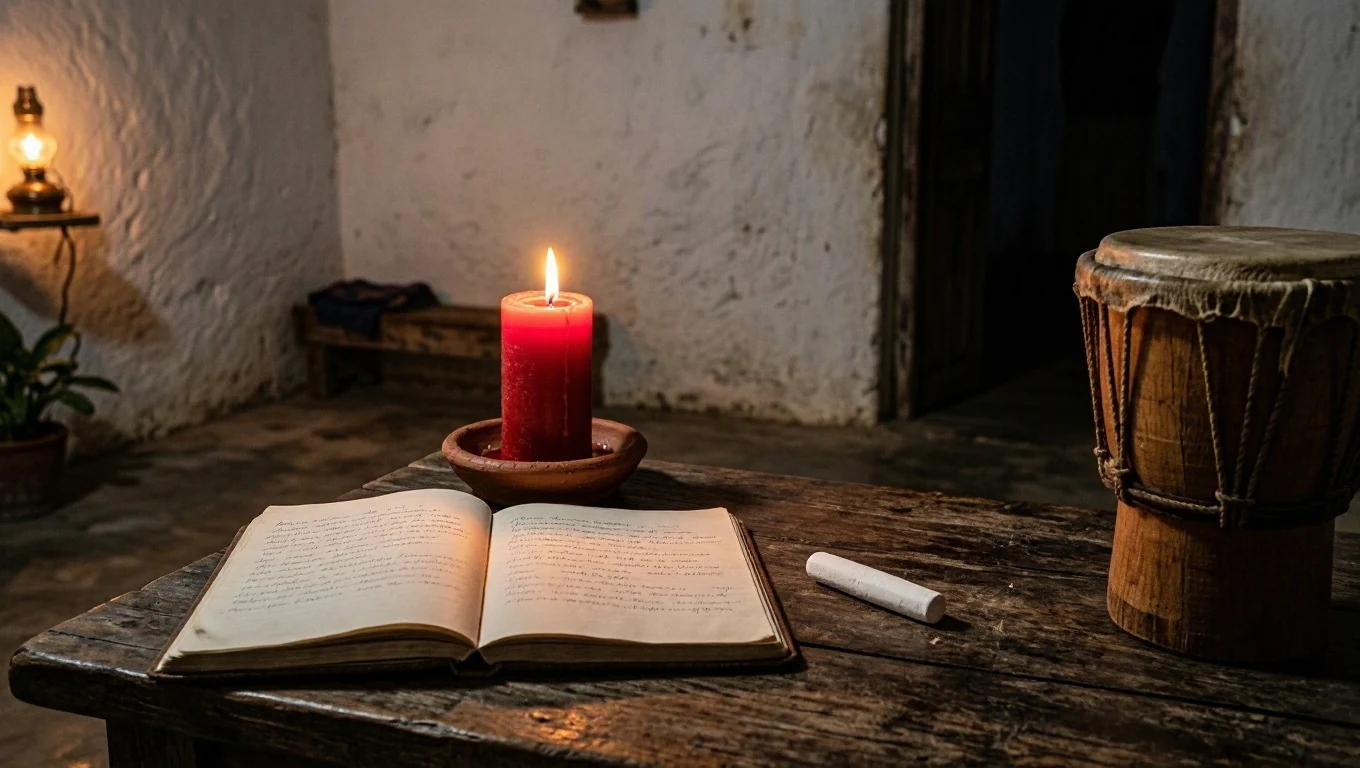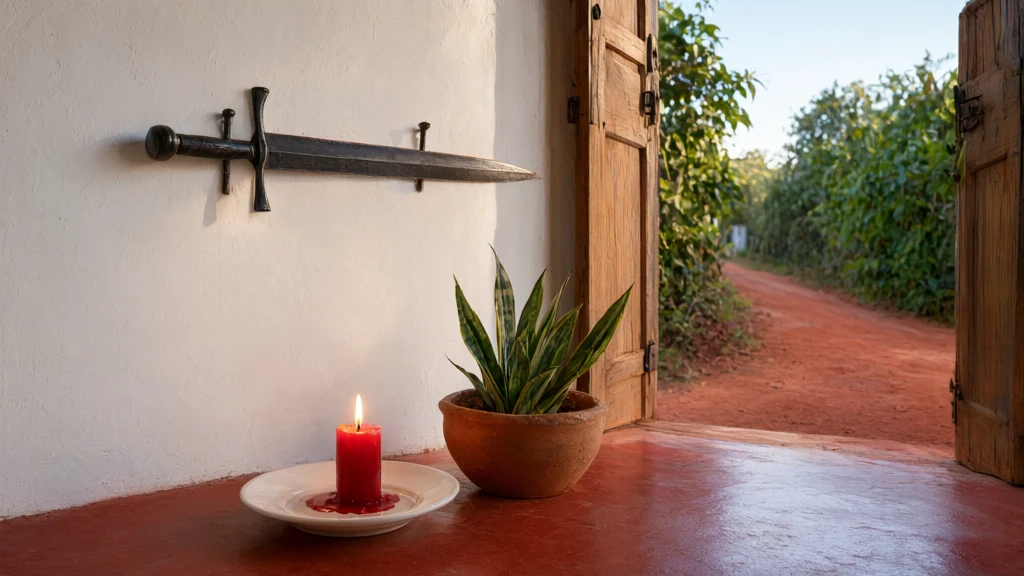
Ogum in Umbanda is the warrior orixá who rules one of the lines of the gira, linked to Saint George and to the color red. He works through phalanxes such as Beira-Mar, Megê, and de Ronda. For most authors, those who descend are caboclos and spirit guides of his line. The day is Tuesday.
Who is Ogum in Umbanda
Ogum is the same orixá of iron and war from Candomblé, lived in a different way. The origin and the complete profile are in who is Ogum.
In 1933, in Rio de Janeiro, the writer Leal de Souza listed the seven lines of Umbanda: "the first of Oxalá (Obatala); the second of Ogum". In the language of Umbanda, this second line was Saint George. The color was "the incarnate", red. In it worked "the warrior phalanxes of Demanda".
Other authors changed the order. Matta and Silva also placed Ogum among the seven lines. The researcher Sônia Lages (UFJF), who summarizes this list, warns: "the classifications vary". The comparison is in the 7 lines of Umbanda.
Some houses and schools link Ogum to the law. The Tenda de Umbanda Caboclo Tupinambá e Vó Catarina (TUCTVC), from São José dos Campos (SP), summarizes the orixá in "Law, Order, and Opening of Paths". In Umbanda Sagrada, the school of Rubens Saraceni, "Ogum is the Orixá of the Law" and occupies the "Throne of the Law". This vocabulary of thrones belongs to Umbanda Sagrada.
Does Ogum incorporate in the gira?
In most houses and among most authors, no. Who incorporates is a caboclo or spirit guide of the line of Ogum, often called by the name of the orixá. Lages summarizes Matta and Silva: the orixás do not present themselves "personally in the terreiro, as occurs in Candomblé".
In Rivas Neto's list, those who work in the line are "Caboclo Ogum Beira-mar", "Caboclo Ogum de Malê", and other caboclos with the name of Ogum. At the Terreiro de Umbanda Pai Maneco, in Curitiba, "the Pai-de-Cabeça is always a Caboclo of OGUM, OXÓSSI or XANGÔ".
"The Orixás do not descend always (...) I only had the occasion to see two Orixás, one of Euxoce (Oxóssi (Oshosi)), the other of Ogum, the Orixá Mallet." Leal de Souza, 1933
How does the one who comes in the line arrive? In a house of Fortaleza, the spirits of Ogum dance "as if they were holding invisible swords". The gesture shows that they are "cutting the demands", and it also applies to the female spirits of the line. In a terreiro in Passo Fundo (RS), the spirits of Ogum arrive with "all the rigidity of a marching soldier".
The line of caboclos is in caboclos in umbanda. The same question about another orixá is in Oxóssi in umbanda. If the doubt is about your gira, ask the leader.
The falanges of Ogum: each author gives a list
Ogum works by falanges, groups of spirits with his name and a place or quality. There is no single list. The Núcleo Umbandista São Sebastião (NUSS), in São Paulo, writes that "the division of the falanges of Ogum diverge greatly from one terreiro to another".
| Source | Names that he registers |
|---|---|
| Matta and Silva, by Lages (2003) | de Lei, Yara, Megê, Rompe Mato, Malê, Beira-Mar, Matinata |
| Casas de Fortaleza, by Pereira (UFC, 2012) | Beira Mar, General de Brigadas, de Ronda, Dilé, Sete Rondas, Mege, Matinata |
| Terreiro de Passo Fundo, by Bertocho (UFFS, 2019) | Beira Mar, Yara, Mege, Xoroque, Rompe Mato, Narue, da Lua, da Pedreira, Sete Espadas |
| Pontos (sacred songs) of the Tenda Espírita Nossa Senhora da Piedade (TENSP), the house of Zélio de Moraes | Iara, Matinata, Rompe Mato, Megê, Beira Mar, Sete Ondas, Sete Espadas |
Some names have little source. Ogum Naruê is on the list that Wikipedia takes from Nei Lopes, in the terreiro of Passo Fundo and in a sung chant (ponto cantado) in Fortaleza. None of them say what the spiritual legion (falange) does. Ogum Sete Ondas, so far, only appears in the sung chants (ponto cantado).
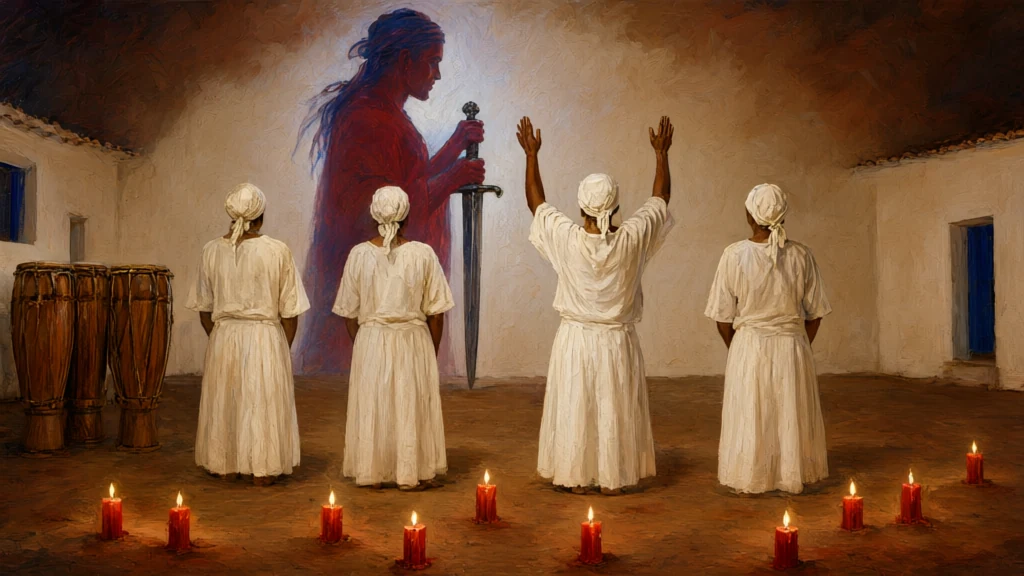
Each line also has its left side. Leal de Souza already placed the Tranca-Rua spiritual legion (falange) in the Ogum line. In the table by Matta and Silva, the chief of the exus of the Ogum vibration is Exu (Eshu) Tranca-Ruas. Who this guardian is is in Exu Tranca Ruas, and the test which is your Exu is a starting point.
Ogum Beira-Mar, Megê, de Ronda and de Lei
Ogum Beira-Mar
Matta and Silva, the houses of Fortaleza and the house of Zélio mention Ogum Beira-Mar. A report recorded by Silva says that, in 1964, a pai de santo (priest of the terreiro) "received Ogum Beira-Mar, who was his spirit guide, the guide for consultation." In a sung chant (ponto cantado) of the TENSP, these Oguns work "on land", "in the sea" and "on the sand".
Ogum Megê and Ogum de Ronda
In the Santo Antônio cemetery, in Vitória (ES), the Umbanda practitioners heard by researcher Barbara Thompson say that Ogum Megê "belongs to the line of the souls". Ogum de Ronda acts at the gate and at the cross and "works assisting the exus". He also appears in the houses of Fortaleza, and the TENSP sung chants (ponto cantado) sing that Ogum "is on patrol". The cemetery line is in line of the souls in Umbanda.
Ogum de Lei
For NUSS, the line's spiritual mentor is Saint Michael Archangel, "known in the Umbanda environment as Ogum de Lei". The Yokaanam list places "Ogum da Lei" in the legion of Saint Lazarus. In TENSP, Ogum de Lei is greeted at the opening of the session. The verses sung for him and for the other phalanges are in ponto de Ogum.
Color, day and greeting of Ogum in Umbanda
Color: red | Day: Tuesday | Date: April 23 | Greeting: Ogunhê, Patakori
- Color. Leal de Souza gave the line "the red one" in 1933. TUCTVC uses a bead necklace and candle "Red, red and white and blue". FUCESP, the São Paulo federation, gives red in Umbanda and navy blue in Candomblé. There are houses that follow the nation: "Ogun takes the deep blue", a leader told researcher Pedro Nogueira. The beads are in guia de Ogum.
- Day and date. Tuesday is in TUCTVC and in FUCESP. TUCTVC gives "Cult date April 23", the day of Saint George. It reminds that syncretism "does not mean that the two figures are exactly the same deity". The history is in Saint George and Ogum. The dates of each tradition are in Ogum's day.
- Greeting. TUCTVC records "Ogunhê!" and "Patakori Ogum". The others are in saudação dos orixás.
What is offered to Ogum in Umbanda
Each house has its own offering, and the rule is to ask first. At Terreiro Pai Maneco, Ogum's amalá takes "7 white and red candles, white beer in coité, cigars, peanuts and fruits". FUCESP indicates delivering "on the roads and railways".
In Matozinhos (MG), an Umbanda tent held in 2025 the "1st Feijoada de Ogum". The leader told Estado de Minas that this offering is usually made on the day of Saint George.
At home, the simplest gesture is a red candle of a single color, lit on Tuesday on a firm plate. The rest is in offering for Ogum. To check the material that the house requested, Joia Mística Laroyê helps via WhatsApp.
What changes from the Ogum of Candomblé
The big difference is presence. In the Umbanda of Matta e Silva, the orixá passes his attributes to the spirits; in Candomblé, he presents himself in the terreiro.
The color also changes. In the table by Reginaldo Prandi for Ketu Candomblé, the beads of Ogum are "dark blue or green". The drink changes meaning. The Umbanda house offers white beer, and in Ketu "getting drunk" is taboo for the children of Ogum.
The paths of Ogum in Candomblé are in qualities of Ogum. The general comparison is in difference between Umbanda and Candomblé, and the orixá's profile, in Ogum.
Frequently asked questions
What is the color of Ogum in Umbanda?
The red, which Leal de Souza already called encarnado in 1933. The TUCTVC uses red, red and white and blue in the bead necklaces and candles. The FUCESP gives red in Umbanda and navy blue in Candomblé. The color of your house counts.
Is Ogum Saint George in Umbanda?
Saint George is the saint who represents Ogum in the congá of many houses, due to syncretism, since the list of Leal de Souza. The TUCTVC reminds that syncretism does not make the two figures the same divinity. For the NUSS, Ogum de Lei is Saint Michael.
In which line does Ogum de Ronda work?
In the line of Ogum, according to the houses of Fortaleza studied by Pereira. In the cemetery of Vitória, the Umbandistas say that he acts at the gate and at the cross, assisting the exus. There, he is honored on April 23 and has Tuesday as his day.
References
- Leal de Souza, 1933 book: O Espiritismo, a Magia e as Sete Linhas de Umbanda
- Lages, UFJF (2003): Exu: light and shadows
- Nogueira, UFJF (2014): The intra-religious dialogue in Umbanda
- Pereira, UFC (2012): Umbanda in Fortaleza
- Silva, UFC (2009): a mãe de santo in the Umbanda of Fortaleza
- Bertocho, UFFS (2019): Terreiro de Umbanda Ogum Beira Mar
- Thompson, UFES (2019): Umbanda in the Saint Anthony cemetery
- Saraceni, Umbanda Sagrada: Universal Orixás
- Prandi, Anthropological Horizons (1995): African gods in Brazil
- Casas: TUCTVC, NUSS, FUCESP, Pai Maneco, Ogum and Oxalá in Umbanda
- TENSP: Book of Sung Chants (Pontos Cantados)
- Wikipedia: Ogum
- Estado de Minas (2025): Feijoada de Ogum in Matozinhos