Oxalá in Umbanda is the greatest of the orixás in the houses and research consulted, and the connection with Jesus Christ is a syncretism that each house explains in its own way.
For some houses, the two are the same being, for others they are not exactly. Each answer below includes the name of the house, the federation, or the author, and none applies to all of Umbanda.
Is Oxalá Jesus in Umbanda? Six houses, six answers
It depends on the house. The profile of the orixá is in who is Oxalá; here are the six positions recorded by open sources.
- FUCESP (federation of São Paulo): “Syncretized with Jesus Christ, he is the greatest of the Orixás worshiped in Umbanda”.
- NUSS (house of São Paulo and Itanhaém): for the house, the syncretism is perfect and it can be said that they are “the same being with different names”. But, “within a logical analysis”, they are not, because an orixá never incarnated and Jesus “was among us two thousand years ago”.
- TUCTVC (house): the syncretism brings symbols and values closer, but “does not mean that the two figures are exactly the same deity”.
- Pai Maneco (Curitiba): the house's study writes that “Oxalá is not Jesus Christ and neither is Jesus Christ Oxalá”. In the same house, the preto-velho Pai Miquimba says: “In truth, Jesus is Oxalá”.
- Templo de Umbanda Pai Oxalá (Aquidauana): Constantino describes that Oxalá “assumes the figure of Jesus Christ in Umbanda and is considered the Greater Father”.
- Terreiro Pai Oxalá (Seara, SC): Lazaroto records Oxalá as “resembling Jesus, but as a spiritual plane”.
The researchers read it differently. Gaia and Scorsolini-Comin, from USP, understand that the Jesus of Umbanda "would differ both from its resonances in the Candomblé universe and from Catholicism." Pai Maneco's study summarizes: "the theme is not settled for all umbandistas."
The Jesus with open arms on the congá
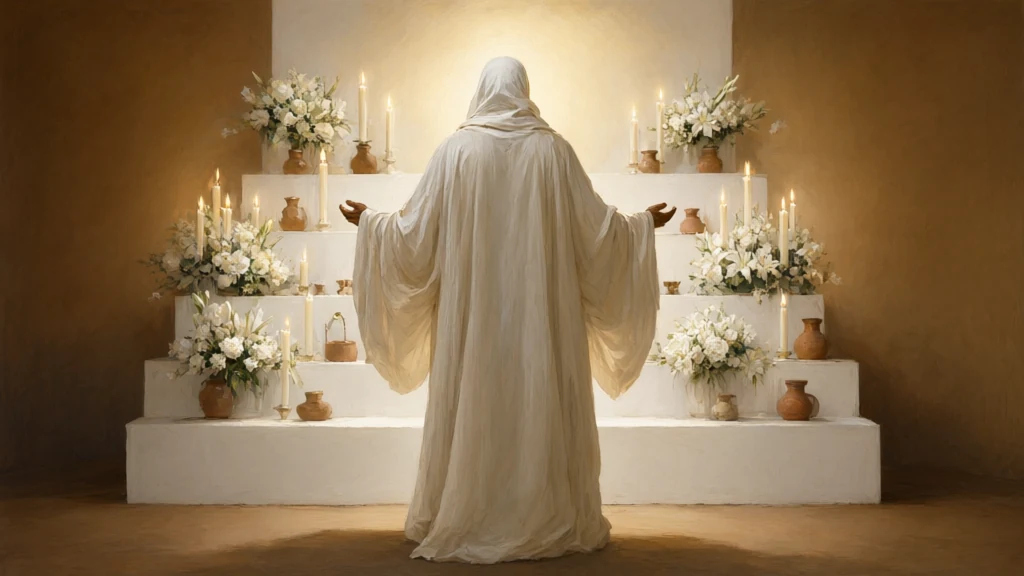
Four studies describe the same design of Jesus on the congá, with open or loose arms. Bairrão, from USP, studied two houses in Ribeirão Preto, where "Oxalá/Jesus Christ occupies the highest place," and describes the figure as:
“Instead of dying, in general this one presents himself with loose legs and arms, full of life.”
In the house of Pagliuso and Bairrão, the statue of Oxalá "is that of Jesus Christ with open arms, wearing white garments." For FUCESP, the statue stays in the center of the congá "of almost all terreiros."
These are descriptions of houses, and not a rule: each house sets up its own congá, as shown by how to set up an umbanda altar. Whoever is going to choose the statue of Oxalá checks with the house leader, and Joice clears up doubts about the statues in the shop via WhatsApp.
The Oxalá line and the seven lines
In 1933, Leal de Souza described in Rio de Janeiro the "White Line of Umbanda and Demanda," with seven lines, and the first was that of Oxalá. For him, the first line was "Jesus, in his invocation of N. S. do Bonfim," that is, Nosso Senhor do Bonfim, and the color was white.
The list was not closed. Pereira, in a dissertation from CEFET/RJ, notes that the division "finds no consensus, varying the lines according to the author or the terreiro." For NUSS, the Oxalá line "is headed by Jesus Christ," for her "all other lines converge" and it is "mainly a line of healing."
A summary by Pai Maneco, drawing on Cumino, at second hand. In "Umbanda Sagrada", "Jesus Christ is a Throne of Faith of intermediate level within the hierarchy of Oxalá". The complete comparison is in the 7 lines of umbanda and in the branches of umbanda.
Does Oxalá incorporate in Umbanda?
It depends on the house. The TUCTVC writes: "In Umbanda, we do not incorporate the Orixá itself, but spiritual entities that work under its irradiation".
Pai Maneco says that the manifestation of Oxalá "is not made through incorporation", but notes that "there are houses where these incorporations occur". A representative from AumBhanDhan in Curitiba, heard in the same study, answers who is right: "Both, each one within their individual truth".
The NUSS describes another arrangement: Caboclos, Pretos Velhos, Children and other workers "demonstrate great obedience" to the line of Oxalá.
Color, day, greeting and date of Oxalá in umbanda
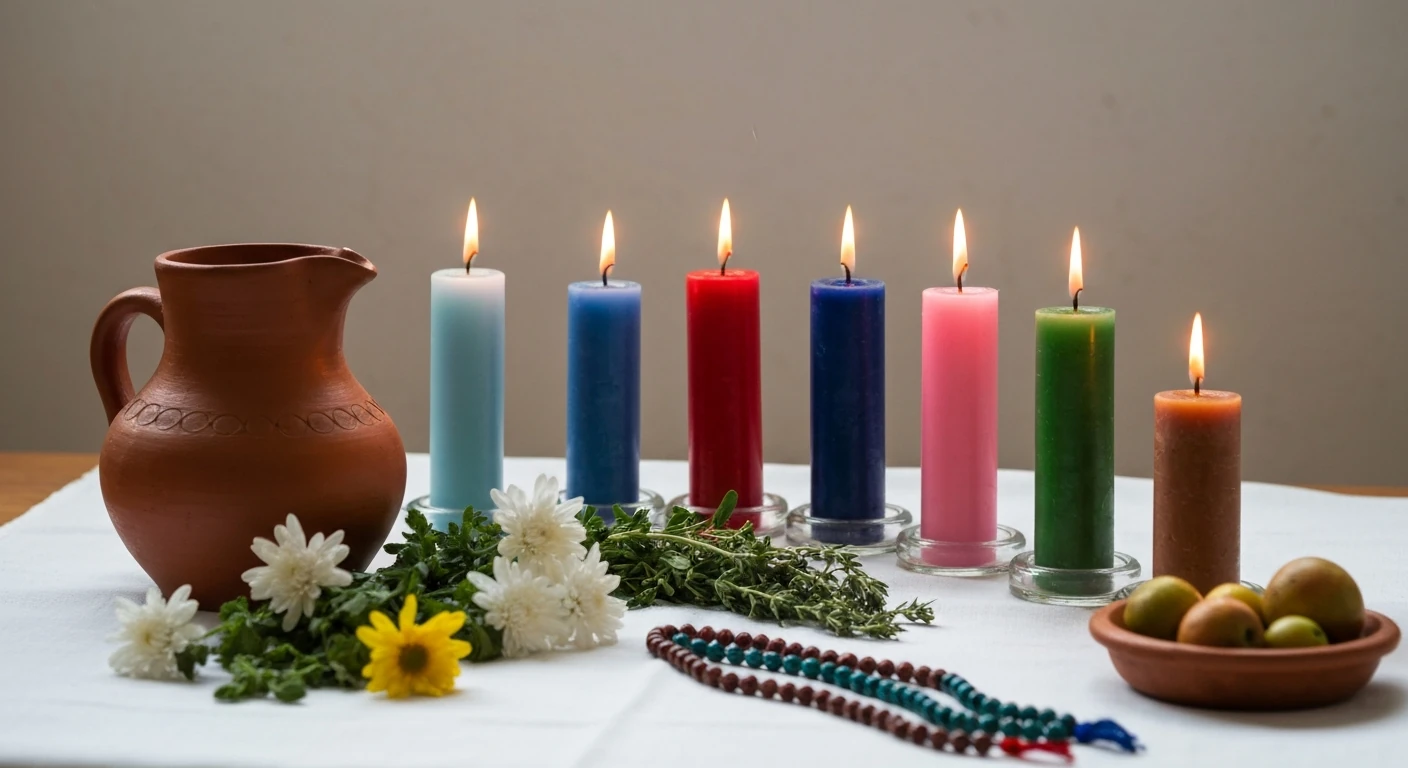
Color: white | Day: Friday or Sunday, depending on the house | Greeting: Êpa Babá | Date: December 25, in some houses
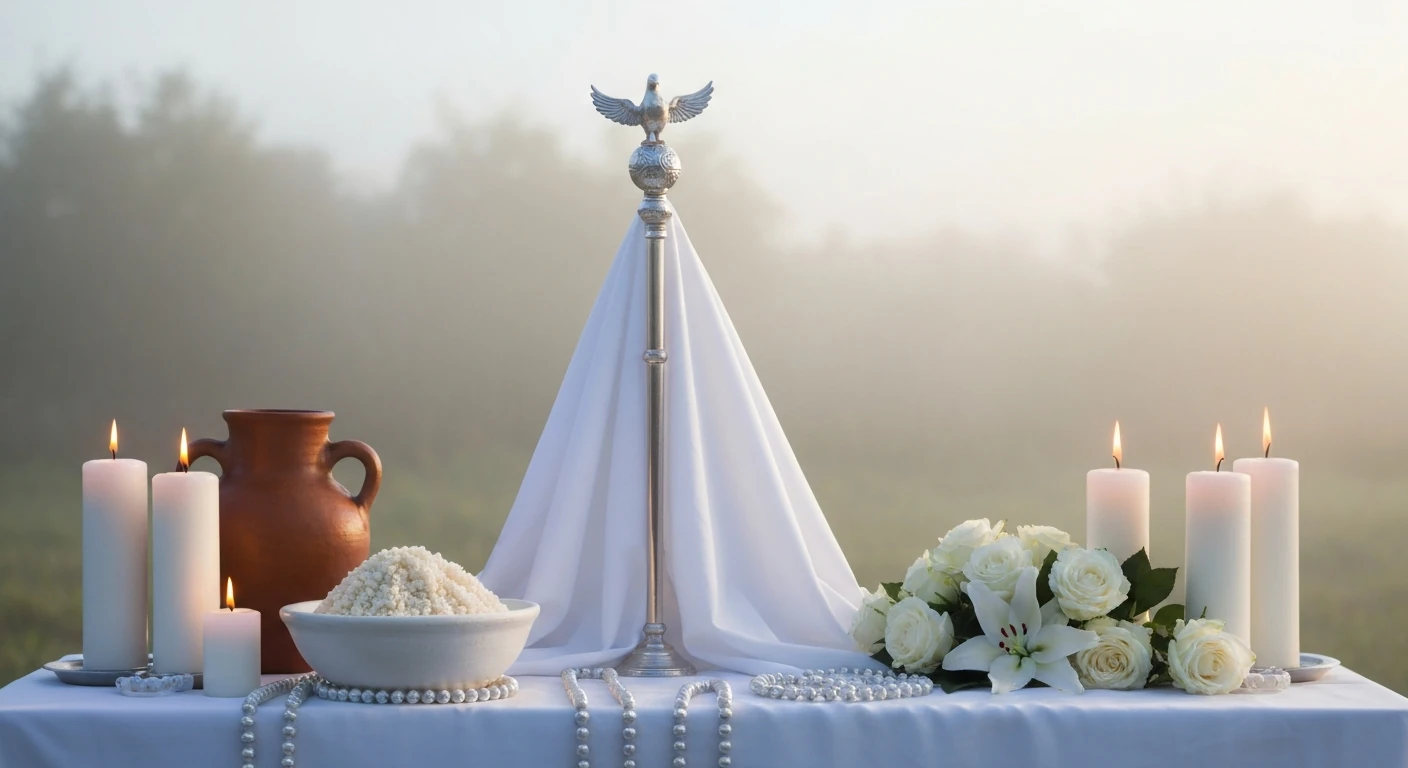
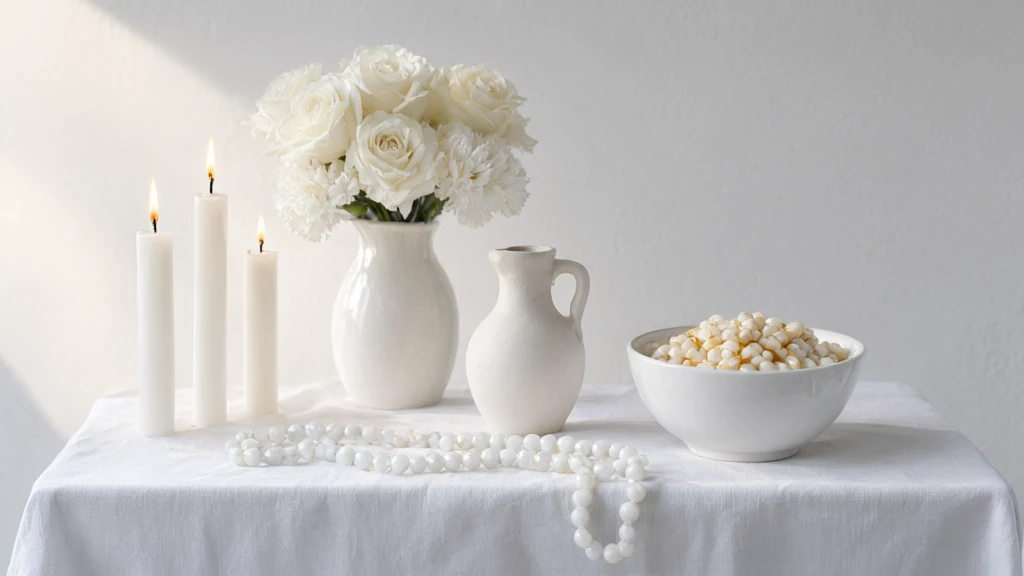
White appears in all open houses. For Pagliuso and Bairrão, Oxalá "integrates, in the white of its color, all the colors of umbanda". In TUCTVC, the bead necklace of Oxalá is "milky white".
The day varies. FUCESP writes "Friday or Sunday" on the card and, in the text, "its day is Friday". TUCTVC and the Seara terreiro give Sunday. The chart of the other orixás is in weekdays of the orixás.
December 25 appears as "date of worship" in TUCTVC, and in Seara Oxalá is "celebrated on December 25". The dates of the year, with the source of each one, are in day of Oxalá.
What each house offers to Oxalá and how the gira opens
Offering is a house rule, and those who want to know what to bring should ask the leader of their own house. FUCESP lists "white candle, pink candle and white flowers," with cooked white canjica, acaçá and yam dough. Pai Maneco writes that the amalá takes "14 white candles, mineral water, white canjica inside a white porcelain alguidar, ribbons and white flowers." In Zambi-Iris, in Bocaiuva (MG), the canjica goes "drizzled with honey".
NUSS teaches something else: "Orixás do not eat," and therefore "there is no need for offerings to Oxalá with fruits, canjicas, delicacies, rice pudding." The house recommends white candles, white carnations, pure water and honey. More in offering for Oxalá.
At the opening of the gira, the houses ask permission from Oxalá. In a terreiro in Goiânia, according to Carrer, the pontos "ask permission from Oxalá, Iemanjá (Yemoja), Ogum (Ogun) and other spirits to begin the ritual work." In Seara, the passe opens with a ponto directed to him.
In Umbanda and Candomblé: what the sources separate
In the Ketu rite Candomblé, Prandi puts "Jesus (Child)" for Oxaguiã and "Jesus (Crucified or Redeemer)" for Oxalufã. In Ketu Candomblé, Gaia and Scorsolini-Comin write that "there seem to be no relations of Òṣàlá with the Christian figures of Jesus Christ or with our Senhor do Bonfim".
The two forms of the orixá are in qualities of Oxalá. The history of Bonfim is in Senhor do Bonfim and Oxalá, and the two religions side by side, in difference between Umbanda and Candomblé.
Frequently asked questions
Is Oxalá God in Umbanda?
In the houses that deal with the subject, Oxalá is not the supreme God. TUCTVC writes that "God is unique" and that the orixás are "irradiations or emanations of the Divine Energy." A medium of Pai Maneco says that "Oxalá is the son of Zambi".
Are Oxalá and Jesus the same thing?
It depends on the house. For NUSS, in name they are "the same being", but not in a logical analysis. For TUCTVC, they are not "exactly the same deity". For Pai Maneco's study, Oxalá is not Jesus. The six positions are in the first block.
What is the day of Oxalá in Umbanda?
Friday or Sunday, depending on the house. FUCESP gives both, and TUCTVC gives Sunday. In the year, TUCTVC gives December 25 as the date of worship. The day of your house matters more.
What is the greeting of Oxalá in Umbanda?
FUCESP writes "Êpa Êpa Babá! (Long live the Father)", and NUSS teaches "Zambi is my father, or Epa Babá Oxalá". In Seara, the record is "Êpa-Bába" and "Epaô-Babá". The spelling varies from house to house.
References
- FUCESP: Oxalá
- TUCTVC: Oxalá, faith, creation and divine peace
- NUSS: Oxalá is Jesus Christ and Oxalá Line
- Terreiro Pai Maneco: Oxalá in Umbanda and Oxalá
- Gaia and Scorsolini-Comin, Memorandum (UFMG): Candomblé Ketu and religious syncretism
- Pagliuso and Bairrão, Afro-Ásia (UFBA): Light on the path
- Bairrão, Memorandum (UFMG): Banto Masters of Alta Mogiana
- Constantino, UFMS: Encantado body
- Pereira, CEFET/RJ: History and memory of Umbanda
- Leal de Souza: The Seven Lines of Umbanda, 1933
- Prandi, Horizontes Antropológicos (UFRGS): African gods in contemporary Brazil
- Gonçalves, UFMG: Food in the terreiros of Bocaiuva
- Lazaroto, UFFS: The terreira Pai Oxalá
- Carrer, UFG: Umbanda in Goiânia