Cosme and Damião in Umbanda are celebrated on September 27 as the sweetest face of axé: the line of the Children, the Erês, in their connection with the Ibejis of Candomblé and with the twin saints of Catholicism. It is one of the most beloved dates of the terreiros, marked by the distribution of sweets, by the pink and blue candles and by a joy that, contrary to appearances, cleanses and renews. Why the date appears as 26 in one calendar and 27 in another is on the day of Cosme and Damião, and the foundation of the sweet of Cosme and Damião has its own item.
Behind the festival, there are three distinct traditions that syncretism brought together without merging. This guide explains who the Erês, the Ibejis, and Cosme and Damião are, why the day fell on September 27, and shows the step by step to set up the offering table at home or in the terreiro, with respect and without magical promises.
Who are the Children in Umbanda
In Umbanda, Cosme and Damião belong to the line of the Children, also called Erês or Ibejada. They are spirits that present themselves with a childish temperament: they speak like children, ask for sweets, play, and act out. But this is where the most common mistake lies. The Erê is not a silly little child. It is a spiritual adult who chooses the form of a child because, in axé, sweetness is also strength.
The line of the Children has a serious role within Umbanda: it is one of the most powerful in ritual works of cleansing, spiritual cleansing (descarrego), and breaking heavy demands. The lightness of the Erês disarms what is stuck, dissolves dense energies, and opens a path for healing. Where a more serious spirit guide needs firmeza, the Child enters laughing and unties the knot.
Therefore, those who work with this line learn to respect it. The traditional greeting is “Hail the Children!” or “Oni Beijada!”, and each house cultivates its own sung points. To understand how the Children fit into the set of spirits, it is worth reading about the spirit guides of umbanda and how they act.
Erê, Ibeji and Cosme and Damião: what is the difference
This is the question that most confuses those arriving at the date. Erê, Ibeji and Cosme and Damião usually appear together, but they belong to three different religious planes. Mixing them as if they were the same thing erases the history of each tradition.
- Ibeji is an orixá (orisha), of Candomblé, of Jeje-Nagô (Yoruba) roots. It is the orixá of the twins, ruler of childhood, fraternity, and joy. The name comes from the Yoruba ibi (birth) added to eji (two): “double birth.” In the myths gathered by Reginaldo Prandi, the Ibejis even manage to defeat Death itself by alternating the toque of magical drums, and appear as children of Xangô (Shango) and Oxum (Oshun), or of Oyá, or of Iemanjá (Yemoja), depending on the house. In the calendar of the orixás, the Ibeji appear precisely on September 27, syncretized with the twin saints.
- Erê is a spirit, acting in Umbanda as the line of the Children. In Candomblé, the term names the childhood state that manifests in the filho de santo and transmits the messages of the orixá. In both cases, it brings the strength of purity and descarrego.
- Cosme and Damião are Catholic saints, twin brothers and doctors of the 3rd century, who healed without charging anything and died as martyrs. In original Catholicism, there is no link between them and the distribution of sweets or the children. This association was born from the encounter with the child Ibeji of the Afro-Brazilian traditions.
Ibeji is an orixá (Candomblé), Erê is a spirit (Umbanda) and Cosme and Damião are Catholic saints. Syncretism brought them closer because all three evoke twin and child strength, but they are not the same thing.
Syncretism was not a coincidence, and much less a confusion. It was a survival strategy. Faced with the persecution of African cults, enslaved people associated their orixás with Catholic saints to continue worshiping under another name. Bringing the twin Ibeji closer to the twins Cosme and Damião was a form of resistance, not a declaration that they would be identical. The same logic explains why chamomile, a herb linked to Ibeji and the Erês, became a plant of sweetness and childhood in the terreiros.
Why is the day September 27
Those looking for the date find two: September 26 and 27. Both are correct, each in its own calendar.
For a long time, the Catholic Church celebrated Cosme and Damião on September 27. In 1969, during a reform of the liturgical calendar, the official date of the saints was moved to the 26. Afro-Brazilian devotion, however, maintained September 27 as the day of Children, of the Ibejis, and of Cosme and Damião in the terreiros. That is why the 26 appears as the Catholic date and the 27 remains firm as the popular and terreiro date, as recorded by Itaú Cultural when telling the history of this syncretism.
In practice, what matters for those who celebrate in Umbanda is September 27. It is on that day that the houses set the table, distribute sweets, and open their doors to the joy of the Erês.
How to set the Cosme and Damião table step by step
The Children's table is joyful, colorful, and simple. It does not require luxury: it requires affection. What we describe here is a devotional reference for setting up the offering at home, remembering that each terreiro has its own specific guidelines.
What to gather
- Varied sweets: candies, lollipops, chocolates, cocada, brigadeiro
- Cake, often cut into pieces (many houses use seven)
- Guaraná in individual cups, the favorite drink of the Children
- Popcorn and fruits such as banana and apple
- Toys colorful, new or well cared for
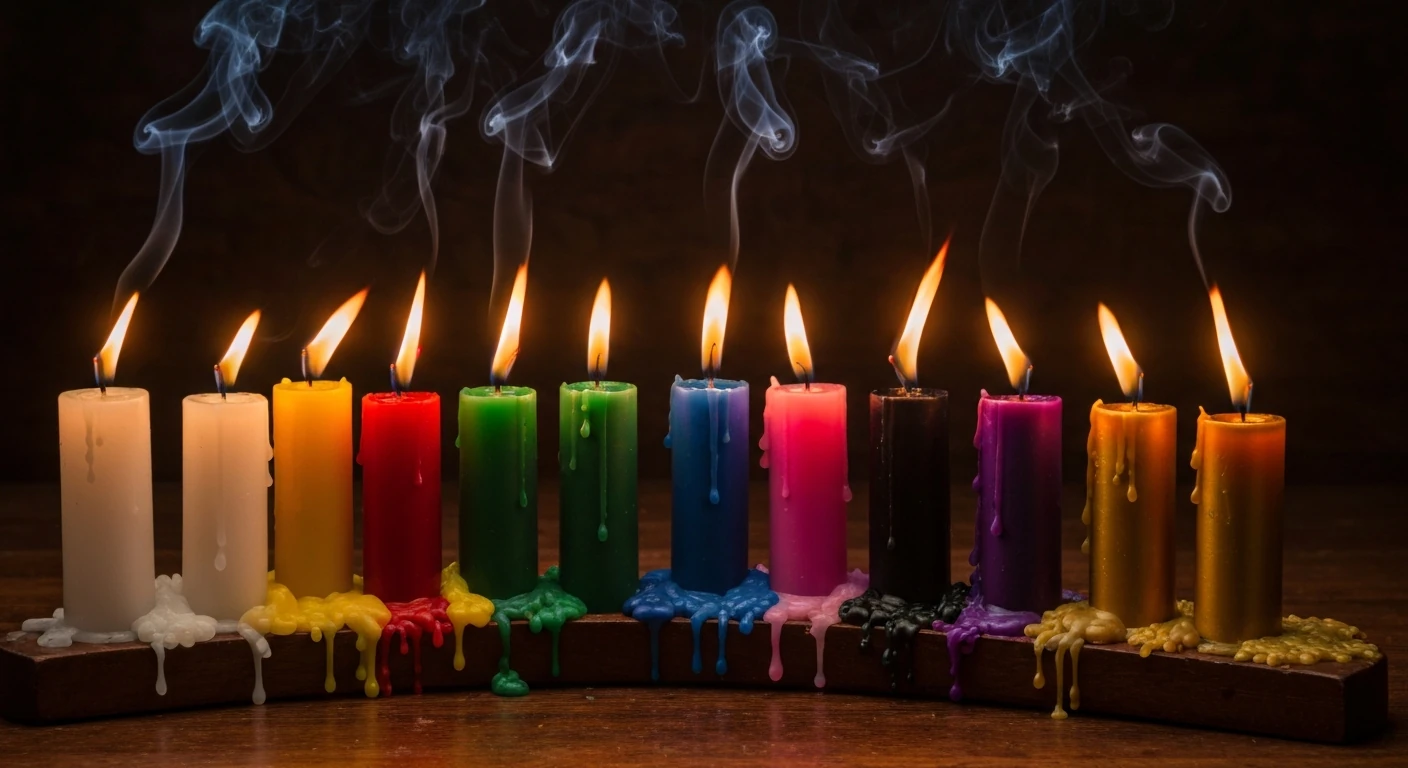
- Pink and blue candles, the colors of the Children's line
- Flowers and ribbons pink and blue to decorate the tablecloth
Step by step
- Choose the location. Cover the floor or a low table with a clean and colorful tablecloth, preferably in a garden, lawn, or open area, away from crossroads.
- Arrange the sweets and the cake in the center, arranging everything with care. The presentation is part of the tribute.
- Serve the guaraná in small cups and distribute the popcorn, the fruits, and the toys around.
- Light the pink and blue candles. A common pattern gathers three pink candles, three blue ones, and one white, but the quantity varies according to the house.
- Hail the Children. Salute the chain of the Erês and of Cosme and Damião, traditionally seven times, with a sincere request or a prayer of gratitude.
Devotion tip: set the table with a light heart, like someone preparing a party for beloved children. The joyful intention is the main seasoning of the offering. Avoid alcoholic beverages: the table of the Children is sweet.
To choose the candles with awareness of what each color represents, see the guide for ritual candles and their meanings.
The caruru of the seven boys
In many families, especially in Bahia and in the root matrix of Candomblé, the celebration gains the caruru of Cosme and Damião, a votive dish made of okra, dendê oil, and dried shrimp, accompanied by cowpeas, popcorn, farofa, and other foods of the orixá. It is worth noting that this caruru is a tradition of Bahian roots and Candomblé, recognized as immaterial heritage of Bahia, and not an exclusive practice of Umbanda, as shown by the report from the Agência Brasil.
The ritual has a beautiful rule: the caruru is served first to seven children, who represent the seven siblings of the tradition. In addition to Cosme and Damião, Doum (also called Dou, the Brazilian form of Idowu, the name the Yoruba family gives to those born after twins), Alabá, Crispim, Crispiniano, and Talabi are included in this count. His story is in who is Doum. Only after the little ones serve themselves do the adults eat. The child, here, always comes first.
Careful steps when celebrating the line of the Children
The offering of the Children is one of the most accessible in Umbanda, but some precautions preserve respect for the tradition:
- No magic promises. The table of Cosme and Damião is devotion and celebration, not a formula that solves a problem by a set deadline. Those who work with faith do not negotiate with axé.
- Charity is part of the celebration. Distributing sweets to real children, in the neighborhood or in institutions, is the heart of the date. The joy that is shared is the offering that most pleases the Erês.
- Every house has its own way. The quantity of candles, foods, and prayers vary between terreiros and nations. If you belong to a house, follow the guidance of your pai or mãe de santo. The step by step here is a reference, not a dogma.
- Respect the strength of the line. Behind the playfulness, there is serious spiritual ritual work of cleansing and healing. Treating the Erê as a cute anecdote is failing to see the axé that he carries.
Frequently asked questions
What is the difference between Erê, Ibeji, and Cosme and Damião?
They are three distinct traditions. Ibeji is the orixá of the twins in Candomblé of Yoruba root. Erê is the child spirit of Umbanda, the line of the Children. Cosme and Damião are Catholic saints, twin brothers who are doctors. Syncretism brought them together through the twin and child strength, but they are not the same thing.
How many candles and of what color are lit for Cosme and Damião?
The colors of the line of the Children are pink and blue. A common pattern gathers three pink candles, three blue ones, and one white, but the quantity changes from house to house. The important thing is the joyful intention and respect, not the exact number of candles.
What to offer on the table of Cosme and Damião?
Sweets, candies, lollipops, cake (often in seven pieces), guaraná, popcorn, fruits, and colorful toys, with pink and blue candles and flowers. In some root traditions, the caruru of okra and dendê of the seven boys is also included. Avoid alcoholic beverages: the table of the Children is sweet.
Why is the day of Cosme and Damião September 27 and not September 26?
The Catholic Church used to celebrate the saints on the 27th, but in 1969 it moved the official date to the 26th. Afro-Brazilian devotion kept September 27 as the day of the Children, of the Ibejis, and of Cosme and Damião. That is why the two dates coexist, and in the terreiros, the 27th is what counts.
Where to buy items for Cosme and Damião
At Joia Mística Laroyê, you find everything to honor the line of the Children with affection and respect:
- Pink and blue candles, in the colors of Cosme and Damião and of the Erês
- Statues of Cosme and Damião and of the Ibejis for your altar
- White candles to complete the offering table
- Herbs and incense, such as chamomile linked to the sweetness of the Children
- Tableware and decoration items to set up the offering with beauty
Visit our shop in Extrema, Minas Gerais and we ship to all of Brazil. For guidance on the correct use of the products, talk to us via WhatsApp.
References
- Itaú Cultural: history of the festival of the twins Ibeji and Cosme and Damião
- Agência Brasil: report on the caruru of Cosme and Damião as heritage of Bahia