In the festival of Casa Branca do Engenho Velho, in Salvador, an orixá in white dances carrying the old Oxalufã on their back. It is Ayrá, whom many people know as Xangô Airá. The Ayrá orixá walks with the white orixás, but also eats okra and dances the alujá, like Xangô.
Then comes the question that appears most about him: Is Ayrá Xangô or another orixá? The ketu Candomblé houses answer in different ways, and both answers have a source. This guide shows both, tells the itan that explains the white, and says what changes from house to house.
Who is Ayrá in Candomblé
Ayrá is an orixá of the ketu nation Candomblé, also called nagô. The spelling varies: Reginaldo Prandi and Armando Vallado write Airá, and other authors write Ayrá.
The two researchers from USP summarize it like this, in the chapter Xangô, king of Oió: in some terreiros, Airá is a group of qualities of Xangô, and in others it is a different orixá, who participates in his myths.
“The most common is to consider Airá as a white Xangô.”
Reginaldo Prandi and Armando Vallado, Edusp, 2010
Nation: ketu (nagô) | Color: white | Toque: alujá | Festival at Casa Branca: June 29 | Spellings: Ayrá, Airá
The origin points to the Savé region. Pierre Verger recorded that in Ketu it was said that the worship came from Savé, and in Savé, that it came from Ketu. The path of Xangô as king of Oió is in the guide about who is Xangô.
Is Ayrá a quality of Xangô or a distinct orixá?
It depends on the house, and each reading has people from the terreiro and research behind it.
Ayrá as Xangô. Pai Pércio de Xangô, babalorixá of Ilê Alaketu Axé Airá, responded to Prandi with three words: "It is all Xangô." The study by Viviane Caldas and Leonardo Lima, from UERJ, published in the Revista Philologus, confirms that many Brazilian houses see the two as a single deity.
Ayrá as a separate orixá. For the terreiro that maintains the O Candomblé website, Airá is "a unique Orixá," of independent worship, who in Brazil was incorporated into the family of Xangô. Djamila Ribeiro, in a column in Folha de S.Paulo, describes strands in which Ayrá is autonomous and very closely linked to Oxalá.
A middle ground. A babalorixá heard in the thesis of Luciano Lima Souza, from UESB, said that Airá is a specific orixá, "but is from the family of Xangô."
None of these statements nullify the others. If your terreiro sings Ayrá as Xangô, that is the liturgy of your house. The list of other paths of Xangô is in qualities of Xangô.
Why Ayrá carries Oxalá on his back
The answer is in an itan that links Xangô, Oxalá, and Ayrá. Tradition tells that Oxalá was held prisoner for seven years in the kingdom of Xangô without the king knowing. When he discovered it, Xangô released him, and he and his people "dressed in white and asked for forgiveness." The O Candomblé website links this event to the festival known today as Águas de Oxalá.
On Oxalá's return home, Xangô could not accompany him and sent Ayrá in his place. "That is how Airá became the companion of Oxalá," the same house records. In the version told by Djamila Ribeiro, Ayrá carried Oxalá on his back during the day and, at night, lit a bonfire and distracted him with stories.
Prandi records another version, on the path of Airá Intilé: Oxalá made Intilé take him back to the palace by the river, carrying him on his back. In Casa Branca, the scene returns in the dance, when Ayrá carries Oxalufã.

Another itan by Prandi explains the white of Airá Osi. After tricking Oxaguiã, the youth returned home dressed in white "and would never wear scarlet again." Oxalufã and Oxaguiã, the two faces of Oxalá, are in who is Oxalá.
Colors, beads, crown and food of Ayrá
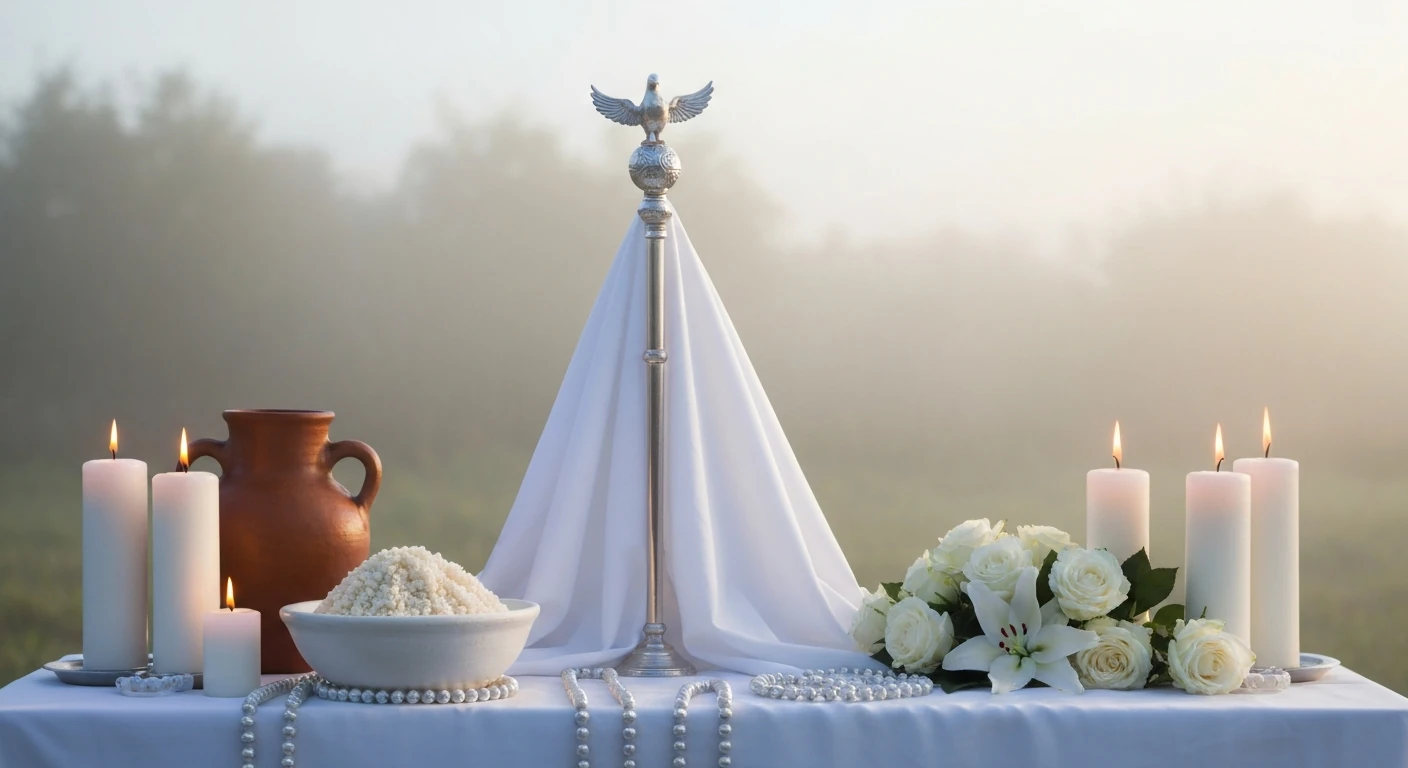
White is the color on which all sources agree. Verger described the Airá as very old Xangôs, always dressed in white. Since Ayrá was not a king, he also does not wear a crown, but rather a head ornament, which Candomblé calls eketé branco.
In large houses, the assentamento of Ayrá does not stay in Xangô's room. He stays with those of Oxalá and Oduduwa, among the funfun orixás, the white orixás. In a small house, the two may share the same room. According to the UERJ study, this proximity to Oxalá also links Ayrá to the rain.
The rest changes from house to house:
| Item | What the sources record |
|---|---|
| Beads | Blues instead of coral (Verger); white with brown stripes and segui (O Candomblé); red and white (babalorixá heard at UESB and the myth of Intilé in Prandi) |
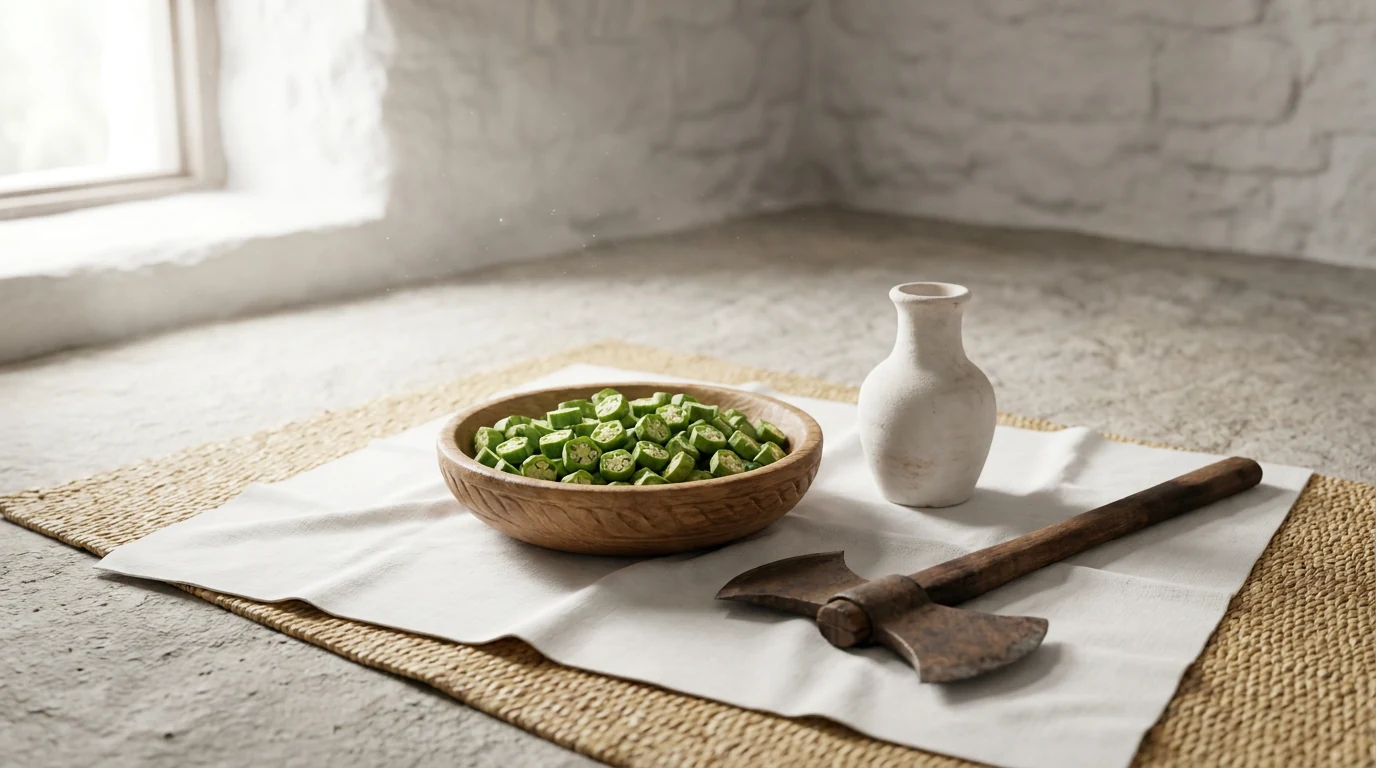
| Food | Okra base, like that of Xangô (Philologus) |
| Dendê | Without dendê and without salt; only a drop in Airá Modé; dendê in moderation, in the response of the same house to a reader |
The divergence of dendê has an explanation. Djamila Ribeiro recalls that everything belonging to Oxalá rejects dendê. Since Ayrá lives between Xangô and Oxalá, each house adjusts the seasoning according to its own fundamento. Xangô's okra dish is in Xangô's amalá, and the restriction of the white orixás is in offering for Oxalá.
For this same reason, this guide does not bring an offering recipe for Ayrá. The house defines the dish.
Ayrá's festival on June 29
Ayrá's most well-known festival takes place in June. Prandi records that, in most terreiros, the Airá bonfire takes place in June, in which Ibonã dances with Iansã (Oya) stepping on the embers. Candomblé links the June 29 bonfire to Ayrá's journey with Oxalá.
At Casa Branca do Engenho Velho, the Ilê Axé Iyá Nassô Oká, June 29 is the festival of Xangô Airá, "one of the most important orixás of the community." Lisa Earl Castillo and Luis Nicolau Parés record this in the magazine Religião e Sociedade. The public festival on that day is for Ayrá Intilé, and those who go to watch wear white. The other dates for Xangô in the year, from São João to São Jerônimo, are in Xangô's day.
The connection is old. According to the oral tradition of the descendant houses, the candomblé of Barroquinha, from where Casa Branca emerged, "was a house dedicated to the orixá Airá Intile." Renato da Silveira, in the article from Afro-Ásia, raises the hypothesis that Iyá Akalá settled the fundamentos of Airá in Bahia.
Oxalá's Waters have their own date, which changes from house to house. At Casa Branca, according to the Geledés record, the rite is on the last Friday of August. At Opô Afonjá, in 2018, it was on the last Friday of September. On the days of the rite, ketu houses use only white and eat without salt.
Frequently asked questions
How do I know if I belong to Ayrá?
Only the house confirms. The head orixá and his path are defined by the babalorixá or the ialorixá of the terreiro. No internet test points to Ayrá. The orixá test serves as an entry point to get to know the orixás, and the answer comes later, in your house.
What is the greeting of Ayrá?
The UERJ study records the greeting Ayrá Lé, which translates as "Ayrá is happy, he is over the house." In case of doubt, follow what your terreiro sings.
Does Ayrá exist in Umbanda?
Ayrá is worshiped in Candomblé houses of the Ketu nation. None of the sources in this guide record worship to him in Umbanda or in the Angola and Jeje nations. If your house sings Xangô Ayrá, the leader explains where that foundation comes from. The differences between the religions are in Umbanda and Candomblé.
Is a son of Ayrá a son of Xangô?
In the houses that treat Ayrá as a quality of Xangô, yes. In those that worship him as a separate orixá, the answer changes. The profile attributed to the sons of Xangô is in sons of Xangô, and the terreiro says how your house understands it.
Where to buy items for the festival of Ayrá
At Joia Mística Laroyê you find what you need for the festival and for the Águas de Oxalá:
- White ritual clothing, to go in white to the festival of Ayrá and to the Águas
- White cloths made of cotton
- Bead necklaces assembled in the color your house defines for Ayrá
- Statues of Xangô and Oxalá in resin
- Orixá tools, such as the oxê of Xangô
Stop by the shop, at Rua Benedito Zingari, 460, Bela Vista, in Extrema-MG, or message on WhatsApp with delivery to all of Brazil.
References
- Reginaldo Prandi and Armando Vallado: Xangô, king of Oió, Edusp, 2010
- Caldas and Lima: Xangô and Ayrá in Philologus Magazine, UERJ, 2022
- Castillo and Parés: José Pedro Autran and the return of Xangô, 2015
- Renato da Silveira: the foundation of the Alaketo terreiro, Afro-Ásia, 2003
- Luciano Lima Souza: The sacred necklaces of memory, UESB, 2019
- Djamila Ribeiro: Ayrá, autonomous orixá, Folha de S.Paulo, 2024
- Correio Nagô: Ayrá, the white mantle of justice, 2015
- Geledés: Casa Branca do Engenho Velho, 2009
- Bahia Já: Waters of Oxalá at Opô Afonjá, 2018
- O Candomblé: Airá, a unique orixá, 2016