Exu Morcego is the guardian who sees where there is no light. The name is not a decoration: the bat navigates without depending on eyes, and the falange works exactly that capacity, the ability to perceive danger before it takes shape.
There is a type of warning that arrives before the argument. A person feels they should not enter that place, that the proposal has something wrong, and only understands why later. This territory is his.
This guide gathers the spirit's profile, explains where the name comes from, and shows where the houses diverge.
Exu orixá (orisha) and Exu guardian are not the same thing
Exu orixá is the lord of the paths in the Yoruba pantheon, the first to receive in any rite. About him, the correct text is who is Exu.
Exu guardião is another category: spirits that work in Quimbanda and in the gira of the left side of Umbanda, organized in falanges with their own names.
Morcego belongs to the second group, and several houses treat him as chefe de falange, which means he is responsible for an entire people under the same mystery.
Why is he called Morcego
The name describes the method, not the appearance.
The bat flies in the dark without hitting anything. He does not see with his eyes: he sends out sound and listens to what returns. It is orientation by echo, not by light. The spiritual reading follows: the falange works the perception that does not depend on visible evidence.
From there comes the field of work. One asks him for danger intuition, vigilance in a difficult phase, and courage to face what scares. He is a sentinel guardian, not of haste.
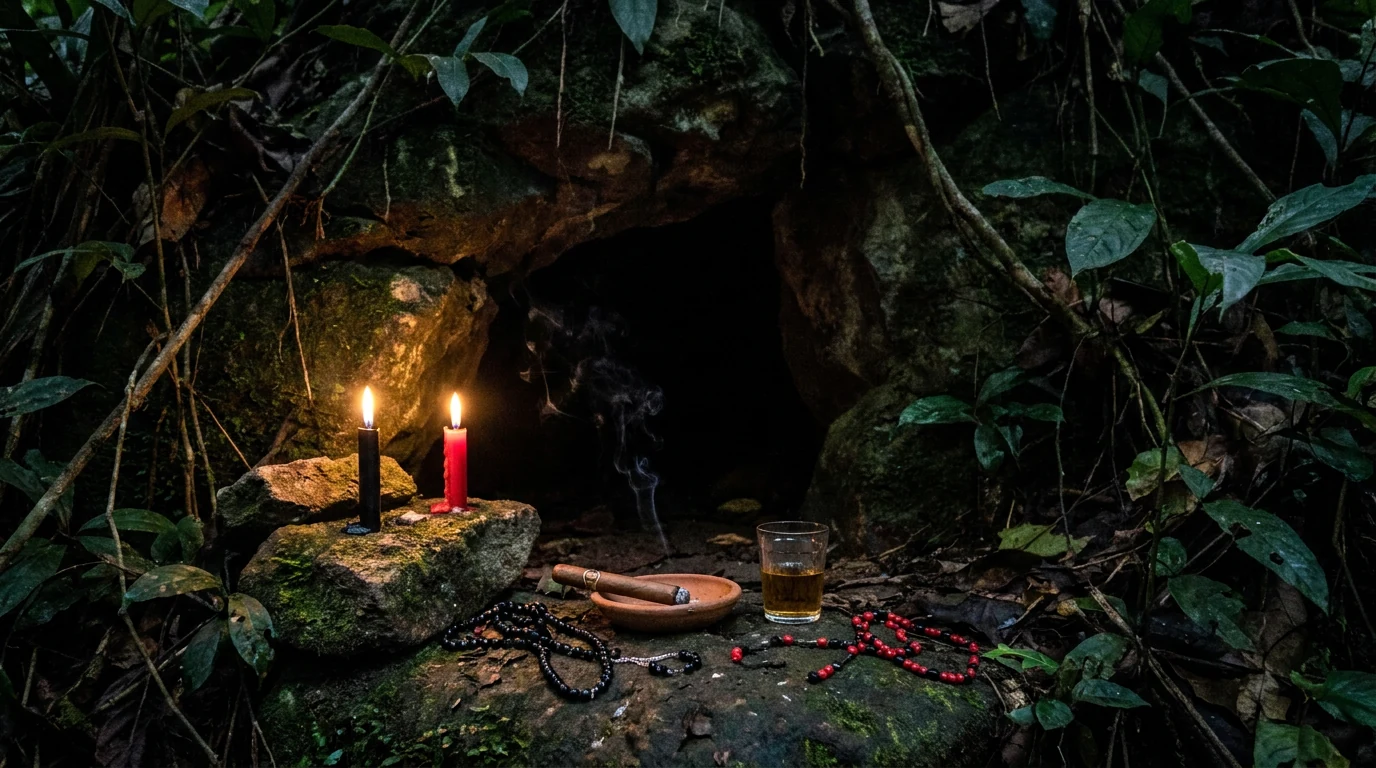
The animal also carries the second sense, that of the night as a territory. Part of the houses work this layer and place his point of strength in a cave, a closed forest, and calunga pequena, which is the cemetery.
Exu Morcego profile: day, colors, greeting, and offering
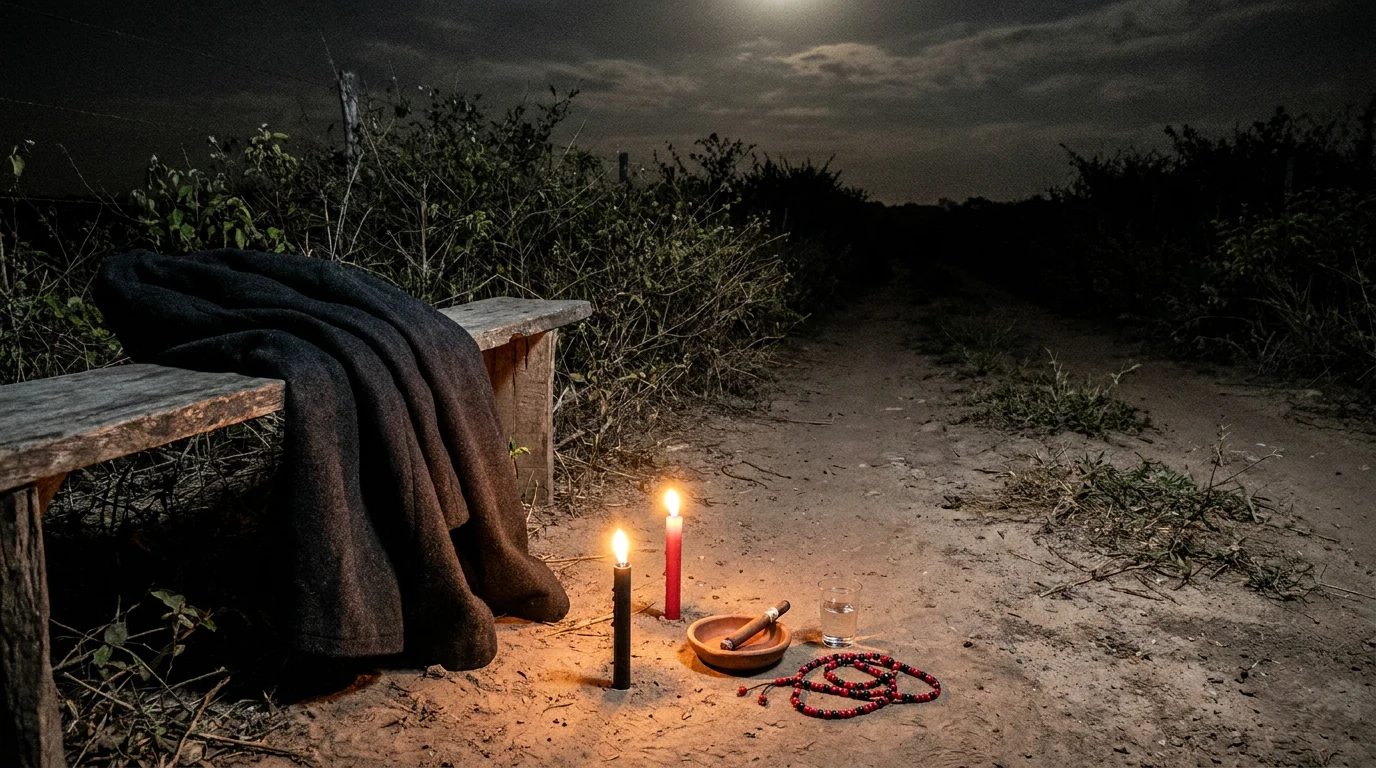
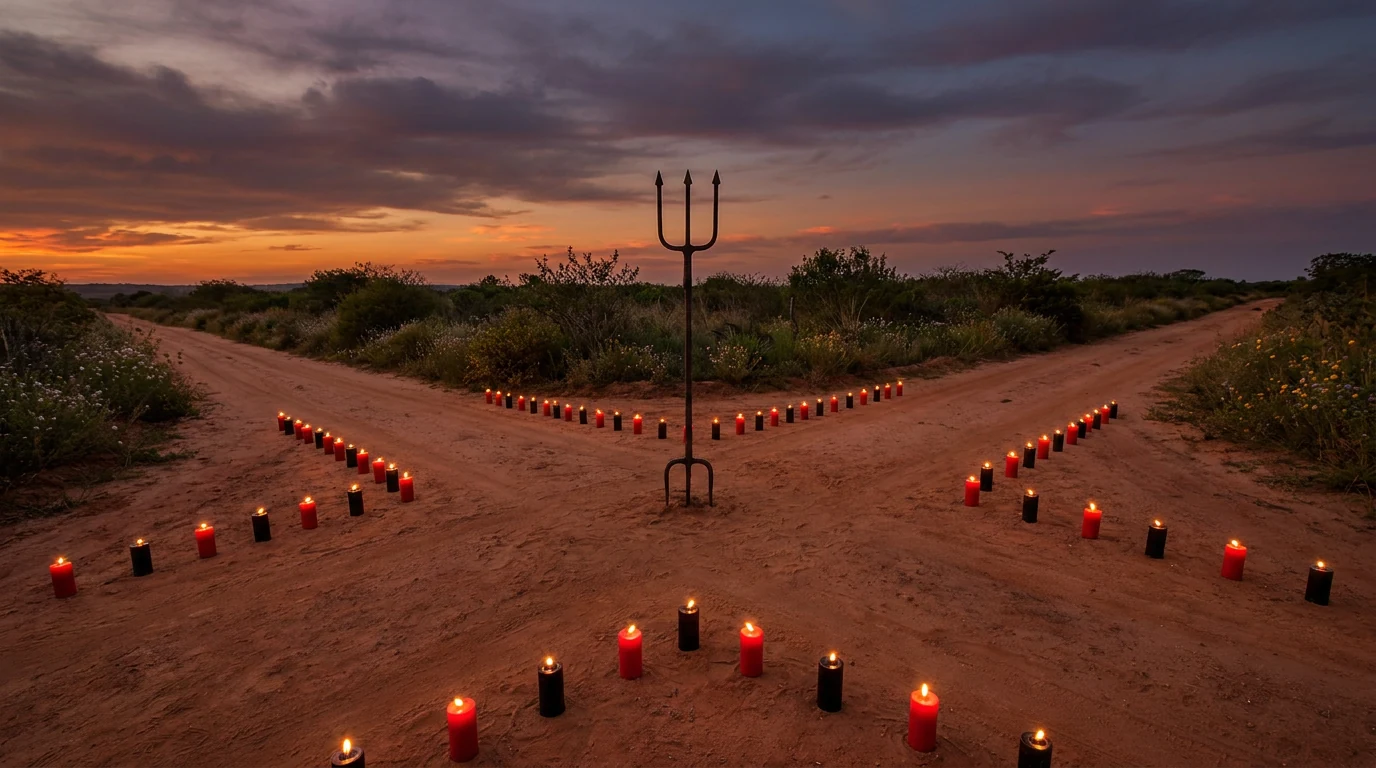
Day: Monday | Colors: black and red, with gray in some of the lists | Candles: black and red | Greeting: Laroyê, Exu Morcego! | Point of strength: crossroads, cave, or calunga pequena, depending on the house | Offering: candle, cigar, and drink, in the location the house indicates
Here, the variation of the ponto de força is greater than in most falanges. Umbanda houses usually maintain the delivery at the crossroads. Houses that work the connection with the cemetery realm deliver at the small calunga, and this is not done on one's own: the cemetery has precepts for entry, exit, and resguardo (ritual restriction).
This is one of the cases where the house's orientation is not a formality. A heavy guard spirit asks for an approach with precept, and the one who informs the precept is the leader.
What is asked of Exu Morcego
- Protection against dense energy, especially in environments that the person does not choose to frequent
- Intuition in the face of a trap, at work and in relationships
- Vigilance in a phase of concrete threat
- Courage to face what the person had been avoiding
Excluded is what affects a third party, what overrides someone else's decision, and what is for the doctor. A protection entity is not a substitute for practical action: if there is a real threat, there is also a police station, a lawyer, and a change of route.
The divergence of the regency and the realm
Ask in five houses and the answers change.
Part of the Quimbanda literature places Morcego in the cemetery realm, subordinate to the calunga leadership, and works the falange as a heavy guard people. Another part keeps him in the crossroads people, without a link to the cemetery.
The root of the divergence is the same as always: Quimbanda did not have a central authority to standardize records, and each lineage organized the realms in its own way. The article about the Quimbanda realms shows how this system is assembled and why the names change.
Exu Morcego is not the devil
Entities of the night and the cemetery receive more prejudice than others, and this prejudice has a documented origin.
Reginaldo Prandi shows in Exu, from messenger to devil that the identification of Exu with the devil came from the missionary and colonial gaze.
Carvalho and Bairrão show, in umbanda and quimbanda as a black alternative to white morality, that the moral hierarchy between the two religions was built from the outside.
In popular culture, the bat became a symbol of terror. In the religion, it is a creature that sees in the dark, and a guardian who sees in the dark is a guardian who warns in time.
Frequently asked questions
Is Exu Morcego from umbanda or quimbanda?
Both. He is worshipped in quimbanda and works in the left gira of umbanda. Some houses treat him as a head of falange, responsible for an entire people.
Where is the offering of Exu Morcego delivered?
It depends on the house. Crossroads in most umbanda houses; cave, forest, or small calunga in houses that link him to the cemetery realm. Delivery in a cemetery has its own precept and is not done without guidance.
What is the difference between Exu Morcego and Exu Caveira?
Both appear linked to the cemetery realm in part of the literature, but the field is different. Caveira works the border between life and death directly. Morcego works perception, vigilance, and warning. See who is Exu Caveira.
Can I consecrate Exu Morcego at home alone?
Lighting a candle and speaking with respect is prayer. To consecrate the assentamento of a heavy guard spirit is something else, and it requires foundation received inside a house. Start with the gira.
Where to find the material for Exu Morcego
At Joia Mística Laroyê you will find:
- Black and red candles, stick and seven day
- Cigars for the gira and for the offering
- Exu statue and black and red bead necklace
- Clay alguidar, flour, dendê, and pemba
- Herbs for protection and descarrego, with instructions for use
Speak via WhatsApp or stop by the shop at Rua Benedito Zingari, 460, Bela Vista, in Extrema-MG.
References
- Reginaldo Prandi: Exu, from messenger to the devil, on the demonization of the orixá during colonization, Revista USP
- Carvalho and Bairrão: umbanda and quimbanda as a black alternative to white morality, Psicologia USP
- Cruz and Arruda: field research on the povo de rua in umbanda terreiros in Rio de Janeiro, Memorandum, UFMG
- Axé Umbanda: Exu Morcego profile, with day, colors, greeting and offering
- Ita Balago: the reading that treats the falange as the guardian of the mysteries of the night