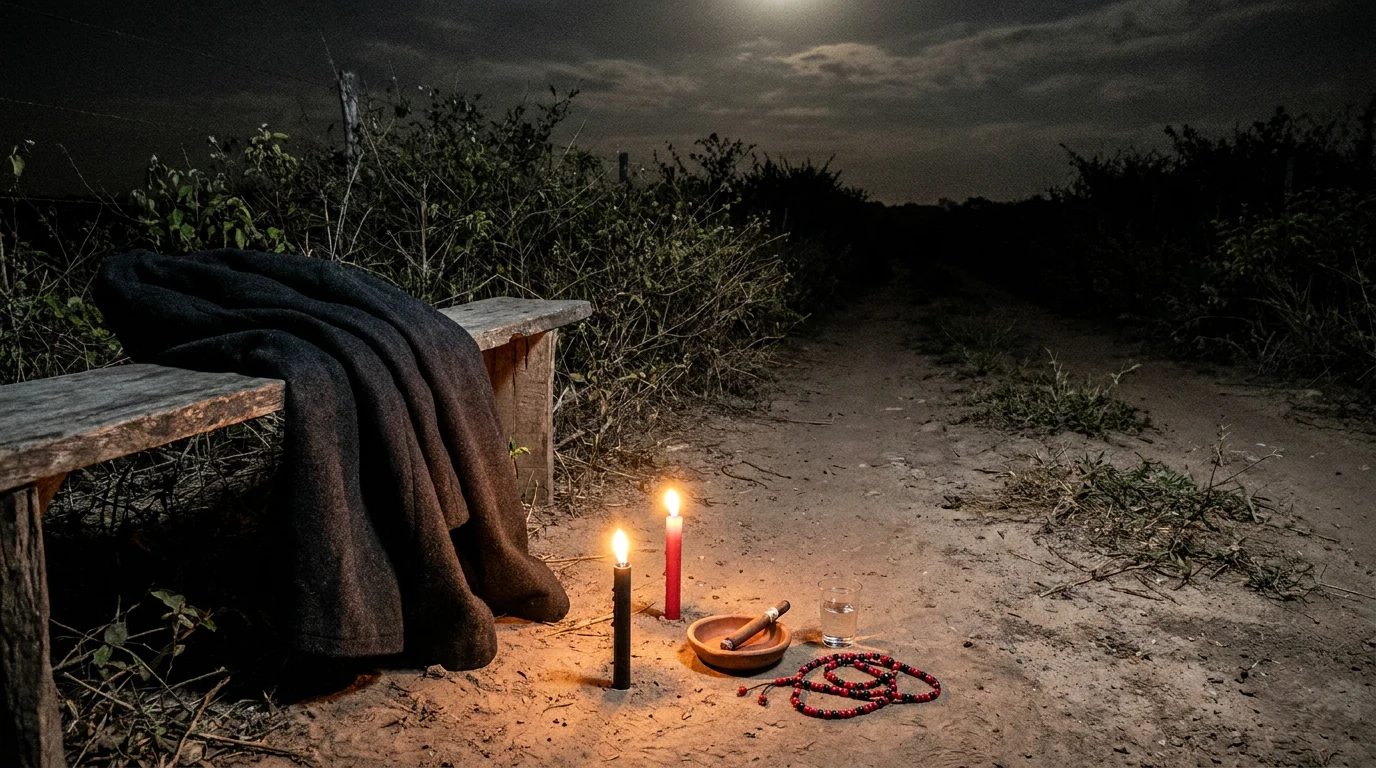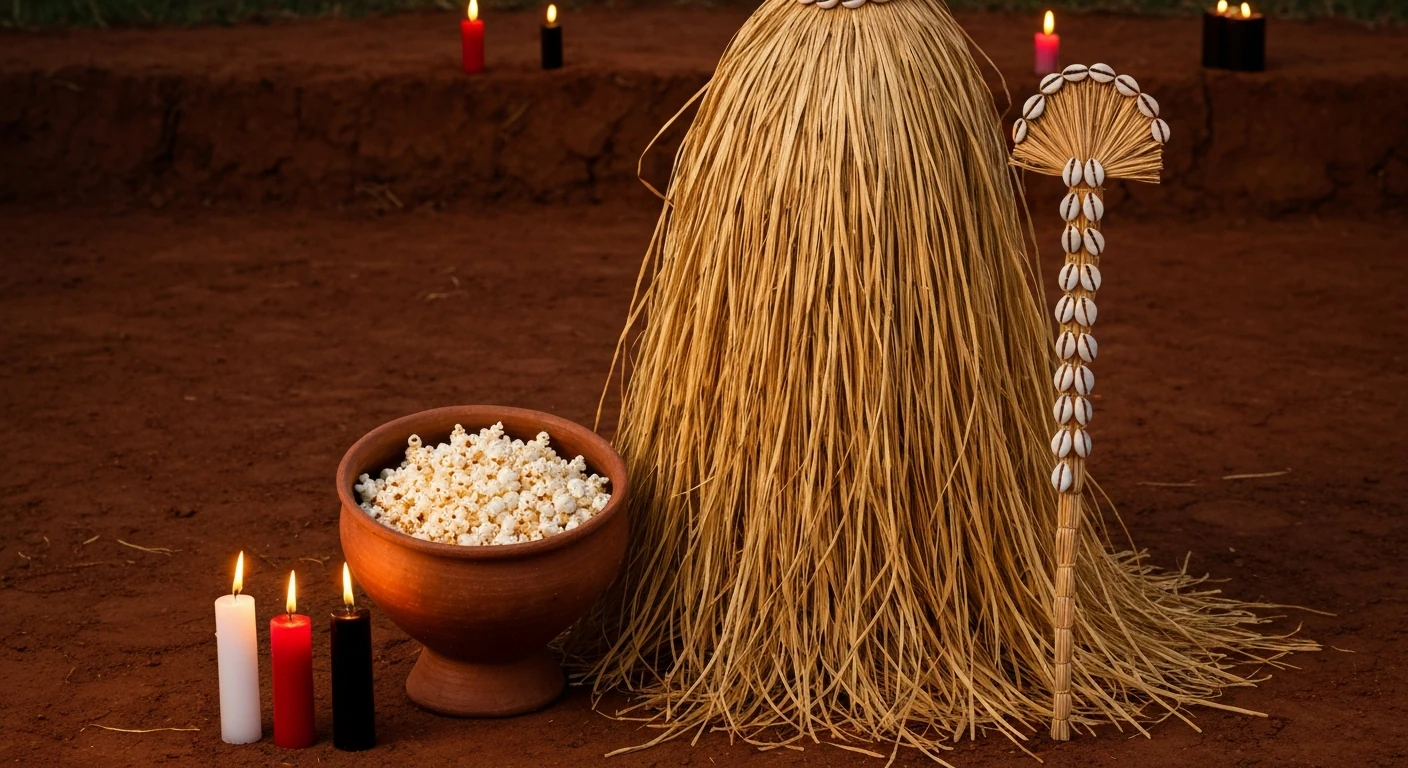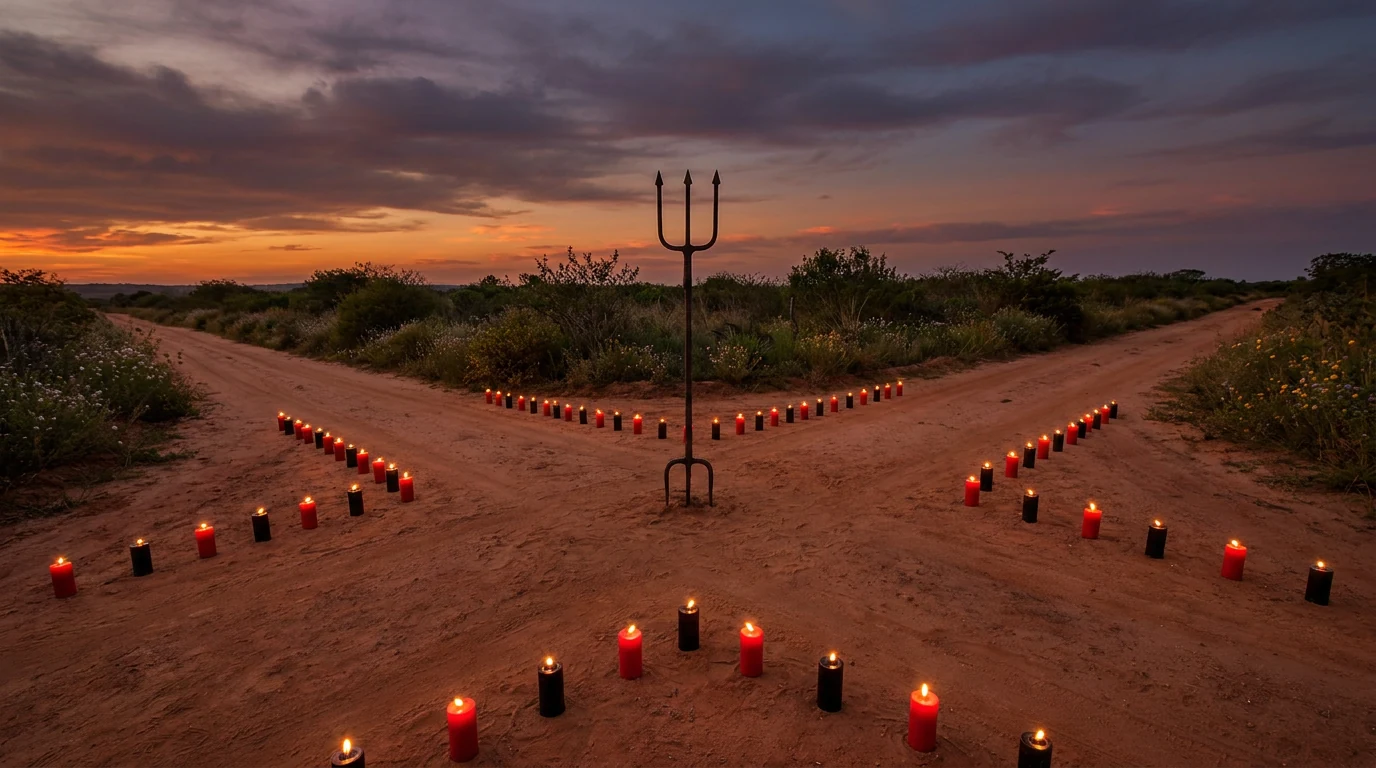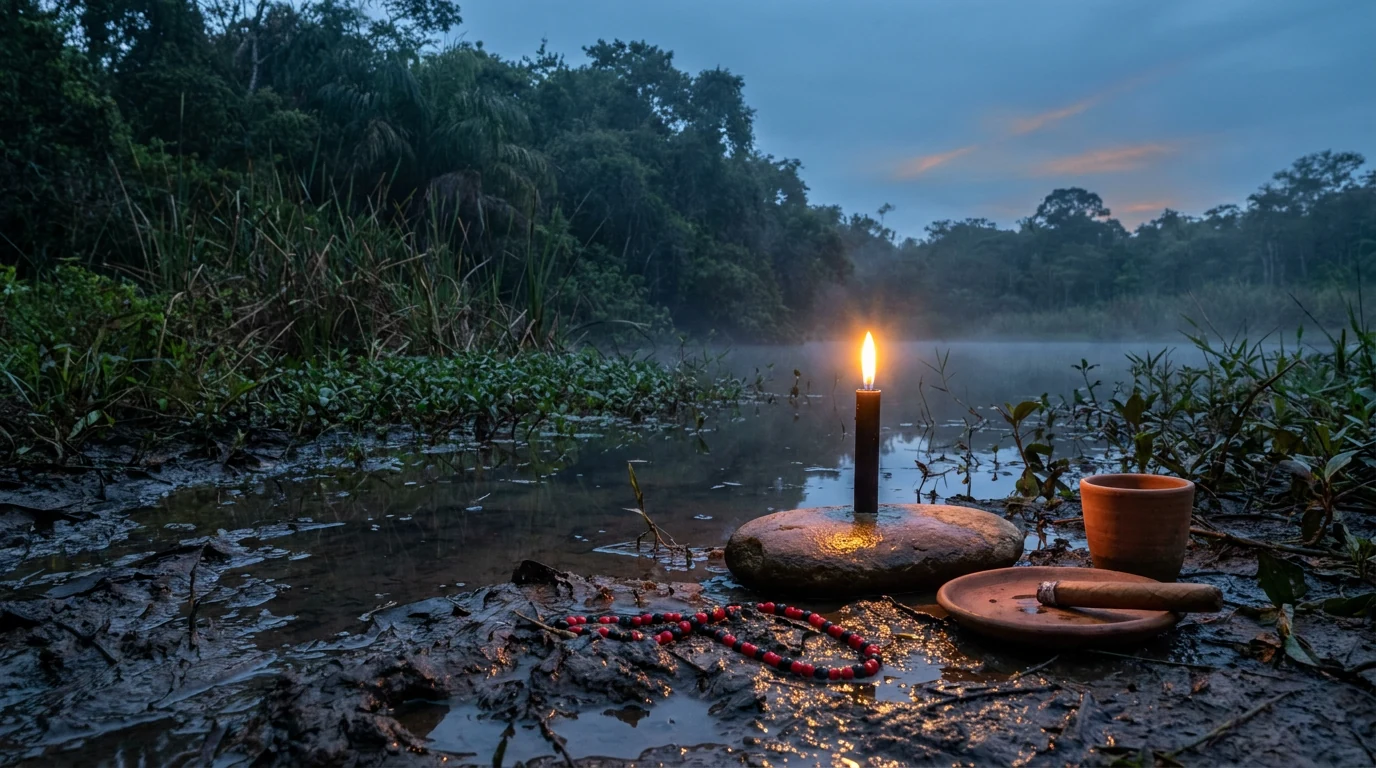
Exu do Lodo is the guardian of what remained still. Among the povo de rua, each falange has a territory, and his is the bottom: the mud, the water that does not flow, that which rots from a lack of movement.
There is a type of situation that has no enemy. No one sent anything, no one did anything, and even so, life got stuck. The house became heavy after a long illness. The work that always yielded stopped yielding. It is in this territory that his falange acts.
This guide gathers the spirit's profile, explains where the name comes from, and shows where the houses diverge.
Exu orixá (orisha) and Exu guardian are not the same thing
Before the profile, the separation that the internet mixes up.
Exu orixá is the lord of the paths of the Yoruba pantheon, the first to receive in any rite. About him, the text is who is Exu.
Exu guardião is another category: spirits that work in Quimbanda and in the gira of the left side of Umbanda, organized in falanges with their own names.
Lodo belongs to the second group. And falange is an entire people under the same name, not just a single spirit.
Why is he called do Lodo
The name is the territory, and the territory is the function.
Lodo is what forms where the water stops. It is not dirt from outside: it is the very bottom that rises when nothing moves. Spiritually, the reading is the same. The falange works where the energy stagnated, and its service is not to cut, it is to unclog.
This difference changes what the person should expect. A cutting falange resolves quickly and the effect appears immediately. Lodo ritual work is slow, because moving the bottom stirs up what was deposited. Getting worse before getting better is a common description among those who work with him, and for this reason, the house's guidance matters more here than in any other prayer request.
There is also the reading that mud is fertile. Riverbed mud is where the seed takes hold, and some houses work this second layer: what seems rotten is what feeds what comes next.
Exu do Lodo card: day, colors, greeting and offering
Day: Monday | Colors: black and red | Candles: black, or black and red | Greeting: Laroyê, Exu do Lodo! | Power point: crossroads, or the location the house indicates | Offering: candle, cigar and drink, according to the house's foundation
Houses that work the connection with mud deliver in wet areas: lakeside, riverbank, swampy land. In them, a brown or green candle, farofa, black beans and fruits also appear.
Houses that work only the crossroads keep the delivery at the dirt crossing, with a dry offering.
Both practices exist, and neither is wrong. What decides is the foundation of your house.
What is asked of Exu do Lodo
The field is stagnation, and it has clear outlines.
- Stagnant situation that does not move for no visible reason
- Heavy environment, especially after a long illness or mourning
- Blocked path in work and money
- Deep cleansing, when a common cleansing bath (banho de descarrego) did not resolve it
What affects a third party, what overrides another person's decision, and what belongs to the doctor stay outside his field. Descarrego does not replace treatment, and a serious house says this to the consulente's face.
The divergence of the regency
Here, the divergence is the most interesting part of the spirit.
Parts of the houses link Exu do Lodo to Omulu and to Nanã, and the logic is coherent: Omulu is the orixá of the earth and of what is buried, Nanã is the lady of the riverbed mud, and the falange works exactly with that material. In this reading, the point of strength is moist and the delivery follows.
Other houses do not make this connection and treat the falange as common crossroads people, without a link to the mud orixá.
Quimbanda never had a central authority to standardize records, and the house literature was written by different leaders in different places. Registering the divergence is more honest than choosing one side and presenting it as a rule.
Exu do Lodo is not the devil
The association comes from Christian demonization, and it has documented history.
Reginaldo Prandi shows in Exu, from messenger to devil that identifying Exu with the devil was the work of the missionary gaze, not of the Yoruba tradition.
Carvalho and Bairrão show, in umbanda and quimbanda as a black alternative to white morality, that the moral hierarchy between the two religions was built by Brazilian society.
Mud bothers those who look from the outside. For those who work, mud is service material.
Frequently asked questions
Is Exu do Lodo from Umbanda or from Quimbanda?
Both. He is worshipped in Quimbanda and works in the left gira of Umbanda. What changes is the place he occupies in each worship, not the spirit.
Where is the offering of Exu do Lodo delivered?
It depends on the house's reading. In houses that link the falange to mud, the delivery is in a damp area, lakeside, or swampy land. In those that work only the crossroads, it is at the dirt intersection. Ask your leader before leaving with the offering ready.
Is Exu do Lodo the same as Omulu?
No. Omulu is an orixá, a force of nature linked to earth, disease, and healing. Exu do Lodo is a falange of guardians, spirits who have lived. Some houses place the falange under the regency of Omulu, which is different from saying they are the same thing.
Why do they say his ritual work gets worse before it gets better?
Because moving what was deposited brings up what was at the bottom. It is a common description among those who work with the falange, and it is precisely the reason why this request asks for the accompaniment of a house, and not an internet recipe.
Where to find Exu do Lodo material
At Joia Mística Laroyê you will find:
- Black and red candles, stick and seven day
- Cigars for the gira and for the offering
- Clay alguidar, flour, dendê, and pemba
- Exu statue and black and red bead necklace
- Descarrego herbs, with instructions for use
Speak via WhatsApp or stop by the shop at Rua Benedito Zingari, 460, Bela Vista, in Extrema-MG.
Before consecrating anything, read what is Quimbanda and offering for Exu.
References
- Reginaldo Prandi: Exu, from messenger to the devil, on the demonization of the orixá during colonization, Revista USP
- Carvalho and Bairrão: umbanda and quimbanda as a black alternative to white morality, Psicologia USP
- Cruz and Arruda: field research on the povo de rua in umbanda terreiros in Rio de Janeiro, Memorandum, UFMG
- Axé Umbanda: Exu do Lodo profile, with day, colors, greeting, and offering
- Terra de Oxóssi (Oshosi): the reading that connects the spiritual legion (falange) to Nanã, Omulu, and the humid point of strength