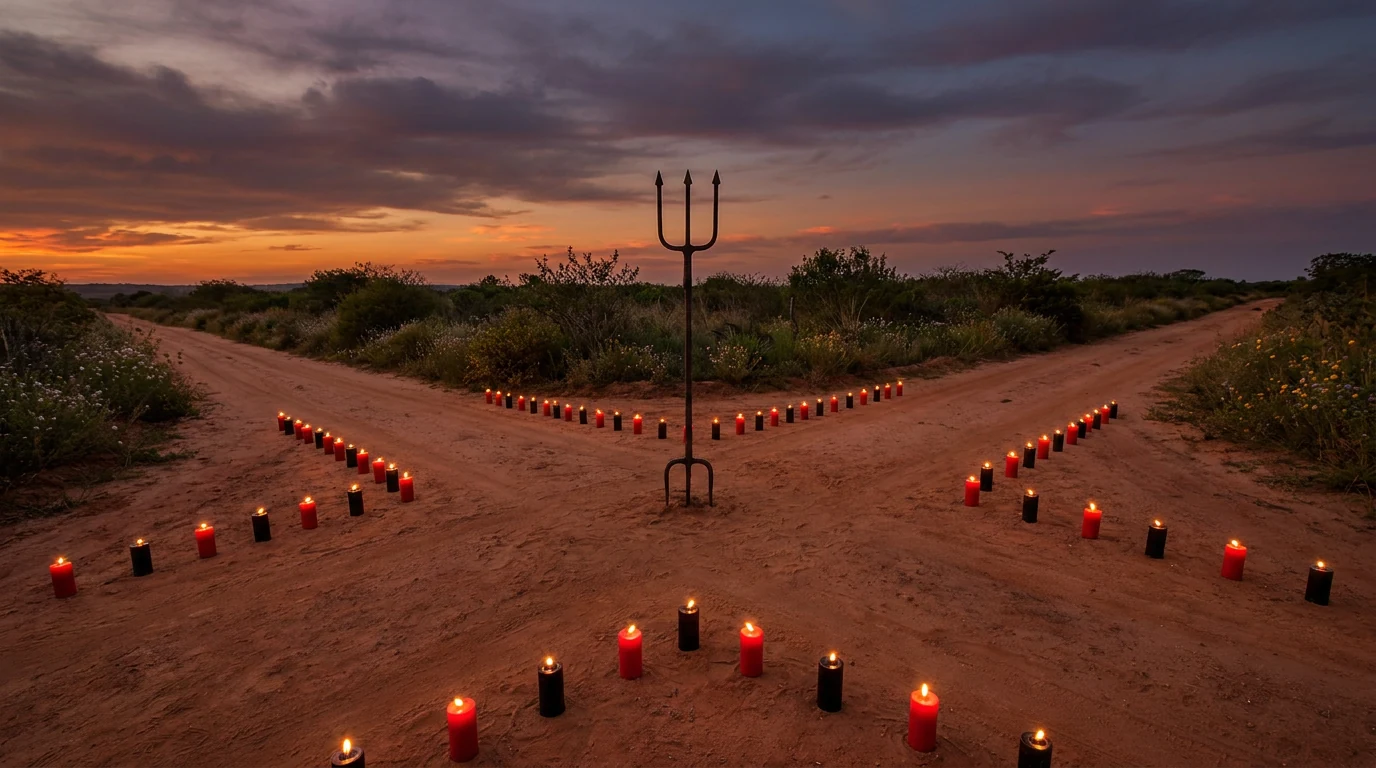
Exu Meia-Noite is the guardian of the turn. The name marks an exact hour, and the hour is the function: the instant when one day ends and another begins, which tradition describes as the crossroads of time.
A street crossroads is the crossing of two paths in space. Midnight is the crossing of two days in time. His falange works in this second type of crossing, and that is what separates it from the others.
This guide gathers the spirit's profile, explains where the name comes from, and shows what changes between the houses.
Exu orixá (orisha) and Exu guardian are not the same thing
Exu orixá is the lord of the paths in the Yoruba pantheon, the first to receive in any rite. About him, the correct text is who is Exu.
Exu guardião is another category: spirits that work in Quimbanda and in the gira of the left side of Umbanda, organized in falanges with their own names.
Meia-Noite belongs to the second group, and some houses place him as the head of the falange of the line of souls.
Why is he called Meia-Noite
Because the name is the hour, and the hour is the foundation.
Every religious tradition marks passages. The turn of the day is one of them, and Quimbanda treats it as a point of temporal strength: it is not the place that opens, it is the moment. Therefore, the delivery to this falange is usually marked at the hour, and not just on the day.
From this reading comes the function that several houses attribute to him: to open and close the ritual work. In these houses, it is Meia-Noite who opens the door at the beginning of the gira and directs what remains at the end.
The comparison helps. Tranca Ruas guards the passage of a place. Meia-Noite guards the passage of a time.
Exu Meia-Noite profile: day, colors, greeting, and offering
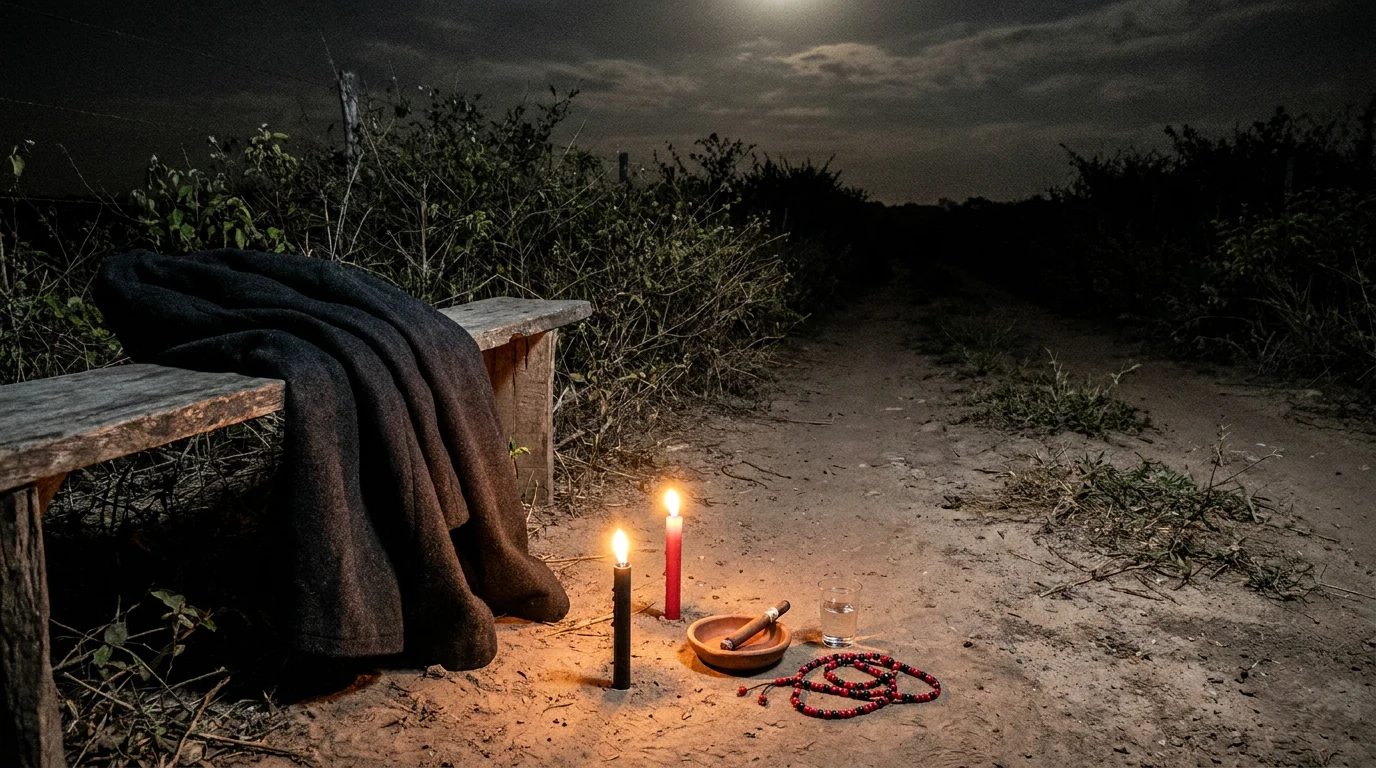
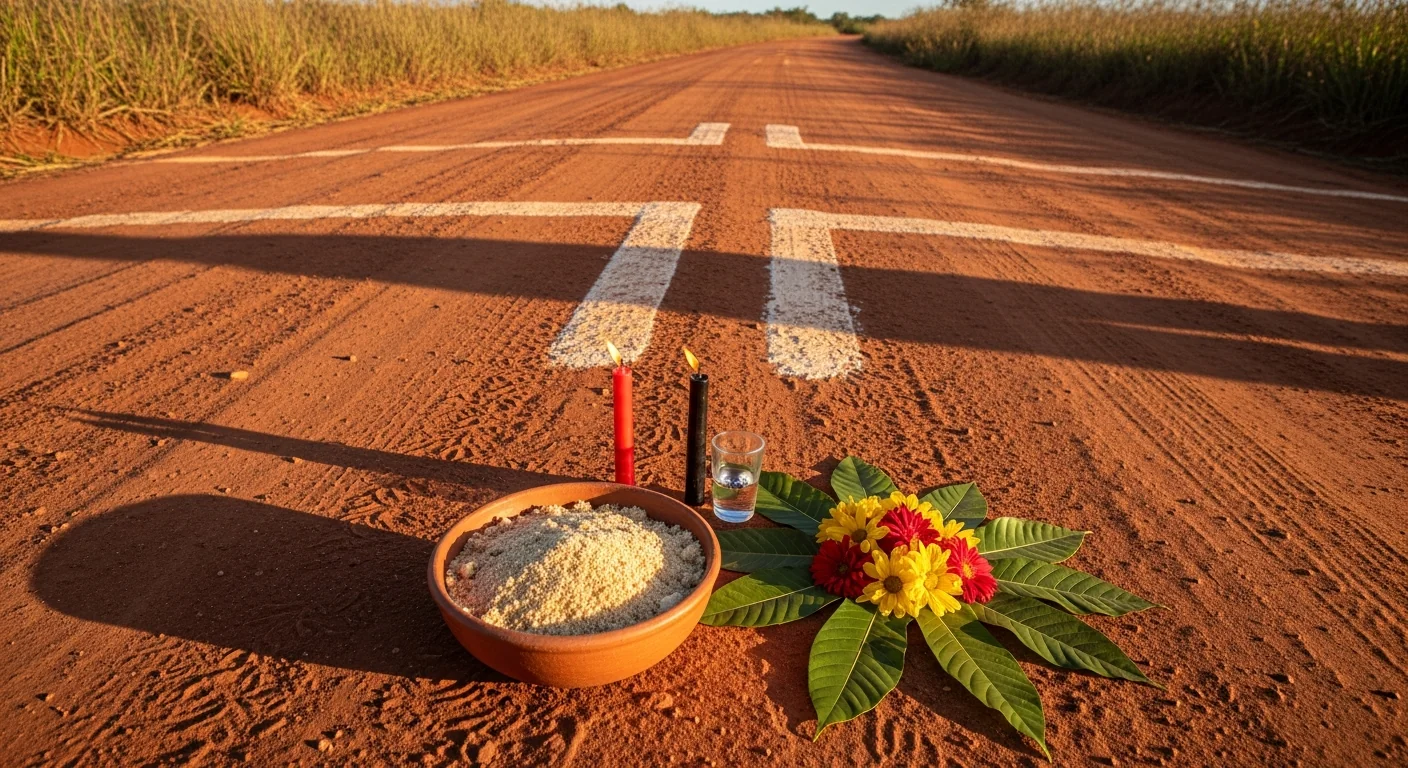
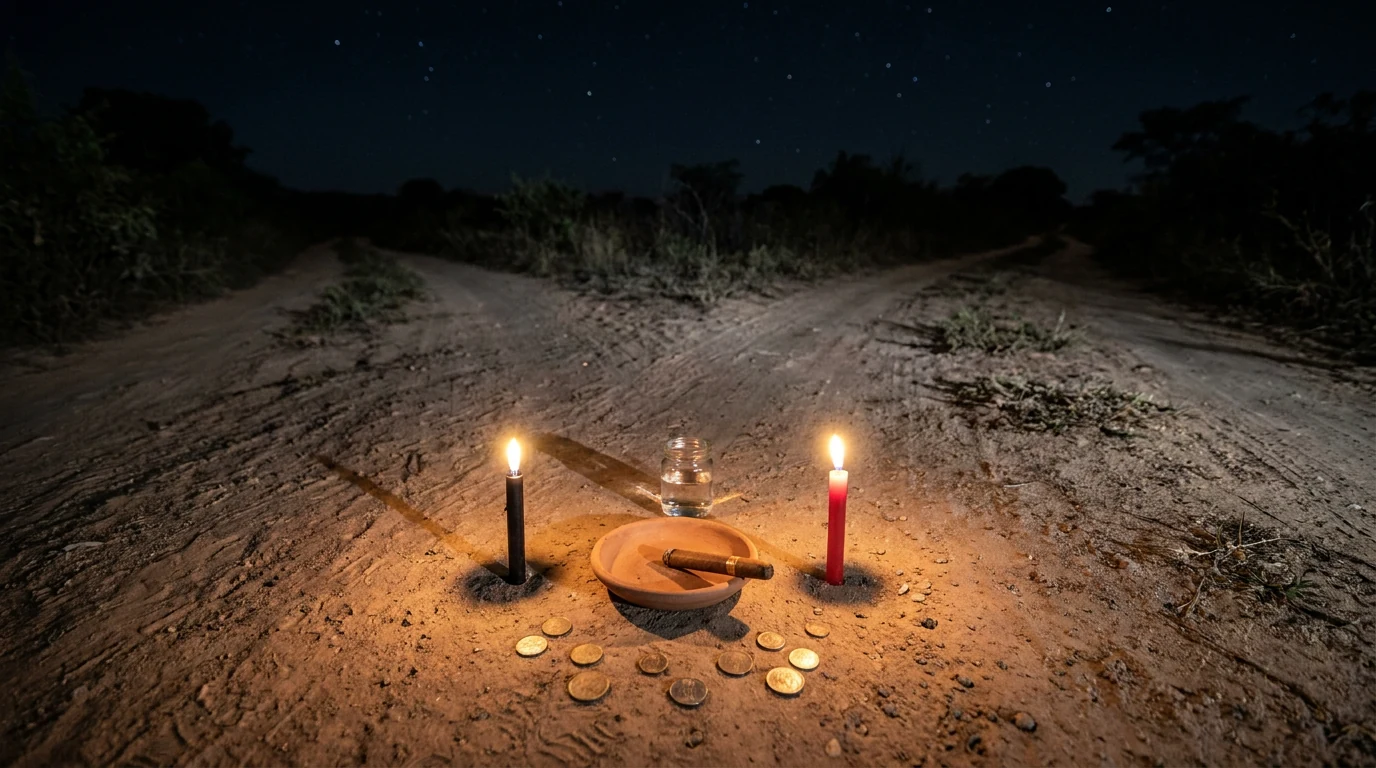
Day: Monday | Colors: black and red | Candles: black and red | Greeting: Laroyê, Exu da Meia-Noite! | Place of power: crossroads, or the location the house indicates | Offering: candle, cigar, and drink, according to the house's foundation
The detail that distinguishes this falange from others is the time. Quimbanda houses mark the delivery at exactly midnight, and there are lineages that consider this the only valid time for it. Other houses follow the normal work schedule and do not treat the time as mandatory.
Regarding the bead necklace, the lists diverge: black and white in some houses, black and red in others. Both appear in house sources and neither nullifies the other.
What is requested from Exu Meia-Noite
His field is passage, and this has a practical consequence on the type of prayer request.
- Transition phase, when life is between one thing and another
- Protection in a difficult situation, mainly at night
- Steadfastness to decide, when the person is stuck between two paths
- Justice, in the sense of settling what remained pending
What is excluded is what affects a third party, what overrides another person's decision, and what is medical. A warning of common sense also applies: delivery at the crossroads at midnight is done with personal safety first, and no spirit asks you to expose yourself to risk.
The divergence: gira chief (chefe de gira) or common falange
The greatest divergence about him is the weight the house gives him.
In the houses that treat him as chefe de falange da linha das almas, he is a central figure: he opens the gira, closes the gira, and responds for an entire people.
In other houses, he is a falange of the povo de rua like the others, without this opening function, and the one who opens the ritual work is another spirit, or the leader himself.
The root is the same: Quimbanda did not have a central authority to standardize the hierarchy, and each lineage organized its own. How an entire gira works, from the beginning to the closing, is in the quimbanda gira.
Meia-Noite is not the devil
The hour scares those who see from the outside, and the association with the devil has a known origin.
Reginaldo Prandi shows in Exu, from messenger to devil that identifying Exu with the devil was the work of the missionary and colonial gaze, and not of the Yoruba tradition.
Carvalho and Bairrão show, in umbanda and quimbanda as a black alternative to white morality, that the moral hierarchy between the two religions is a construction of Brazilian society.
Midnight, in the religion, is the hour of work. Whoever works at this hour is the one who guards the turn.
Frequently asked questions
Is Exu Meia-Noite from Umbanda or from Quimbanda?
From both. He is worshipped in Quimbanda and works in the left gira of Umbanda. Some houses place him as the head of the falange of the line of souls.
Is it really necessary to deliver the offering at midnight?
In the quimbanda houses that work the hour as a foundation, yes, and they are the majority of those that register this falange. In other houses, the time follows the custom of the terreiro. Ask your leader, and do not expose yourself to risk to fulfill a schedule.
What is the difference between Exu Meia-Noite and Exu Tranca Ruas?
The two are guardians of passage, but of different types. Tranca Ruas guards the passage of a place, the street, and the crossroads. Meia-Noite guards the passage of a time, the turn of the day. See who is Exu Tranca Ruas.
Can I consecrate Exu Meia-Noite at home alone?
Lighting a candle and speaking with respect is prayer, and everyone can do that. Setting up an assentamento (consecrated foundation) requires foundation received inside a house, with someone who is responsible for you. Start by visiting a gira.
Where to find the material for Exu Meia-Noite
At Joia Mística Laroyê you will find:
- Black and red candles, stick and seven day
- Cigars for the gira and for the offering
- Statue of Exu and bead necklaces in black and red, and in black and white
- Clay alguidar, flour, dendê, and pemba
- Protection herbs, with guidance on use
Speak via WhatsApp or stop by the shop at Rua Benedito Zingari, 460, Bela Vista, in Extrema-MG.
References
- Reginaldo Prandi: Exu, from messenger to the devil, on the demonization of the orixá during colonization, Revista USP
- Carvalho and Bairrão: umbanda and quimbanda as a black alternative to white morality, Psicologia USP
- Cruz and Arruda: field research on the povo de rua in umbanda terreiros in Rio de Janeiro, Memorandum, UFMG
- Axé Umbanda: file of Exu da Meia-Noite, with the line of souls and the crossroads of time