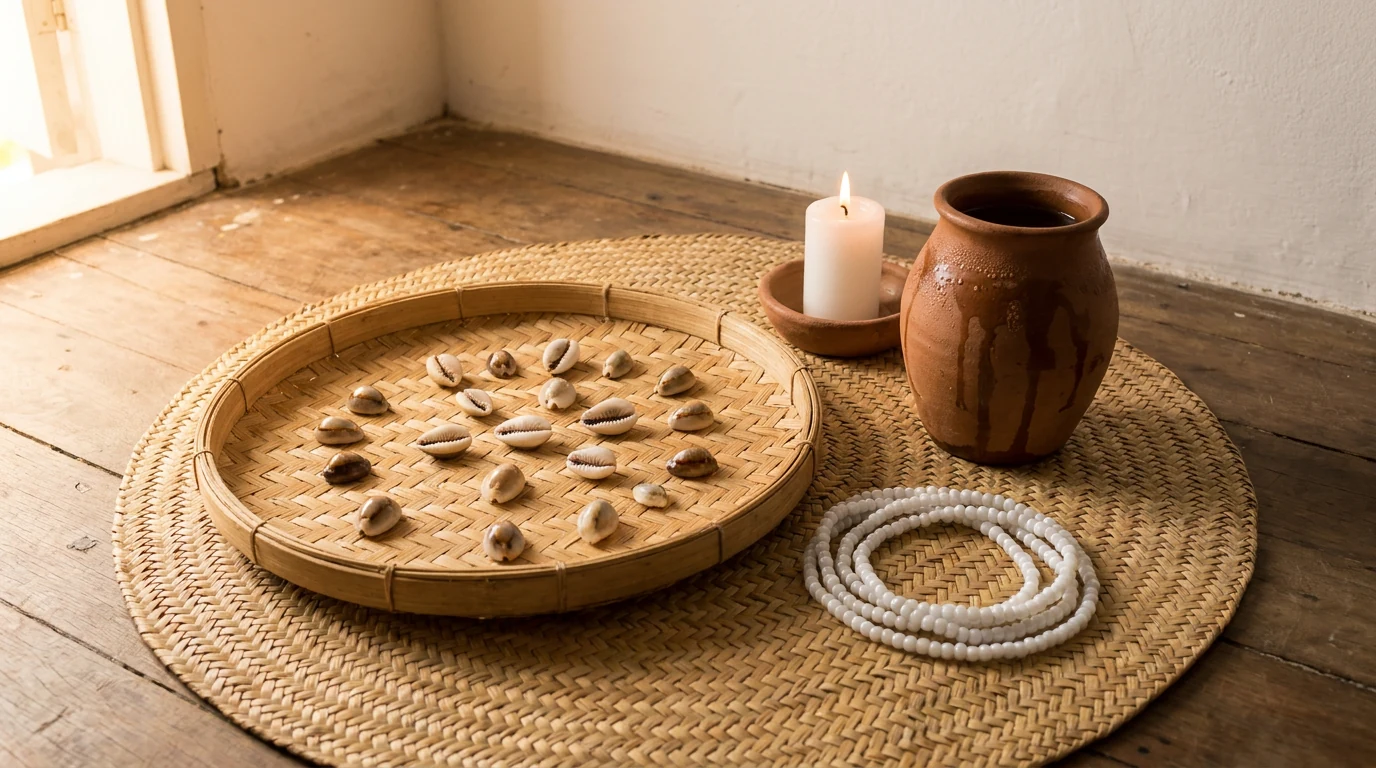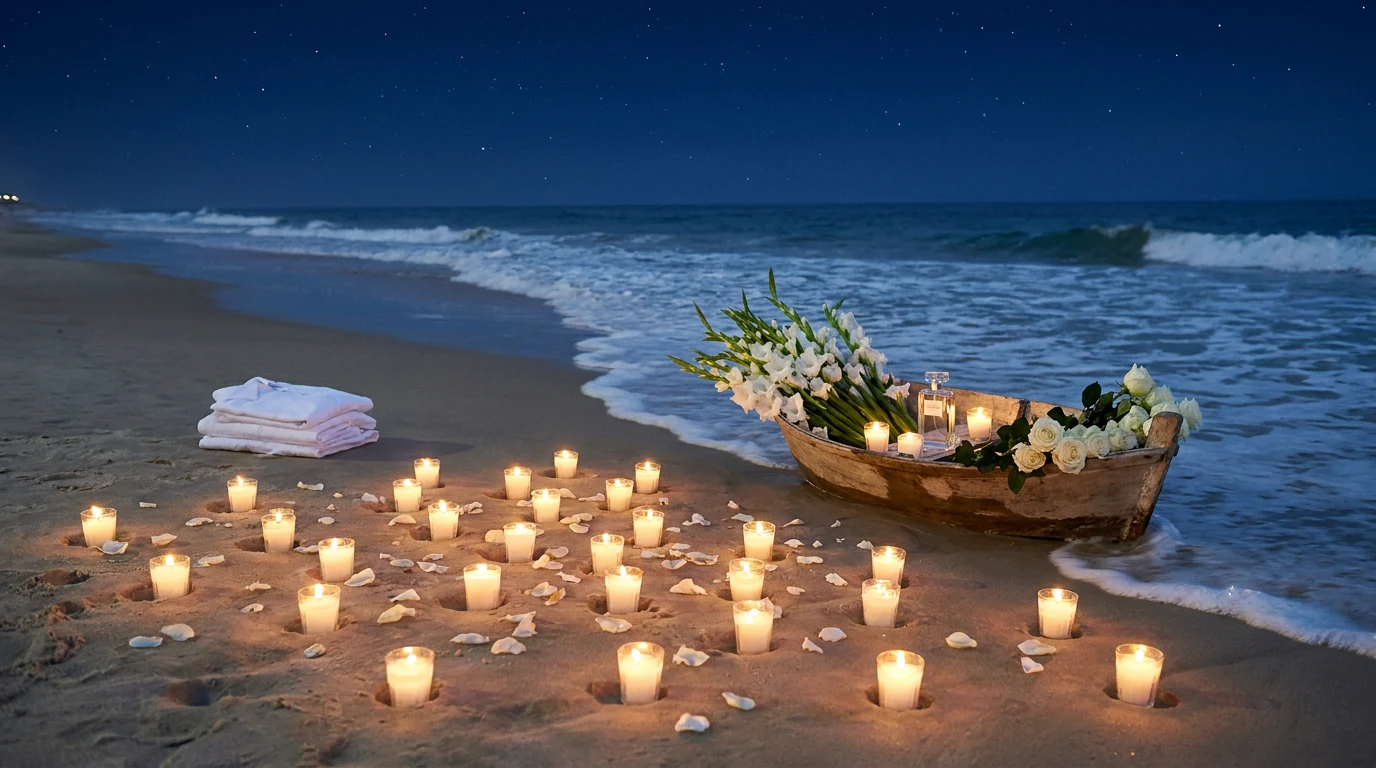
Wearing white on New Year's is a custom that moved from the terreiros to the beach, and from the beach to all of Brazil. The first people to spend the turn of the year in white on the sands of Copacabana were devotees of Iemanjá, bringing flowers and offerings to the sea. Later, those who were not of the religion copied the attire.
The history has a date, a name, and some divergence between sources. Below is what they tell, what white means in the terreiro, and the other colors of New Year's Eve.
Where the white in the turn comes from
The custom of occupying the beaches of Rio on New Year's Eve dates back to the mid-1940s and is linked to the worship of the orixás, according to Itaú Cultural. The text summarizes a 1968 article by folklorist Edison Carneiro. The devotees of Iemanjá did not go alone: they went in groups, "uniformed in white clothes and generally barefoot," with atabaques, flowers, and candles.
The most cited name is that of Tata Tancredo da Silva Pinto, a Rio Umbandista leader. According to historian Luiz Antonio Simas, interviewed by Agência Brasil, Tancredo encouraged the gathering in Copacabana on the night of December 31, in the early 1950s.
"People began going to the beach dressed in white to participate in the ceremony, deliver offerings to Iemanjá, jump seven little waves, and make their requests for prosperity." (Agência Brasil, 2023)
A report by Edison Veiga in Correio Braziliense gives the most precise date: the turn of 1949 to 1950. A small group of Umbandistas, mobilized by Tancredo, went to the beach dressed in white, with offerings to cast into the sea before midnight. The event was called Flores de Iemanjá.
The historian Diego Uchoa de Amorim speaks in the same report. He recalls that bringing flowers and boats to the sea at the end of the year had already been happening in Rio since the end of the 19th century, on beaches like Caju, Ramos, and Glória. What Tancredo's umbandistas took to Copacabana was the collective rite, in white. In the magazine Religare, Joana Bahia and Farlen Nogueira, from UERJ, follow the same line. The umbandas organized the worship on the beach starting in the 1950s, but it is not possible to "credit a single group for its origin".
How white came out of the terreiro
The researcher Claudia Alexandre, from USP, explains the passage in Correio Braziliense. In a short time, the party attracted sympathizers, who went to the beach "repeating the white attire and the gesture of giving flowers to the sea".
There is a divergence worth noting. A report by BBC News Brasil, republished by Estado de Minas, places the popularization of white in the 1970s and speaks of members of candomblé. The report does not cite a source for this. The historians heard by Agência Brasil and Correio Braziliense point to umbanda and the 1950s.
Then came the mass party. The fireworks of the old Le Méridien hotel changed Copacabana's Réveillon. Itaú Cultural dates the fireworks to the late 1970s; Agência Brasil, to 1987. The worship of Iemanjá continued, but changed days. Since 2002, the Festa de Iemanjá do Mercadão de Madureira takes small boats of offerings to Copacabana on December 29. It has been Carioca Cultural Heritage since 2011.
What white means in the terreiro
In candomblé ketu, white is the color of Oxalá and the color that everyone can wear. The article by Raphael Felipe da Silva de Jesus in the Sacrilegens magazine, from UFJF, compiles ten authors, from Edison Carneiro to Reginaldo Prandi.
“White is the most important color within Candomblé Ketu.” (Raphael Felipe da Silva de Jesus, Sacrilegens, 2024)
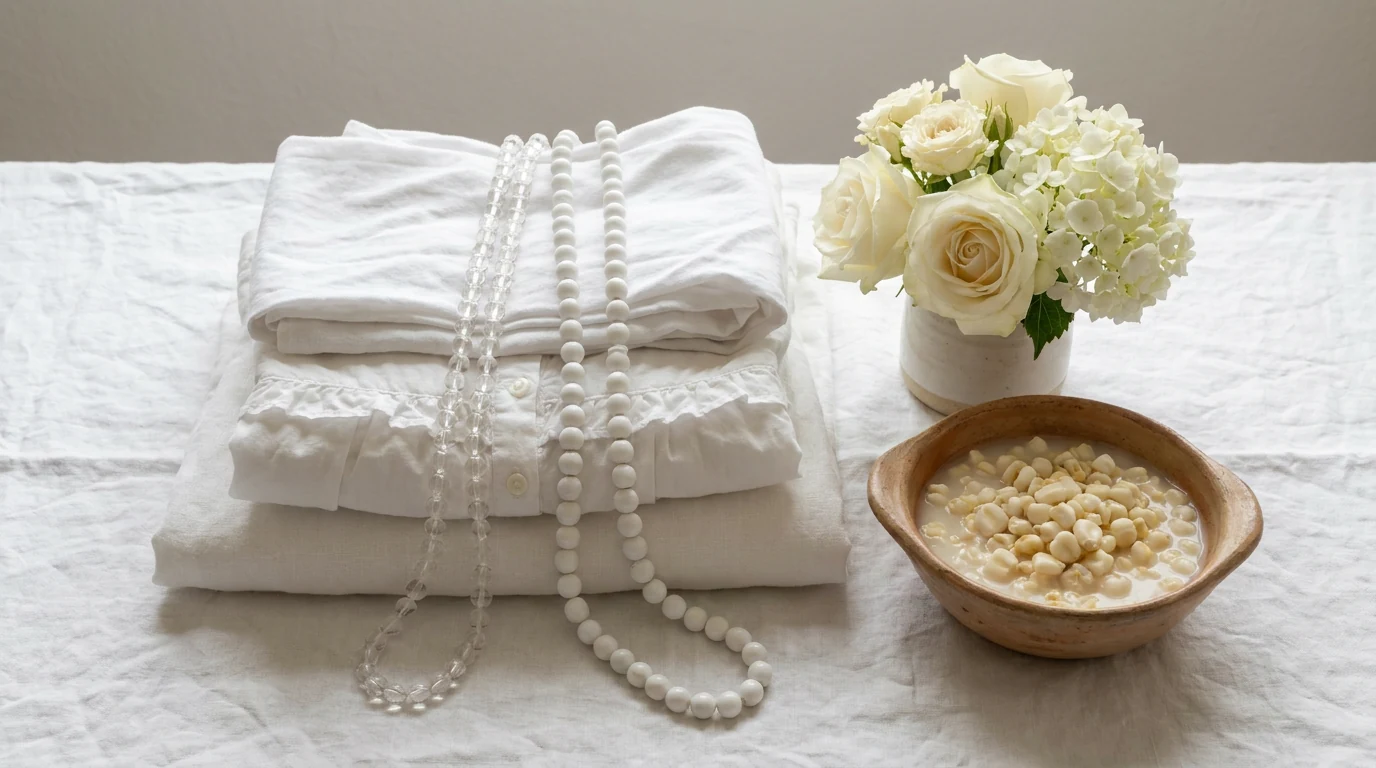
The same author, in a note, says that whoever wears white when visiting a terreiro “does not commit a chromatic faux pas.” It is the safe clothing for any visitor.
On the beach, white was worn by those who went to greet Iemanjá. In the terreiro, it belongs to Oxalá, and light blue belongs to Iemanjá, linked to the sea. The two readings coexist, and that is why so many people say that the white of the New Year's Eve “belongs to Oxalá.” In the houses heard by a report from ICL Notícias, however, Christmas and the New Year do not appear as the day of Oxalá: one Umbanda house makes the Oxalá canjica in the last gira of the year, and other houses say they do not celebrate Christmas. The day of Oxalá in the week and in the year is in Oxalá's day. Who is the father of creation is in who is Oxalá, and the queen of the sea is in who is Iemanjá.
The other colors of the New Year and the orixás
The table below follows the survey by Sacrilegens for Candomblé Ketu. It shows the first color of each orixá and others that appear in the authors.
| Color | Orixá linked in ketu | Other colors of the same orixá |
|---|---|---|
| White | Oxalá | light blue, silver |
| Light blue | Iemanjá | silver, light green, pink |
| Yellow | Oxum (Oshun) | blue, white, pink |
| Green | Oxóssi (Oshosi) | blue, yellow |
| Dark blue | Ogum (Ogun) | green, red |
| Red | Xangô (Shango) and Iansã (Oya) | white, brown |
| Purple | Nanã (Nana Buruku) | white, dark blue |
The same article warns that "there is no right or wrong use of colors in the tradition," only different uses. The example is Oxóssi: in the terreiros of Bahia he wears more blue, and in those of Rio, more green, according to Raul Lody.
The complete list, with the nations, is in colors of the orixás. To choose the color based on what you want for the year, the test new year's clothing color suggests one in five questions.
Can you use white in the 2027 new year?
You can. No terreiro source we consulted prohibits white on the turn, in 2026 or in 2027. The advice to change color comes from numerology and from psychics. For the 2026 turn, they were betting on the red of "Universal Year 1".
The bet didn't take. A text from Terra recorded that the demand for white new year's clothing grew by more than 10% in retail at the end of 2025, according to Shopee data.
If you are from a terreiro, the rule is different. Some houses request a specific color in obrigação, or forbid a color due to the quizila of your orixá. In this case, what your zelador instructs applies. The most common restrictions are in quizilas in Candomblé.
What devotees do most on New Year's Eve
The turn of the Umbanda followers of Tancredo had three gestures that continue to be practiced:
- Give flowers to Iemanjá. On the 31st, devotees take flowers, perfume, rice, and jewelry, according to Itaú Cultural. Today, prefer flowers without plastic or cellophane paper, because what does not decompose returns to the sand. The traditional items are in offering for Iemanjá.
- Jump the seven waves. The gesture has appeared in the Copacabana turn since the 1950s, according to Agência Brasil. The explanation regarding the seven lines of Umbanda circulates in the press, but we did not find a primary source for it. The hypotheses and what to take to the sea are in Iemanjá in the new year.
- Make the request for the year. This is the part that each person does in their own way.
In the terreiros, the turn of the year has another rite: the reading (jogo) that reveals the ruling orixá of the year for the house. It is in ruling orixá of 2027.
Frequently asked questions
Why is white used on New Year's?
Because the devotees of Iemanjá used to go to the beach in white on the 31st to take offerings to the sea. Historians link the custom to Carioca Umbanda and Tata Tancredo, on the turn of 1949 to 1950. Those who were not from the religion began to copy the attire and the gesture of giving flowers.
Is the white of New Year's from Oxalá or from Iemanjá?
From both. At the beach, white was worn by those who went to greet Iemanjá. In Ketu Candomblé, white is the main color of Oxalá and the color that everyone can wear in the terreiro. Iemanjá has light blue as her first color, linked to the sea, according to an academic survey from 2024. The day of Oxalá, in the week and in the year, is another question, answered in day of Oxalá.
Can't you wear white on New Year's 2026 or 2027?
You can. No terreiro source consulted prohibits white on the turn of the year. The advice to avoid white came from numerology and from psychics, and even so, the search for white clothing grew at the end of 2025. If your house requested another color due to obrigação or quizila, follow your house.
Which color to use on New Year's according to the orixás?
Each color has a linked orixá: yellow for Oxum, green for Oxóssi, light blue for Iemanjá, red for Xangô and Iansã. But the color of each orixá changes from house to house, and no color guarantees a result. The New Year's clothing color test, here on the site, suggests a color based on your request.
Will you spend the turn of the year at the beach or at home? The shop in Extrema, Minas Gerais has white and blue candles, statues of Iemanjá and Oxalá, perfumes and lavender for Iemanjá and bead necklaces. Message the Joia Mística WhatsApp, with delivery to all of Brazil.
References
- MATOS, Maria Clara. Itaú Cultural, 2022. Copacabana New Year: the ritualization of the passage of time
- RODRIGUES, Léo. Agência Brasil, 2023. New Year in Rio started with Umbanda, today distanced from the party
- BAHIA, Joana; NOGUEIRA, Farlen de Jesus. Religare (UFPB), v. 18, n. 1, 2021. The popularity of flowers to Iemanjá and the occupation of public space by umbanda omolocô
- VEIGA, Edison. Correio Braziliense, 2026. The black pope of Umbanda who invented the Copacabana New Year
- MODELLI, Lais. BBC News Brasil, republished by Estado de Minas, 2021. Jumping seven waves, wearing white: the origin of New Year rituals
- JESUS, Raphael Felipe da Silva de. Sacrilegens (UFJF), v. 21, n. 1, 2024. The chromaticism of the Orixás
- Terra, 2025. Can you wear white on New Year? Understand the meaning and the trend for 2026