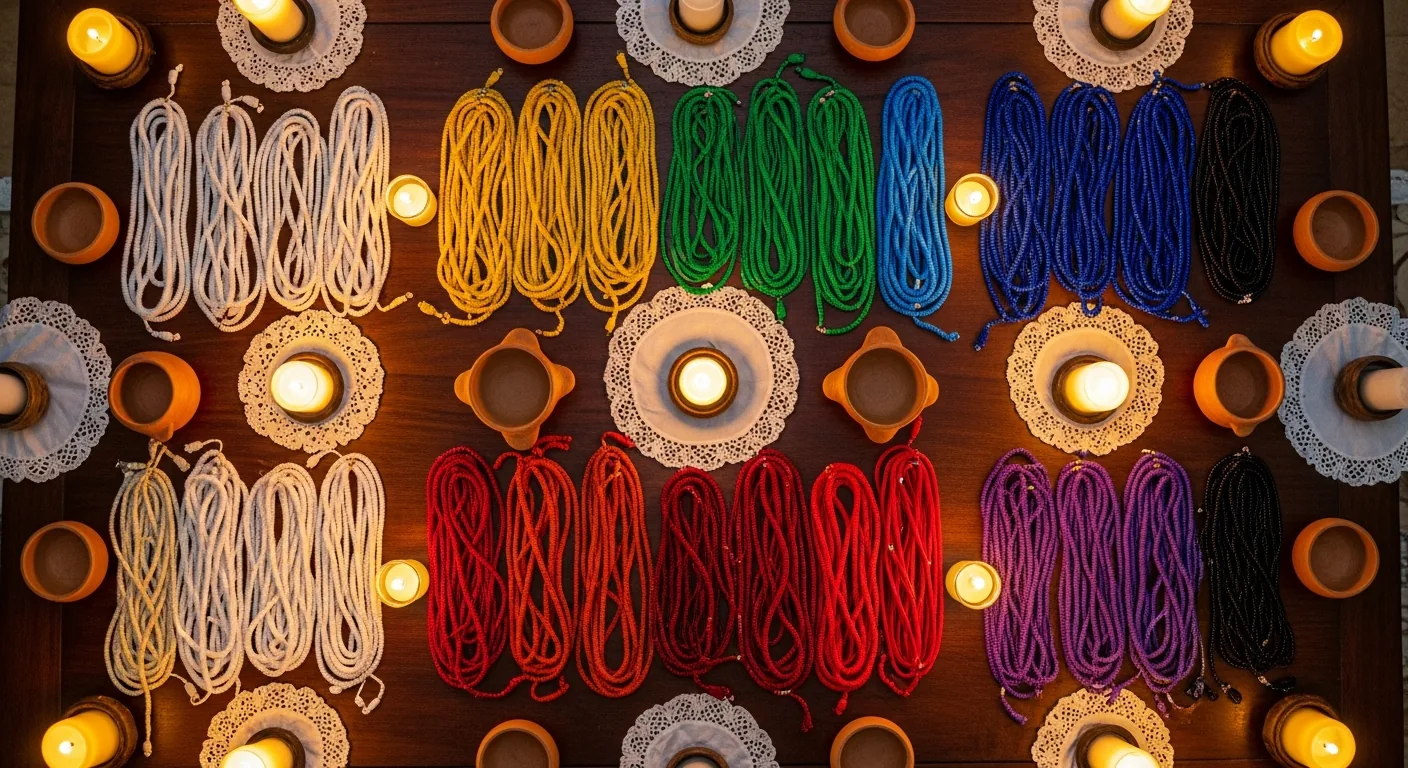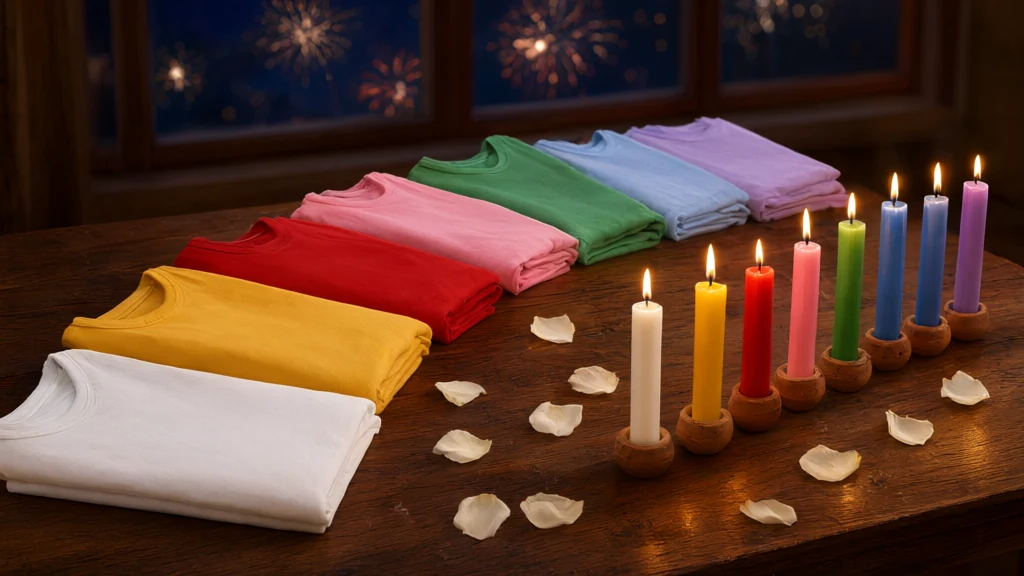
New Year colors are the clothes the Brazilian chooses for the turn of the year according to the prayer request: yellow for money, green for health, red for passion, pink for love, and blue for calm. Almost all of them also wear an orixá in Candomblé ketu and in Umbanda.
Whoever wants to find their own color can take the new year clothing color test.
What each color means in the new year
Each color has two sides: popular custom says what it asks for the year, and the terreiro says which orixá wears it. Both go together in the turn of the year, but they come from different sources.
| Color | What the custom asks | Orixá that wears the color |
|---|---|---|
| White | is the most used | Oxalá (Obatala) |
| Yellow and gold | money and success | Oxum (ketu), Iansã (umbanda) |
| Red | passion and energy | Xangô, Iansã, Exu (ketu), Ogum (umbanda) |
| Pink | love | secondary color of Oxum, Iansã, and Iemanjá |
| Green | health and hope | Oxóssi and Ossaim (Osanyin) |
| Light blue | tranquility | Iemanjá |
| Dark blue | no specific meaning | Ogum (ketu), Oxum (umbanda) |
| Lilac and purple | spirituality | Nanã |
| Orange | creativity | no orixá in the sources |
| Silver | change | Iemanjá and Oxalá |
| Gray | only numerology speaks of it | no orixá in the sources |
| Black | protection or bad luck, depending on who is speaking | Exu and Omolu |
| Brown | recent fashion | Xangô and Iansã |
White
Who wears: the majority | Orixá: Oxalá, in Candomblé ketu and in Umbanda
White continues to be the most chosen color for New Year's Eve, according to the Brazilian Institute of Fashion, and it is the oldest: in the 1950s, devotees went to the beach in white to deliver offerings to Iemanjá. In Candomblé ketu, white is the most important color and "can be used by everyone." In Umbanda, it is the color of Oxalá. The complete history is in why wear white on New Year's.
Yellow and gold
By custom, yellow or gold is the color of money, prosperity, and material success.
In Candomblé ketu, the main color of Oxum is gold-yellow. Researcher Raphael de Jesus, from PUC Minas, shows that in Yoruba the name of yellow has the radical of Oxum's titles: for him, "yellow would literally be the color of Oxum." In Umbanda, gold-yellow is also of Iansã, in the FUCESP record and at Terreiro Pai Maneco, in Curitiba.
Red
Red calls for passion and desire. In Candomblé ketu, red is the first color of Xangô, Iansã, Exu, Obá (Oba), and Ewá (Yewa). In Umbanda, it is of Ogum, both in FUCESP and at Pai Maneco. In Candomblé, the same Ogum wears dark blue.
Pink
Pink calls for romantic love and affection. In terreiros, no orixá has pink as the first color in the Candomblé ketu chart. It appears after the main color in Iansã, Oxum, Iemanjá, and Ewá.
Green
Those who ask for health wear green, the color of hope by custom. In Candomblé ketu, green is the first color of Oxóssi and of Ossaim. There is variation: Oxóssi wears more light blue in the terreiros of Bahia and more green in those of Rio, according to Raulino Lody.
Light blue and dark blue
Custom says only "blue" and asks for tranquility with it. In ketu Candomblé, light blue is the first color of Iemanjá and the second of Oxalá. Dark blue belongs to Ogum in ketu and also appears in Nanã. In the FUCESP Umbanda, dark blue is the color of Oxum.
Lilac and purple
Purple and lilac ask for spirituality. Here the sources agree: purple is the first color of Nanã in ketu and in FUCESP, which asks for lilac candles in the offering.
Orange
Orange asks for creativity and enthusiasm. Neither the chart of 16 orixás from Sacrilegens magazine, made from ten authors, nor Prandi's table give orange to any orixá.
Silver and gray
Silver is linked to innovation and rapid changes. In ketu, it is the second color of Iemanjá and the third of Oxalá. Gray does not appear in the custom lists. Numerology speaks of it, reading it as "wisdom and neutrality." There is no orixá of gray in the sources. The closest is the lead of Oxalufã in a FUCESP card.
Black
In black, the custom is divided. For some, it represents protection and the end of a cycle. For others, dark clothing on New Year's Eve is "strongly associated with bad luck." Itatiaia reminds us that black "is not part of the oldest tradition."
In the terreiro, black has nothing to do with bad luck. It is the color of Exu, with red, and of Omolu, with white. No terreiro source consulted prohibits black on New Year's Eve.
Brown
Brown almost does not appear in the New Year's lists. It entered through fashion when Pantone chose a brown tone, of "coziness, welcoming, and comfort," as the color of 2025. In the terreiros, brown has an owner: it is the color of Xangô in Umbanda, in FUCESP, and in Pai Maneco. In Prandi's table, it is the first color of Iansã.
Where does the tradition of colors on New Year's come from?
It began with the white of the worship of the orixás on the beach. The other colors came later, without a known date or author.
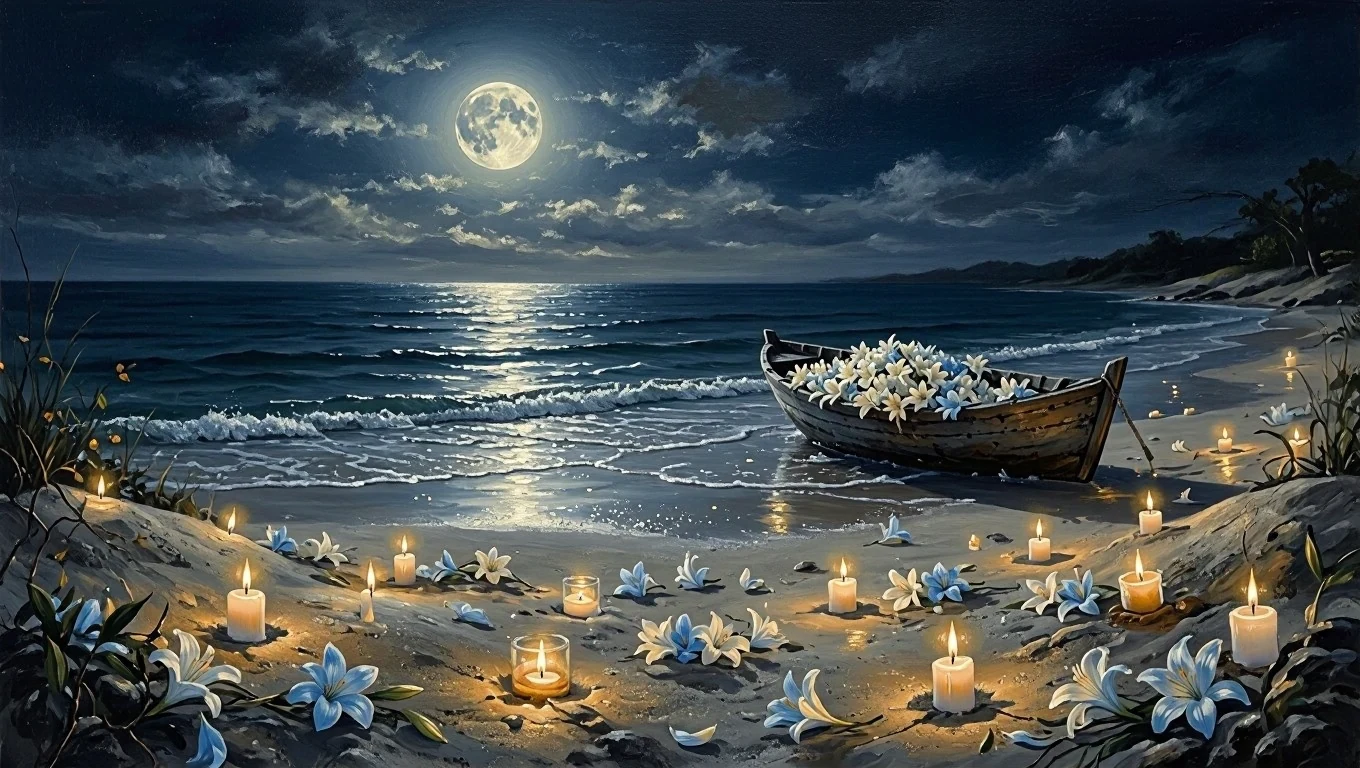
Itaú Cultural, summarizing folklorist Edison Carneiro, states that the trip to the beaches of Rio on the 31st "dates back to the mid-1940s, and is intimately linked to the worship of the orixás." Devotees arrived "uniformed in white clothes and generally barefoot."
No academic source says when yellow, green, or red entered the turn. The press calls the choice of practice "very popular in Brazil," in which the associations "vary according to religious, regional, and family traditions."
The "color of the year," which changes every New Year, comes from numerology and color therapy, which pointed to red for 2026. Researcher Raphael de Jesus recalls that colors are "interpreted in different ways depending on the culture." The yellow of money and the yellow of Oxum are different readings of the same color. The same applies to the New Year's charms, such as the pomegranate and the 12 grapes, which come from popular custom and not from the terreiro.
Is the color of the orixá the same in every terreiro?
No. The color of each orixá changes from nation to nation and from house to house, and none of them are wrong. Raphael de Jesus studied ten authors of Candomblé Ketu and concluded:
"We know that there is no right or wrong use of colors in the tradition. There are only different uses." (Jesus, Sacrilegens, 2024)
For him, "each priest has the autonomy to establish their own color palettes and combinations for each Orixá." At FUCESP, Oxum is "dark blue (Umbanda), gold yellow (Candomblé)." Xangô is brown in Umbanda and red and white in Candomblé.
Whoever is a child of a house follows the color it gives to its orixá. The color of each orixá for the entire year, with bead necklace and candle, is in colors of the orixás.
Should I use the color of the ruling orixá of 2027?
For several priests heard by the Correio from Salvador, the ruler of the house does not yet exist on the night of the 31st: he only appears in the morning game of the 1st. Pai Air José, from Terreiro Pilão de Prata, stated "that it is an error to see the regency before the first day of the year".
In the same report, Pai Ducho de Ogum did the opposite: he added the digits of 2017, reached Oxalá and indicated white, light blue, and yellow. The predictions for the next year are in the ruling orixá of 2027.
How to choose the color of your turn
Part of the prayer request, as is customary, or of the orixá of devotion, in the color your house uses. To light a candle of the same color, use the which candle to light; questions about your house color, Joice answers via WhatsApp. What to take to the sea is in Iemanjá in the new year. The leaves of Oxalá, Iemanjá, and Oxum for the turn of the year are in new year ritual bath, and the time and candle for each prayer are in prayer for the new year.
Frequently asked questions
What is the color of the new year of 2027?
There is no official color. The "color of the year" for December comes from numerology and color therapy, which change the tone every New Year's Eve.
Can you wear black on New Year's?
You can. The belief that dark clothes bring bad luck is a popular custom. In the terreiros, black is the color of Exu and Omolu, with no connection to bad luck.
Which color to use on New Year's to have health?
Custom indicates green, which in the terreiros is the color of Oxóssi and Ossaim. No color guarantees health: it is a prayer request.
References
- Itaú Cultural: Copacabana New Year's Eve: the ritualization of the passage of time
- Agência Brasil: New Year's Eve in Rio started with Umbanda, today distanced from the party
- Correio Braziliense: What each color means for New Year's Eve and how to choose your outfit for the turn of the year
- Rádio Itatiaia: Red, yellow, or white? Public colors Praça da Liberdade with New Year's tradition
- Rádio Itatiaia: Which colors to wear on the turn of the new year
- Correio da Manhã: Specialist gives tips for the New Year's outfit
- Raphael de Jesus, Sacrilegens (UFJF, 2024): The chromatics of the Orixás
- Reginaldo Prandi, Horizontes Antropológicos (1995): African gods in contemporary Brazil
- FUCESP: Oxum, Oxalá, Iemanjá, Iansã, Ogum, Xangô, Nanã, Exu, Obaluaê
- Terreiro de Umbanda Pai Maneco: Iansã, Xangô, Ogum, Oxóssi
- Correio (Salvador): Find out what the energy of the ruling orixá of the new year will be
- Correio (Salvador): Oxum, Nanã and Iemanjá: orixás that will rule 2022