The prayer for the new year begins by thanking the year that is ending and only then asks for the year that arrives. In Umbanda, a simple sequence prays to Ogum for the paths, to Iemanjá for the family, and to Oxalá for peace. Then come the Guardian Angel and the ori. Below are the texts and the time to pray.
Which prayer to say at the turn of the year?
At the turn of the year, say a short sequence: first the gratitude, then a prayer request to each orixá and, finally, personal protection. The six prayers fit into ten minutes. They can be said at home or by the seaside.
| Order | To whom | What is requested | Greeting |
|---|---|---|---|
| 1 | To the sacred, for the year that passed | gratitude | Amen |
| 2 | Ogum | open paths and courage | Ogunhê! |
| 3 | Iemanjá | protection of the family and the home | Odoyá! |
| 4 | Oxalá | peace, faith and blessing for the family | Epa Babá! |
| 5 | Guardian Angel | guard and light in the new year | Amen |
| 6 | Ori, your head | firmeza and good paths | Amen |
The three orixás have a reason. In a gira from Goiânia described in a UFG study, the opening is a sung prayer that asks permission from Oxalá, Iemanjá and Ogum. The greetings are in Reginaldo Prandi's table about candomblé queto. TUCTVC, an umbanda house, uses the same ones.
Oxalá closes the orixás as in candomblé queto, where he is the last to be praised in the ceremonies.
How to give thanks for the year that is ending?
To give thanks for the year that is ending, pray before any prayer request, still on the 31st. Remember what worked out and who helped. Also remember what the error taught you. Only then ask.
The order has an old record. The Catholic Church prays the Te Deum on the last day of the year, to give thanks for the entire year. On the first day, it prays the Veni Creator, to ask for help for the new year. The texts are in Te Deum and Veni Creator.
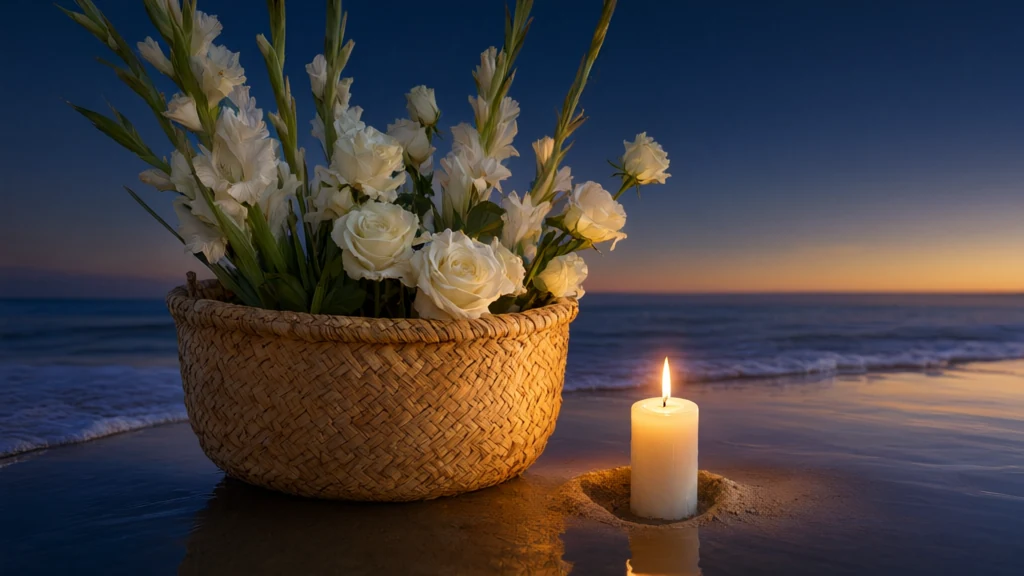
On the beach, each wave jumped carries a prayer request or a thank you, according to Alma Preta.
Gratitude prayer suggestion from Joia Mística:
Thank you for the year that is ending. Thank you for the health I had, for the bread that did not run out and for the people who stayed by my side. Thank you also for what hurt, because it taught me. I surrender what passed and do not carry resentment into the year that arrives. Amen.
Prayers to the orixás for the new year
The three prayers below are suggestions written by Joia Mística. The prayer requests follow what TUCTVC, an umbanda house in São José dos Campos, teaches to ask each orixá. The house publishes its own prayers on the pages of Oxalá, Iemanjá and Ogum.
Prayer to Ogum to open the paths
From Ogum, one asks for opening of professional and personal paths, protection, and courage. The house warns that opening a path is not removing all difficulty, but rather creating conditions to move forward. Pray on New Year's Eve or on the 1st, before leaving. Another prayer to Ogum, and one to Exu (Eshu), are in the prayer to open paths. A prayer of gratitude and protection to Exu, greeted before the other orixás in Candomblé, is in the prayer for Exu.
Ogum, lord of the paths, I ask for permission to start the year. Open the doors of work and give me courage to pass through them. May I do my part and may nothing stop me in the middle of the road. Ogunhê!
More about the orixá and his chants in Ogum sung chant (ponto cantado).
Prayer to Iemanjá for the family
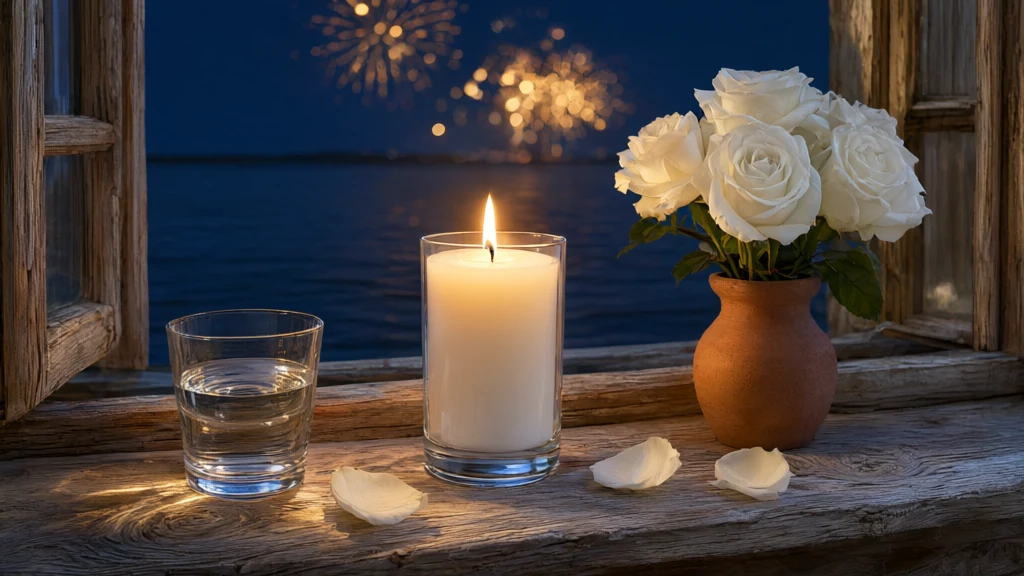
To Iemanjá, one asks for protection of the family and the home and emotional balance. It is the prayer by the seashore. The New Year's Eve in Copacabana was encouraged by Tata Tancredo Silva in the early 1950s, with offerings to Iemanjá and requests for prosperity. Far from the sea, pray before a glass of water.
Mother Iemanjá, queen of the sea, I thank for the year that passed and I ask for my home. Guard my family, calm our fights, and take to the bottom of the sea what was heavy. Odoyá!
What to take to the sea is in Iemanjá in the new year.
Prayer to Oxalá for peace
To Oxalá, one asks for faith, peace, and blessing for families and paths. In doubt about whom to turn to, TUCTVC advises asking Oxalá. The white of New Year's Eve is also his: those who wear white seek the energy of Oxalá for a peaceful cycle. FUCESP translates the greeting Êpa Êpa Babá as "Long live the Father".
Father Oxalá, I arrive in white at the end of this year. Thank you for everything I lived. Give peace to my home, firmeza to my head, and calm to my heart in the year that begins. Epa Babá!
Who is the orixá, the color, and the day are in who is Oxalá.
Guardian Angel prayer and to the ori
The Guardian Angel prayer is traditional in the Catholic Church. It comes from the Latin Angele Dei, and in Brazil it is prayed like this:
Holy Angel of the Lord, my zealous guardian, if to you divine mercy has entrusted me, always guide, guard, govern, and illuminate me. Amen.
The Portuguese version, in the Compêndio do Catecismo, says "since to you I have entrusted." See the Guardian Angel prayer.
The ori is the sacred head, the carrier of each person's destiny. Researcher João Ferreira Dias shows that the Nigerian theologian Idowu calls the ori the "guardian angel" of the individual. Therefore, the two prayers go together. House suggestion, to pray with your hand on your head:
My ori, my head, I thank you for bringing me this far. May I think calmly in the new year, choose with firmness, and walk the path that is mine. Amen.
The prayer at home does not take the place of the care done in the terreiro. The offering to the head is the bori, and the house performs it.
What time to pray and which candle to light?
Pray the thanksgiving on the 31st, before midnight, and the requests on the turn or on the morning of the 1st. There is no set time. What exists is the Catholic pair: thank on the last day and ask on the first.
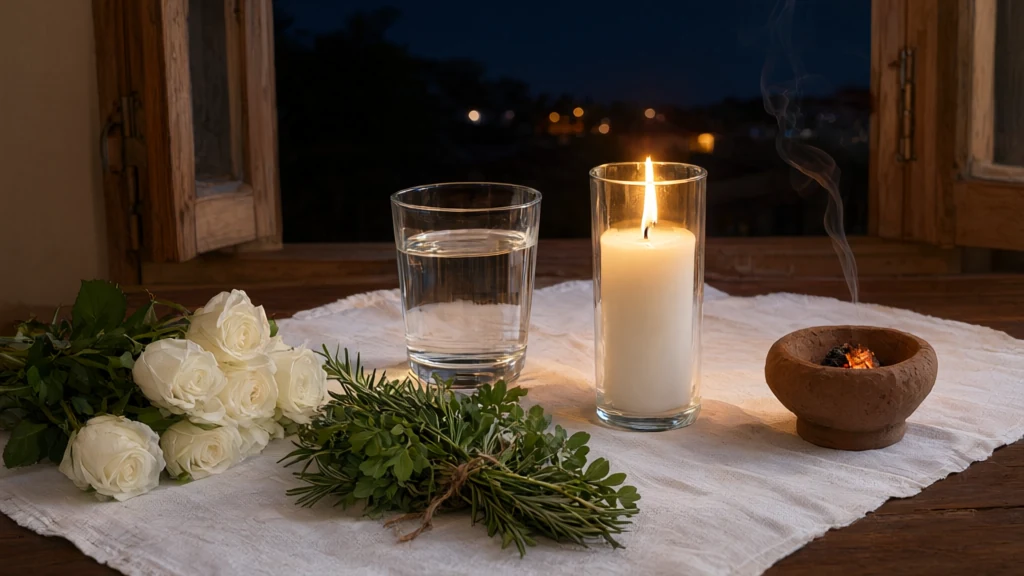
The candle that serves for the entire sequence is the white candle. In research about candles in Belém, white is considered neutral in the terreiro and serves any spirit. FUCESP lists white candles and white flowers among the offerings to Oxalá.
For the Guardian Angel, the Diário de Umbanda website suggests white or 7-day candles at least once a week. The 7-day candle lit on the turn stays lit during the first week of the year. See how to light the 7-day candle.
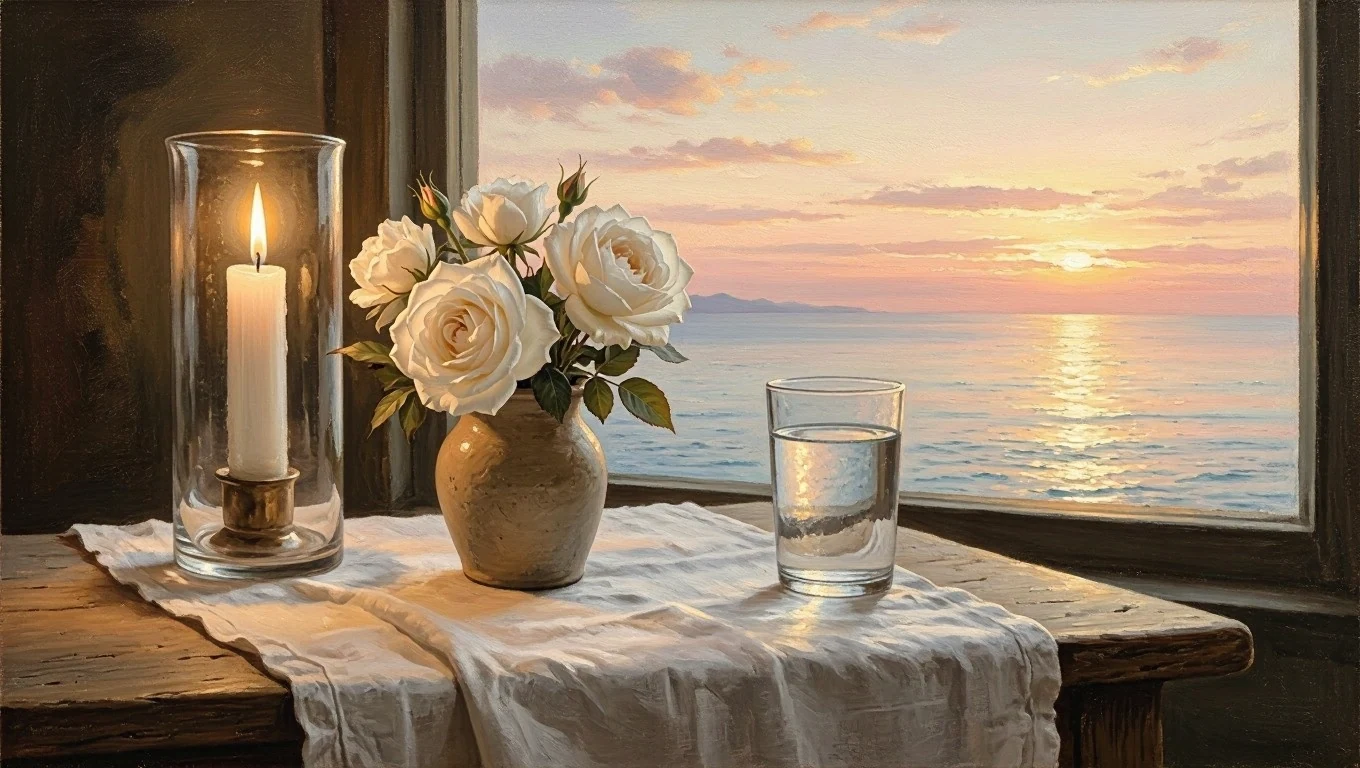
If your house requested a candle of another color for the turn, Joia Mística helps you check via WhatsApp.
Is the New Year prayer the same thing as a sung chant (ponto cantado)?
No. The prayer is spoken by anyone, at home or at the sea. The sung chant (ponto cantado) is from the gira: in the Goiânia house described by UFG, the pai de santo begins the points and the opening prayer is sung. Each point has lyrics and a house of origin. Therefore, there are no invented points here. An example with a source is in Ogum point.
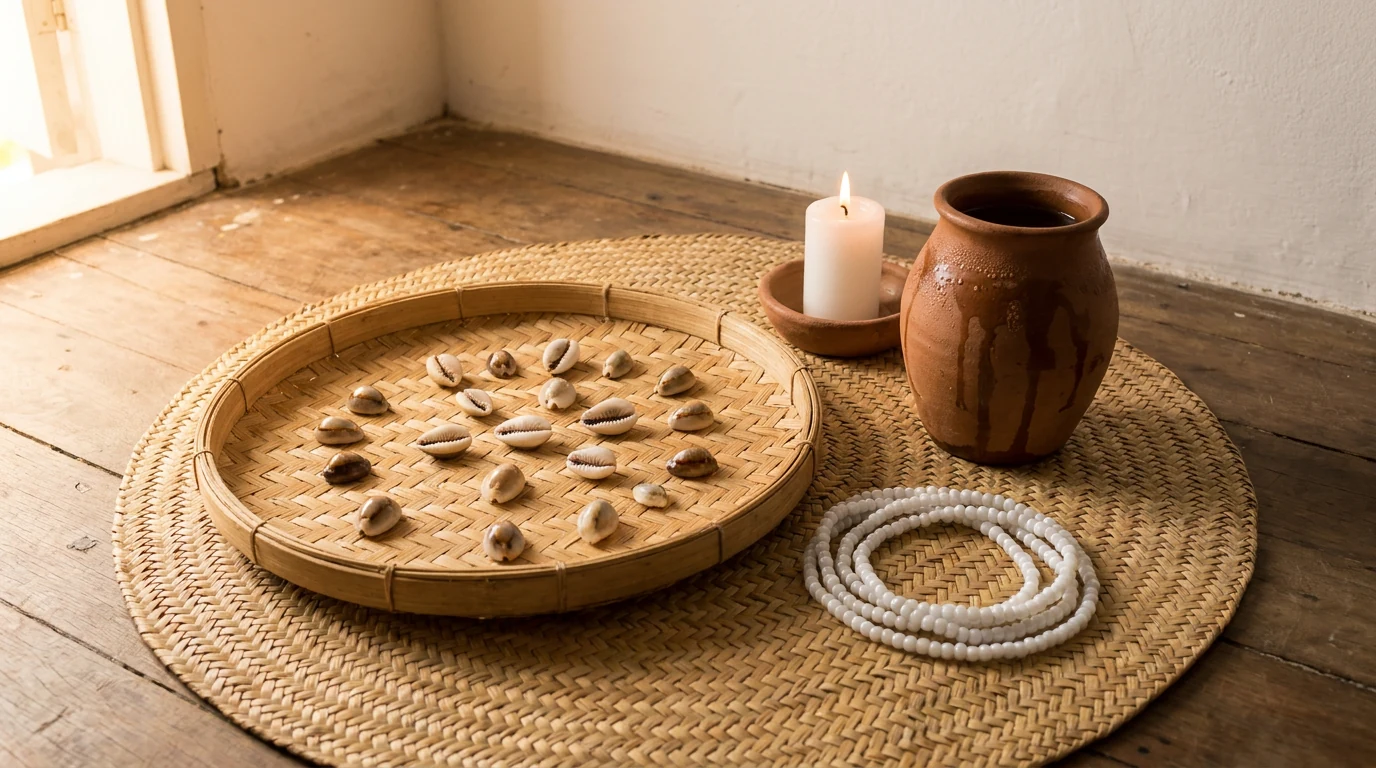
In Candomblé, the turn of the year is a renewal of life and cycles in the various nations. It is when orixás, inquices, and voduns speak about the new year and guide the community. This comes from the jogo de búzios and the obligations of each house, and the prayer at home does not replace it. The ruling orixá also leaves the house: see ruling orixá of 2027. The turn in the terreiro is in New Year ritual, and the ritual bath, in New Year ritual bath.
Frequently asked questions
Is there a New Year prayer for Umbanda?
There is no single New Year text for all of Umbanda. Each house has its own prayers and its own points. There are gestures with records: in a Goiânia gira, the opening asks permission from Oxalá, Iemanjá, and Ogum; on the beach, each wave carries a request or a thank you. The prayers here are suggestions.
What is the greeting for Ogum, Iemanjá, and Oxalá?
Ogunhê for Ogum, Odoyá for Iemanjá, and Epa Babá for Oxalá. All three are in Prandi's table about Ketu Candomblé and on the TUCTVC pages, an Umbanda house. FUCESP writes "Êpa Êpa Babá" and translates it as "Long live the Father". Say the greeting at the end of the prayer.
Do you need a candle to pray on New Year?
No. The prayer is valid without a candle. Whoever wants to light one uses the white candle, which in the terreiro is considered neutral and serves for any spirit. A 7-day candle lit on the turn accompanies the first week of the year. Keep the flame away from curtains and children.
References
- Prandi (1995): African gods in contemporary Brazil
- Carrer Nogueira, UFG (2009): Umbanda in Goiânia
- Dias, Afro-Ásia (2014): I carry identity on my head
- Sena, Revista do IHGP (2020): The flame and the sacred forms
- Holy See: Enchiridion Indulgentiarum
- Holy See: Compendium of the Catechism
- Padre Paulo Ricardo: Holy Angel of the Lord
- FUCESP: Oxalá
- Diário de Umbanda: Candles
- Agência Brasil (2023): New Year's Eve in Rio started with Umbanda
- Alma Preta (2024): The end of the year for Candomblé and Umbanda
- Alma Preta (2025): New Year traditions of Afro-Brazilian origin