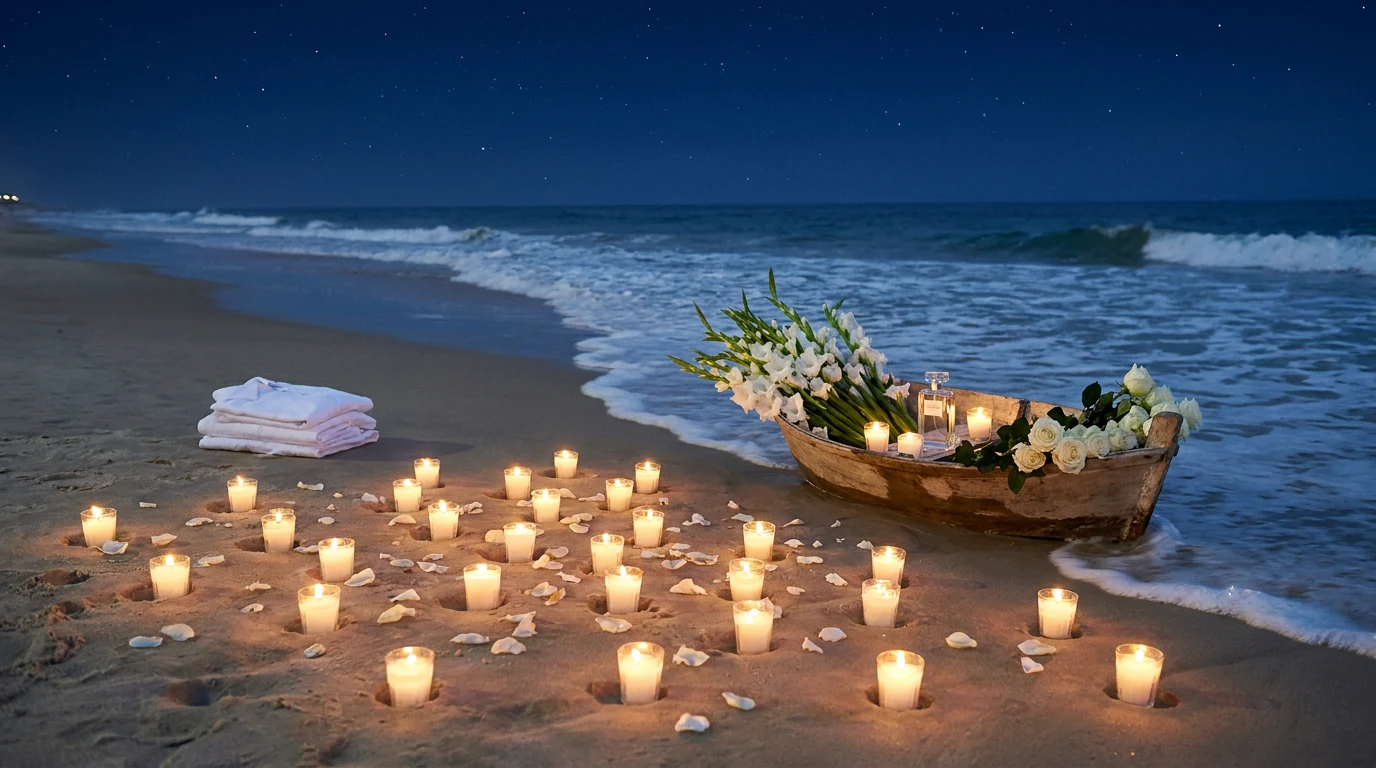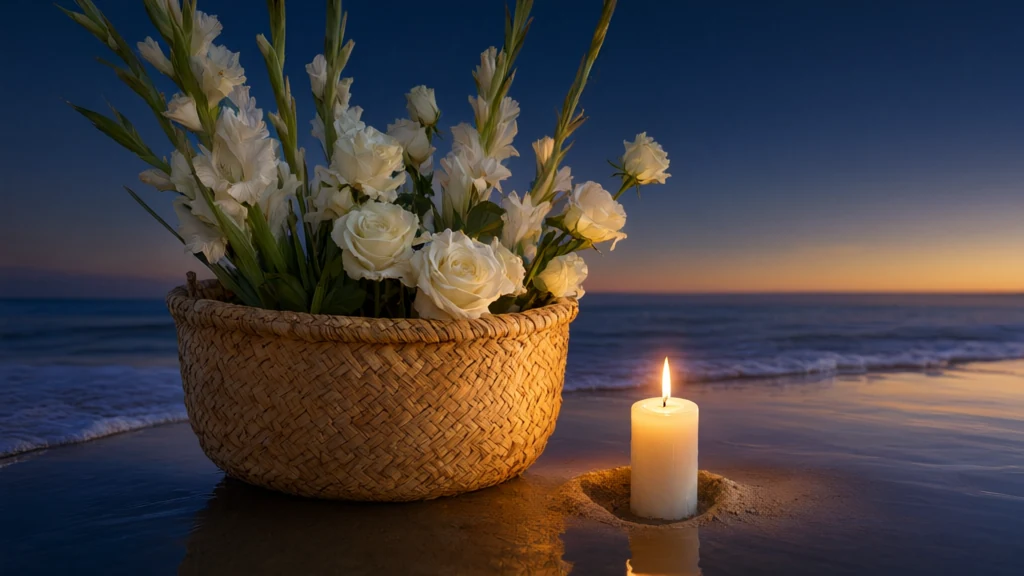
Iemanjá on New Year's Eve receives flowers, candles, and gifts by the seashore on the night of December 31, a Carioca custom dating back to the end of the 19th century. Umbandas organized the beach worship starting in the 1950s, and today many people who are not from a terreiro also bring gifts.
In 2026, the turn of the year falls from Thursday to Friday.
Why Iemanjá receives offerings on New Year's Eve
Because the devotion to the sea on New Year's Eve is old and was not born from a single group. In the magazine Religare, Joana Bahia and Farlen Nogueira, from UERJ, find flowers for Iemanjá on the beaches of Santa Luzia and Russel, in Rio. For them, it is not possible to "credit a single group for its origin."
The press noted the custom in the 1940s. Umbandas began organizing it in the 1950s. Labanca, cited in the dissertation by Cristiane Barros (UFJF), dates the public worship to "around 1952" and explains how the date became fixed:
"Without anyone arranging it, the last day of the year and the first hours of the new year became the date chosen by the people." (Labanca, cited by Barros, 2006)
Historian Luiz Antonio Simas points to Tata Tancredo as the great stimulator of the beach occupation on the 31st. His story is in why wear white on New Year's Eve. For clothing, there is the test New Year's clothing color.
The turn of the year also did not stay only in Rio. Pierre Verger wrote that in Rio, Santos, and Porto Alegre, the worship of Iemanjá "is very intense during the last night of the year." It was there that he saw the white Iemanjá of the umbandistas, the subject of Iemanjá statue. Anthropologist Ordep Serra, from UFBA, calls the Carioca night "the most gigantic rite of offerings performed in Brazil." The profile of the orixá (orisha) is in who is Iemanjá.
What to bring to Iemanjá on New Year's Eve
When: night of December 31 | Where: seaside | Most cited: flowers, candles, perfume, champagne, manjar, and melon
Flowers, candles, and perfume are the gifts that appear most. Itaú Cultural, which summarizes a text by folklorist Edison Carneiro from 1968, lists flowers, perfume, rice, lamb meat, and costume jewelry. In 2023, the Agência Brasil counted flowers, candles, champagne, manjar, and melon.
Regarding flowers, Radioagência Nacional speaks "mainly" of palms. FUCESP lists white roses and cologne perfume. Cici de Oxalá (Obatala), heard by Mongabay, warns not to perfume the roses with lavender, "otherwise it kills the roses."
The candle varies from house to house. Terreiro Pai Maneco, in Curitiba, prepares the amalá of Iemanjá with 7 white candles and 7 blue ones. It is a rule of this house.
Want to check the material your house requested, such as white or light blue candles, roses, and perfume? Joice clears up doubts via WhatsApp. The step by step of the offering on any date is in offering for Iemanjá, and the tool which offering to make is part of the request to reach the orixá.
What not to throw into the sea on New Year's Eve
Plastic, styrofoam, glass, and coated objects stay out of the water. The Prefeitura de Salvador and Limpurb request 100% natural flowers, vegetable wax candles, and wooden combs. They also advise avoiding souvenirs, "plastic materials and coated or paper objects."
In the Z1 Fishing Colony, in Salvador, plastic baskets are refused. The president of the colony believes that 30% of the gifts are not biodegradable. In Rio, the Superintendency of Environmental Education distributed the Decalogue of Offerings in 2011. The text was written by religious leaders because of the risk of candles, glass bottles, and clay pots.
Research finds the same in the sand. In Sepetiba, Rio, Rodrigo Rosa (UERJ) saw offerings of "materials of difficult degradation." In Tramandaí (RS), Aniceto and Scoz found "a gap between theory and practice."
A caveat about the numbers. At the turn of 2021 to 2022, Comlurb collected 167 tons of waste in Copacabana alone, according to a study by UFRJ. It is the waste from the entire party. No source separates how much of it was offering.
Iemanjá's boat
We found no rule for biodegradable boats. The general rule applies: plastic and styrofoam are excluded. In Rio, the Madureira procession pushes small boats with offerings toward the sea.
A terreiro in Canoas (RS) makes blue cardboard boats, about 40 centimeters long. Limpurb, however, includes objects "made of paper" in what should be avoided. The material stays with the house.
Jumping seven waves: where it comes from and which religion it belongs to
The origin has no record. The oldest reference we found is from the 1950s: according to Agência Brasil, citing Simas, at that time those who went to Copacabana in white began to "jump seven little waves and make their requests for prosperity."
Three explanations circulate, and none have a primary source:
- The seven lines of Umbanda: on BBC News Brasil, each jump would be "the request to a different orixá."
- The seven senses: Alma Preta speaks of the "seven senses of life."
- An African heritage: Radioagência Nacional says the gesture "reminds of traditions brought by enslaved Africans," without saying which.
The seven weighs in Umbanda. The number of lines is "probably due to its cabalistic value," writes Vagner Gonçalves da Silva, cited by Barros. A collection from Duke University gives 7 as the sacred number of Iemanjá. None of this shows where the waves come from.
And what religion is it from? The first record is from the Umbanda turn of the year in Copacabana. Later, it became a custom for those who spend the year at the beach, whether in a terreiro or not. Jumping is a gesture of faith, without a set number of requests and without a promise of results.
The turn outside of Copacabana
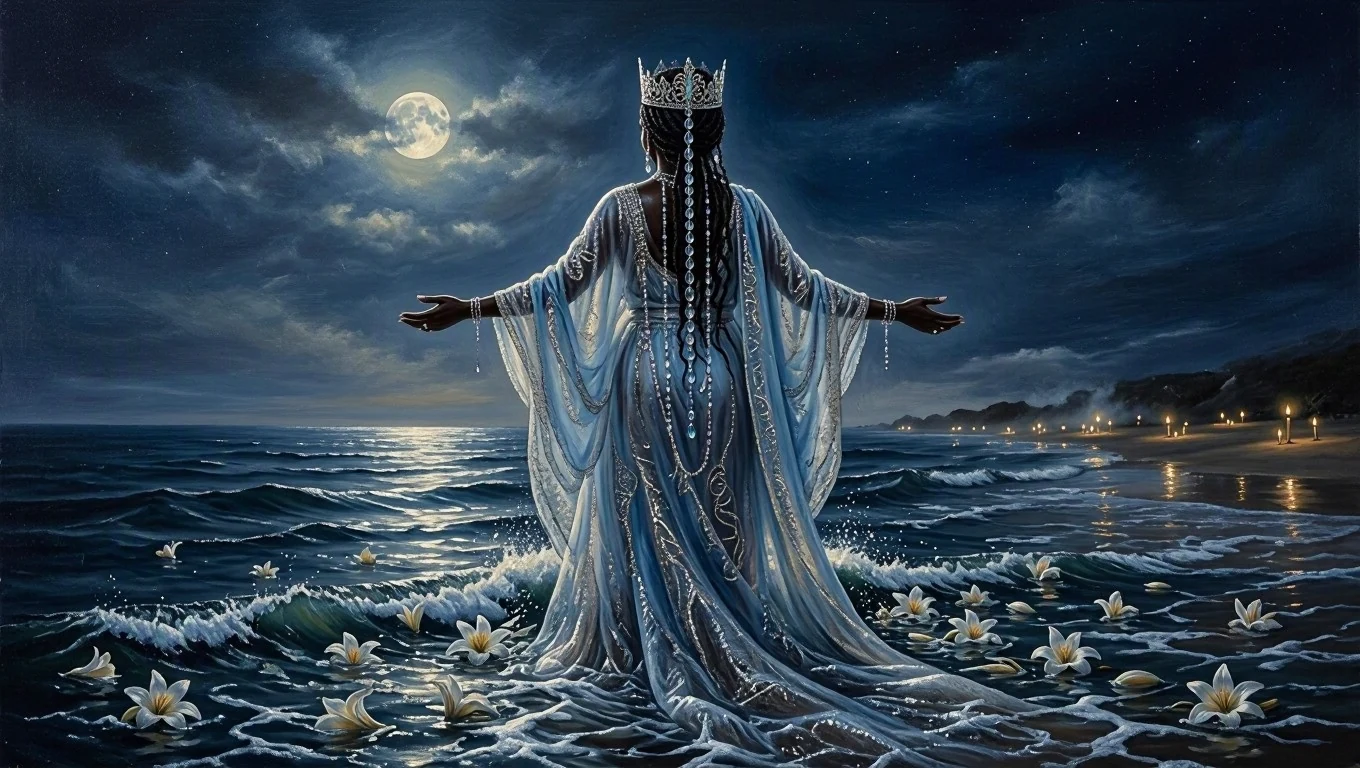
Madureira, day 29. Since 2002, the Festa de Iemanjá of Mercadão de Madureira takes place on December 29th for Copacabana. It has been Carioca Cultural Heritage since 2011. In 2026, the 29th falls on a Tuesday.
Salvador. Serra records small gifts on the shoreline on the 31st. Formerly, some terreiros in the city made their main offerings to Iemanjá on this date.
Santos and Porto Alegre. Verger places the two cities next to Rio on the last night of the year. In São Paulo, the festival falls on the 31st in Santos and on December 8th in Praia Grande, according to the work of UFRJ. December 8th is the festival of the terreiros de umbanda, the subject of Iemanjá in Umbanda.
Away from the sea. Vallado recalls the festival at Lake Paranoá, in Brasília. Every 31st, he writes, "thousands of people" go to the beaches along the entire coast.
If the sea returns the offering
Collect what returned to the sand. Verger recorded that, "according to tradition," the accepted offering must dive to the bottom. In Colônia Z1, when the baskets sink, "it is a positive sign."
Mãe Ângela, iyalorixá from Canoas, says that Iemanjá, from the calm to the surf, "takes and carries away whatever she wants, including your gifts."
Many people enter the sea. For the filhos de santo, Barros writes, the waters purify, and in the ritual bath they ask Iemanjá for abundance, health, and courage. The ruling orixá of the year, the subject of every house on the turn, is in ruling orixá of 2027.
Frequently asked questions
Jumping 7 waves is from which religion?
The first record is from the turn of the year by the umbandistas of Copacabana in the 1950s, according to Agência Brasil. Today it is a custom for those who spend the year at the beach, whether at a terreiro or not. The origin has no record, and the explanations circulate without a primary source.
What flowers to give to Iemanjá on New Year's?
Natural flowers, without plastic wrapping. Radioagência Nacional mainly cites palms, and FUCESP lists white roses. Cici de Oxalá warns not to perfume the roses with lavender (alfazema). The color and quantity follow the rule of your house.
Can you throw an offering into the sea?
You can, with material that dissolves. The City Hall of Salvador requests natural flowers, vegetable wax candles, and wooden combs, and advises avoiding plastic and objects coated or made of paper. Glass and styrofoam are excluded, and what returns to the sand is collected.
Why is the Madureira festival on the 29th?
Some say the date avoids the crowd of Copacabana on the 31st. For Simas and Ivanir dos Santos, heard by Agência Brasil, it was not a mere choice: the terreiros were moving away from the 31st when the festival turned into a fireworks show.
References
- Bahia and Nogueira, Religare, 2021: The popularity of flowers to Iemanjá
- Barros, UFJF, 2006: Iemanjá and Pombagira
- Verger: Orixás
- Serra, EDUFBA, 2009: Rumors of the party
- Vallado, 2010: Iemanjá, the powerful mother
- Agência Brasil, 2023: New Year's Eve in Rio began with Umbanda
- Radioagência Nacional, 2023: New Year traditions
- Prefeitura de Salvador, 2024: biodegradable gifts
- Mongabay Brasil, 2025: Sustainable Iemanjá Festival
- Aniceto e Scoz, RevBEA, 2022: offerings in Tramandaí
- Rosa, ANPEd, 2019: Gift of Yemoja
- Novellino, UFRJ, 2023: A gift for Her
- Dorneles, NER Debates, 2020: The little boats of Iemanjá