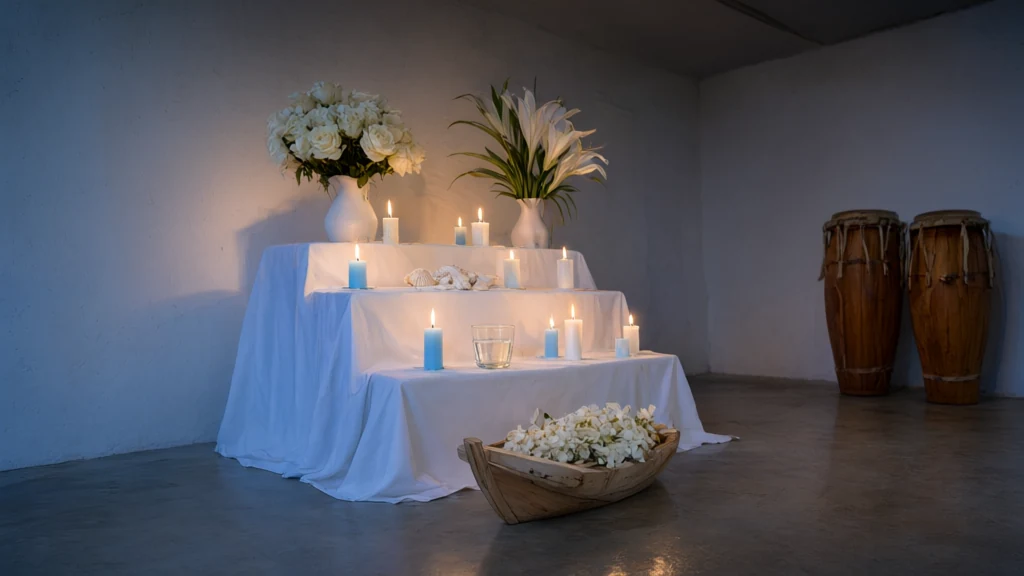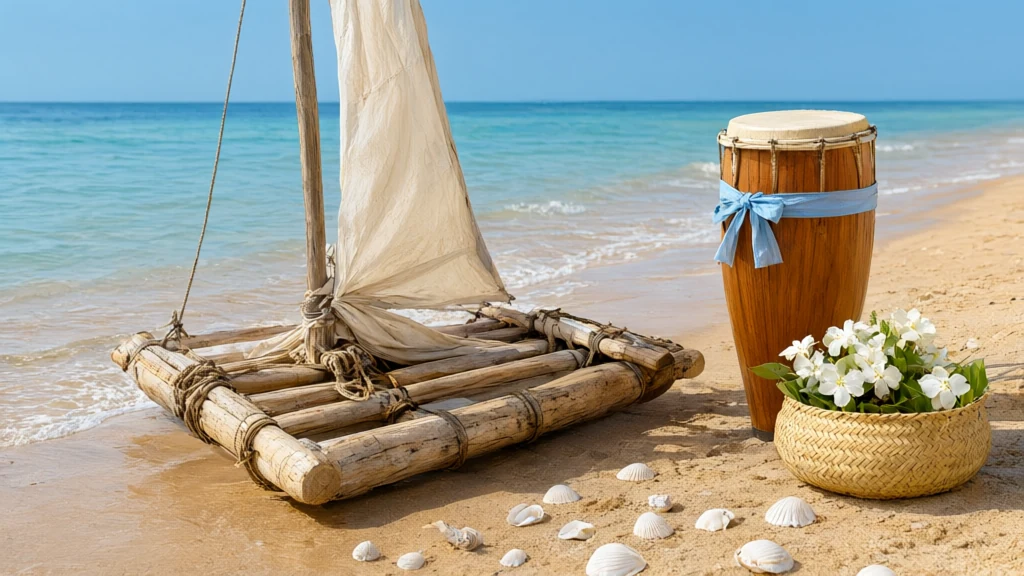
The ponto de Iemanjá is the Umbanda chant that calls, accompanies, and bids farewell to the line of Iemanjá in the gira. The verses most repeated in open sources call her mother of the water, queen of the waves, and mermaid of the sea. The lyrics change from house to house, and part of what circulates has a composer.
What is the ponto de Iemanjá and when is it sung?
The ponto de Iemanjá is the ponto (sacred song) of the orixá (orisha) and the people of the waters in Umbanda. It enters when the house calls her line and returns at the farewell, with the ponto de subida. Each house has its own repertoire and decides the moment to sing. Who is the orixá behind the chant is in who is Iemanjá.
The house founded by Zélio de Moraes is the Tenda Espírita Nossa Senhora da Piedade (TENSP). In its Book of Pontos Cantados, the Iemanjá section has 11 pontos. The Terreiro de Umbanda Pai Maneco, from Curitiba, publishes 13 line pontos and 1 of subida. The types of ponto are in pontos cantados na umbanda.
The chant calls the line, but Iemanjá herself does not always descend. Armando Vallado writes that her daily role in Umbanda "is quite reduced." In a terreiro in Passo Fundo (RS), however, she incorporates and crosses her hands over her chest. What changes between houses is in Iemanjá na umbanda.
Where it is sung: line and subida | Zélio's House: 11 pontos | Pai Maneco: 13 of line and 1 of subida | Greeting in Candomblé: Odoyá
What are the pontos de Iemanjá with source records?
Four pontos de Iemanjá have records in house books or research, without a marked composer: "Mãe d’água", "Hoje é dia de Nossa Senhora", "Retira a jangada do mar" and "Pus-me a escrever na areia". Here are only short excerpts.
Mãe d’água, rainha das ondas
It is in Pai Maneco's booklet, in a terreiro in Passo Fundo, and in a study by USP researchers.
“Mãe d’água, queen of the waves / Mermaid of the sea”
Further on, a verse changes: Pai Maneco sings “É bonito o canto de Iemanjá”, and both researches record “Como é lindo o canto de Iemanjá”. Later, this chant makes the fisherman cry and takes whoever listens to the bottom of the sea. The Passo Fundo record notes “(Unknown author)”.
”Today is Our Lady's day”
This sung chant is in both houses, and in Pai Maneco it is also the one of Iemanjá in the vibration of the seven lines.
“Today is Our Lady's day / Of our Mother Iemanjá”
The refrain is “Olundaê” in TENSP and “Calunga” in Pai Maneco. The little fish shine in one house and play in the other. The verse joins two devotions: in São Paulo and in Recife, the Iemanjá festival falls on the day of Conceição. Syncretism does not make them the same figure.
”Take the raft out of the sea”
It is in Pai Maneco, without a marked composer.
“Take the raft out of the sea / Mãe d’água sent the warning”
The message is that today no fishing is done, because there is a festival in the sea. Further on, the sung chant asks for “Bring a comb bring a mirror”, in addition to flowers and perfume. In Salvador, a member of the festival commission listed perfumes, soaps, and combs among the offerings. In Fortaleza, the 2023 report saw religious people avoiding plastic and bringing white flowers and fruits. The care with the present is in offering for Iemanjá.
”I set myself to write in the sand”
It is in the TENSP, without a composer.
“I put myself to write in the sand / With shells of Iemanjá / I made a ponto of Mãe Sereia”
Then the wave comes and undoes what was written, and the ponto asks the king of the waters to firm it.

What do the verses of the ponto say about Iemanjá?
The verses of the ponto of Iemanjá speak of mother, sea, mermaid, crying, and cleansing. Graminha and Bairrão, from USP, gathered about 1,200 pontos used in terreiros and read 155 that speak of water. Motherhood and cleansing are among the meanings found.
- The crying. In this study, the crying always appears linked to salt water, that is, to Iemanjá.
- The mermaid. Bertocho notes that Iemanjá “in her pontos can also be seen as a mermaid”. In Pai Maneco, she is under the stone, the sand, and the shell.
- The cleansing. A discharge ponto from the TENSP asks the Mermaid to take the evil to the bottom of the sea.
To know if Iemanjá rules your head, the discover your orixá test gives a first guess, and the house confirms it.
Who does the ponto of Iemanjá belong to?
The ponto of Iemanjá has no single owner: some come from oral tradition, without a known author, and others have a named composer. Graminha and Bairrão remind us that many pontos receive influence from popular music, and that those created inside a terreiro make it “impossible to date or determine their authorship”.
Diamantino Trindade, cited by Lourival Andrade Júnior, separates the root pontos, “brought directly by the incorporated spirits”, from the pontos of composers, “very common in curimba festivals”. Pai Maneco writes the name of who composed:
- ponto 11 of the Iemanjá booklet, by Itaércio Rocha;
- "Soberana do Mar", by Adriana Batista;
- "Descarrego das Sete Linhas", which also mentions Iemanjá, by S. Akuan.
Popular music also enters this story. "Canto de Iemanjá" is by Baden Powell and Vinicius de Moraes. With authors on the credits, the lyrics stay out of here. The same care applies to the ponto de Oxum and the ponto de Exu.
Which ponto is sung by the seashore?
By the seashore, each terreiro sings its own repertoire. No open source fixes a ponto of Iemanjá for December 8, the turn of the year, or February 2. The records speak of singing and drums on the sand, without stating which lyrics.
| Date | Where | What the source records |
|---|---|---|
| December 8 | Cidade Ocian (SP), on the first two weekends of the month | terreiros, the majority of Umbanda, go down to greet Iemanjá |
| December 31 | beaches along the entire coast | thousands of people make offerings |
| February 2 | Rio Vermelho, in Salvador | Candomblé under the toque of atabaques, and a boat with atabaques and alabés in the procession |
| August 15 | Fortaleza | circle that sings in the ritual of the gira, and drums all night long |
Whoever goes with the house sings what the house sings. Whoever goes alone can pray: the texts are in prayer for Iemanjá. The turn is in Iemanjá on New Year, and on February 2, in Iemanjá festival in Salvador.
What is the difference between ponto cantado, ponto riscado, and cantiga?
The ponto cantado is voice and drum, the ponto riscado is a drawing, and the cantiga belongs to Candomblé. All three have similar names, but only the first is the chant that the curimba of Umbanda pulls in the gira.
Ponto riscado. Andrade Júnior defines the riscado as a set of symbols that says who the spirit is: "It is as if it were your signature." In the sources cited here, no drawing of the riscado of Iemanjá appears published, and the fundamento is in ponto riscado in Umbanda. Whoever goes to set the ponto and wants to check the pemba or the candle that the house requested can speak with Joia Mística via WhatsApp.
Cantiga of Candomblé. The pontos of the houses cited are sung mostly in Portuguese. Whoever seeks a ponto of Iemanjá in Yoruba is looking for the cantiga of Candomblé ketu. The magazine Reflexão (PUC-Campinas) read these lyrics in the Portuguese version of the book Cantando para os Orixás. Therefore, there is no Yoruba here. A passage asks:
Who is the owner of the rivers? It is Yemanjá to whom we turn
The greeting Odoyá, "Mother of the River," recalls the same water. The game Which orixá is the cantiga from? shows the lyrics without the name and asks for the owner.
Frequently asked questions
What is the most well-known ponto of Iemanjá?
There is no measurement of which is sung the most. In open sources, what is repeated most is "Mãe d’água, rainha das ondas": it is in Pai Maneco, in a terreiro in Passo Fundo and in a USP study.
What is the sung chant (ponto cantado) of subida for Iemanjá?
It depends on the house. Pai Maneco publishes a sung chant (ponto cantado) of subida for Iemanjá, which speaks of the sea wave that rolls and carries her children. The TENSP book does not bring a subida section for her. In doubt, follow what the curimba of your house sings in the farewell.
"Eu escrevi um pedido na areia" is a sung chant (ponto cantado) of Iemanjá?
The verse appears a lot in searches, but we do not find it in house books or in open research, so lyrics and author remain unconfirmed. Pai Maneco has a similar sung chant (ponto cantado), of a prayer request to the mermaid mother on the white sand of the sea.
References
- TENSP: Book of Sung Chants (Pontos Cantados)
- Pai Maneco: sung chants (pontos) of Iemanjá
- Pai Maneco: Vibração das Sete Linhas
- Graminha and Bairrão, Memorandum: Torrentes de sentidos
- Bertocho, UFFS: TCC sobre o Terreiro Ogum Beira Mar
- Andrade Júnior, Mneme: Os caboclos
- Vallado, Le Monde Diplomatique: Iemanjá, a mãe poderosa
- Gomes et al., Reflexão: As representações sociais dos orixás
- Blass, Nures: Dois de fevereiro, Dia de Iemanjá
- Diário do Nordeste: Pra entrar no mar, pedimos licença