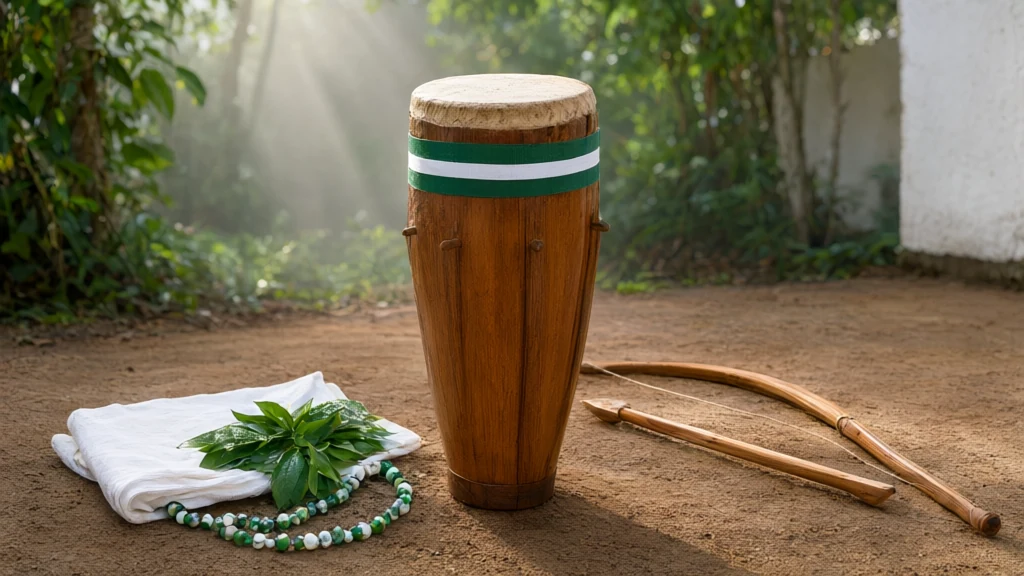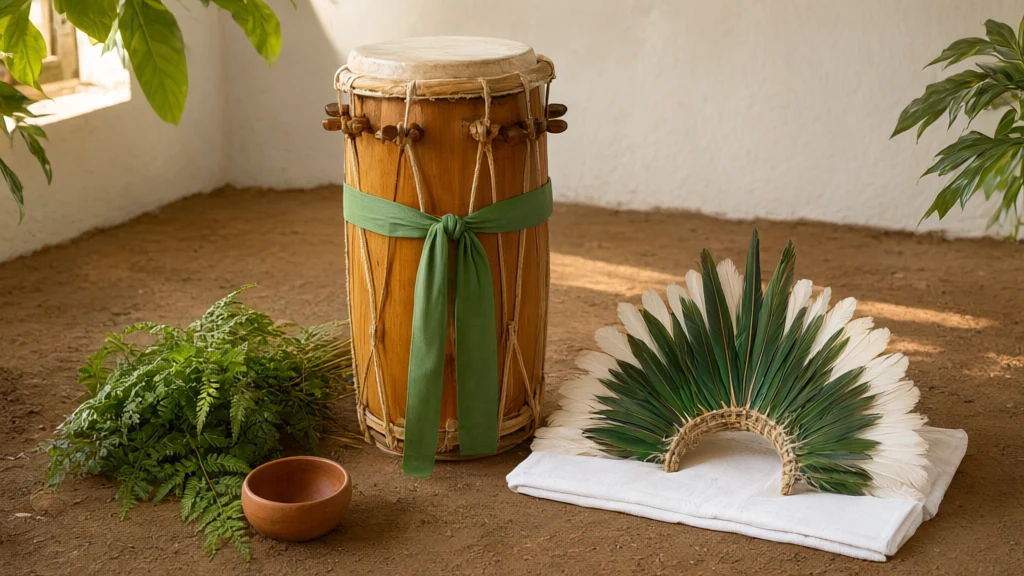
The caboclo ponto is the Umbanda chant that calls the caboclos to the gira, accompanies the consultations, and takes them away at the end. The verses speak of forest, leaf, plume, and Jurema, and the greeting is Okê Caboclo. The lyrics change from house to house.
What is the caboclo ponto and when is it sung?
The caboclo ponto is the ponto cantado of the caboclo line, led by the curimba with atabaque and clapping. Who these guides are is in caboclos in umbanda. In the sources, the ponto appears in three moments of the gira.
- Call: in terreiros in Petrópolis (RJ) studied by Pedro Nogueira, from UFJF, the leader commands the "Pontos Cantados de chamada dos Caboclos." When they incorporate, everyone greets "Okê, Caboclo!"
- During consultations: the pontos become "a kind of soundtrack," and most of the time the ogãs choose what to sing. For Thaís Constantino, from UFMS, the pontos and the drums "sustain the circulating energy" of the gira.
- Departure: at the end, the caboclos say goodbye to the sound of their own pontos.
Nogueira saw that many consultants know the pontos by heart and calls the curimbas "the most intense way of prayer during the rite." The role of those who play is in curimba in umbanda.
Greeting: Okê, Caboclo! | Boiadeiros: Xêtuá | Who chooses the ponto: in general, the ogãs
Which caboclo pontos have source records?
Four caboclo sung chants (ponto cantado) are in a home book or in research, without a marked composer, and three of them are in more than one source. Only short excerpts are provided here, in the order of the gira. The Oxóssi sung chants and the one for Sete Flechas are in ponto de Oxóssi.
“Caboclo's attire is fern”
It is a calling sung chant. Nogueira registered it as the first from Petrópolis.
“Caboclo's attire is fern, it is fern, it is fern! / Look, arria Caboclo comes out of the macaia, comes out from the middle of the fern!”
Lourival Andrade Júnior, from UFRN, transcribes a version as “Calling sung chant for all the pena caboclos”. At the Terreiro de Umbanda Pai Maneco, in Curitiba, it is the first of the line sung chants. The leaf is in samambaia.
“Oh, what plume is that”
It is the sung chant of Caboclo Ubirajara. It is in the Tenda Espírita Nossa Senhora da Piedade (TENSP), the house founded by Zélio de Moraes, as sung chant 12.
“Oh, what plume is that / It is a macaw plume / It is who breaks through the virgin forest”
The last verse says the name: “It is Caboclo Ubirajara”. Pai Maneco sings the same sung chant in his block, and Andrade Júnior transcribes it.
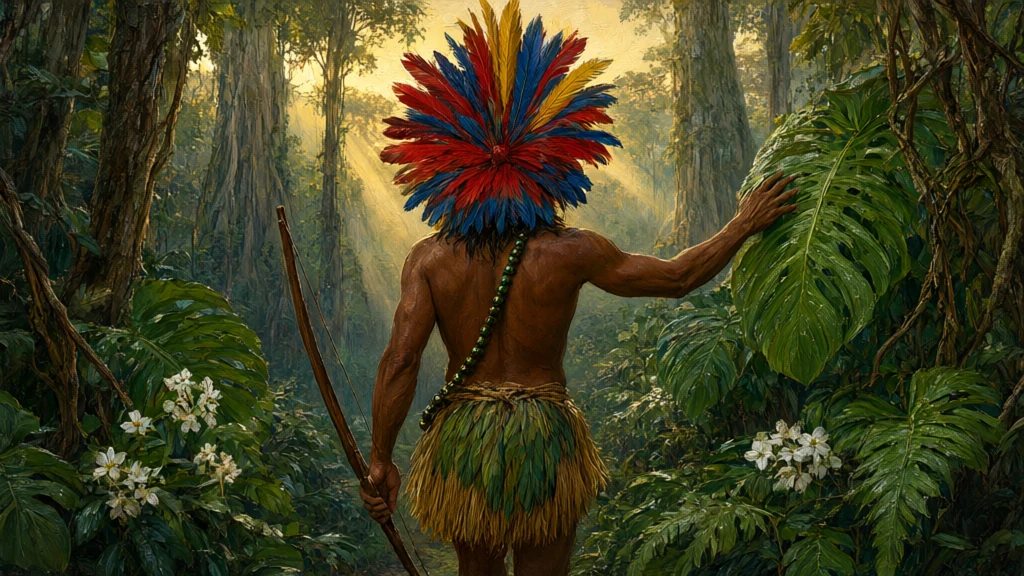
“A leaf fell in Jurema”
It is the sung chant of Cabocla Jurema, the 46th of the Oxóssi section of the TENSP.
“A leaf fell in Jurema / The dew came and wet it / And then the sun came”
The sun dries the leaf and the forest opens in bloom. Andrade Júnior records the same sung chant (ponto cantado) with another closing. Who are the caboclas is in caboclas da umbanda.
”Caboclo goes away to the city of Jurema”
It is a rising sung chant (ponto), the first of the farewell sung chants (pontos) of Petrópolis.
“Caboclo goes away to the city of Jurema! / Ah, good Jesus is calling you in the city of Jurema!”
The next verse says that there he will be crowned. Nogueira reads in these sung chants (pontos) the mixture of Jesus, Oxalá and the city of Jurema. The Jurema of the Northeast is a tradition of its own, told in caboclo da Jurema.
How does the same caboclo sung chant (ponto) change from one house to another?
The caboclo sung chant (ponto) travels from terreiro to terreiro and changes words along the path. The first three sung chants (pontos) appear in more than one source with different verses.
| Ponto (sacred song) | One version | Another version |
|---|---|---|
| Fern | ”sai da macaia” (Petrópolis) | “não me atrapalha” (Pai Maneco) |
| Ubirajara | ”Oh, what plume is that” (TENSP) | “Ai what plume is that” (Pai Maneco) |
| Ubirajara | ”It is who breaks the virgin forest” (TENSP) | “Oh, when it breaks the virgin forest” (Pai Maneco) |
| Jurema | ”And the forests opened” (TENSP) | “And the forest was all in bloom” (Andrade) |
Marina Graminha and José Bairrão, from USP, gathered about 1,200 pontos. The pontos “have no dating, as it is oral tradition,” and many circulate only in one house. The correct version is the one of your house.
What do the verses of the caboclo ponto say?
The verses of the caboclo ponto always return to the forest, to the leaf, to the plume, and to the order from above. For Andrade Júnior, the caboclo is “a character of the forests and nature.”
- The forest and the leaf. The caboclo dresses in fern, the leaf falls in Jurema, and in a line ponto of Pai Maneco he has no path to walk: he walks above and below the leaf.
- The plume and the village. The macaw plume is from Ubirajara. In his village are Rompe Mato and Arranca Toco, and in Jurema nothing is done without supreme order.
- Who orders to call. In a Petrópolis ponto, it is Oxalá who orders to call the caboclos. The pontos of the orixá (orisha) himself are in ponto de Oxalá. In another, the one who sings calls Caboclo Tupinambá by the riverbank.
- The caboclo who lingers. TENSP asks for Seu Pena Branca, who has not yet arrived, and calls the old Tupinambá with the gongo roaring in the woods.
Constantino summarizes: in the pontos “the stories of each entidade are told,” often with the name of the caboclo who descends. The greeting Okê Caboclo came from an adaptation of “Okê Oxóssi,” according to Andrade Júnior.
Is every caboclo from Oxóssi?
No. Most work in the Oxóssi line, but there are caboclos from other orixás. The Núcleo Umbandista São Sebastião (NUSS) says that caboclos, for the most part, work in the vibration of Oxóssi. And it completes: "although this is not a rule, since the Caboclos work in all the lines of Umbanda".
The sung chants show this. In Petrópolis, one sung chant calls the Caboclo Pedra-Preta, "who is a Caboclo of Xangô", and another sings the Cabocla Yuara, who comes on the waves of Iemanjá. The ogãs alternate sung chants of caboclos linked to various orixás. Those of Xangô are in Xangô sung chant.
In Zélio's house, the book of sung chants does not have a specific section for caboclo: the sung chants of Ubirajara, from Jurema, and of Pena Branca are inside the Oxóssi section. The boiadeiros are another line, greeted with Xêtuá, in boiadeiros in Umbanda. To see if your profile matches the caboclo, take the test discover your spirit.
Who owns the caboclo sung chant?
The caboclo sung chant does not have a single owner: some come from oral tradition, others have a composer. Diamantino Trindade, cited by Andrade Júnior, calls the first ones root sung chants, "brought directly by the incorporated spirits". The others are "very common in curimba festivals".
Pai Maneco writes "Composition:" with the author's name in several caboclo sung chants, "Composition: Spirit" in one, and "Adaptation:" in another. The sung chants cited here do not bring credit. The types of sung chants are in sung chants in Umbanda.
Ponto riscado. The sung chant is voice and atabaque; the riscado is a drawing with pemba. For Andrade Júnior, the riscado is "as if it were your signature." In our caboclo traditions, the arrow is "the most perceptible element," alongside the star, sun, moon, waterfall, and leaf. The foundation is in ponto riscado in umbanda. To check the pemba or the green candle that the house requested, speak with Joia Mística via WhatsApp.
Frequently asked questions
What is the most well-known caboclo point?
There is no measurement of which is the most sung. "Vestimenta de caboclo é samambaia" is in Petrópolis, in Pai Maneco, and in a UFRN research. The Ubirajara point, "Oh, que penacho é aquele," is in TENSP, in Pai Maneco, and in the same research.
What does Okê Caboclo mean?
Okê Caboclo is the greeting to the feathered caboclos, said when they incorporate in the gira. According to Andrade Júnior, it came from an adaptation of "Okê Oxóssi." The boiadeiros are greeted with Xêtuá.
Which point is sung for the caboclo to leave?
It is the point of ascent, sung when the caboclos finish attending. In Petrópolis, one of them says that the caboclo leaves for the city of Jurema, where bom Jesus calls him. What to ask in the consultation is in what to ask for the caboclo.
References
- Tenda Espírita Nossa Senhora da Piedade: Book of Chanted Points
- Terreiro de Umbanda Pai Maneco: handout of points of Oxóssi and the caboclos
- Pedro Antonio Pires Nogueira, UFJF: The intra-religious dialogue in Umbanda
- Lourival Andrade Júnior, Mneme (UFRN): The caboclos in Afro-Brazilian religions
- Thaís Monique Batista Constantino, UFMS: Corpo encantado
- Graminha and Bairrão, Memorandum: Torrentes de sentidos
- NUSS: Linha dos Caboclos