The Caboclo Tupinambá is a caboclo de pena of Umbanda, a spiritual chief of terreiros in Mato Grosso do Sul and in São Paulo. Three houses place him in the line of Oxóssi, and the Candomblé of caboclo paulista lists him in Omolu. In the gira, he receives those who arrive, screens the requests, and gives a spiritual pass. He is greeted with Okê Caboclo.
Who is Caboclo Tupinambá in Umbanda?
Caboclo Tupinambá is a spirit guide of the line of caboclos, the spirits who present themselves as indigenous people in the gira, explained in caboclos in Umbanda. His name is among the most repeated in the houses.
The researcher Pedro Nogueira, from UFJF, studied houses in Petrópolis (RJ). Some caboclos, he says, have names of "ancient indigenous groups," such as Guarani, Tupi, and Tupinambá.
He is a house chief. At the Tenda de Umbanda Caboclo Tupinambá, in Dourados (MS), the anthropologist Haroldo Medeiros, from UFGD, recorded that he is the "owner" of the terreiro and the "spiritual director of the house." In the material plane, the one who directs is the pai de santo Sebastião Augusto da Silva, Tião.
In São José dos Campos (SP), the Tenda de Umbanda Caboclo Tupinambá e Vó Catarina (TUCTVC) writes on its own website that it has "Caboclo Tupinambá as the chief spirit guide of the House."
Greeting: Okê Caboclo! | Line: Oxóssi in Umbanda, Omolu in the Candomblé of caboclo of São Paulo | Houses he leads: Dourados (MS) and São José dos Campos (SP)
Is Caboclo Tupinambá of Oxóssi, Ogum, or Omolu?
In Umbanda, Caboclo Tupinambá works in the Oxóssi line: three houses with published records say so. In the caboclo Candomblé of São Paulo, of Angola tradition, he appears among the caboclos of Omolu. No source consulted places him in Ogum or in Xangô.
| Where | Tupinambá Line | Source |
|---|---|---|
| Pai Maneco Umbanda terreiro (Curitiba) | Oxóssi: own block in the Oxóssi booklet, with the verse "Tupinambá is a warrior of Oxóssi" | handout 09 |
| Nossa Senhora da Piedade Spiritist Tent (RJ) | three points of his in the Oxóssi section | Book of Chanted Points |
| TUCTVC (São José dos Campos, SP) | Oxóssi "deeply linked to Caboclo Tupinambá" | house website |
| Candomblé of caboclo in São Paulo | Omolu, with Girassol, Xapangueiro and Cambaí | Prandi, Vallado, and Souza |
Reginaldo Prandi, Armando Vallado and André Ricardo de Souza studied the São Paulo caboclo Candomblé. There, the caboclos are considered children of the orixás: "children of Oxum (Oshun) have caboclos of Oxum". Tupinambá enters the Omolu list. It is the list of those houses, not a rule for Umbanda. The orixá is in Omolu in Umbanda.
Many people look for "Caboclo Tupinambá of Ogum", but the houses and open research here do not make that connection. The orixá of most houses is in Oxóssi in Umbanda.
Where does the name Tupinambá come from?
The name comes from the Tupinambá, Tupi peoples of the Brazilian coast. In the 16th century, the Tupi between São Vicente and the mouth of the Amazon were called, in a generic way, Tupinambá. This is what historian John Monteiro says, cited by the Instituto Socioambiental (ISA).
The Tupinambá did not stay in the past. The Tupinambá de Olivença live in southern Bahia. Recognized by Funai in 2001, they totaled 7,656 people in Bahia and Pará in 2020, according to Sesai.
The word "caboclo" itself weighed against this people. ISA records that, at the beginning of the 20th century, the "reclassification of Indians as caboclos" helped take away the lands of the Tupinambá de Olivença.
Entity is not ethnicity. The Caboclo Tupinambá of the gira is a spirit guide; the Tupinambá are a living people. TUCTVC reminds us that the form of the caboclo "can be a fluidic vestment of ritual work".
No house or research consulted tells a life story of Caboclo Tupinambá. Versions that he "was a chief" circulate without a source.
How does Caboclo Tupinambá work in the gira?
Caboclo Tupinambá works in service: he receives those who arrive, separates the prayer requests and gives spiritual pass and benzimento. This is what Medeiros recorded in the house of Dourados, where the caboclos are "the first entities to descend" and have their own gira.
Whoever arrives for the first time with a prayer request will speak with him and brings a white candle so that he "firms" the Guardian Angel. Then, the Tupinambá decides the path: he can attend to the case or pass "to another caboclo", or even "a preto-velho, a baiano or even to Exu (Eshu)".

In the same house, the spiritual pass goes "first on the children, then on the women and finally on the men". During the gira, Tião, embodied with the Caboclo Tupinambá, commands a healing ritual. The person has their head and shoulders covered by a white veil, with healing sung chants. It is the rite of that house, not a recipe.
The medium Rosa, who receives the Tupinambá in Dourados, says that the caboclos "have much love and patience". The pai-pequeno João summarizes the ritual work: the caboclos "are more for giving spiritual passes, blessing, removing bad fluids".
Health: the consultation with the caboclo does not replace the doctor. Medicine and treatment continue with whoever takes care of your health.
What to bring and how to talk to him is in what to ask the caboclo.
What is the sung chant of Caboclo Tupinambá?
The most well-known sung chant of Caboclo Tupinambá is da beira do rio, a calling chant. It appears in three independent records: in the house of Dourados, in the houses of Petrópolis studied by Nogueira and in the booklet of Terreiro Pai Maneco. In the Petrópolis version:
Tava na beira do rio sem poder atravessar, / Chamei pelo Caboclo, Caboclo Tupinambá!
In Dourados, it is the calling chant of the guide of the head of the terreiro. Other caboclo sung chants are in caboclo sung chant.
The Tupinambá block in Pai Maneco has five sung chants without a marked composer. In one of them, a boa constrictor is "wrapped in the bodoque of Tupinambá". In another, "Tupinambá is a warrior of Oxóssi" and "comes to defend his children". In a third, he is a "warrior chief".
The book of Tenda Espírita Nossa Senhora da Piedade, the house of Zélio de Moraes, has three sung chants of his in the Oxóssi section. One says that "Tupinambá is Pai de Terreiro".
Is Caboclo Tupinambá the father of Jurema?
In the sung chants, yes. Sônia Lages records the chant of the cabocla Jurema: "Jurema is the daughter of Tupinambá, her congá is here, it was Oxalá (Obatala) who gave it to her". Point 39 of Pai Maneco calls Tupinambá "Father of every Jurema". It is a point image, not a closed doctrine. The cabocla is in caboclas of umbanda.
In the Jurema of Goiana (PE), "tupinambá" is a tribe, a falange of caboclos, as shown by the caboclo of Jurema.
What is the color, day, and offering of Caboclo Tupinambá?
No consulted source gives a specific color, day, or offering for Caboclo Tupinambá. What exists is the general information for caboclos and that of the orixá of the line in which the house places him.
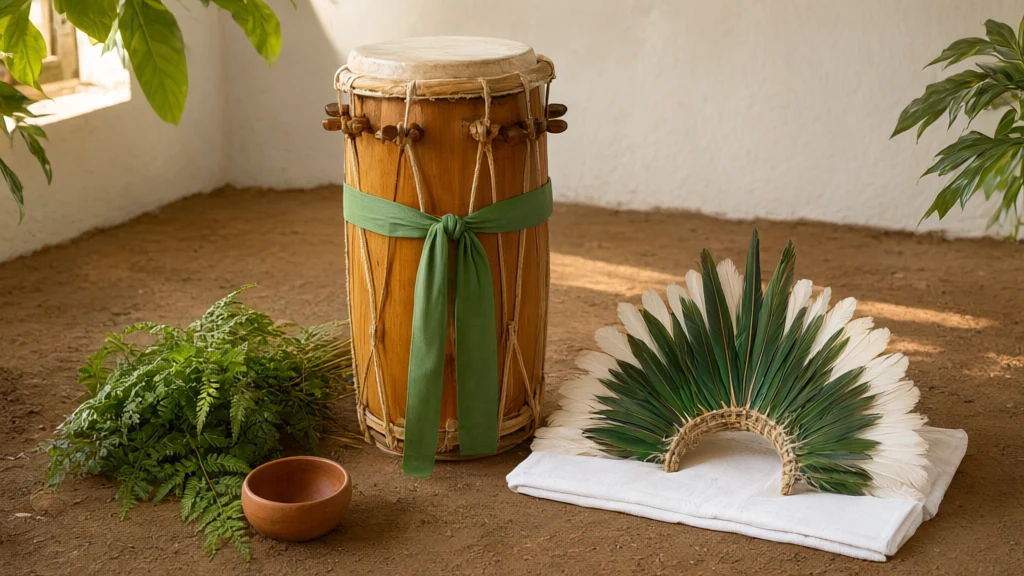
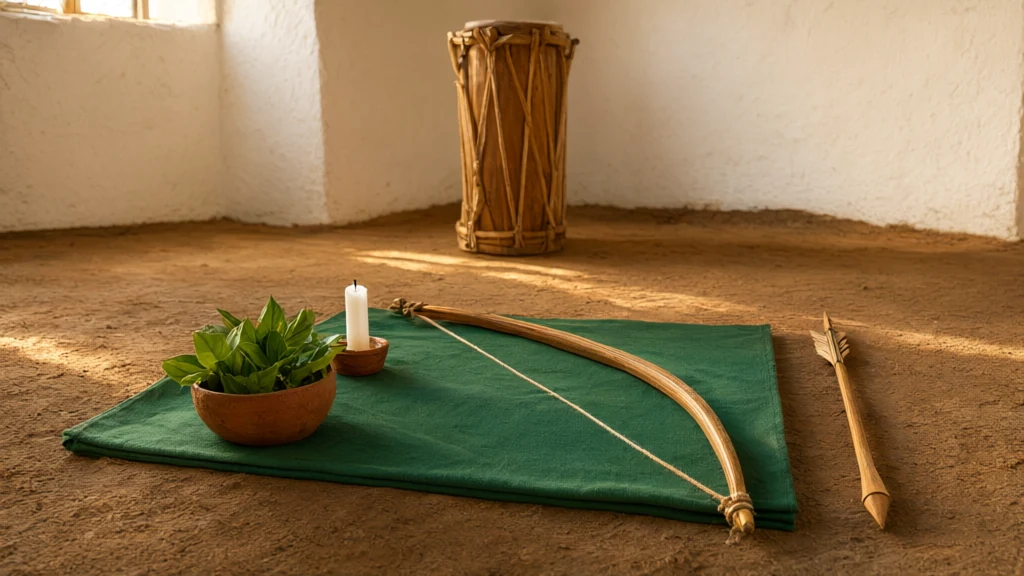
- How he presents himself. Upright posture, sometimes with a cocar, feather headdress, bow, or spear, like caboclos in general (Nogueira, quoting Matta and Silva). His points speak of a shotgun, arrow, and tambora.
- Cigar and drink. "In some houses", says Nogueira, caboclos use "cigars, drinks, and herbs" during the service. There is no record of what Tupinambá asks for.
- Day. There is no specific day for him in any source. The January festival of the orixá of the line is on Oxóssi's day.
In Dourados, the candle taken to him is white. To light by intention at home, there is the Caboclo Tupinambá candle. Did the house request material for his gira? Joia Mística helps check via WhatsApp.
Who is the Caboclo Tupinambá of Itaparica?
In Bahia, Tupinambá is also the name of the Caboclo of Itaparica, a figure of the independence festivals. His festival is on January 7, according to Milton Moura, from UFBA.
It is a civic symbol, carried in a procession. No source says it is the same caboclo received in umbanda giras. The relationship between the caboclos of independence and those of the terreiro is in candomblé of caboclo.
Frequently asked questions
Is Caboclo Tupinambá of Ogum or Xangô?
The sources consulted do not place him in Ogum or Xangô: three houses place him in Oxóssi, and the Candomblé of caboclo from São Paulo, in Omolu. If your house works him in another line, it is their foundation, and the leader is the one who confirms it.
What is the greeting of Caboclo Tupinambá?
Okê Caboclo, the greeting of the feather caboclos, registered by TUCTVC, the house of São José dos Campos that has Tupinambá as the chief guide. No source consulted gives a greeting only for him, so the greeting of the caboclos that your house uses is valid.
How to know if I have Caboclo Tupinambá?
Who says which caboclo accompanies someone is the house, in the development of the medium. The test which is my caboclo points to the vibration of your caboclo, not the name Tupinambá.
References
- Instituto Socioambiental, Indigenous Peoples in Brazil: Tupinambá de Olivença, entry by Susana de Matos Viegas
- Haroldo Paulo Camara Medeiros, UFGD: Quebra o coco e arrebenta a sapucaia: the magic of the baianos in umbanda
- Pedro Antonio Pires Nogueira, UFJF: The intra-religious dialogue in Umbanda
- Prandi, Vallado and Souza, USP: Candomblé de caboclo in São Paulo
- Maria Acselrad, Locus (UFJF): Jurema is body, it is not head
- Milton Moura, Revista Brasileira de História das Religiões: Caboclo Eduardo and the January 7th Festival in Itaparica
- Sônia Regina Corrêa Lages: Exu, light and shadows
- Umbanda terreiro Pai Maneco: handout of Oxóssi sung chants
- Tenda Espírita Nossa Senhora da Piedade: Book of Chanted Points
- TUCTVC: Caboclos and Caboclas