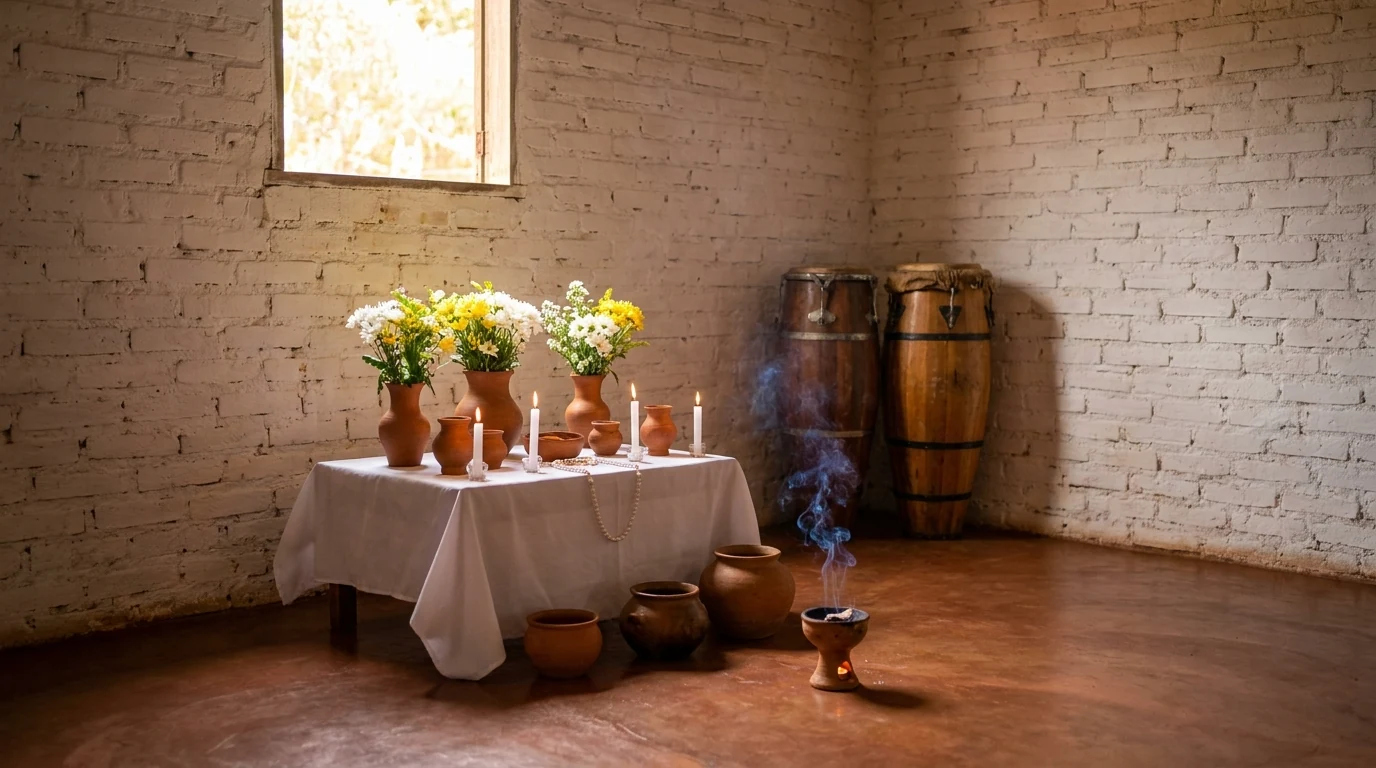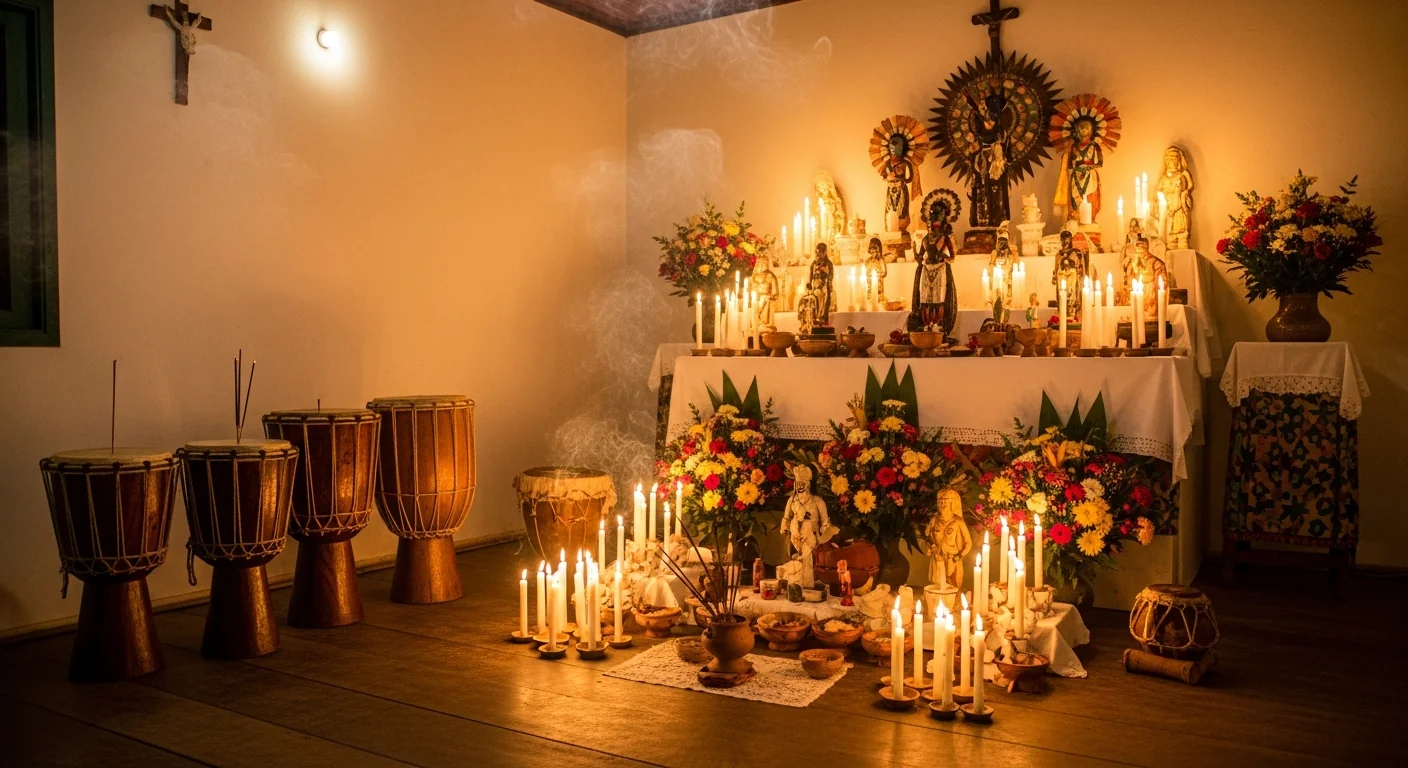
Those looking for what to ask the caboclo usually arrive at the gira with a ready order in their head. In practice, the flow is the opposite: you bring the problem, and he returns a task for you to fulfill.
This guide shows what the caboclo's field of work is, how the consultation actually works, what to bring, and what not to ask for. The last part is the one that avoids embarrassment.
In the consultation, the one who asks the most is the spirit
The research that closely studied the mediumistic consultations of Umbanda names the phenomenon directly. Luana Silva and Fabio Scorsolini-Comin, in the Revista de Estudos da Religião, call the category the request and execution of the requests made by the spirits.
The interviewed consultants describe exactly that. One of them says that the spirit asked for a candle for the guardian angel and a ritual bath of white rose, rue, guinea hen weed, and basil, and that he did everything. Another summarizes in four words: they always ask, and I always do.
In other words, you do not order a result, you receive a task. Arriving prepared to note what the spirit indicates yields more than arriving with a list of demands.
In another ritual work, published in the Saúde e Sociedade magazine, the same researchers list the repertoire of the consultation: prescription of ritual baths, use of teas, performance of rituals, and the space of welcoming that the conversation opens.
The caboclo's field: herb, cleansing, strength, and path
The caboclo does not deal with everything, and knowing his scope avoids asking the wrong person. The field sources converge: healing, cleansing, breaking a demanda, and opening a path.
The ethnography by Jean Favaro, Hieda Corona, and Jandir Ramos, presented at the Meeting of Anthropology of Science and Technology, describes the caboclos as indigenous spiritual masters. It records the teaching of the use of herbs, roots, and seeds for ritual bath, smoke cleansing (defumação), and tea. The herb is his craft.
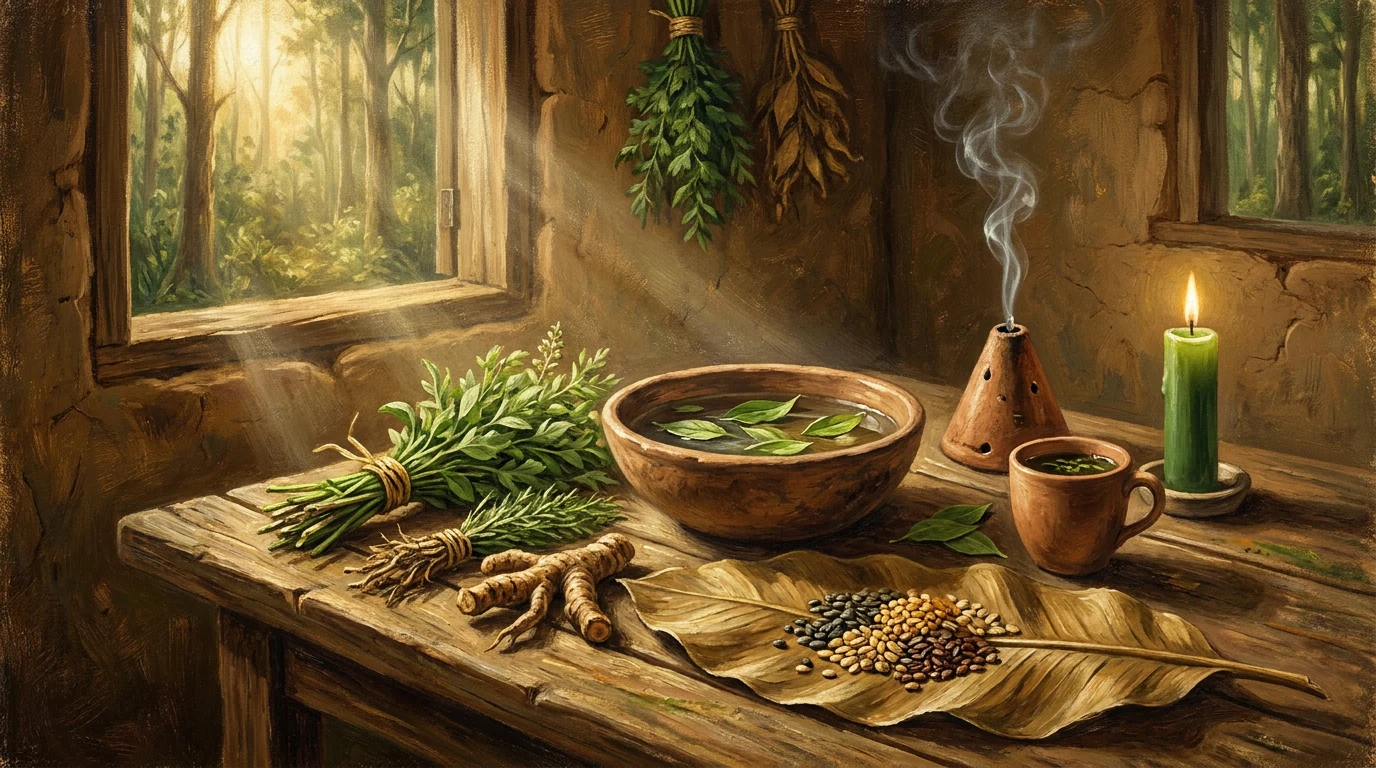
In the practice of the gira, the requests that fall into this field are as follows:
- Cleansing and spiritual cleansing (descarrego) when the phase became heavy, the body grew tired, and the environment became dense.
- Opening of path for work, study, and moving.
- Strength and courage to cross a decision that has already been made.
- Protection of home, family, and routine.
- Guidance on an impasse, with the caveat that the choice remains yours.
Whoever wants the complete portrait of the spirit, with lineages, names, and history, can find it in caboclos in umbanda. Here, the subject is what you do before them.
It is worth delimiting before proceeding: the caboclo also exists in Candomblé, with its own foundation, the subject of Candomblé of caboclo. This text is about Umbanda.
How the consultation happens
The scene has an order, and knowing it removes half the nervousness. The dissertation by Nícolas Mastrocola Garcia, in the Anthropology of UFSC, describes the caboclo gira from the inside.
The mediums manifest the caboclos, and the assistance is organized in a line to receive the spiritual pass. The spiritual pass comes first and is collective. Only after that does the consultation happen, individually, in a corner of the terreiro, and who opens the conversation is the spirit itself asking what you want to know.
The cambone is there all the time, calling the line, lighting the candle and the cigar, and translating the spirit's speech when you do not understand. Asking him what remained obscure is not a lack of manners. The office is explained in cambone in umbanda.
Regarding the duration and order of the line, the honest answer is that it varies by house, and no serious source sets a number. If you want to know how the entire rite is organized before going, see what is the umbanda gira.
Note what the spirit indicates. The ritual bath, the candle, and the smoke cleansing that it asks for are the part of the conversation that continues after you leave the terreiro.
What to take
Two different things are often confused here, and the confusion creates embarrassment.
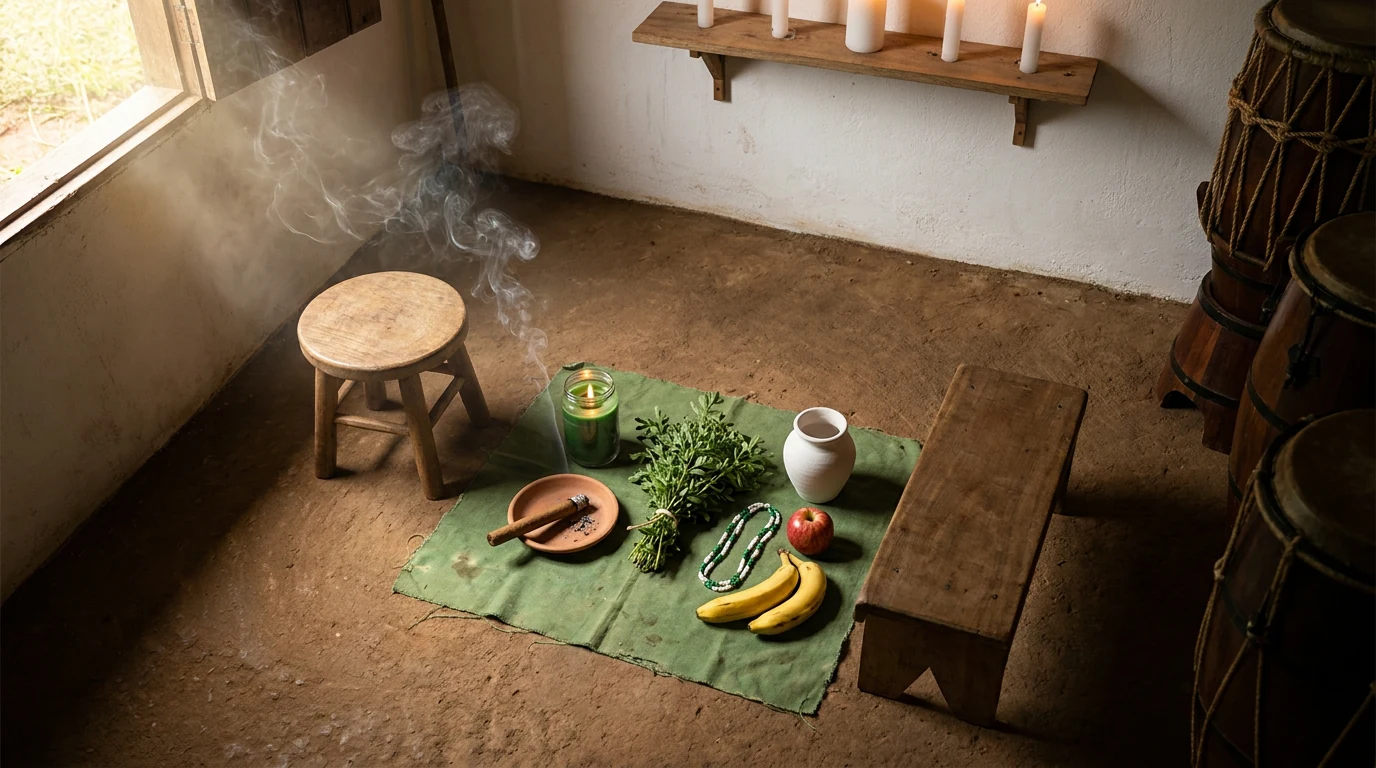
For the house goes the donation and the gira material: candle, ribbon, cigar, ritual supplies, and non-perishable food for the charity that the house performs. This is a contribution to the terreiro, it is not an offering to the caboclo.
For the caboclo goes the offering, which is something else. It happens outside, in the woods, at the waterfall, or wherever the house indicates, and always with the indication of the leader. One does not set up a woods offering on their own after reading a text on the internet.
The repertoire that the sources record is lean: fruits, flowers, cigar, honey, spring water, and candle. The most cited color is green, and there are houses that use the color of the orixá (orisha) of the spiritual legion, which usually refers to Oxóssi.
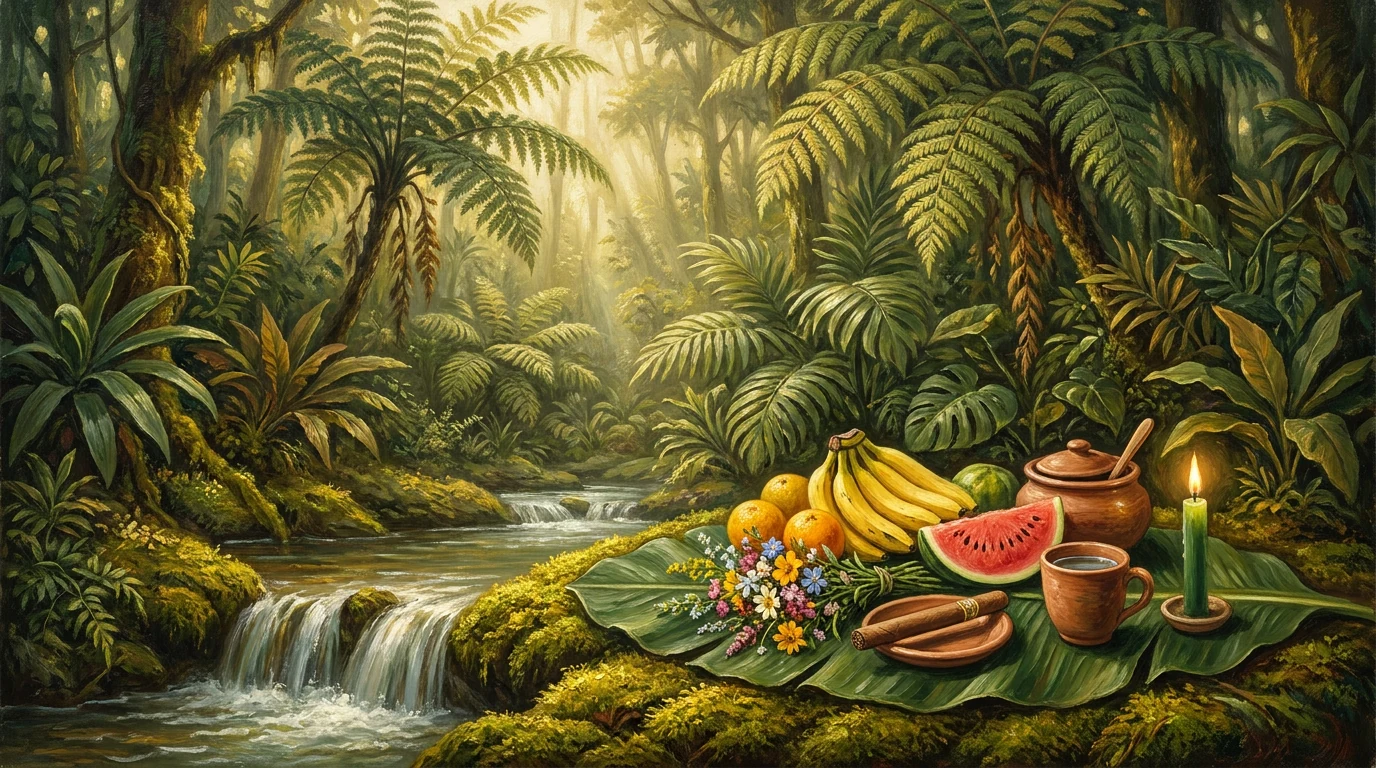
Regarding drinks, the divergence is too great to become a rule. Favaro records a caboclo who drinks black beer, and the Federation of Umbanda and Candomblé of the State of São Paulo mentions cigar and beer for some. Other houses record wine or natural juice, and there are houses that do not work with alcohol. Who defines is the spirit and the house.
If the task that returns is a ritual bath, the smoke cleansing for cleaning and the seven herbs ritual bath are the most common starting points.
How to speak with him
The greeting confirmed in more than one source is Okê Caboclo, which comes from the Okê Arô of Oxóssi, orixá of the forest and regent of the line.
Some greet by the vibration of the orixá of the falange, but this varies from house to house and has no firm record. In doubt, use Okê Caboclo and observe what the house does.
Speak the problem with objectivity. And if the spirit indicates something that you will not be able to fulfill, say it immediately, because promising what you will not do is worse than refusing.
What not to ask
This is the part that almost no one writes, and each item here has a source.
- Evil toward a third party. The ethnography of Favaro records that the caboclo studied is not summoned to incite spiritual attacks, only to defend against them. Defense is the field, attack is not.
- Love binding ritual and ritual work to harm someone. The Confraria dos Pretos Velhos de Umbanda declares in its guidelines that it does not perform love binding rituals or anything that harms others.
- Let the spirit decide for you. The Colégio Espiritualista de Umbanda Caboclo Pery advises that the consultation serves for clarification and the strengthening of autonomy, and that the medium avoids encouraging dependency.
- Interfere in the free will of another person. The Terreiro de Umbanda Pai Maneco is direct: the law of free will is imperious, and not even the protective spirit bypasses the choice of the one who chose.
- Test the spirit. Lying during the consultation to see if it gets it right is a reported and exhausting practice, as the text consultation is a serious matter states.
- Medical diagnosis and prognosis. Neither the caboclo replaces the doctor, nor the consultation replaces the treatment.
Regarding this last point, the best formulation came from a practitioner interviewed in the Health and Society research. He says that the doctor treats the physical, the mediums treat what is in the inner self, and that having both types of accompaniment is a set. The researchers conclude that the terreiro appeared there as a space of integration, not of opposition to formal care.
Frequently asked questions
What is asked of a caboclo in Umbanda?
Cleansing, descarrego, opening of paths, protection, strength to cross a phase, and guidance on an impasse. Outside of his field are requests that affect third parties and health issues that belong to the doctor. And remember that a large part of the consultation is the spirit asking for a ritual bath, candle, or smoke cleansing for you to perform later.
How is the caboclo greeted in the gira?
The greeting recorded in more than one source is Okê Caboclo, which derives from the Okê Arô of Oxóssi, orixá of the forest. Some houses greet by the vibration of the orixá of the falange, but this varies. If you are visiting for the first time, use Okê Caboclo and follow what the house does.
What does the caboclo drink?
There is no single answer, and the sources truly diverge. One ethnography records a caboclo who drinks black beer, a federation mentions cigar and beer for some, other houses record wine or natural juice. There are also houses that do not work with alcoholic beverages. The spirit and the house define this.
Do you need to pay to consult with the caboclo?
No. The houses state this in writing, and the Confraria dos Pretos Velhos declares free service for consultation, spiritual pass, and ritual work. There is real variation, recorded in research, but the declared norm is free of charge. The contribution is in first time in umbanda.
Where to find what the consultation usually asks for
At Joia Mística Laroyê you find the material that appears in these sources:
- Green and white candles, taper and seven day
- Cigar for the gira and for the offering
- Fresh and dry herbs for ritual bath and smoke cleansing
- Smoke cleansing incense blend and charcoal
- Green bead necklace and caboclo statue for the home congá
Stop by the shop, at Rua Benedito Zingari, 460, Bela Vista, in Extrema-MG, or message on WhatsApp with delivery to all of Brazil.
If you still do not know which spirit walks with you, the spirit test is the entry point. The ritual bath that the consultation usually returns has a guide in which ritual bath to take.
References
- Luana Silva and Fabio Scorsolini-Comin: the investigation with Umbanda adepts with complaints of illness, Health and Society, 2020
- Jean Favaro, Hieda Corona and Jandir Ramos: the ethnography on the caboclos of Umbanda, Meeting of Anthropology of Science and Technology, 2022
- Nícolas Mastrocola Garcia: the field description of a caboclo gira, Social Anthropology, UFSC, 2023
- FUCESP: the federation text on the caboclos, greeting and offering, 2012