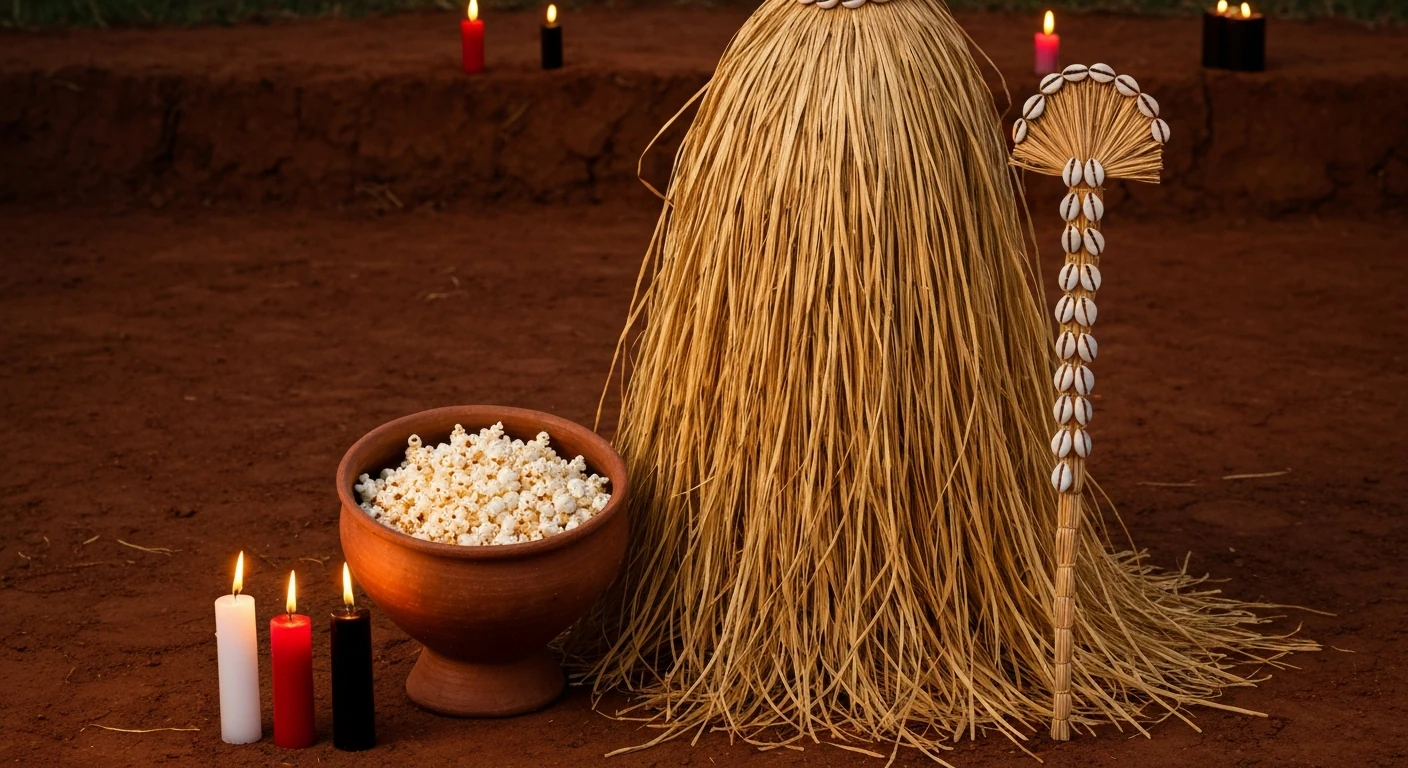
Saint Lazarus and Obaluaê walk side by side in Brazilian faith: the Catholic saint covered in sores, surrounded by dogs, and the orixá who wears the straw of the coast and dominates diseases and healing. In both, the same image repeats, that of one who knows the wound from the inside and, therefore, knows how to heal it.
But ultimately, is Saint Lazarus Obaluaê? The answer involves a third name. In the table of sociologist Reginaldo Prandi, Obaluaê is "Syncretized with Saint Lazarus and Saint Roch", the two together (Horizontes Antropológicos), and which saint goes with which face changes from house to house.
Who was Saint Lazarus
Here lies the first surprise: there are two Lazaruses in the New Testament, and popular devotion merged the two into one.
The first is Lazarus of Bethany, brother of Martha and Mary, friend of Jesus. He is the one whom Christ resurrected after four days in the tomb, one of the strongest passages in the Gospel of John. His liturgical feast falls on December 17.
The second is the Lazarus of the parable told by Jesus in the Gospel of Luke. A poor beggar, covered in wounds, lying at the door of a rich man, with dogs licking his sores. From the fusion of the two was born the Saint Lazarus of the people: the protector of the sick, of lepers, of the poor, and of animals.
Because of the sores, he became the saint invoked against skin diseases and ailments of the body. The classic statue shows the saint leaning on crutches, with wounds on his legs and two dogs by his side. It is this figure that meets the orixá.
Obaluaê, the orixá of disease and healing
Obaluaê, also called Omulu, is the orixá who rules illnesses and, at the same time, the power to cure them. His name comes from Yoruba and means something like "king, lord of the earth." He is the doctor of the poor, the one who brings the disease but also holds the remedy.
Here we provide only the essentials, because the blog already has his complete profile. To learn about the mythology, the colors, the offerings, and the archetype, it is worth reading who is Obaluaê (Omulu). What interests us now is understanding why this orixá found Saint Lazarus.
Some points help to see the bridge with the saint:
- Greeting: "Atotô!", which asks for silence and respect
- Symbol: the xaxará, a staff "made of fibers from the palm leaves with cowrie shells (búzios)", in Prandi's table
- The straw: Obaluaê dances covered by the straw clothing of the coast, which hides the marked body
- Offering: the popcorn popped in the sand, called doburu, the flower of the Old One
- Day: Monday
Notice that the orixá also carries on his body the mark of the disease, just like the saint of the sores. It is no coincidence that the people united the two.
Why Saint Lazarus became Obaluaê
The encounter was not by chance, and it was also not a free choice. During slavery, Africans were forbidden from worshipping their orixás. The way out was to hide the orixá behind the statue of a Catholic saint with a similar domain. Thus, the terreiros revered Obaluaê while, in the eyes of the plantation owner, they prayed to Saint Lazarus.
The link that united the two is the wound that heals. Saint Lazarus is the saint covered in sores, linked to disease and to the return from death, since one of the Lazaruses was resurrected. Obaluaê is the orixá who dominates the plague and health, lord of the earth and the passage. Faced with such close domains, the association was natural.
Therefore, syncretism is neither fusion nor theological equality. It is a strategy of resistance, the way enslaved Africans found to keep their faith alive. Saint Lazarus continues to be Saint Lazarus for the Catholic, and Obaluaê continues to be Obaluaê for the people of santo. The same mechanism unites Our Lady Aparecida and Oxum and appears in the June saints and the orixás.
Syncretism does not erase either of the two religions. It kept the orixá alive under the mantle of the saint, in a time when worshipping him openly was forbidden.
Saint Lazarus or Saint Roch? The doubt of the two faces
Here is the part that confuses the most. Obaluaê does not always syncretize with Saint Lazarus. Prandi gives both saints together; the Santuário Nacional da Umbanda writes that he "Can also be syncretized with Saint Roch and Saint Benedict"; and the Núcleo Umbandista São Sebastião (NUSS) adds: "Others syncretize him with Saint Roch and others with Saint Cyprian." A very cited explanation is in the two faces of the orixá.
A reading that Gildeci Leite records "in the popular Bahian imaginary" (Fragmentos de Cultura) distinguishes Omulu, the older face, hunched, covered in sores and linked to death, from Obaluaê, the young face, who has already overcome the disease and dominates it standing up. Each face pulls a saint:
| Face of the orixá | Saint in the Bahian reading | Reason |
|---|---|---|
| Omulu (old, of the sores) | Saint Lazarus | both linked to wounds and the return of death |
| Obaluaê (young, healer) | Saint Roch | saint who was cured of the plague and cures epidemics |
| Other houses | Saint Benedict (Sanctuary) and Saint Cyprian (NUSS) | house variation |
Saint Roch, in fact, also appears with a dog and a wound on his leg, the mark of the plague from which he was cured. Therefore, the two saints and the two faces mix easily in popular devotion. The important thing is to understand that there is no unique correspondence. The Tenda de Umbanda Caboclo Tupinambá and Vó Catarina (TUCTVC) does the opposite of the table: "Omulu is syncretized with Saint Roch and Obaluaê with Saint Lazarus." And in the tambor de mina terreiro in São Paulo studied by Prandi, each vodun has its saint: Acóssi is Saint Lazarus, Azile is Saint Roch and Xapanã is Saint Sebastian (In the footsteps of the voduns).
In the angola nation, for example, this same energy of disease and healing appears as the inkice Kavungo (or Kafunge), with its own chants and foundations. To understand these differences between traditions, see the nations of Candomblé.
The feast dates of Saint Lazarus and Omulu
The calendar reflects this richness of associations, with more than one important date throughout the year.
The liturgical date of Saint Lazarus is December 17, linked to Lazarus of Bethany. Meanwhile, the great popular feast of Saint Lazarus in Salvador takes place on the last Sunday of January, at the Church of Saint Lazarus, in the Federação neighborhood. It is one of the strongest moments of Bahian syncretism. In umbanda houses, December 17 is also the date of the orixá: the FUCESP gives it "due to the syncretism with Saint Lazarus." The other dates and the color of Omolu in umbanda are in Omolu in umbanda.
On this day, Catholic faith and Afro devotion meet in the street. There is mass, procession and, on the side of the people of santo, the pipoca ritual bath offered by mothers and fathers of santo, one of the most striking rituals linked to Omulu. The popped popcorn, the flower of the Old One, falls upon the devotees as a request for cleansing and healing.
To situate these dates within the larger cycle of Afro-Brazilian celebrations, see the calendar of the orixás. And it is worth remembering: devotion is not a magic formula. Neither the prayer nor the ritual bath work as an automatic guarantee. They are gestures of faith, of respect and of belonging.
How devotion happens today
In the terreiros, Obaluaê is greeted with the silence of "Atotô", with black and white candles and with the sharing of food. The most well-known ritual in his honor is the olubajé, the sacred banquet in which those present eat together the foods of the orixá, in a gesture of collective healing. We explain this rite in olubajé, the banquet of Omolu.
On the Catholic side, Saint Lazarus is remembered by those who suffer from skin diseases, wounds that do not heal and long illnesses. Tradition also makes him the protector of animals, especially dogs, always present in his statue.
The two devotions coexist in the same respect. Those who pray to Saint Lazarus and those who greet Obaluaê are, each in their own way, asking for the same thing: health, relief and the strength to cross through the pain. It is the same lesson from the two faces of the orixá, that there is no cure without first knowing the wound.
Frequently asked questions
Is Saint Lazarus Obaluaê?
For many houses, Saint Lazarus is the saint associated with Obaluaê; in the Bahian reading, to the older face, called Omulu, and in the TUCTVC, conversely, to Obaluaê. But the two are not the same divinity: they are figures from different religions, brought together by the common domain over disease, healing and the wounds of the body.
What is the difference between Saint Lazarus and Saint Roch in syncretism?
Both saints appear with a dog and a wound on the leg. In the Bahian imaginary, Saint Lazarus is linked to Omulu, the old face of the sores, and Saint Roch to Obaluaê, the young face; the TUCTVC does the opposite. The correspondence varies according to the house and the region.
What is the day of Saint Lazarus and Omulu?
The liturgical date of Saint Lazarus is December 17. The great popular festival, however, happens on the last Sunday of January, in Salvador, with mass, procession, and the popcorn ritual bath offered by the people of santo in honor of Omulu.
What is the greeting of Obaluaê?
The greeting is "Atotô!", which asks for silence and reverence. It expresses respect before disease, death, and healing, domains of the orixá. Unlike other orixás, greeted with high celebration, Obaluaê is revered with seclusion (recolhimento).
Where to find items for Obaluaê
At Joia Mística Laroyê, you find what you need to honor Obaluaê and Saint Lazarus with respect:
- Black and white candles: the colors of the orixá of healing
- Bead necklaces and beads of Obaluaê: for those who are children of the Old One
- Statues of Saint Lazarus and Omulu: for the domestic altar
- Popcorn and items for ritual bath: for the rituals of cleansing and health
Visit our shop in Extrema, Minas Gerais or receive it at home with delivery to all of Brazil. For guidance on the correct use of each item, talk to us via WhatsApp.
References
- Wikipedia: article about Lazarus of Bethany
- Reginaldo Prandi, Horizontes Antropológicos, 1995: African gods in contemporary Brazil
- Gildeci de Oliveira Leite, Fragmentos de Cultura (PUC Goiás), 2019: Omolu, Obaluaê, Saint Lazarus, Saint Roque
- Reginaldo Prandi, 2005: In the footsteps of the voduns
- TUCTVC: Obaluaê and Omulu
- National Sanctuary of Umbanda: Obaluaiê
- NUSS: Omulú
- FUCESP: Obaluaê page
- Salvador City Hall: coverage of the Saint Lazarus festival in the Federação neighborhood