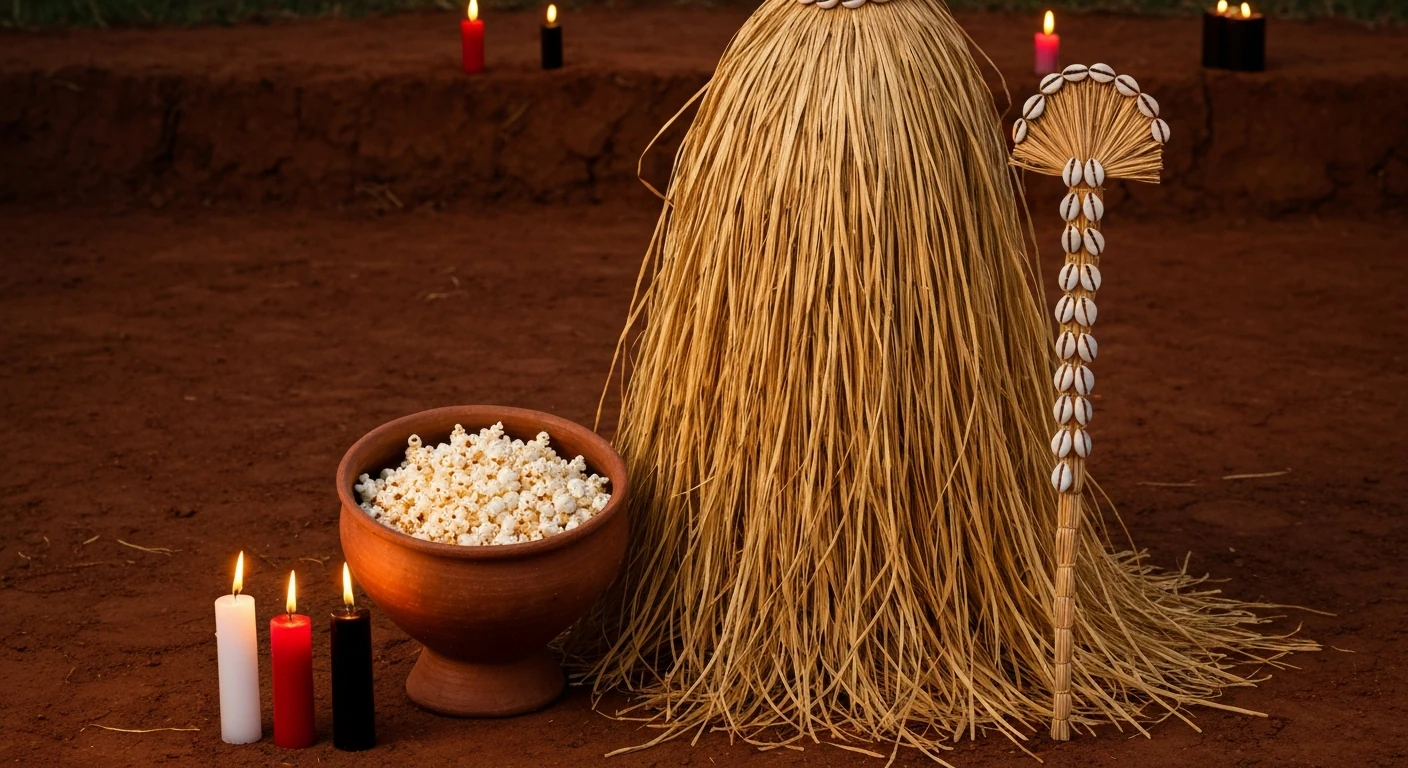
The children of Omolu are described as reserved, calm, shy, and pessimistic people who enjoy silence. The portrait changes from author to author, and Pierre Verger even speaks of people who "like to display their sufferings." In Candomblé, the registered taboo for them is attending funerals. Pipoca is not on Verger's list of forbidden foods.
What are the children of Omolu like
The traits that repeat most are shyness and reserve. The serious air hides kindness. To know the orixá behind the children, see who is Obaluaê.
The sociologist Reginaldo Prandi summarizes what Candomblé says about them as follows:
“Their children appear to have a depressed aspect. They are negative, pessimistic, inspiring pity.”
“They seem unfriendly, but it is because they are shy and embarrassed.” And he concludes: they need “a little attention and a pinch of love.”
Prandi calls these portraits stereotypes. He gathered them in 60 Candomblé terreiros in São Paulo and says they largely coincide with those in Salvador, Rio, and Africa. For him, what matters to the initiate “is feeling close to the divine model.”
A final course project from UFJF describes the children of Obaluaê as “reserved, calm, peaceful, and pessimistic.” The same text calls them shy, cautious, and lovers of silence, as requested by the Atotô greeting.
Child name: omolussi | Taboo: attending funerals | Day: Monday | Colors in Candomblé: red, white, and black
Verger's “archetype” and the Augras test
Verger gives the harshest description of all. In the book Orixás, he writes:
“The archetype of Obaluaê is that of people with masochistic tendencies, who like to display their sufferings and the sorrows from which they derive an intimate satisfaction.”
For Verger, these people can reach "enviable material situations" and give everything up "because of certain imaginary scruples." But they can also dedicate themselves to the well-being of others, forgetting their own interests. "Archetype" is his word. Prandi's term is stereotype.
Among the sources, the only psychological test with filhos de santo is that of psychologist Monique Augras and Angela Maria Correa (FGV). According to the myths, Omolu would be "aggressive, but controlled," and sometimes would turn aggression against himself. The relationship "does not seem very easy." They also point out, as a possibility, anxiety and concern with one's own body.
The filhos de Omolu interviewed highlighted the persistence of the orixá. "When he wants something, he fights until he gets it," they said. In the test, the filhos de Omolu had "the same type of experience," and two showed clear anxiety.
How many were there? Three. The authors warn that the sample is small. Three people do not make a rule. Why these portraits do not serve as a personality test is in what your orixá says about you.
The taboo of going to funerals
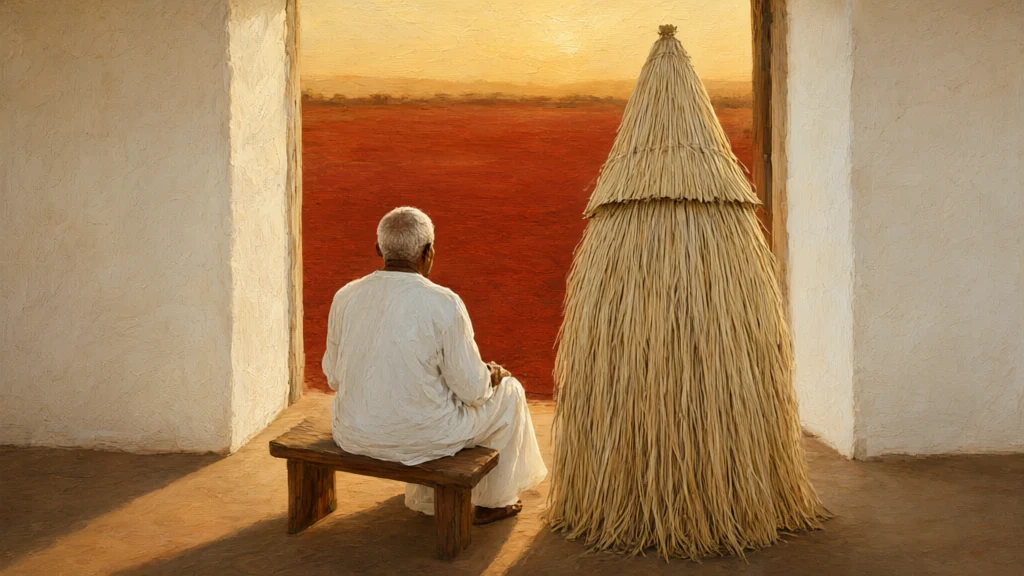
In the two sources that record it, the taboo of the filho de Omolu is going to funerals. It is in Prandi's table. The UFJF work repeats: the taboo "of its children" is "that of going to funerals."
In the same Prandi table, the taboo of Xangô (Shango) is similar, but broader: "contact with the dead and cemeteries." That of Omolu speaks only of the funeral.
The sources do not say how far the taboo goes: wake, burial, cemetery, or axexê. In practice, it depends on the house. Psychologist Dalva Barbosa studied Axé Baraleji, a ketu house in Goiás called "Casa dos Filhos de Omolu." There, when the ialaxé, his wife, died, it was the babalorixá himself, Tito de Omolu, who left the hospital to perform the first rites at the terreiro. The dissertation does not discuss the taboo.
A filho de Omolu who lost someone and does not know if they should go to the wake asks the pai de santo or mãe de santo first. The answer comes from the house.
Can a filho de Omolu eat popcorn?
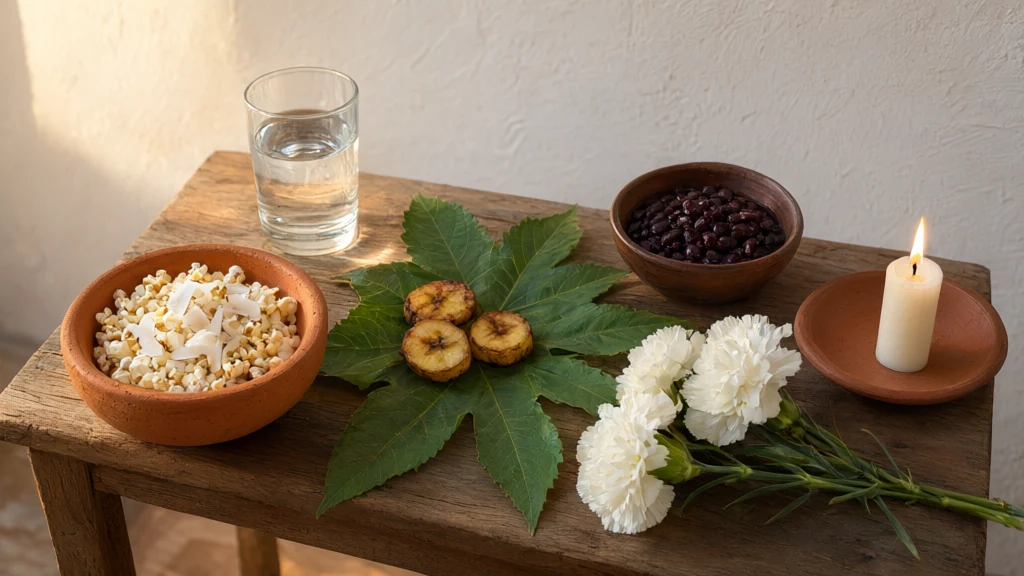
No open source lists popcorn as a general quizila for the filho de Omolu. Popcorn is his food. In Prandi's table, it is "popcorn with coconut slices." In the Olubajé photographed by Lucas Barreto de Souza in Salvador, the food is served on castor bean leaf and is picked up with the hands. The preparation is in popcorn of Obaluaê.
Verger lists what people connected to Obaluaê do not eat, and Abrantes (UFRJ) provides the page:
- lamb meat;
- freshwater fish with smooth skin and crabs;
- silver bananas (banana-prata), jackfruit, melons and pumpkins;
- fruits of climbing plants.
Popcorn is not there. Verger recounts that, on Monday, the courtyard of the Church of Saint Lazarus, in Bahia, is covered with popcorn that people rub on their bodies to protect themselves from diseases. In 2024, the Salvador City Hall registered an ialorixá who offers a popcorn ritual bath in front of the same church.
Is there a personal quizila of popcorn? There is. A study by UFRB interviewed people from terreiros in Recôncavo. One interviewee says that a 18-year-old boy does not eat popcorn. It was after "pocou as pernas" that he had to rub popcorn on his body. The report does not state his orixá. The author separates the precept quizila from the personal quizila of each filho de santo.
Abrantes calls Obaluayê an orixá "full of quizilas," and the houses have their own. The babalorixá Mário Cesar Barcellos gives Omolu the quizilas "claridade and amêndoa." In Bocaiuva (MG), one house records pineapple, and another, pineapple and pork, which also apply to the médiuns. And the quizila of the pai de santo can pass to the filhos de santo of the house. What is quizila is in quizilas in Candomblé.
Jagun is not Azoani: quality and juntó change the child of the orixá
No one is a child of "Omolu in general." For Prandi, a person's orixá "derives from a quality of the general orixá," which can be young or old. Roger Bastide, cited by Augras, told of 14 subdivisions of Omolu.
A child of Jagun heard by Samuel Abrantes links the quality to his way of being. "Mine is JAGUN, who is a warrior OMOLU, a young boy," he said, "hence my temperament." He told of thirteen qualities and admitted: "I do not know them all." Regarding Azoani, he said that "it is very JEJE" and wears blue straw.
There is also the person's second orixá, the juntó, which Prandi calls the "associated divinity." Whoever seeks "child of Omolu and Iansã (Oya)" or "with Oxum (Oshun)" almost always speaks of this. No open source speaks of a matching couple. The juntó is in can one be a child of more than one orixá?.
Omolussi: the bead necklace (guia) and who confirms the orixá
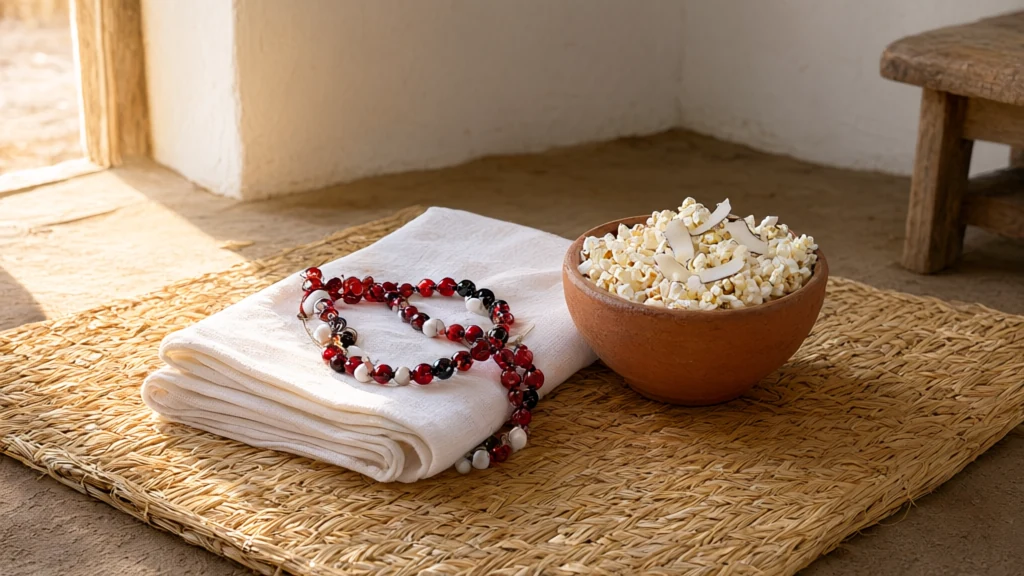
The child of Obaluaê is called omolussi. In Candomblé, his beads are red, white, and black. Verger records two necklaces in Bahia: the lagidiba, of black discs, or brown beads with black stripes. In the Umbanda of the Núcleo Umbandista São Sebastião, the color is "white and black." How Umbanda treats the orixá is in Omolu in Umbanda.
Who says if you are of Omolu is the pai or mãe de santo. Prandi writes that it is a "religious prerogative of the pai or mãe-de-santo" to discover the orixá "through the jogo de búzios." The discover your orixá is the starting point, and the orixá by birth date is a declared joke. Neither of the two replaces the divination.
Once the orixá is confirmed, the bead necklace (guia) follows the colors the house gives. What is taken to the orixá is in offering for Omolu. If you want to check a bead necklace (guia) or the straw that your house requested, Joia Mística Laroyê can be reached via WhatsApp.
Frequently asked questions
Can a filho de Omolu eat popcorn?
No open source places popcorn among the general quizila of the son of Omolu. It is the food of the orixá itself, and Verger's list of prohibitions does not include it. There is a case of personal quizila of popcorn. The word of your house prevails.
What can the son of Omolu not eat?
It depends on the house. Verger lists lamb, smooth-skinned fish, crab, silver banana, jackfruit, melon, and pumpkin. Barcellos speaks of almond. In Bocaiuva (MG), pineapple and, in one house, pork.
Can the son of Omolu go to a wake?
The taboo recorded by Prandi and by an academic study from UFJF is going to funerals. The sources do not say if it applies to wakes, burials, and cemeteries in the same way. Whoever needs to go should ask the Pai or Mãe de santo beforehand.
Can the son of Omolu eat pork?
In one of the two houses in Bocaiuva (MG) studied at UFMG, no: there the quizila of Obaluaiê (Babalu Aye) is pineapple and pork. In the other, only pineapple. Verger does not list pork. It is a house rule.
How to know if I am a son of Omolu?
Through the game, performed by the Pai or Mãe de santo of your house. Prandi says that discovering the head orixá is their prerogative. Online tests and personality portraits are curiosities. They do not confirm anything.
References
- Prandi, Horizontes Antropológicos (UFRGS, 1995): Deuses africanos no Brasil contemporâneo
- Verger, book (Corrupio, 1981): Orixás
- Augras and Correa, Arquivos Brasileiros de Psicologia (FGV, 1979): study with filhos de santo
- Guimarães, UFJF (2017): Obaluaê, o médico entre os orixás
- Abrantes, UFRJ (1996): Atotô Obaluayê Ajuberu
- Gonçalves, UFMG and Unimontes (2017): food in the terreiros of Bocaiuva
- Santos, UFRB (2018): Food practices in the terreiros
- Barbosa, UCB (2006): The listening of the filho de santo about death
- Souza, Photocronographies (UFRGS, 2021): Olubajé in Ilê Axé Akaraizô
- Prefeitura de Salvador (2024): Saint Lazarus Festival
- Núcleo Umbandista São Sebastião: Omulú