The day of the dead in Umbanda is a day to remember the deceased and to greet the souls. The date comes from the Catholic calendar, and Umbanda absorbed it along with Monday, which the people call the day of the souls. In 2026 the two things meet: November 2 falls on a Monday.
What is done on the day changes from house to house, and changes even more from one tradition to another. Quimbanda has its people in the cemetery. Candomblé, according to the sources we consulted, does not have Finados in the liturgy.
What November 2 means for those who are from terreiro
Date: November 2 | In 2026: Monday | Holiday: national, by Law 10.607/2002 | Day of the souls in the week: Monday | Orixá honored on the day, in houses studied in Vitória (ES): Obaluaê-Omulu
| Tradition | What the day is | What the sources record |
|---|---|---|
| Catholic Church | commemoration of all the faithful departed | mass, visit to the cemetery, prayer for the dead |
| Umbanda | Catholic date absorbed by the terreiros | offering at the Cross of Souls (Cruzeiro das Almas) and on the tombstones, in Vitória |
| People of the calunga (left) | day to go to the exus and pombagiras of the cemetery | record of an Umbanda practitioner in Vitória, on All Souls' Day in 2016 |
| Candomblé | no All Souls' Day in the liturgy | some houses mark the date, others do not |
The anthropologist Barbara Thompson, from UFBA, studied Umbanda rituals in the Santo Antônio public cemetery, in Vitória. Supported by DaMatta, she observes that two dates lead Brazilians to the cemetery: Monday, the day to pray for the souls of purgatory, and All Souls' Day. Both, the author emphasizes, are of Catholic origin. This is where Umbanda departs from.
Where does All Souls' Day come from
The date was born in the monasteries. According to Vatican News, the liturgical celebration of a deceased person began in the 9th century, a legacy of a monastic custom from the 7th century. In 809, Bishop Amalary placed the memory of the deceased on the day after All Saints.
The fixation came in 998. By order of the abbot of Cluny, Odilo, the solemnity was marked for November 2, with a novena that began on October 24. The Archdiocese of Rio explains the logic of the pair of dates. The 1st day celebrates those who have already reached heaven. The 2nd day is for those who are still in purification.
Two facts from today complete the picture:
- National holiday. November 2 is in Law 10.607, of 2002, alongside dates such as September 7 and December 25.
- Indulgence from November 1 to 8. The Catholic rule, remembered by Vatican News in 2020, gives a plenary indulgence to those who visit the cemetery praying for the deceased during these eight days. On the 2nd, a visit to a church praying the Our Father and the Apostles' Creed also counts. The extension for the entire month was a decision that year, because of the pandemic.
From this base comes the idea of souls asking for prayer. Popular devotion inherited this idea, and Umbanda did as well.
What is done on All Souls' Day in Umbanda
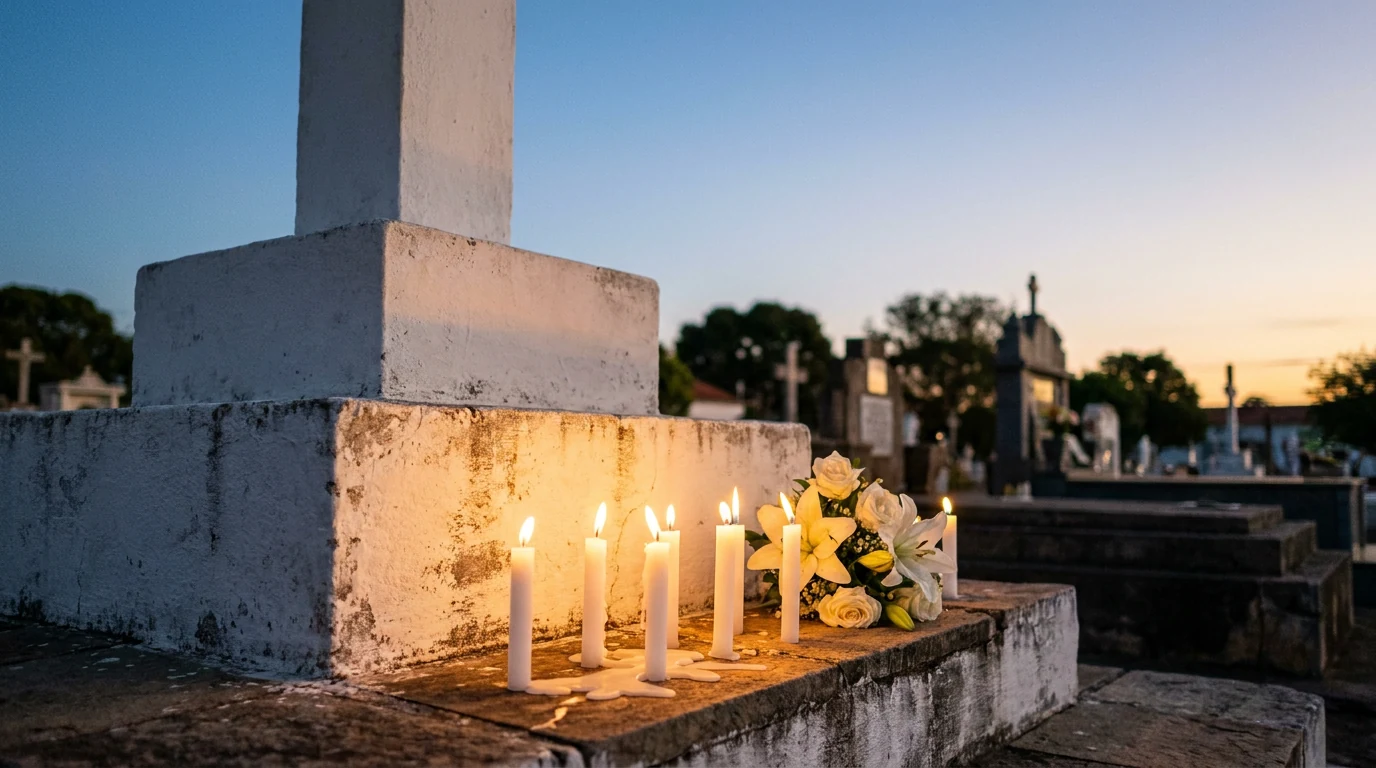
The most detailed description we found is that of Vitória. In the Thompson article, the cemetery becomes the stage for various religions on the 2nd. Umbandistas leave offerings at the cross and on the tombstones, while Catholics pray for their dead and for the souls in purgatory.
For these Umbandistas, the cemetery is the calunga pequena, the dwelling of orixás and spirits. The sea is the calunga grande. The interviewees cite as cemetery orixás Omolu (Omulu)-Obaluaê, Iansã (Oya) of the souls, Nanã (Nana Buruku), Ogum (Ogun) Megê, and Ogum de Ronda. The spirits of this field are the pretos-velhos, from the line of the souls, and the exus. The difference between the two calungas lies in calunga grande and calunga pequena.
Obaluaê is the orixá that the research links to the date. There he is honored on November 2 and on August 16, and he acts most strongly on Mondays. The FUCESP makes the same connection: "His day of the year is November 02 (along with All Souls' Day)", and the Santuário Nacional da Umbanda also gives November 2 to Abaluaiê. Who is the owner of the land and the passage is in who is Obaluaê (Omulu); the color, the candle, and his other dates in Umbanda, in Omolu in Umbanda.
The script recorded in Vitória has three gestures:
- Go first to the cross. Two Umbandistas say that, upon passing the gate, they go straight to the cross to greet all the souls.
- Clap hands three times, the right hand on the left, to greet a spirit or orixá.
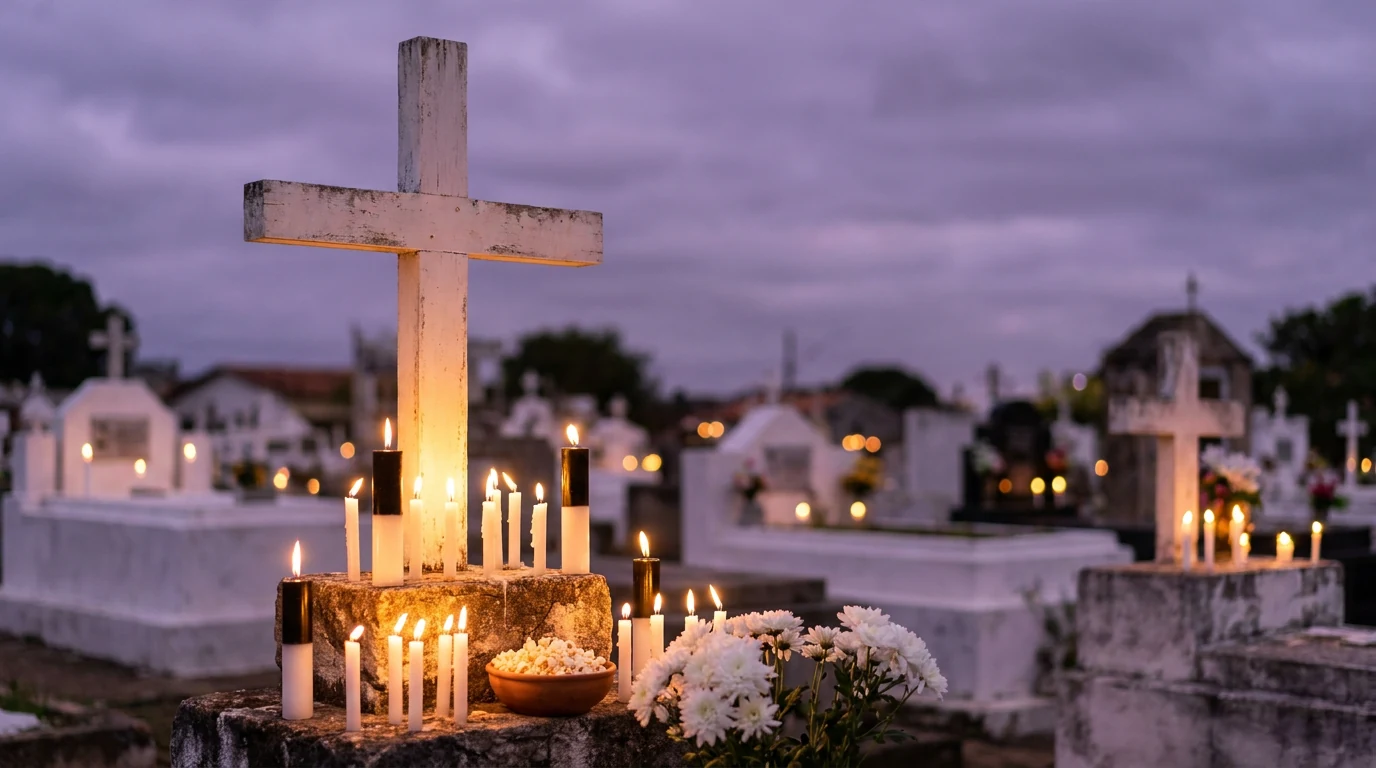
- Offer to each in their place. The pretos-velhos receive a white and black candle at the white cross. Obaluaê and Omulu receive popcorn in an alguidar.
The author herself breaks the generalization. Some Umbanda practitioners say the cemetery is a point of strength only for Obaluaê; others accept offerings to Iansã and Nanã.
“Umbanda practitioners are not a homogeneous mass.” (Barbara Thompson, UFBA, 2019)
The Monday comes from the same Catholic root. In a study of popular devotion in Ceará, Michelle Maia records that the blessed souls are worshipped mainly on Monday, “which is the day of the souls”. In terreiros, the greeting to the pretos-velhos carries the date in the name. The historian Lourival Andrade Júnior records that it ends in “I adored the souls” in most terreiros in the country.
Quimbanda and the people of the calunga on the 2nd
A warning first: the researches we opened did not study a house of quimbanda on All Souls' Day. What they record is the people of the calunga, exus and pombagiras of the cemetery, inside houses of Umbanda and a house with quimbandeiro worship.
The name of the spirit says where the ritual work is done with it. In Vitória, Thompson notes names like Exu (Eshu) 7 Caveira and Exu 7 Catacumba as a sign of who acts in the cemetery. On All Souls' Day in 2016, an Umbanda practitioner explained his path like this:
“when I arrive, I go straight to the cruzeiro, because the pombagira of my mãe de santo is Maria Padilha do cruzeiro preto.” (João Jorge, in Thompson, 2019)
The same man has an Exu Tranca Rua das 7 Catacumbas. Therefore, his offering goes to the seventh catacumba after the gate.
In a house of Umbanda with a Quimbanda cult in Bocaiuva (MG), Fábio Gonçalves' research records food in the cemetery for Obaluaiê (Babalu Aye) and the pretos-velhos. It also goes to João Caveira, Tranca-Ruas das Almas, Rosa Caveira, and Maria Padilha das Almas. And Reginaldo Prandi describes a table from Umbandista literature with Exus who work under Omulu, "the lord of the cemeteries." Prandi describes it to show how Exu was demonized, and not to endorse it.
No source says that Finados is the day of Exu Caveira. Who he is and why he is not the devil is in Exu Caveira. What research records as his drink and tobacco, the cachaça and the cigar, and what is rumor is in what Exu Caveira likes. And ritual work in the calunga is done with the leader, within the house's foundation, and not on one's own.
And does Candomblé celebrate Finados?
Not as its own liturgy, according to the sources consulted. The cult of the dead exists, but it does not follow the Catholic calendar.
The axexê depends on death, not on the date. Prandi describes the axexê as the funeral rite of the Queto nation Candomblé and the variants of Yoruba and fom-Yoruba origin. It begins after the burial of the initiate and varies from terreiro to terreiro and from nation to nation. Nothing in the text links it to November 2. The rite is explained in what is axexê.
The Egungun cult has its own house and calendar. In Itaparica (BA), the Omo Ilê Agboulá was founded in 1934, according to the IPHAN heritage listing report. The same report records that it was the first time the agency dealt with a terreiro that is not for the worship of orixás. Another house on the island, the terreiro Onilá, holds large festivals in February, April, and July. In November, always after the 2nd, obligations take place. Who these ancestors are is in egum in Candomblé.
Each house decides. A report by Agência Cenarium shows both positions. One house in Manaus worships ancestors on the eve of and on All Souls' Day; the article does not state the nation. Meanwhile, a babalorixá from Brasília says there is no specific day, because the ancestors are remembered in every toque.
“The Afro-religious people respect November 2 for other people who are not practitioners.” (babalorixá Ronald Aguiar, to Agência Cenarium, 2023)
What to do and what not to do on the 2nd
Light a candle
The candle appears in both readings, that of the church and that of the terreiro. In the Catholic reading, the candle on the grave is the light of resurrection and the hope of rest for the souls. In Umbanda, the sources do not give a mandatory color. In Vitória, pretos-velhos receive white and black candles at the cross. In a house studied by USP, the leader replaces a white candle every day in the house of the souls.
If you are going to light it at home, with a 7-day candle or a common one, use a firm support and leave about 30 cm of distance from curtains and cloth. Extinguish it before leaving or sleeping, as requested by the U.S. Fire Administration guidance. The step by step is in lighting a candle for the souls.
Pray: which prayer
We did not find, in any source we could cite, a specific Umbanda prayer for All Souls' Day. Therefore, we have not published any. On the Catholic side, the official indication for the 2nd is the Our Father and the Apostles' Creed. On the terreiro side, what is recorded is the greeting "Adorei as almas". The prayer of the day, if there is one, is the one your house teaches.
Can you have a party, barbecue, or make noise?
None of the sources consulted record a general religious prohibition of parties, barbecues, or noise on the 2nd. The holiday is civil, established by law.
What the sources show is something else. For the Catholic, the day is for prayer and visiting the dead. And the babalorixá heard by Cenarium speaks of respecting the date of those who live it. In practice, this calls for discretion near the cemetery and those in mourning. If your house has a preceito for Monday or for the 2nd, it counts more than any internet rule.
Going to the cemetery
In Vitória, Umbanda rituals are performed at dusk, when the cemetery is emptier. According to the babalorixá heard by Cenarium, many practitioners of Afro-Brazilian religions prefer to avoid the cemetery on All Souls' Day because of intolerance. Offering at the calunga is not done on your own: ask your leader what the house requires and where.
The line of the souls, the candle, the cross, and the Exu das Almas
All Souls' Day brings up four subjects that have their own page on the blog.
The line of the souls. In many houses, it is the line of the pretos-velhos, which a São Paulo leader called "conductors of the souls". In others, it joins exus and pretos-velhos in the cemetery line. And in the book by Leal de Souza, from 1933, it had another meaning. Those who work in it and those who rule it are in the line of the souls in umbanda.
The candle for the souls. Monday or the 2nd, at home or at the cross, white or white and black: the choice depends on what the house commands. Catholic devotions, such as that of the 13 souls, also count toward this. All of this is in lighting a candle for the souls.
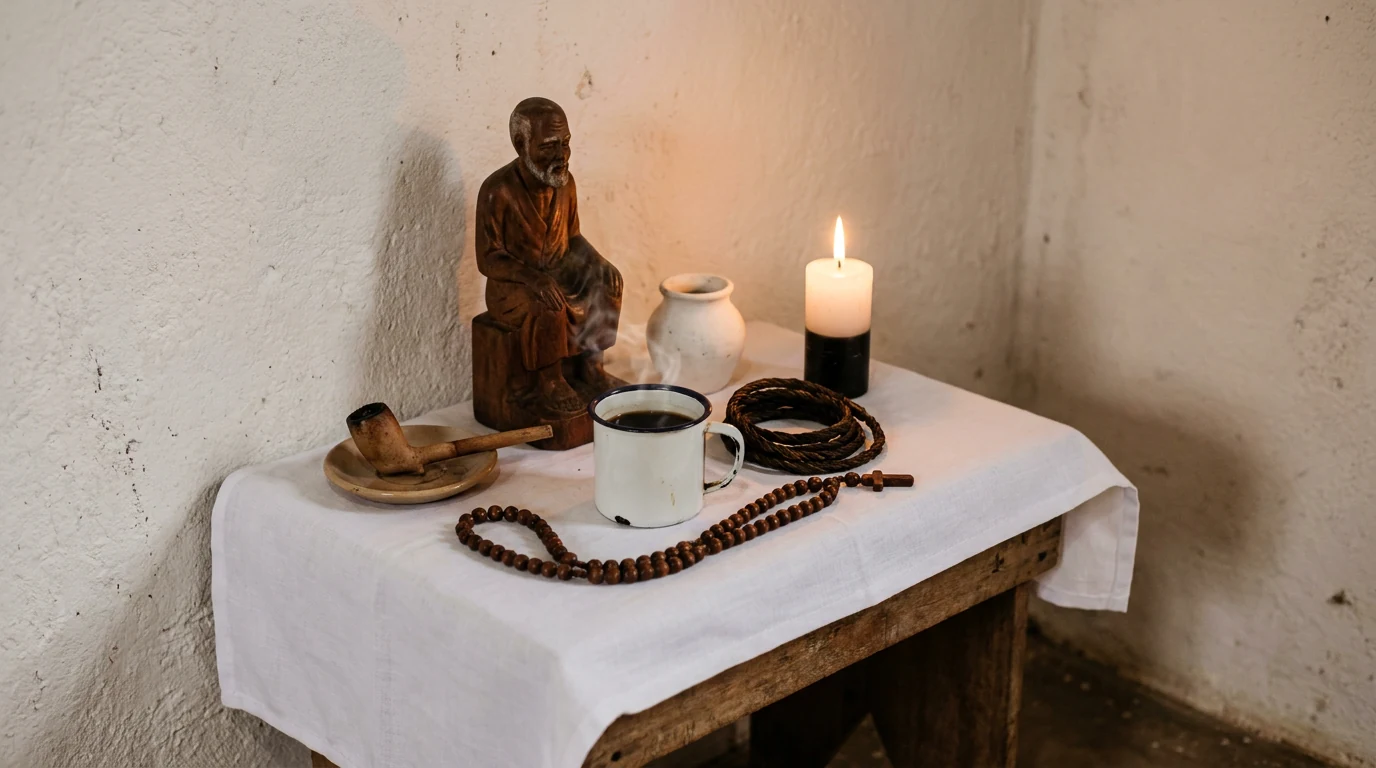
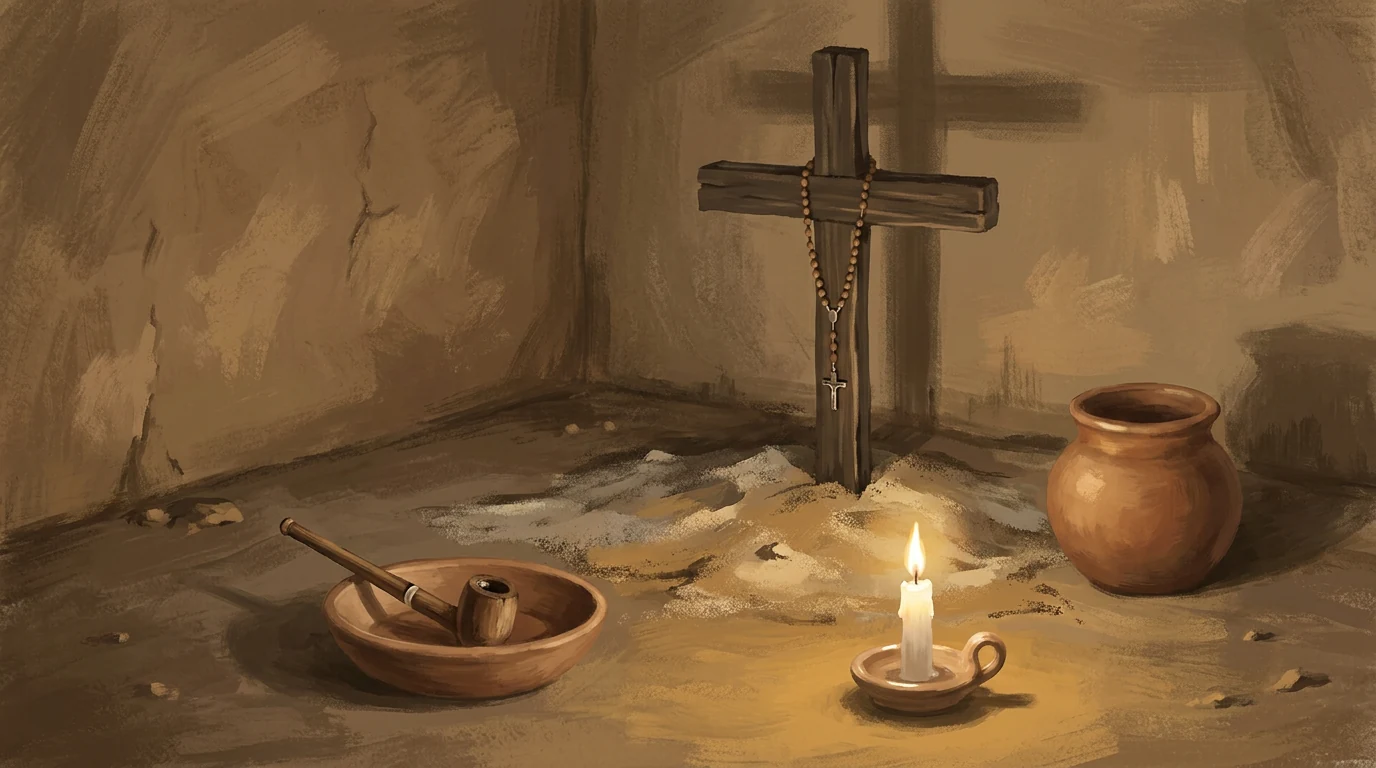
The cross. In 19th-century cemeteries, the central cross marked the holy ground. There are terreiros that also have their house of souls: in a house studied by USP, it holds a pepper tree cross, quartinha, rosary, and pipe. The history of the cross and who works there is in cruzeiro das almas.
The Exu das Almas. "Das Almas" is a surname of a falange, and several Exus carry it. In a house in Curitiba, the title applies to Tranca Ruas, João Caveira, and Seu Mangueira. What this name says about the ritual work is in Exu das Almas. If you do not yet know which spirit accompanies you, the discover your spirit test is a start.
Frequently asked questions
What does All Souls' Day mean in Umbanda?
It is the day to remember the dead and greet the souls, inherited from the Catholic calendar. In houses studied in Vitória (ES), umbandistas go to the cemetery on the 2nd, greet the souls at the cross, and leave offerings there and on the tombstones. What is done varies from house to house.
Which orixá is honored on All Souls' Day?
In Barbara Thompson's research in Vitória, it is Obaluaê-Omulu, honored on November 2nd and August 16th, with Monday as his day. It is a field record of a city, not a national rule. Other umbandistas heard there also offer to Iansã and Nanã at the cemetery.
Can you light a candle for the souls at home on All Souls' Day?
No consulted source prohibits it. Michelle Maia's study records that the intention to the souls is done in churches and, in the same measure, at home. Use a firm support, away from curtains and cloth, and turn it off before sleeping. The color and number of candles follow the orientation of your house.
Does Candomblé celebrate All Souls' Day?
Not as its own liturgy, according to the consulted sources. The axexê, a funerary rite of Candomblé queto and jeje-nagô, happens when the initiate dies. The Egungun cult has its own calendar. A house in Manaus holds worship to the ancestors on the date; a babalorixá from Brasília says the dead are remembered in every toque.
On what day of the week does All Souls' Day fall in 2026?
In 2026, November 2 falls on a Monday, the day that popular devotion and many terreiros call the day of the souls. The date is a national holiday by Law 10.607, of 2002. For Catholics, the indulgence linked to the visit to the cemetery is valid from November 1 to 8.
Did your house ask for a white candle, a black and white candle, a 7-day candle, or a preto-velho statue for the 2nd? The shop in Extrema-MG separates and sends it to all of Brazil. Just call on the Joia Mística WhatsApp.
References
- Vatican News (Holy See). Commemoration of all the faithful departed
- Vatican News, 2020. Apostolic Penitentiary: plenary indulgences of November
- Archdiocese of São Sebastião do Rio de Janeiro. All Souls' Day in the Catholic Church
- Presidency of the Republic. Law No. 10.607, of December 19, 2002
- THOMPSON, Barbara (UFBA). Proceedings of the IV Seminar of Social Sciences PGCS-UFES, 2019. At the gates, tombstones and crosses of the souls
- MAIA, Michelle Ferreira. Mneme (UFRN), v. 11, n. 29, 2011. Between the request and the received
- ANDRADE JÚNIOR, Lourival. Proceedings of the XXVII National History Symposium, ANPUH, 2013. I adored the souls: umbanda, preto-velho and slavery
- GONÇALVES, Fábio da Silva. Dissertation, UFMG and Unimontes, 2017. Food in the terreiros of Bocaiuva (MG)
- PRANDI, Reginaldo. Revista USP, n. 50, 2001. Exu, from messenger to the devil
- PRANDI, Reginaldo. In Faraimará, o caçador traz alegria, Pallas, 2000. Concepts of life and death in the axexê ritual
- IPHAN, 2015. Heritage listing report of Omo Ilê Agboulá, Itaparica (BA)
- Rede de Terreiros Egùngùn. Terreiro Onilá, Ilha de Itaparica
- Agência Cenarium, 2023. Afro-Brazilian religions and All Souls' Day
- FUCESP. Obaluaê Page
- Santuário Nacional da Umbanda. Abaluaiê
- U.S. Fire Administration (FEMA). Candle fire safety